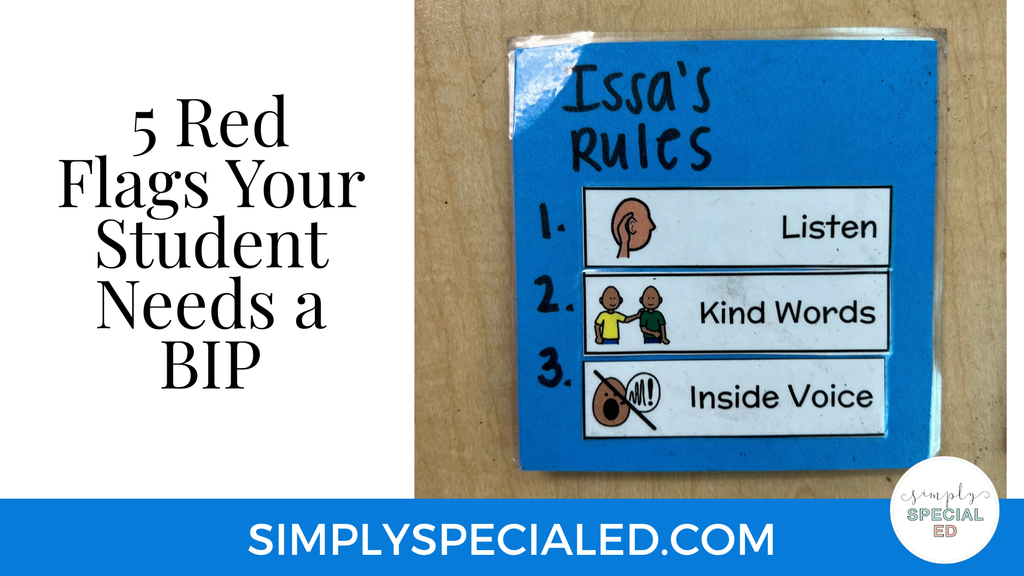
In special education, we see student behavior and how it impacts our whole classroom. It is what we get our degrees in – Learning & Behavior Specialists. However, we are so immersed in behavior, it often becomes our normal. What we may view as “normal” in our self-contained classrooms can differ from school to school and state to state. It is important we find interventions that work for students and put it in writing aka a BIP in the IEP. This is especially helpful if that student were to move, even if it is from one teacher to a new teacher. We don’t want to reinvent the wheel when we have successful interventions with students. The answer is not always outplacement. We need to find interventions that work for our students. Here are 5 signs your student needs a BIP.
1. Behavior is impeding their own learning or others
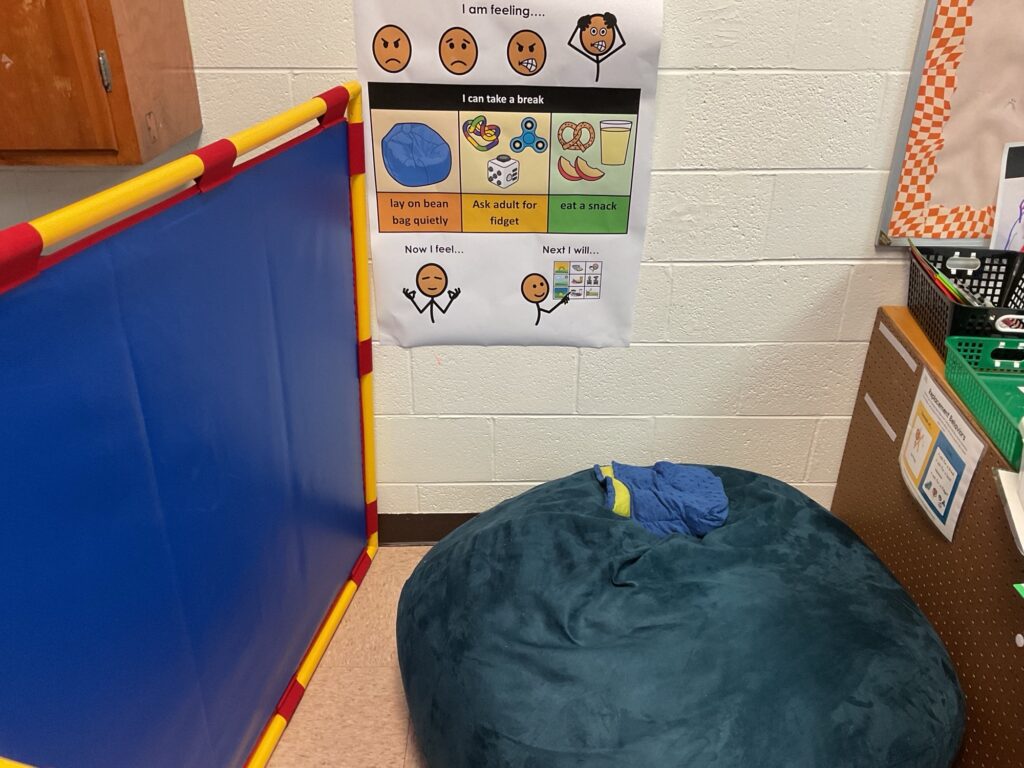
If a student is interrupting your instruction for themselves or for other students, it may be worth your time to conduct a FBA for a BIP. This is especially true if it is impacting long chunks of your day. I once visited a school where a student was spending 2+ hours on the floor throughout her day and did not have a BIP. 2 hours everyday would equate to 10 hours a week not learning. That definitely qualifies for impeding their own learning. When behavior is impeding a student’s learning, there should be communication to families so they are aware. A BIP helps keep everyone in the IEP in the loop so nothing comes as a surprise when it is brought up. A calm down corner (like the one in the photo above) can be a great replacement strategy for students who are becoming frustrated or agitated.
2. Harming themselves or others
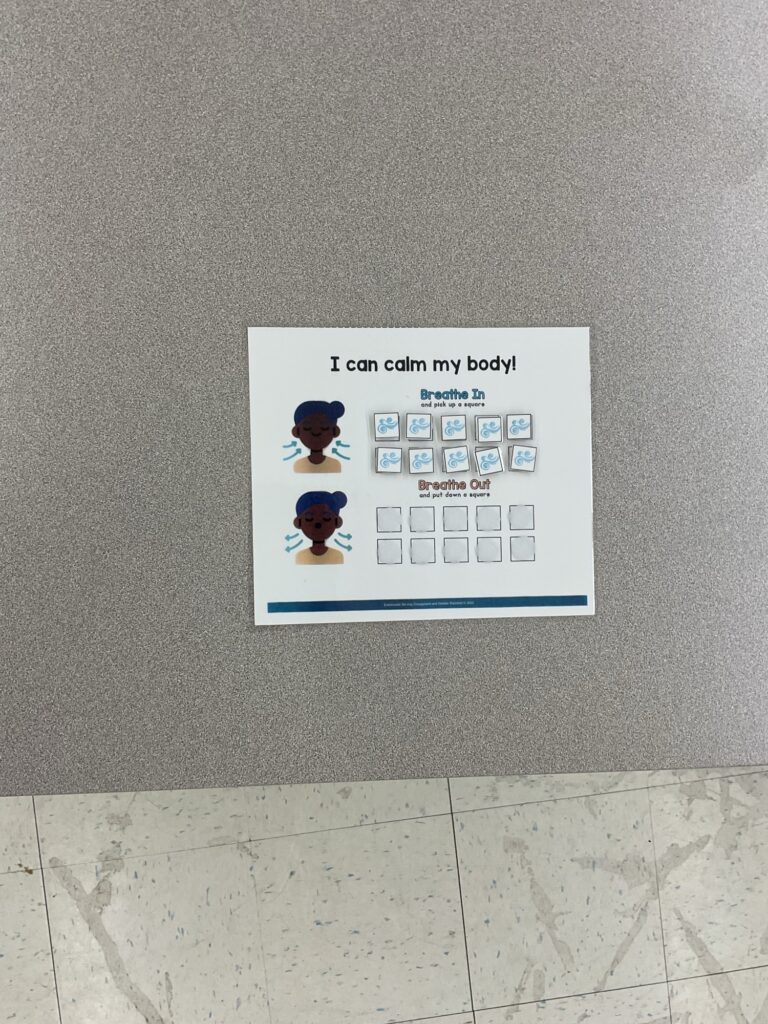
Staff should intervene whenever a student is harming themselves or others no matter what the function is. We need to teach replacement behaviors for physical aggression. The deep breath visual in the photo is one strategy of a replacement behavior. Instead of resorting to physical aggression, we can teach students to take deep breaths. They can repeat this activity until they are calm. You can learn more about the functions of behavior here. When a student is harming themselves or others, it is important to define what that looks like in their BIP. You can break down the type of aggression and collect data based on frequency or intensity. For example, you may have a data sheet that has different boxes for pinching, hitting, kicking, etc. Check out this blog if you need help with collecting data/data sheets!
3. Behavior is a safety concern
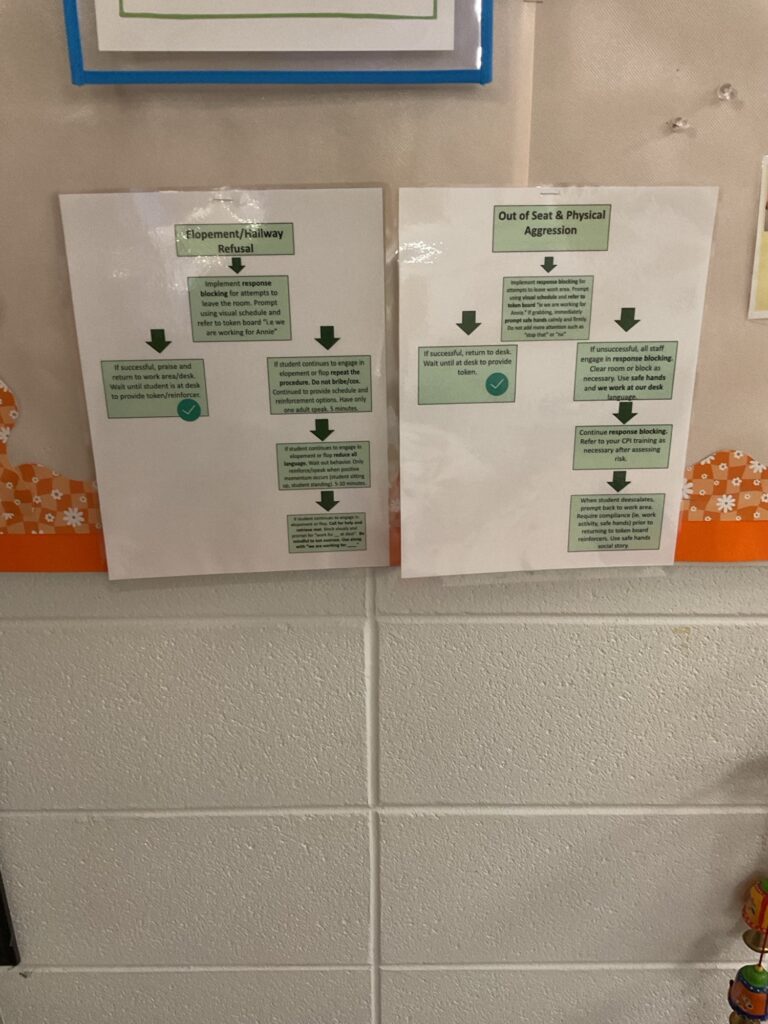
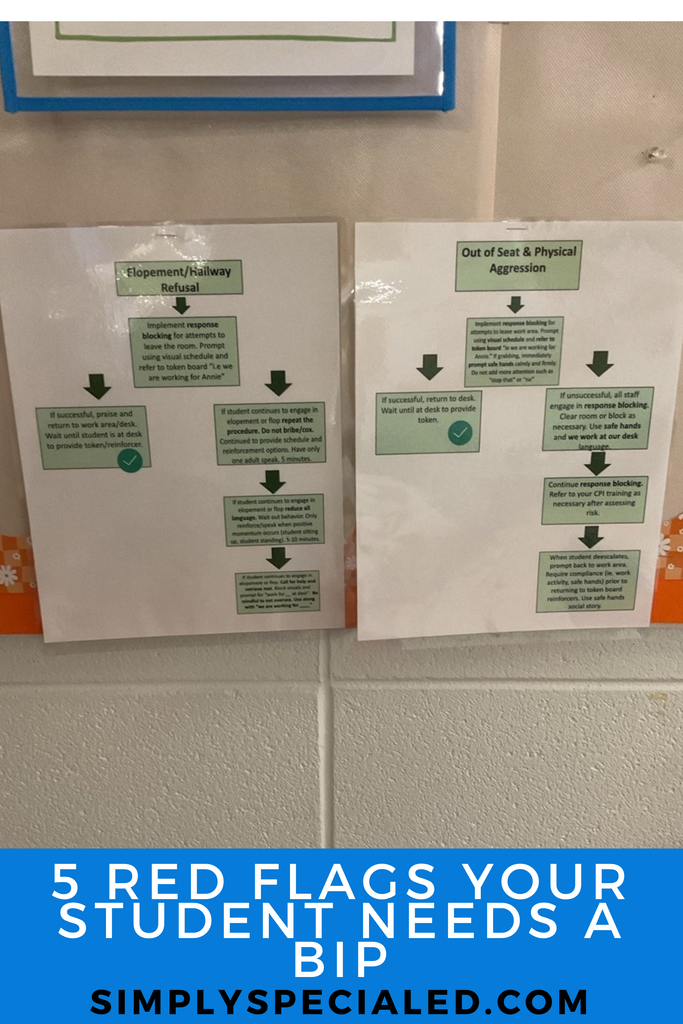
A BIP should be written if there is any type of safety concern. Often, students will have a BIP if they elope from the environment they are supposed to be in. This could look like sprinting out of their classroom into a different classroom or sprinting out of their classroom to out of the building. It can also look like slowly wandering away from the group. For example, if your classroom is on a CBI trip to the grocery store and you have a student who does not stay with the group, you will want a BIP written to know exactly what to do if elopement occurs. A good question to ask ourselves is “is this behavior truly a safety concern?” or “is it just annoying?”
4. Student is not making progress
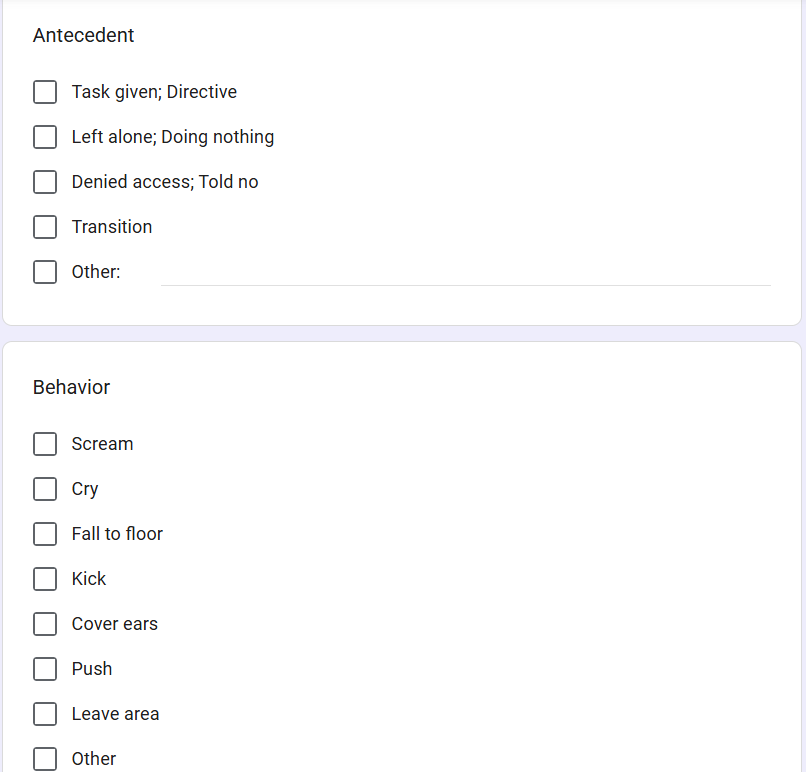
You may need a BIP if the student is not making progress academically because of behavior. You also need one if the student is not making progress behaviorally. Once you have a plan in place, you can determine what interventions will help that student to be successful. You can collect data on paper or digitally like the photo above. Most BCBAs, social workers, or teachers will collect ABC (antecedent, behavior, consequence) data during an open FBA to figure out the function of a student’s behavior. It is crucial to be objective when taking ABC data. I like to use data sheets that have pre-determined options to keep the subjectivity out of it like the example above.
5. Current interventions are not working
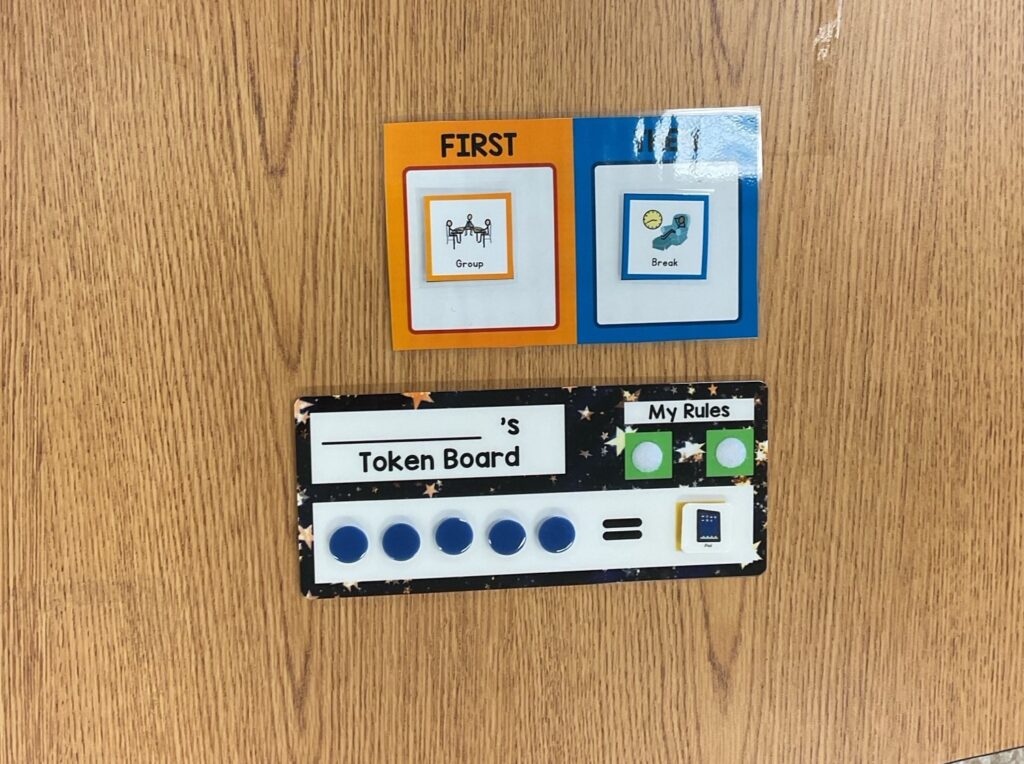
A student may need a BIP if you have tried multiple interventions that are not working. We have to give ourselves at least 2 weeks of truly trying an intervention with fidelity before giving up and saying it did not work. I have been in many classrooms where teams will tell me “the token board didn’t work”, and they tried it one time for one round of centers. We need to give students time to learn how to use these supports before throwing in the towel. You can find plenty of visual behavior supports here. A BIP should include interventions that ARE working. If a BIP has interventions written into it that are not working for the student, the BIP should be revised based on your school’s guidelines.
Special educators are immersed in behavior day in and day out. Behavior is one of the main reasons those in the special education field are burning out quicker and quicker. Conducting an FBA and BIP can help everyone in the classroom, including both the student and the adults. It can be really incredible to see a behavior intervention working when the team is following through with fidelity. Once you see any of these 5 red flags, it is essential you alert appropriate team members and administration to see what the next steps in your school should be. A lot of the time, the first step is to open an FBA domain and start collecting data when parents have signed off. Then, you can determine the function of the student’s behavior and have a solid plan on how to address it in a BIP. BIPS will travel with the student from school to school or teacher to teacher so you are not starting over each year.


Leave a Reply