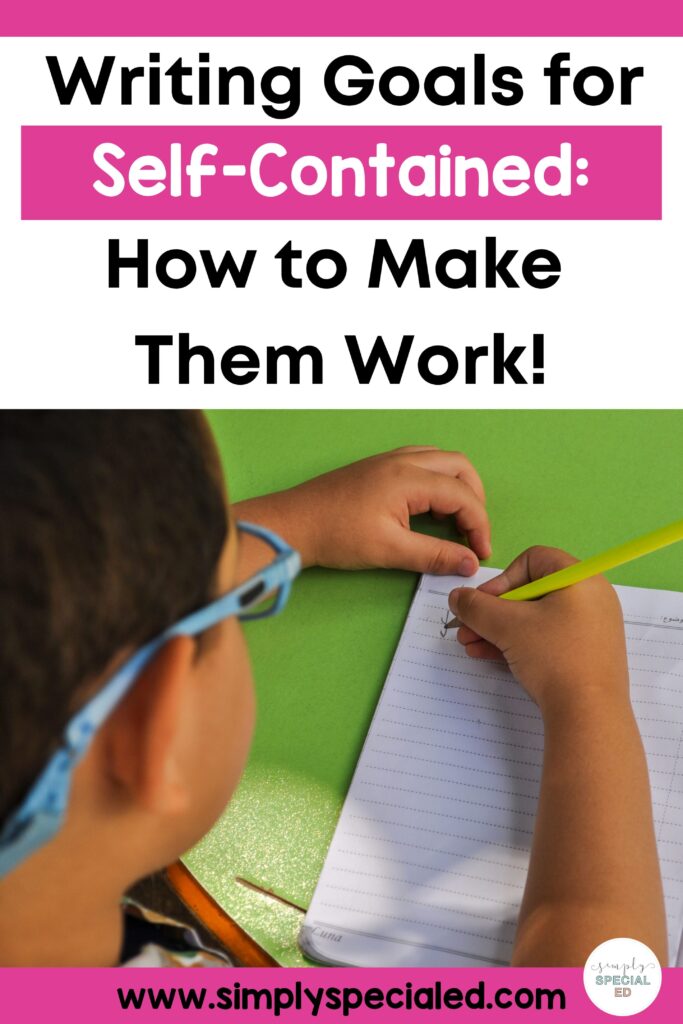
Have you ever struggled to help your students meet their writing goals? I know I have! Writing can be a tricky subject for our self-contained students to tackle. Luckily, there is a way to make teaching this subject (and taking data on writing goals) so much easier! Keep reading to learn more!
Why is it So Hard to Teach Writing?

Ask any group of teachers (gen ed teachers included!) what their favorite subject to teach is. Chances are, only a small percentage will say that they love to teach writing. Why is it so hard to teach writing? Kids, and especially our self-contained kiddos, can have a hard time with the complex nature of writing. Writing is a big job! It requires so many different skills to work together — memory, fine motor, attention, and language, and more. When kids have challenges in one (or more) of those areas, it can make the task or writing feel simply overwhelming.
Aside from the issues students face with writing, it is tough for teachers to manage this class as well. First of all, there are sooooo many things we need to do each day that it is just easy to skip over writing. And, in the self-contained setting we naturally have students of varying ability levels. This amkes it extra difficult to plan for writing that is differentiated.
Making Writing Easier

Luckily, there are ways that we can make writing easier for our students, and ourselves! To start, think about the barriers to writing your students may be experiencing. Then, you can address those issues piece by piece to make writing easier.
For example, fine motor deficits can be a barrier for student writing. If that is the case, you can try different strategies and tools to make the physical act of writing easier. Pencil grips, adapted pencils, or specialized paper can help make the physical act of writing easier for students. They can also help improve legibility.
If students struggle with remembering letters or words, providing an alphabet chart can help students work with more independence. For older students, a personal reference sheet or word bank with known words on it is a handy tool.
Another difficulty students might experience is struggling to produce a response to prompts. For this situation, providing word banks helps give them a clear option to choose from. Also, responses with picture prompts are helpful! Students can choose from images to help them complete sentences. These response choices take away the pressure of having to come up with a response on their own.
Writing Journals to the Rescue!
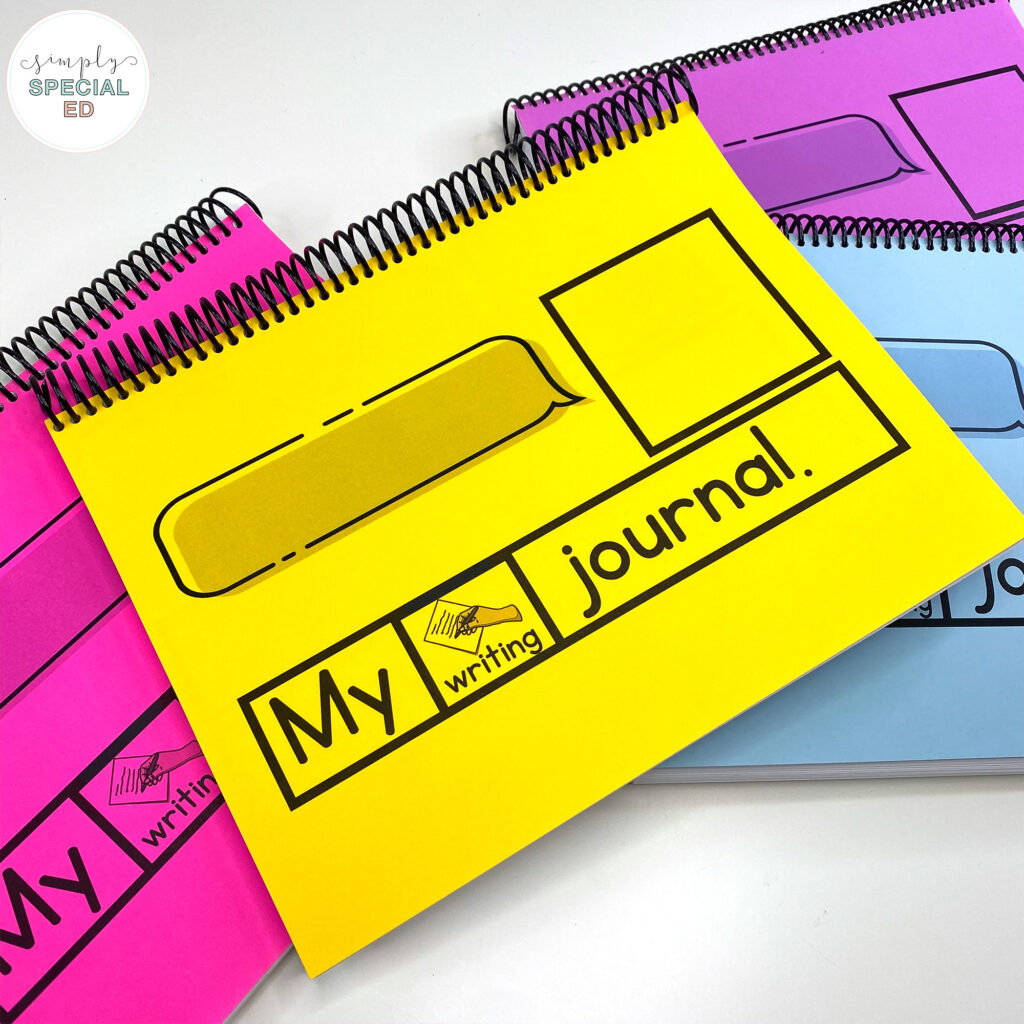
One of the hardest parts of teaching writing in self-contained is accounting for students’ various levels. Simply Special Ed’s Daily Writing Journals are the answer to this problem!
Daily Writing Journals are adapted, leveled daily journals that meet your students where they are. There are four levels of journals and each has a prompt for every day of the year. That means that your students can work on the same prompt at their own level each day of the year!
Each leveled journal contains:
– 180 writing prompts (one per day)
– WH question focus
– Real pictures on every page
– Age-appropriate images and symbols
– Custom binder cover for student name and photo
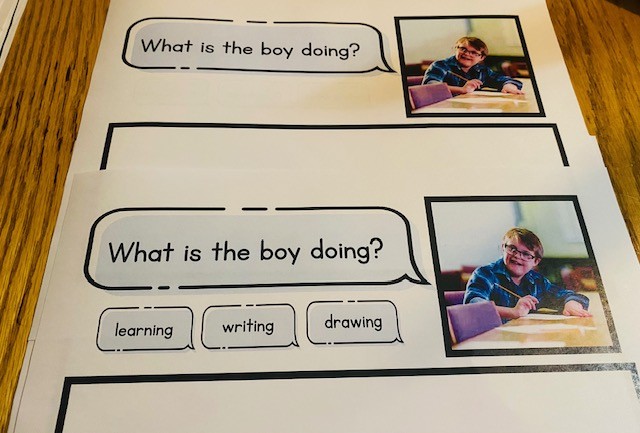
The levels are differentiated like this:
– 1: Fill in the Blank (errorless: with + without choice)
– 2: Cut & Paste (with visual support)
– 3: Cut & Paste (without visual support)
– 4: Written Response (with + without word bank)
These journals will truly help your students feel more confident in their writing abilities. Once they start meeting their writing goals, they will realize they can do it themselves. That will motivate them to keep going each day!
Tackling Writing Goals
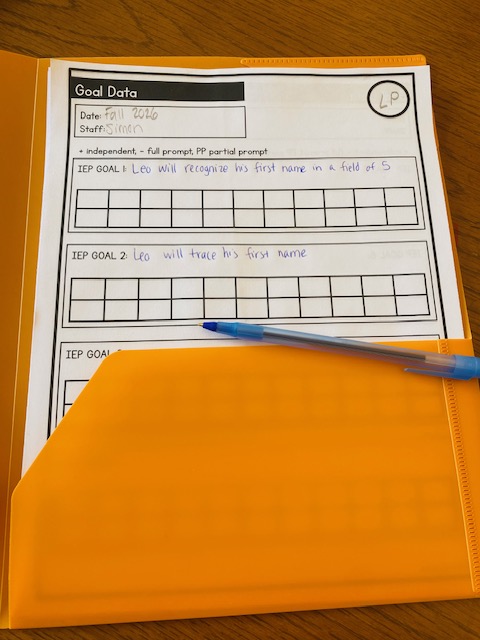
Once your students have gotten into the writing routine, it is time to take data on those writing goals!
The daily writing journals are the PERFECT solution for your data-taking needs! You will have a clear progression of how student writing is developing, all in one neat, organized package. Whenever I go back and look at their writing after an interval of time, it is amazing to see the progress they have made! Tip: Before we do our daily writing, I always have students write (or copy) the date at the top of the page. If needed, a date stamp can also be helpful for this!
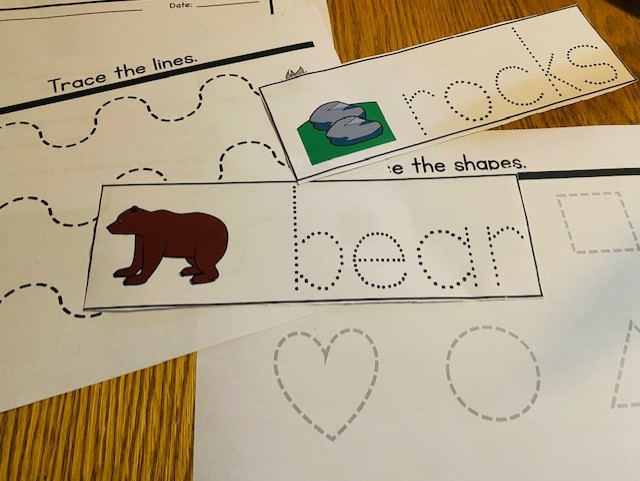
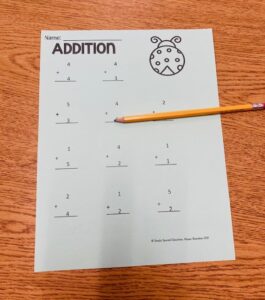
For students who are in the prewriting stage, adding in tracing activities helps to develop their writing readiness. By giving daily or weekly tracing activities, you will be able to take note of how their accuracy is improving.
If students are working on higher-level writing goals such as capitalization and punctuation, I like to use cut-and-paste sentence activities as a data point. Students must accurately place the capitals and periods to complete the scrambled-up sentences. It is a fun way for kids to practice these skills. As a bonus, the worksheets ask students to draw an accompanying picture. This part of the activity helps develop student comprehension!

You can learn even more about writing routines in the Simple Special Ed webinar, “How to Build a 10-Minute Daily Writing Routine.” In the webinar, you will learn more about how to make this writing routine work for you, taking data on your students’ writing, building a daily structure, and more. Plus, there are freebies!
Have any questions about writing with your self-contained students? How do YOU fit this subject into your schedule? Share your ideas below!