• Home
  • Online Courses
    • Simple Self-Contained Setup 101®
      • Success Stories
    • Simple Centers System
    • Course Member Sign In
  • Shop Now
    • Shop Now
    • Free Resources
    • Gift Cards
    • Cart
    • Purchase Orders
    • School Licenses
    • My Account
  • Free Webinars
  • Blog
    • Academics
      • Adapted Books
      • Comprehension
      • Cooking
      • Crafts
      • ELA
      • ESY
      • Fine Motor
      • Life Skills
      • Math
      • Occupational Therapy
      • Science
      • Sensory Bins
      • Social Emotional Learning
      • Social Skills
      • Social Studies
      • Speech Therapy
      • Task Boxes
      • Vocabulary
      • Writing
    • At Home Learning
      • Digital
      • Remote Learning
    • Behavior
      • ABA
      • Communication
        • AAC
      • Data
      • Schedules
      • Visuals
    • Simple Classroom
      • Back to School
      • Book Recommendations
      • Classroom Setup
      • Freebies
      • IEP
      • Inclusion
      • Inspiration
      • Organization
      • Paraprofessional
      • Remote Learning
      • Seasonal
        • Fall
        • Winter
        • Spring
        • Summer
    • Tot School
  • Classroom Tours
    • Self-Contained
    • Speech
    • Preschool
    • Elementary Autistic Support
    • K-2
    • K-2 (Socially Distanced)
    • K-4 (Tiny Room)
    • 1-4 (Life Skills)
    • 2-3 (ABA)
    • Middle School
    • High School
    • High School (Life Skills)
    • Multiple Disabilities
  • New Teachers
    • Join My Online Course
    • First Year
    • Interviews
    • Job Search
  • Grade Level
    • Preschool
    • Primary
    • Elementary
    • Middle School
    • High School
  • More…
    • Meet Alyssa
    • Meet Our Bloggers
    • Collaborate
    • Guest Blogging
    • Contact Me
    • Disclosures
    • Facebook
    • Instagram
    • Pinterest

Simply Special Ed

Resource Downloads & Teaching Advice

Blog Cooking Data High School Life Skills Middle School Writing

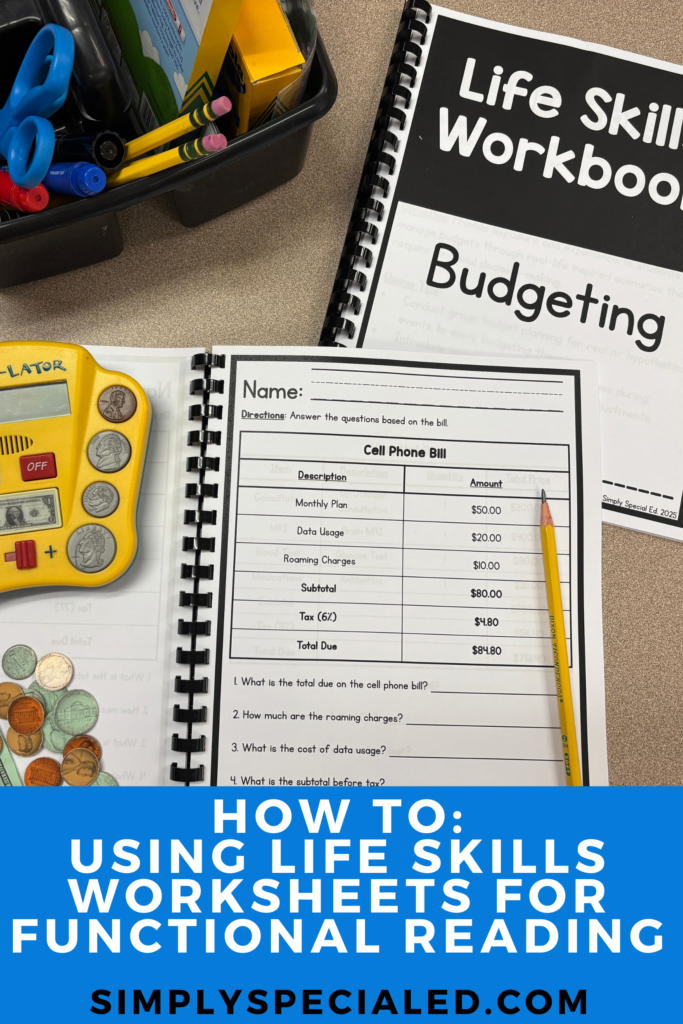
How to Use Life Skills Worksheets for Functional Reading

How to use life skills worksheets for functional reading blog header

Life Skills Worksheets and Functional Reading are both alike in that they focus on important skills for independence and self-help for students in Special Education. How can you use Life Skills Worksheets here for Functional Reading practice?
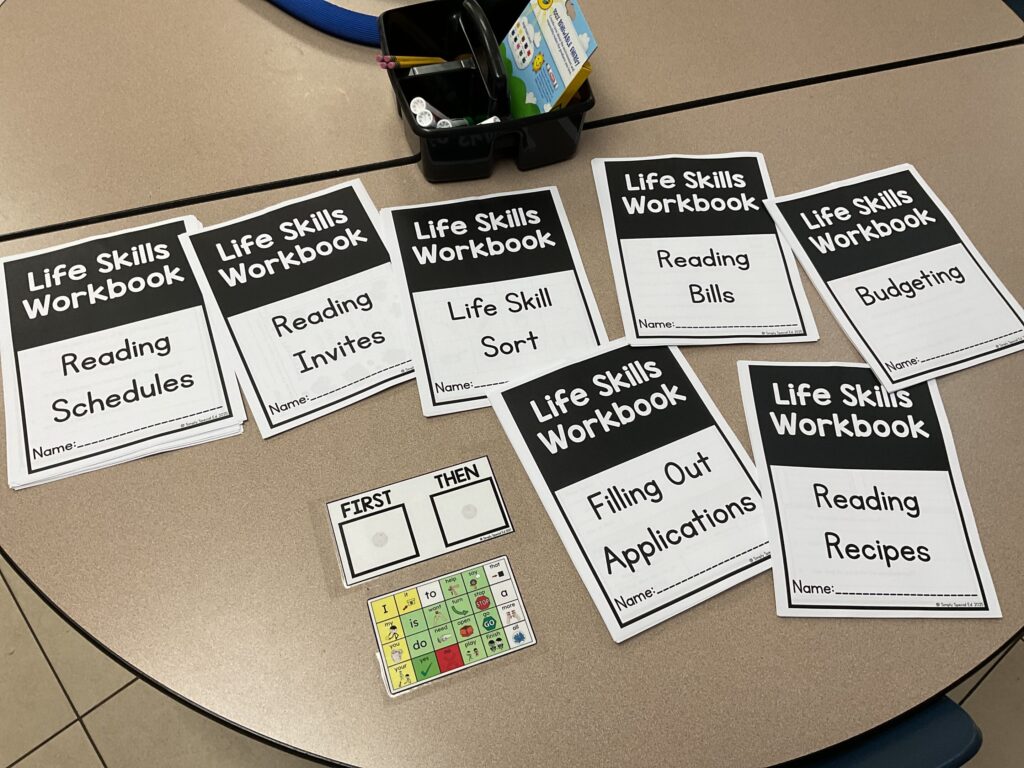
The life skills workbook bundles are laid out on a tabletop
Life Skills Workbooks are available in a variety of topics for functional reading practice.

Life Skills Worksheets – What’s Included?

There are 8 different topics covered in the Life Skills Workbook bundle.

  • Filling Out Forms
  • Filling Out Applications
  • Reading Bills
  • Reading Recipes
  • Reading Invitations
  • Reading Schedules
  • Budgeting 
  • Life Skill Sorting

These sheets can be used for hands on practice of important life skills, and each workbook is crafted to provide students with the exposure and experience needed to handle daily tasks independently. These resources are perfect for developing critical thinking, problem-solving, and functional skills in a structured learning environment.

Although they are ready to print and use (time saver – yes!), we can also add some helpful and fun things to make these Life Skills Worksheets even more hard hitting and effective.
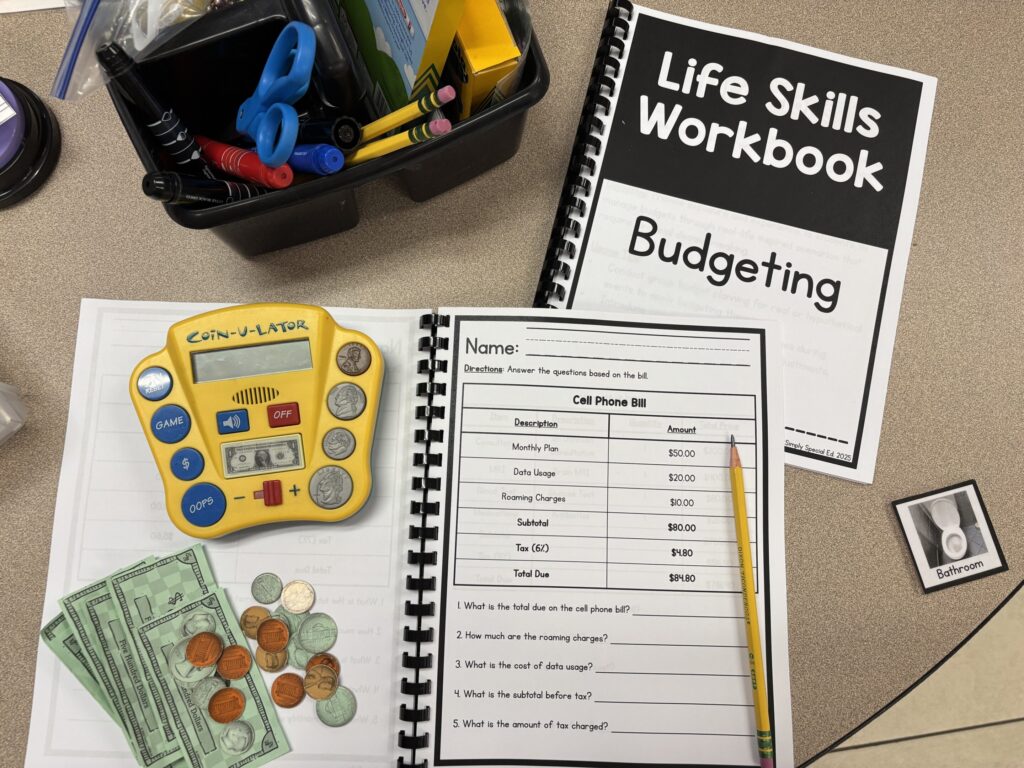
Budgeting and reading bills workbooks lay on a table top with a visual coin-u-lator calculator and pretend money
Pair hands on money and calculators with budgeting or reading bills worksheets.

Pair with Hands On Manipulatives

I love adding those REAL pieces to a worksheet that not only make it fun and colorful, but they add hands on practice of skills for students that benefit from real practice. This will also assist students when they generalize these skills to other places like home or the community. Some possible pairings may be:

  • Use “real” (pretend) money to give students a budget when using the Budgeting workbook pages. Students can practice seeing the amount of money in the budget and just how much goes where.
  • Use images of jobs and occupations when students work on Filling Out Applications workbook pages. They can visualize where they are applying and what type of information these applications require. Hold mock “interviews” or application sessions to practice the real-life process of filling out an application.
  • Use clocks (digital and analog) to view times and visualize improving time management skills. I like to use analog clocks with visual markers to help students visualize time and practice how to manage their schedule.
  • Use store advertisements with food, home goods, or clothing to practice Life Skills Sort workbook pages. Students can visualize or extend their practice on where items go within the house, kitchen, closet, or elsewhere. Organization in personal and professional settings is a very important skill!
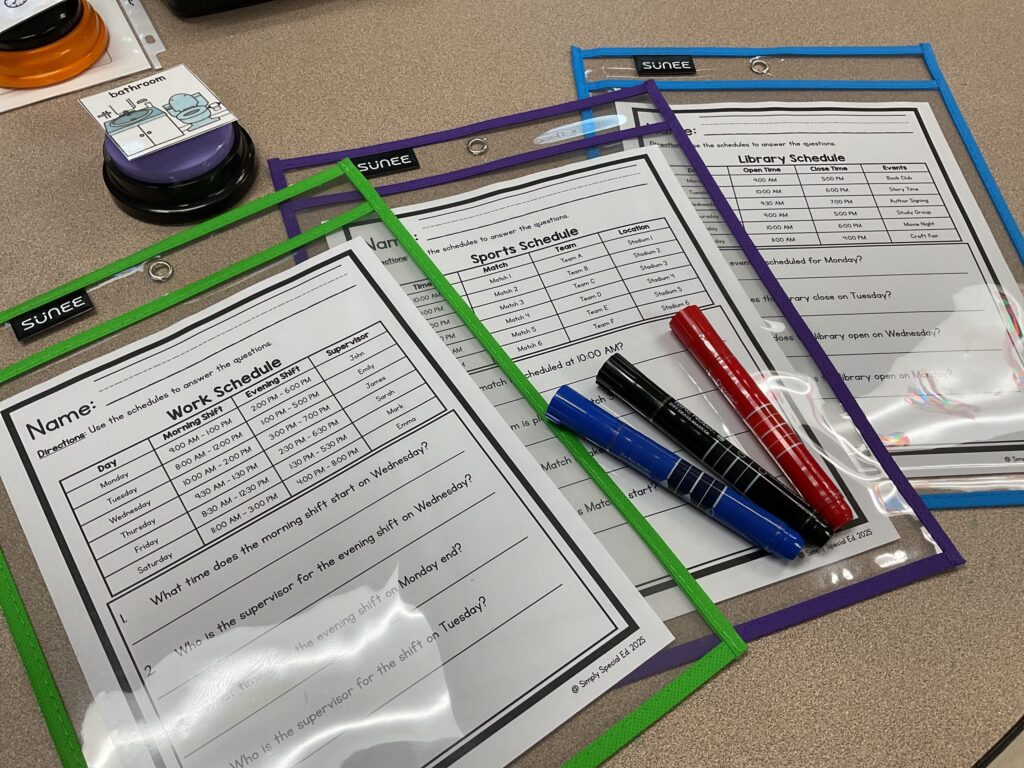
A reading schedules set of 3 worksheets lay on a tabletop in dry erase pockets with dry erase markers
Place your life skills worksheets into plastic sleeves to practice repeatedly while fading prompt level.

Set Up for Longevity

A lot of students have greater success with repeated practice of a skill. If you laminate, add Velcro, or even just place these sheets into protective/plastic dry erase pockets, you can utilize these Life Skills Workbook sheets again and again. I love laminating things to use with multiple students. I have even been able to use some things for multiple years!
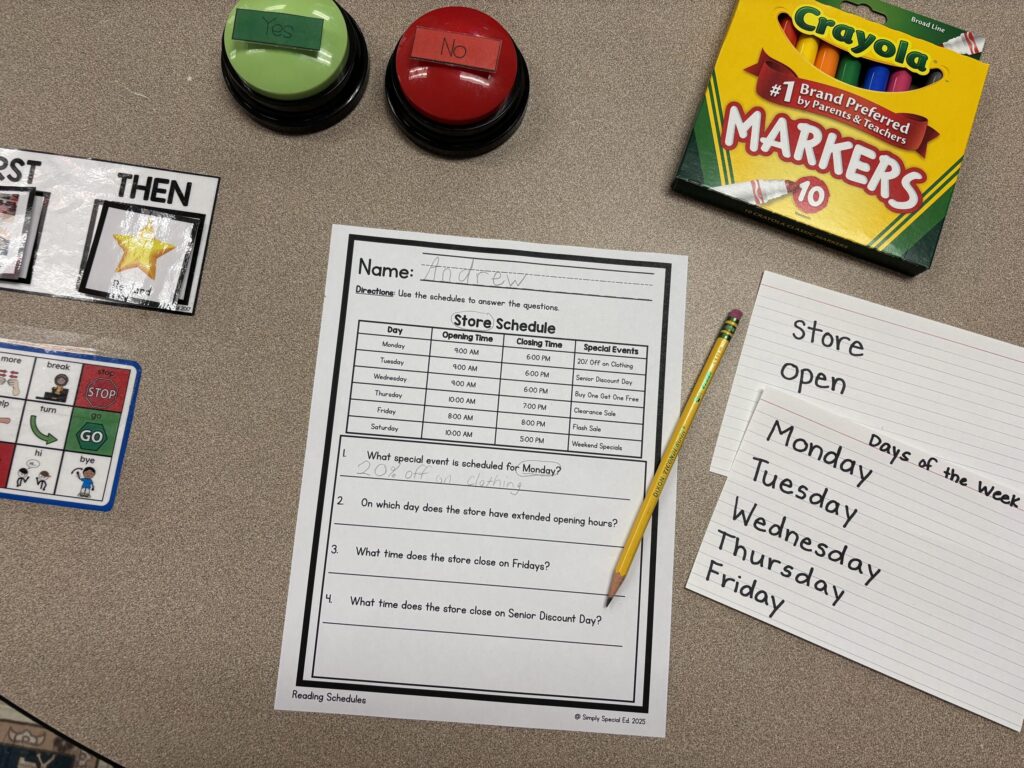
A reading schedules workbook page lays ona tabletop with a word bank of useful words
Provide a word bank like the one shown here with the days of the week.

Tools at Your Disposal

Use tools like word banks and highlighted materials to assist students in functional reading practice when using these workbooks! Highlight key words for students to easier identify when practicing. Provide a word bank of functional words to find when using the workbook.
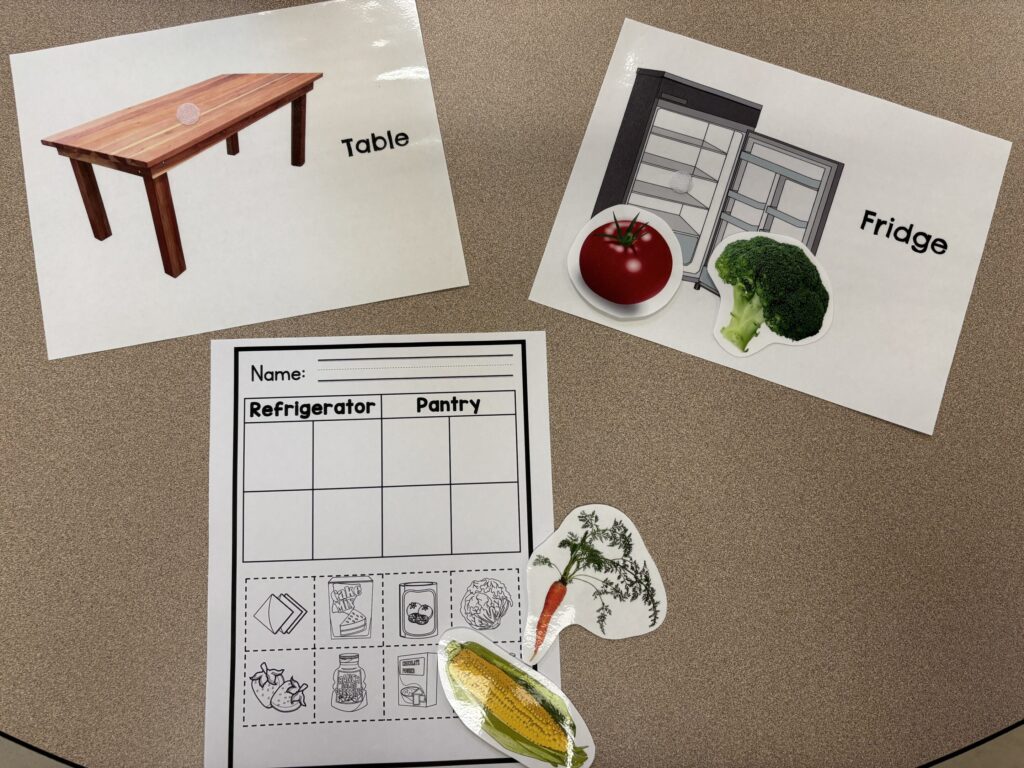
A life skills workbook page in the skill of sorting is shown on a table top with color visuals of food, table, and fridge
A life skills sheet like this one assists students in practicing where foods should be placed to keep them from spoiling.

Repeated Exposure

Because of the variety of sheets in each Life Skills Workbook bundle, repeated practice is easy (and you can even print and go!)

As I mentioned earlier, practicing many times is beneficial for students in Special Education. Some students need much more exposure than their peers. Adding workbook sheets and functional reading to your daily schedule, even as a quick warm up, can help strengthen those skills and using a familiar task for students can reduce anxiety (and reduce behaviors due to new work anxiety.) Varied repetition is important for long term-retention.
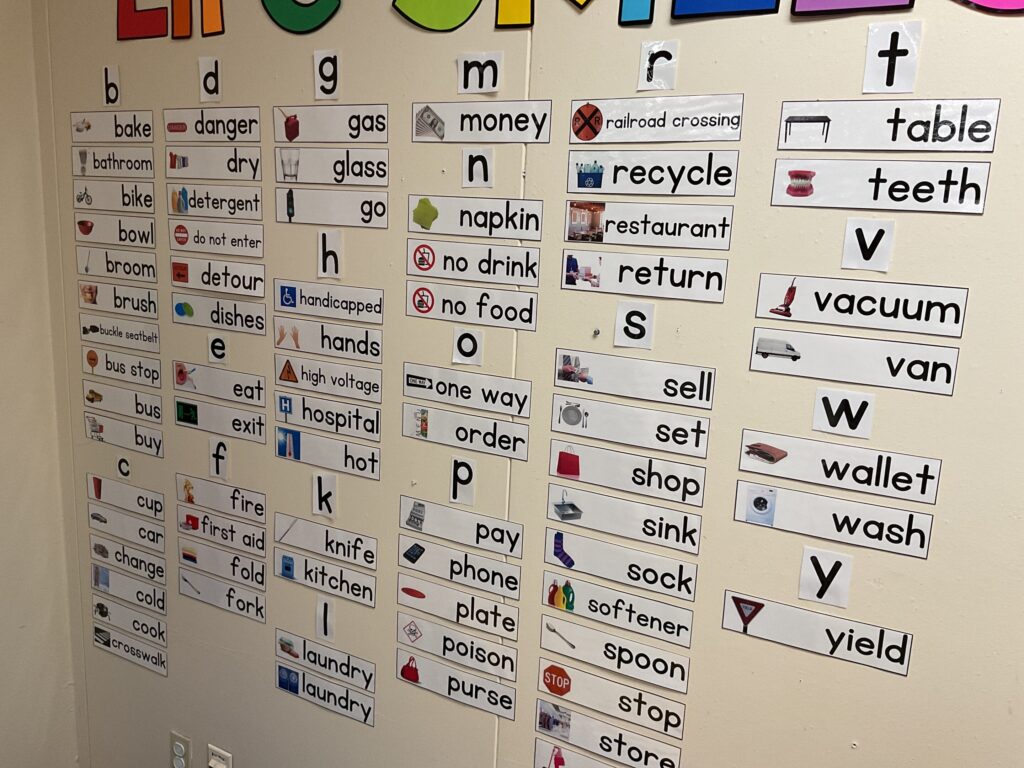
A life skills word wall shows example words and visuals in alphabetical order for functional reading practice using the environment
A life skills word wall can provide functional reading practice into the environment, and can be paired with life skills practical tasks and worksheets.

Environmental Print

Another way to expose students to functional reading is by having these words be a part of their environment. Labeling areas, tools, schedules, numbers, foods, prices, and more, help to expose students to those essential words. Create an entire bulletin board with labeled areas that students can use as part of a station. Students can take their Life Skills Workbook to the station and find helpful information in the environment to aid in completing their work.
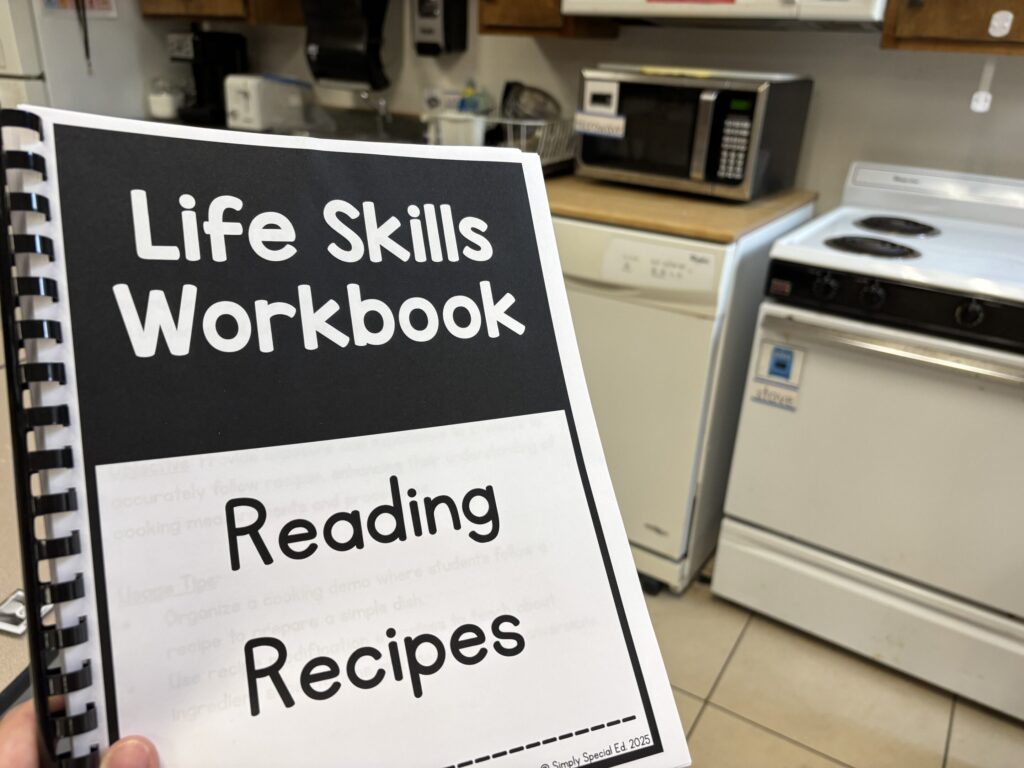
A life skills work ookin the topic of reading recipes is held up in front of a classsroom kitch
Place your “Reading Recipes” workbook into the kitchen for hands on practice!

Keep Data Using the Workbook

An easy way to gauge a student’s growth is to keep copies of completed workbook pages. By comparing the same type of workbook sheet over time, you can see your student’s growth and change, as well as where they may need extra supports.

Use the paper copies and bring them to a student’s annual meeting as data collected. Use digital data tracking sheets to transfer information about student’s functional reading skills.

Whatever you’re working on with your students this year, I hope you can utilize the Life Skills Workbook to strengthen many skills along with functional reading. If you’re still interested in how to use these sheets, check out Allison’s blog to hear from the OT perspective.

Alex blogger signature

Related Posts:

  • IMG_5526
    5 Ways to Teach Functional Life Skills
  • cal4
    How to Use Daily Calendar Worksheets
  • IMG_0851
    Setting Up a Middle School Life Skills Classroom
Share
Pin


Leave a Comment

« Center Differentiation Tips for Special Education Staff

Leave a Reply Cancel reply

Your email address will not be published. Required fields are marked *

This site uses Akismet to reduce spam. Learn how your comment data is processed.

Hi amazing teachers!
I'm Alyssa Shanahan -- a former Elementary Special Ed & Life Skills teacher. My classroom focus was always to keep things simple, increase communication, and build independence. Simply Special Ed's goal is to help teachers and students reach their full potential in and out of the classroom!

Sign up to receive exclusive tips,
free resources, and more!

Recent Posts

Center Differentiation Tips for Special Education Staff

How to Manage Finished Work and Task Boxes

Teaching Students to Work Independently From Day One

Writing Goals for Your Self-Contained Students: How to Make Them Work!

Your First Year in Self-Contained (Including What NOT To Do!)

My Favorite Tricks for Center Rotations

Copyright © Simply Special Ed 2026 · Design by Fancy Girl Design Studio

Copyright © 2026 · Simply Theme on Genesis Framework · WordPress · Log in

We use cookies to ensure that we give you the best experience on our website. If you continue to use this site we will assume that you are happy with it.