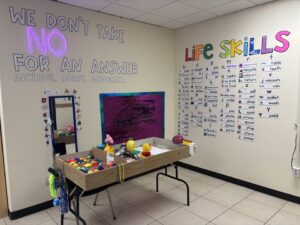
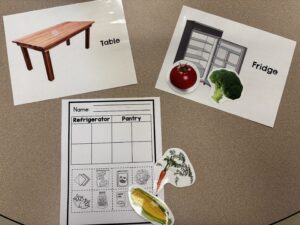
Functional life skills are essential in a self contained classroom. Students will not always have an adult next to them for the rest of their life. It’s important we give them the proper instruction to allow them to be as independent as possible! We’ll talk about meaningful ways of how you can implement functional life skills into your classroom.
1. Adapted Books
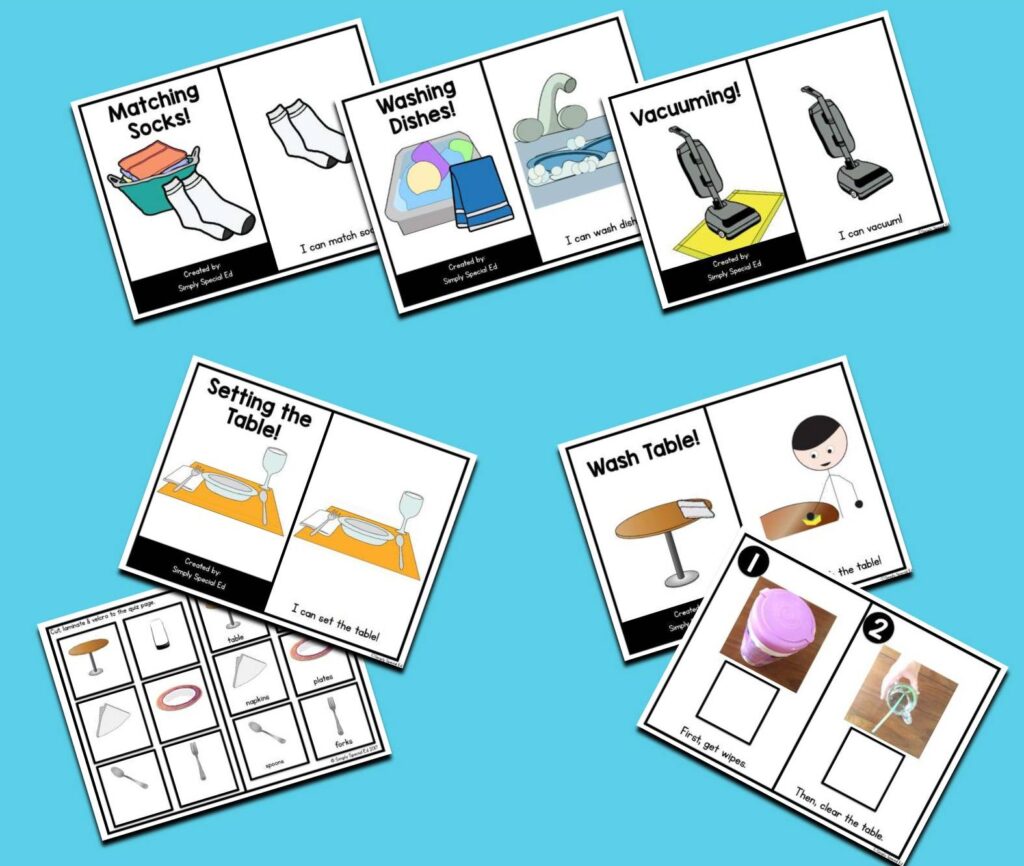
First, adapted books are a great way for students to learn about a skill before practicing it. You can use real life pictures to show them exactly what it looks like. You can also use symbolized pictures for more generalization. Adapted books teach students step by step exactly what they need to do to perform the skill. It also includes pictures to match to keep students engaged. Here is the Life Skills Adapted Books Bundle so that all you have to do is print, laminate, velcro and use!
2. Practice the Skill in Real Life
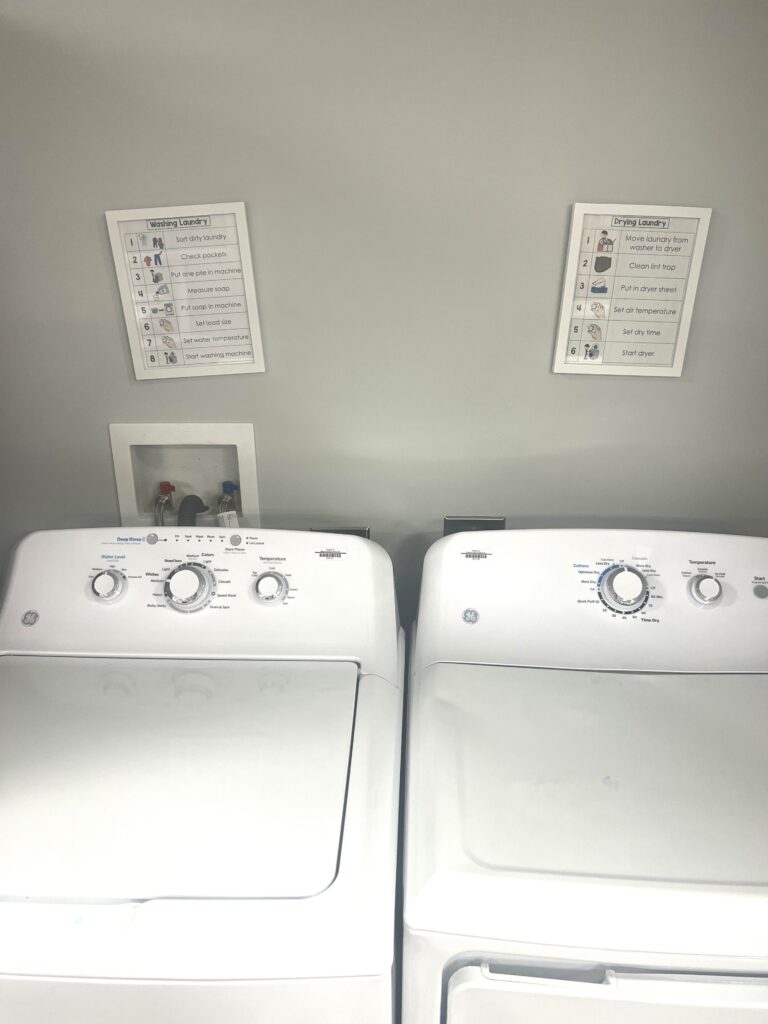
Learning about how to perform the skill is a great prerequisite to practicing the skill in real life. We need to give students opportunities to practice these skills in as natural of a setting as possible. In the picture above, a middle school classroom has a real washer and dryer with task analyses listed above for how to do the laundry. You would be surprised how many life skills can be naturally targeted in a school. For example, I work with many teachers that pair up with the PE teachers to help wash PE uniforms or pennies. This is a task that needs to get done no matter what but is the perfect opportunity for our students to practice!
If you need help getting started, Life Skills Centers has everything you need to be set up to practice the skill in real life.
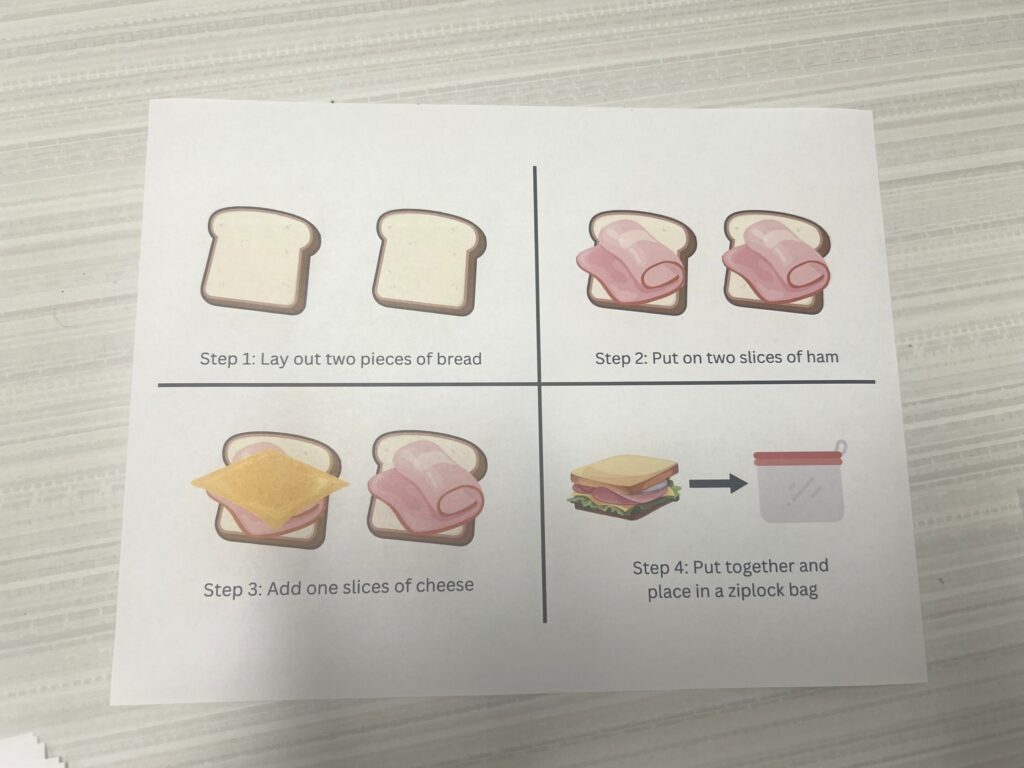
3. Using Task Analyses
Once students learn about the task via an adapted book or lesson, you can introduce a task analysis to pair with the skill in real life. Task analyses are step by step instructions. You can create a written task analyses with pictures or without based on the students reading level. In the example above, students are making sandwiches for a homeless shelter. This skill teaches them how to make a sandwich, whether for themselves or for someone else, while also giving back to the community.
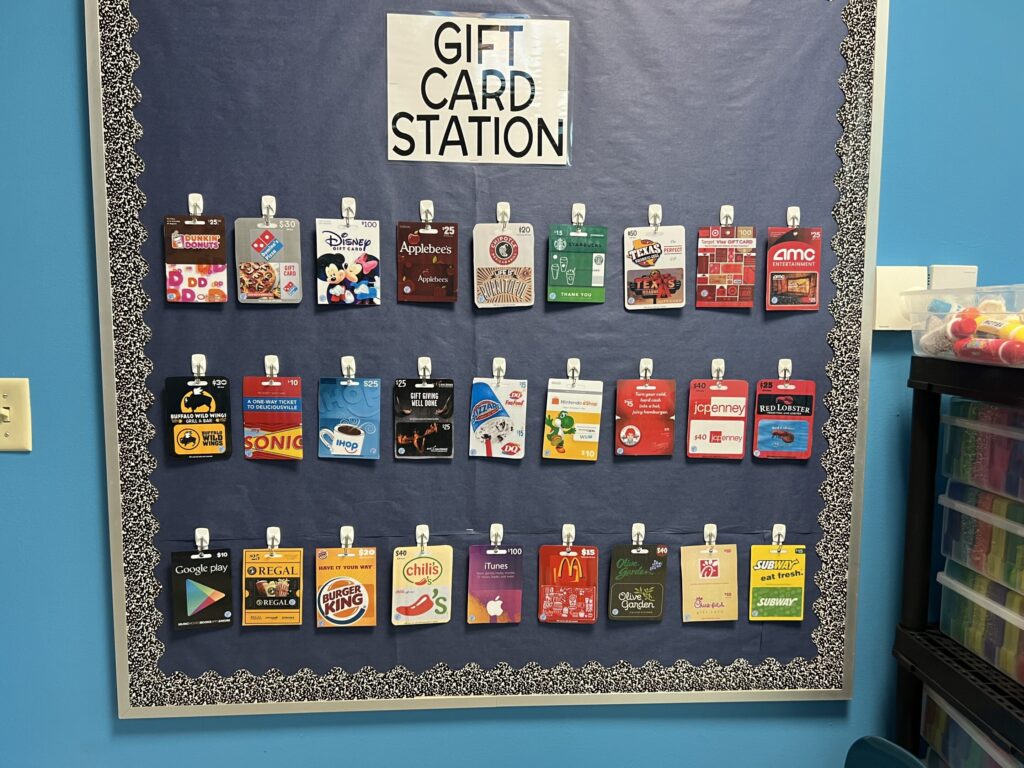
4. Sorting, Matching, or Simulated Activity
You can create some clever opportunities within your classroom that simulate a real life setting. As shown above, the classroom has a gift card restock using their bulletin board. This activity is great for high school or transition aged students who may want to work at Walgreens, CVS, or Target. This is a wonderful example of why teaching matching skills early on can be so important! Check out the Simply Special Ed Life Skills Workbook for lots of pre-prepped activities!
Functional life skills can and should be taught in all grade levels. You can create a block in your schedule for a life skills centers block. Students in elementary school may be working on more hygiene skills, such as hand washing. Students in middle or high school may be working on more daily living or job skills. Hopefully, you gained some new ideas for your classroom!