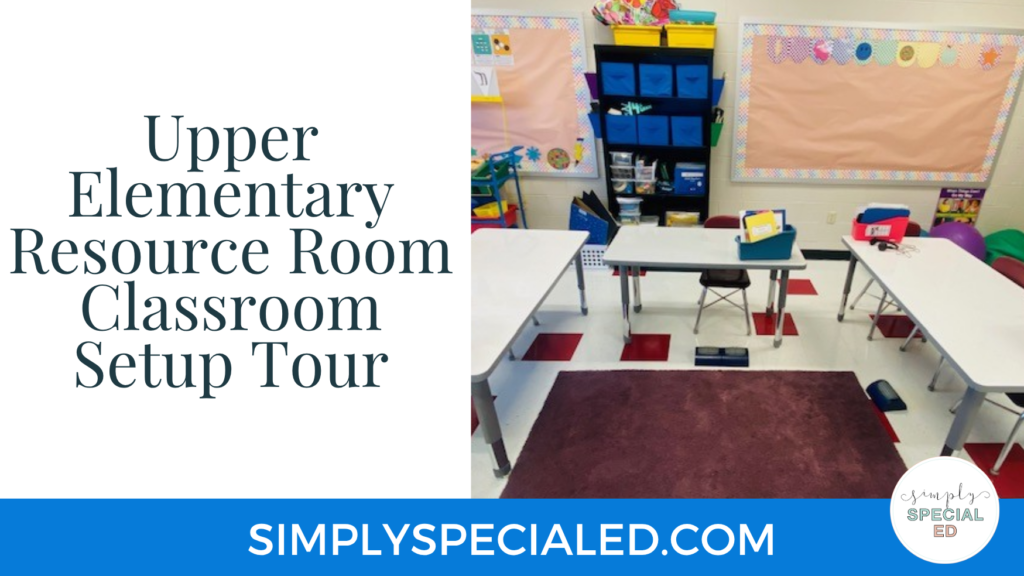
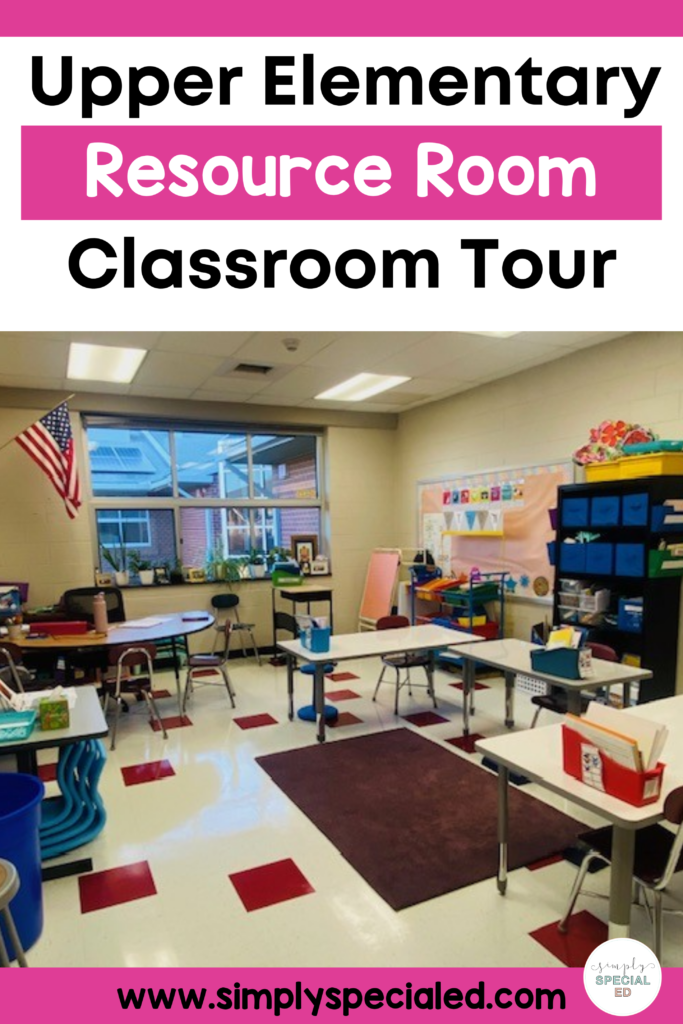
Welcome to my resource room! After many years of teaching a self-contained class, I have transitioned to teaching in a resource room setting. This change definitely felt intimidating! But, it has been so much fun to set up a new classroom and meet a new group of students. Come see what I did to make my new resource room into a functional classroom!
A New Resource Room Setting
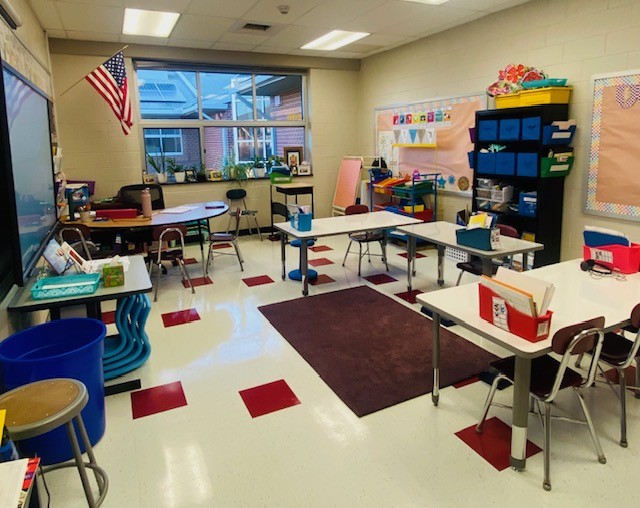
My new role is POR teacher. That stands for pull-out replacement. That means I am replacing the general education curriculum with adapted material to meet my students’ learning needs. I pull a small group of students to work on reading, writing, word study, and math in the resource room. At other times of the day, I support those same students in their homeroom during science/social studies, a whole-group reading lesson, and other activities.
My resource room is right next door to our homeroom class, and we go back and forth between rooms depending on the day’s schedule.
Preparing for A New Setting
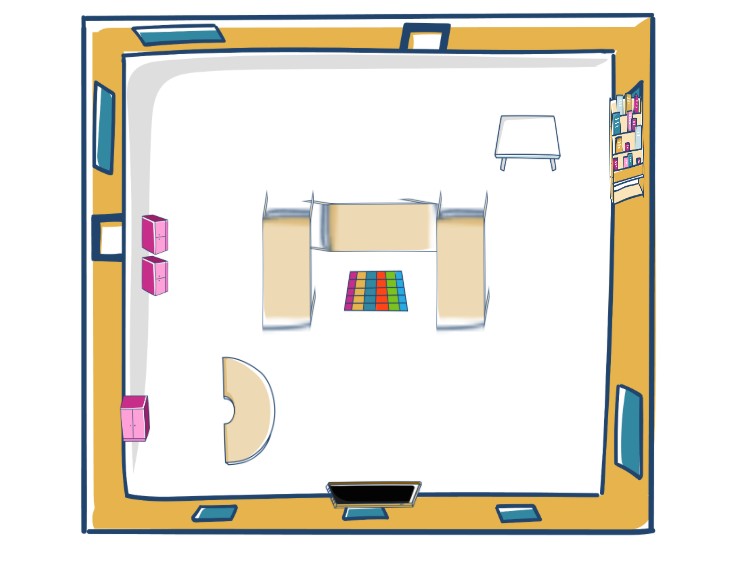
When I found out I would be moving settings, I was eager to get into my new room and start making it my own. However, my school building was closed for the summer. What was I to do? Turn to the Layout Builder, of course!
The Classroom Layout Builder is one of the components of the Simple Self-Contained Setup 101 Course. Even though this course is geared towards self-contained classrooms, SO many of the lessons are relevant to my new role! From setting up to planning curriculum and working with paraprofessionals, there are a ton of resources I turn to again and again!
I knew what my new room would look like and had a general idea of what furniture would be available to me. Using the Layout Builder, I started by choosing a room shape that matched mine. Then, I got to work dreaming up an ideal space! The tool let me play around and imagine an ideal space before ever having to move furniture. Once I had a layout I liked, I was able to use the image to make my dream room a reality!
Resource Room Areas
Here are some of the different areas I have set up in my room:
Teacher Table
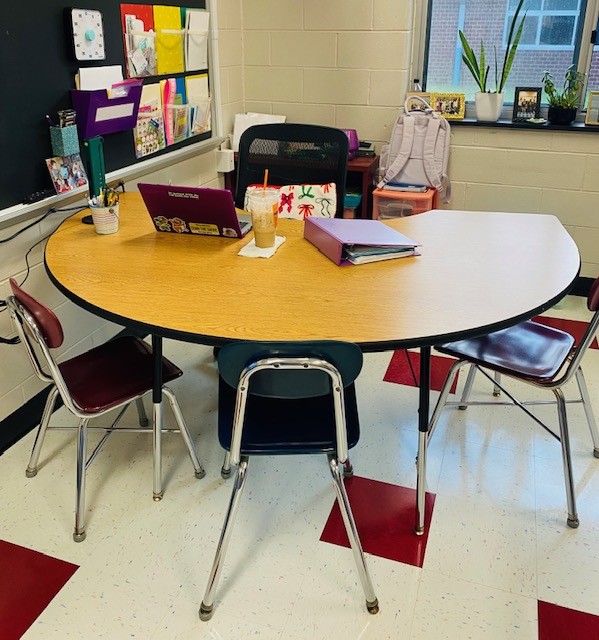
The kidney table is my command center in the classroom! I have it set up in proximity to the interactive board, so that I can plug my computer in and control everything from here. Behind the table is a bookshelf where I keep all of my important supplies. I also have some magnetic pockets on the board next to my chair to keep papers and other things that I need close at hand.
Additionally, I use this table during center rotations. One of the rotations will be for students to work with me for direct instruction, either one-on-one or in a small group. I have everything I need for small group instruction and progress monitoring ready to go!
I do not use a regular teacher’s desk for a few reasons. First of all, I don’t have a ton of room in my resource room! It is less than half the size of a regular classroom, so space is at a premium. Second, they are too clunky! I think that teacher’s desks are boxy and hard to move. Third, I can’t stand all the drawers in those desks! I like having the things I need close at hand, rather than hidden in one of many drawers. So, my table and bookshelf work just fine for me!
Student Tables and Flex Seating
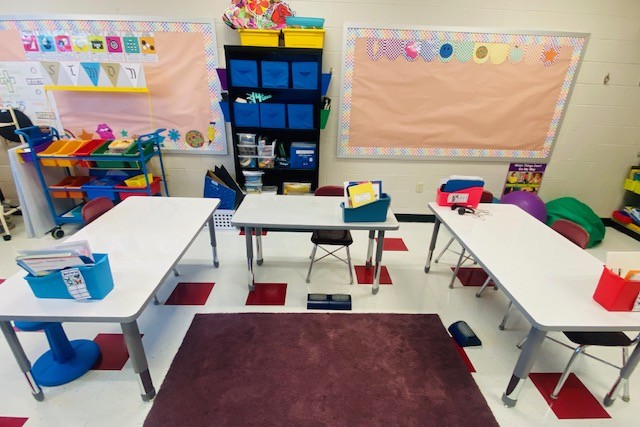
Instead of regular student desks, I use tables in my room. I like the flexibility of letting students choose their seat. Plus, my tables have dry erase tops! Students can write, draw, or solve math problems on their tables. And, I can jot quick notes for them as needed.
In addition to the tables, I also have flex seating options in my resource room. Standing desks, floor seats, lap desks, and yoga balls are all options for students. I want to empower them to find the classroom option that lets them learn in the way that works best for them!
Where do students keep their supplies, like books, workbooks, headphones, and pencils? I give each kid a book bin to keep their items in. These are stored on a shelf in the front of the room. When they enter the room each day, students grab their bin and take it to the seat they are choosing for the day. This is a great way to build independence because students must be responsible for their own supplies.
Self-Serve Supplies
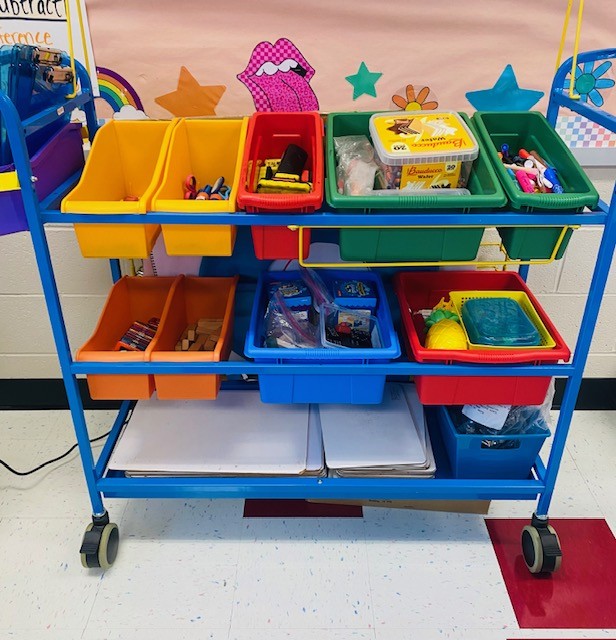
I have a cart set up that contains all of the supplies that may be needed. I think of this as a self-serve area. Pencils, erasers, crayons and markers, whiteboards, dry erase markers, glue, and scissors are all materials that we use daily. I want students to be able to get the materials they need without having to ask me for things. And, I want them to be able to keep materials clean and organized. Letting these supplies be self-serve lets kids take responsibility for themselves!
In addition to supplies, this cart also has some puzzles, blocks, and other open-ended activities. When students have a break or finish their work early, they are able to engage in some cooperative play with these materials.
Classroom Library
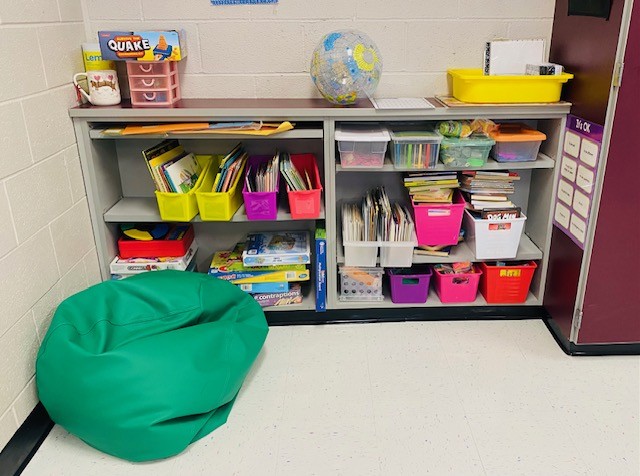
I set this area of my room up with a bean bag and yoga balls to make it a bit cozy. My classroom library has a mix of picture books, easy readers, and chapter books. I want my students to be able to choose books that interest them so that they will be motivated to read! They are also able to borrow books from their homeroom and the school library.
I also have some board games in this area. On Fridays, I love to have the students play a game together. Sometimes we play Uno as a class, or smaller groups of students play a board game. This is a fun way to build classroom community! Games help students practice turn-taking, patience, and other social skills.
Visual Schedule
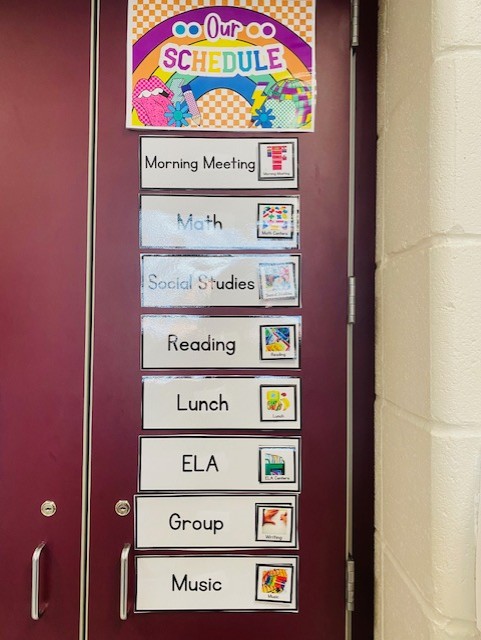
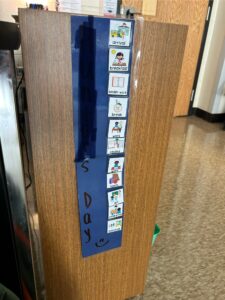
One of the most important areas in the room is the schedule. A visual schedule with real pictures helps students understand how the day will go. Creating predictability with a standard schedule helps reduce student anxiety. I keep my schedule posted in an area of the classroom that is easy to see throughout the day. The real pictures help reinforce This is especially helpful for my students who are English Language Learners!
And that is my resource room! I am so happy with the way the set up turned out. The different classroom areas are functional and help me promote independence for my students.
Have any questions about classroom set up? Ask them below!


Leave a Reply