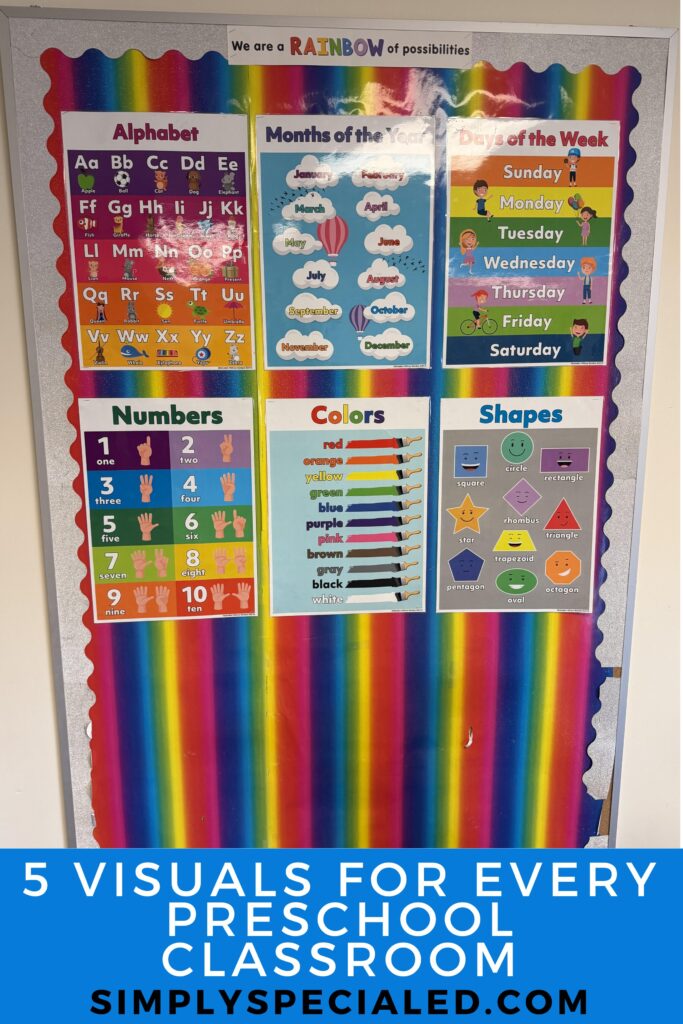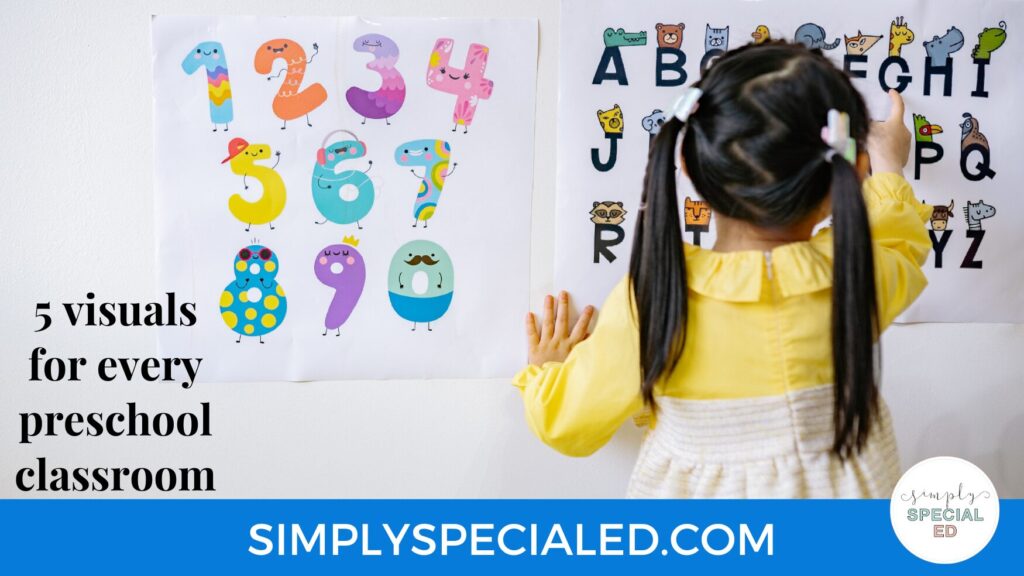
Visuals are helpful for all young students, whether they are in a general education or special education class. Since students most likely cannot read at this age and are still working on pre-academic skills such as identifying letters, visuals are an easy way for them to understand things that are going on in the classroom. Day one of school is the best time to start utilizing visuals! Ideally, some visuals will be already set up before students arrive for the year, and others will be added as the class learns things together.
Read on to see examples of different visuals you can use in your preschool classroom!
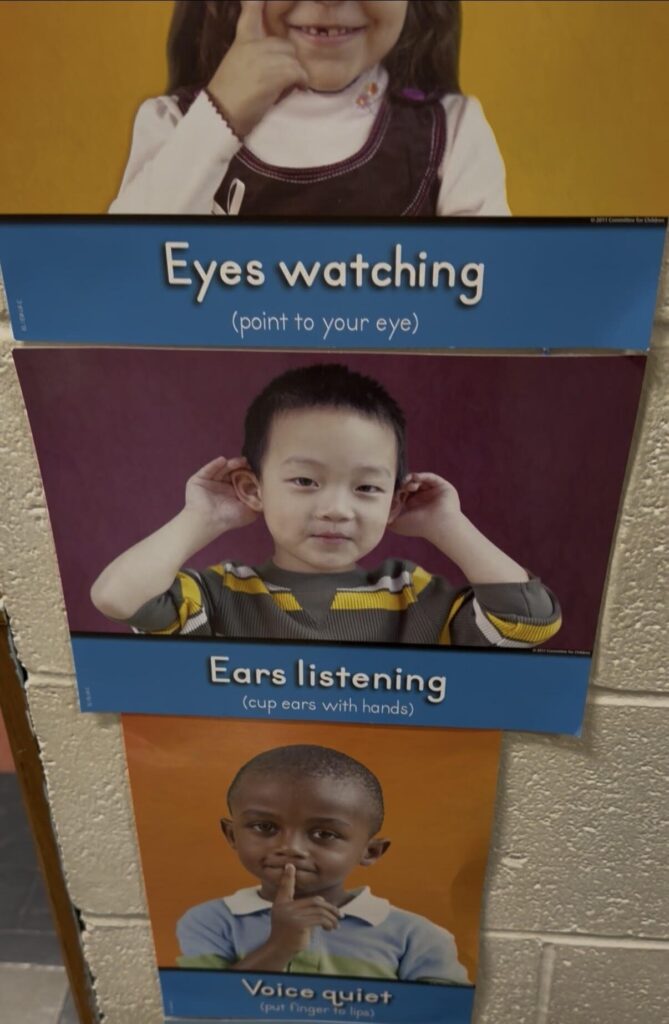
Posters showing visuals of what students’ bodies should look like in the classroom can help support positive behavior. They can be made into a song with movement, such as in the image below.
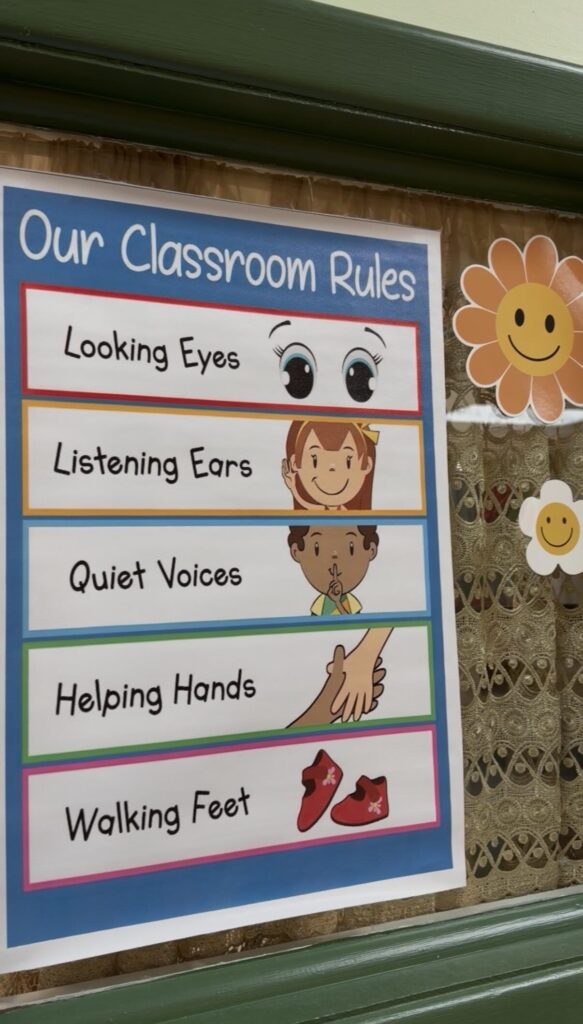
1. Classroom rules and expectations
Students should not have to guess or be expected to remember what your classroom rules and expectations are. This does not just go for preschool students, but all young children. There should be visuals posted all around the room reminding students of these rules.
This way, they can easily reference them when needed. Rules and expectations visuals are especially helpful in the beginning of the year, after a break, when you get a new student, etc. If a student is displaying a negative behavior that goes against the class rules and expectations, it is easy to point to the picture and remind them of the expectation.
Reference these images to remind students of the expectations throughout the day. Activities like circle time or morning meeting can be a great time to do this to start off the day on the right foot. You can have students point to their eyes to practice “eyes watching”, point to their ears to show “ears listening”, etc. You can even choose a student to be a circle time/morning meeting helper that helps lead the class in referencing the visuals to review rules and expectations.
These visuals can be used to support the class as a whole, as well as individual students. It is also helpful to attach smaller visuals to individual students’ desks/workspaces, so they have close visuals to look at throughout the day.
Centers/play areas are also a great place to put up visuals of the expectation at that specific center. For example, at the sensory table area, you can have a poster showing the expectations there with visuals. Before students begin playing, you can review the rules with them to make sure they understand.
Read this SSE blog to see more examples of preschool visuals, including those showing rules and expectations.
2. Academic supports
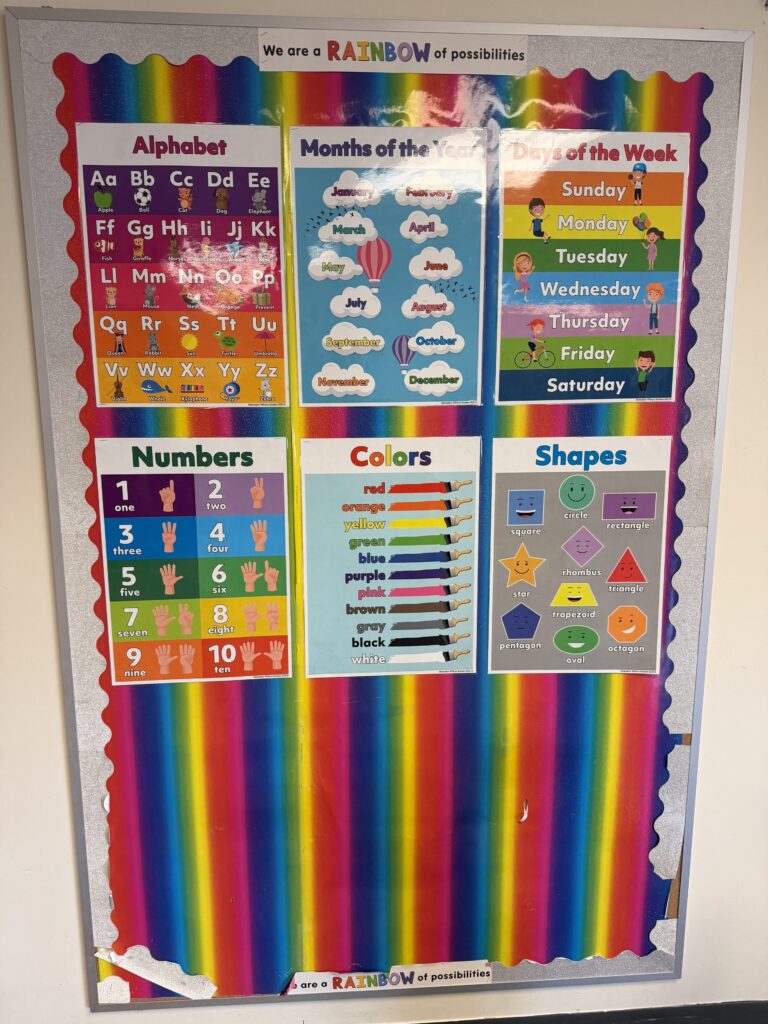
Preschool students should be able to look around the room and know what they are learning about. Common academic concepts such as letters, numbers, shapes, colors, and more should be displayed with different visuals in the classroom.
These visuals can easily be referenced during times such as circle time. Some ideas to incorporate these visuals include having individual students come up and use a pointer to point to different letters, numbers, etc. as the class reviews them. Also, singing songs to learn about these concepts while pointing to them can help students learn the concepts easier.
You can even incorporate sign language visuals for academic concepts in your classroom for students who are nonverbal, or just because learning sign language is a great skill! This bundle from SSE shows all the letters with the corresponding sign.
3. Individual schedules
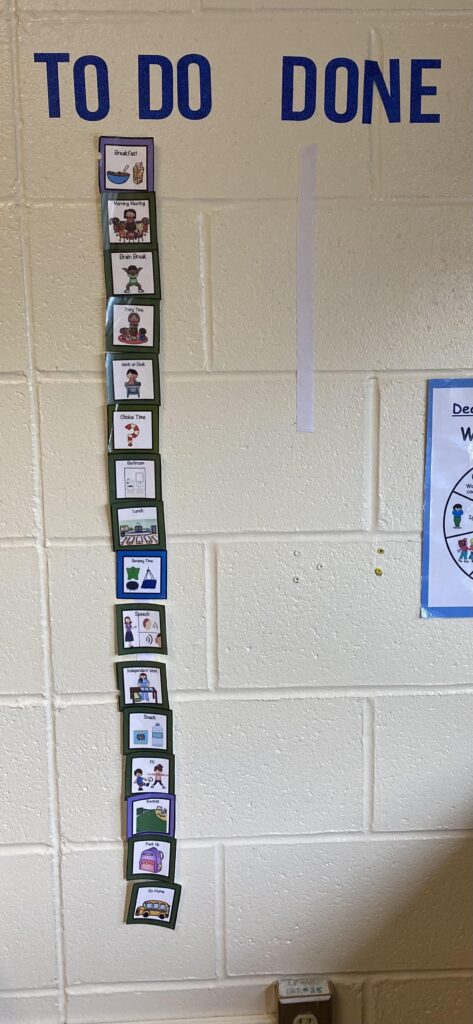
Chances are your students most likely will have slightly differing schedules throughout the day, especially if they receive any related services such as speech, OT, PT, etc. It can be helpful for each student to have an individual schedule with visuals that they can manipulate and move throughout the day to help them understand the flow of the day and decrease anxiety/uncertainty.
This also helps promote independence, and your students’ future teachers will thank you for starting this early!
Each portion of their day should be accompanied by a visual of what that activity is. You can use images you find online or even take pictures of the child doing that activity so they can see themselves and understand what will be happening at that time.
I have found it helpful to have students have their own space where they can have their schedule posted with a “to do” and “done” side (shown in image above). That way, the tasks they still have to complete are there for them to see, and as they complete the tasks, they can move them to the “done” side.
You can also have individual schedules posted on a clipboard for students to carry with them, on a binder ring, etc. These are especially helpful to students with autism, ADHD, anxiety, or any child that struggles with behavior.
4. Whole class schedules
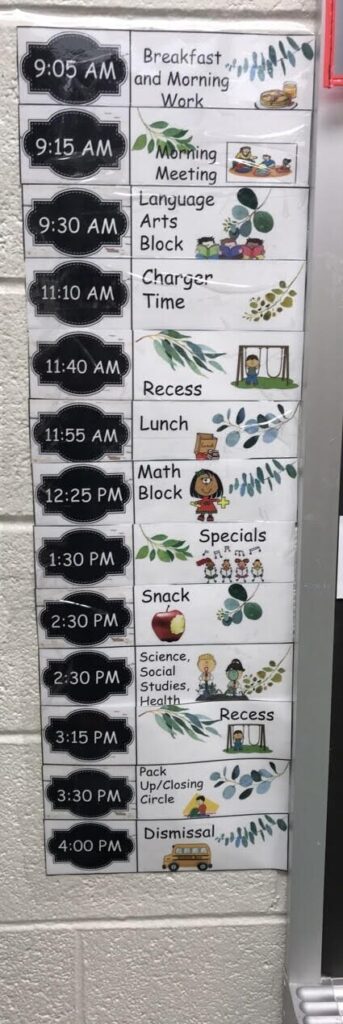
It also is important to have a whole class schedule posted somewhere in your preschool classroom. This should show the overall layout of the day, such as when centers occur, snack, lunch, nap, playground time, etc.
This should be posted somewhere students can easily reference it, with the goal being to reduce the number of times students are asking, “what are we doing now?” or “what comes next?” Referring to the overall daily schedule can save you from explaining it all day and save students from being anxious about what comes next. This is also helpful for when administration comes in the room and wants to know what you are doing, when parents come in, substitutes, etc.
It can also be helpful to use real life pictures in the schedule, such as this one from SSE.
5. Behavior Supports
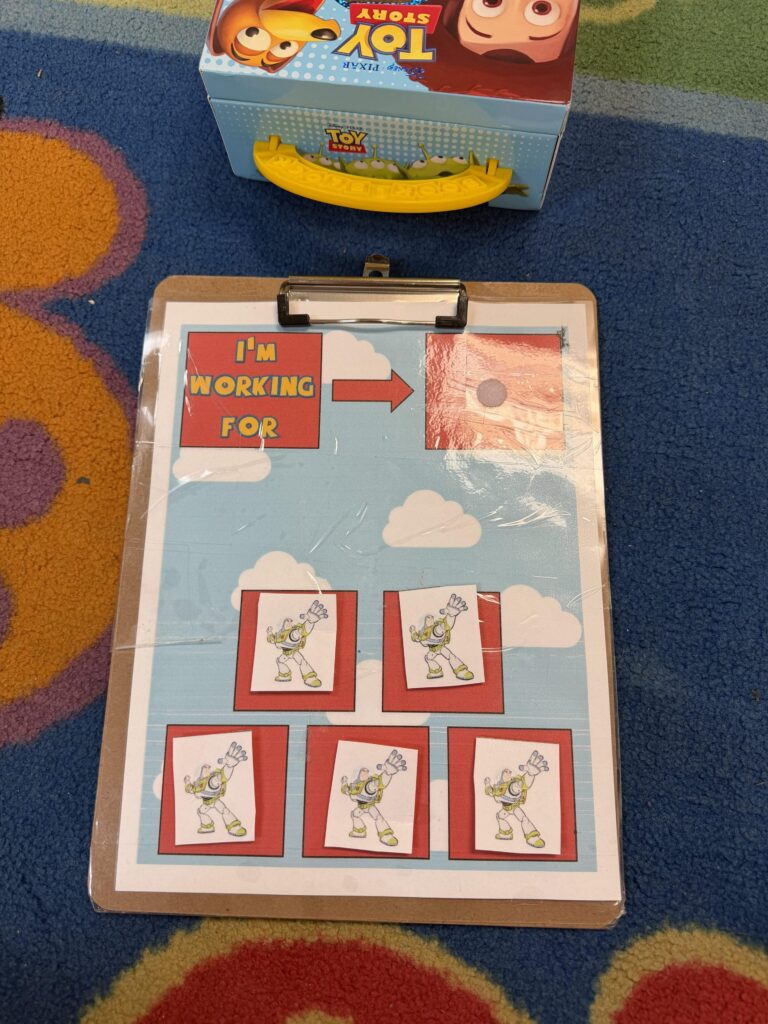
Some students may need individual behavior supports, such as a first/then board, a token board, social story, etc. For example, the image above shows a token board that I use with one of my preschool students. He loves Buzz Lightyear, so he uses the board to encourage him to be safe and follow directions. When he displays those positive behaviors, he earns a token. He can work for different things, such as a special toy, video, etc.
Students, especially preschool students, love when you use their interests in individualized visuals. It can help motivate them to earn tokens, stickers, etc.
You can find more token boards from SSE here.
Visuals not only help support behavior and academic concepts, but they can also make your classroom more colorful and inviting! It is always fun to find visuals to go along with your classroom theme, whether that be rainbow, under the sea, or just homey feeling.
Feel free to also ask your students what kinds of visuals they enjoy or want to see in your classroom. Students love having input and a say! Visuals help the day run smoother. You do not need to have a student with an IEP to start using visuals.
You can start off small with the number of visuals you use at the beginning of the year. As the school year goes on, you can add more when students learn certain academic concepts, get introduced to new behavior plans, etc.
Have a great year with your students!