You may already be back at school, or you may be starting to think about setting up your classroom for the upcoming school year. Either way, August is a great time to freshen up your learning space and try new things.
A visual schedule is a great tool for Special Education students, as well as all young children who are nonreaders. Sometimes, schedules can be put up and then just sit there all year. Here are some ideas to build a visual schedule that actually works for your students to build independence and routines! Hopefully you can take some of these ideas into your classroom for this school year.
Use engaging images
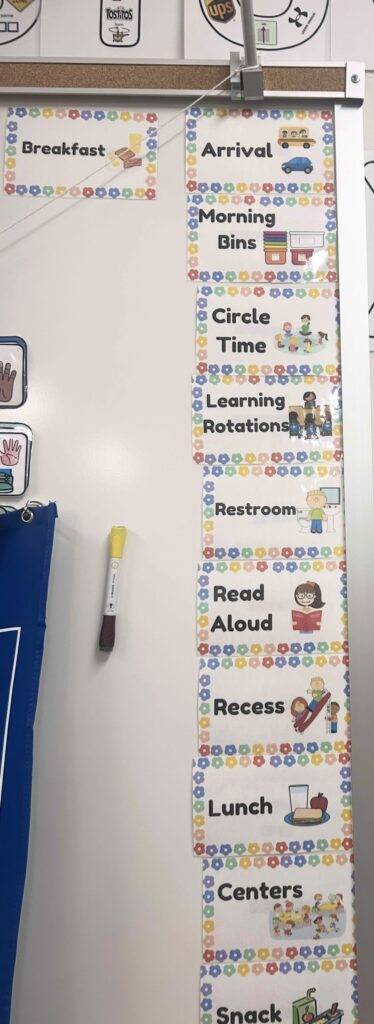
It may sound obvious, but students are more likely to want to look at the visual schedule if the images are fun and colorful. You can match them along with your classroom theme. For example, if you have an under the sea classroom theme, you may want to find fun cartoon visuals of different sea animals doing the activities (a starfish reading, a seahorse eating lunch, etc.). Even if you have just a color scheme in your classroom, it can be helpful to match the visuals with the color scheme.
You may also want to use student’s interests, especially if it an individual schedule for a student. The student may really enjoy Spiderman, so finding Spiderman visuals will motivate the child to use the schedule. The more “buy in” the student has, the more they will want to use it.
Simply Special Ed has a simple visual schedule bundle that includes many different options.
Use real images
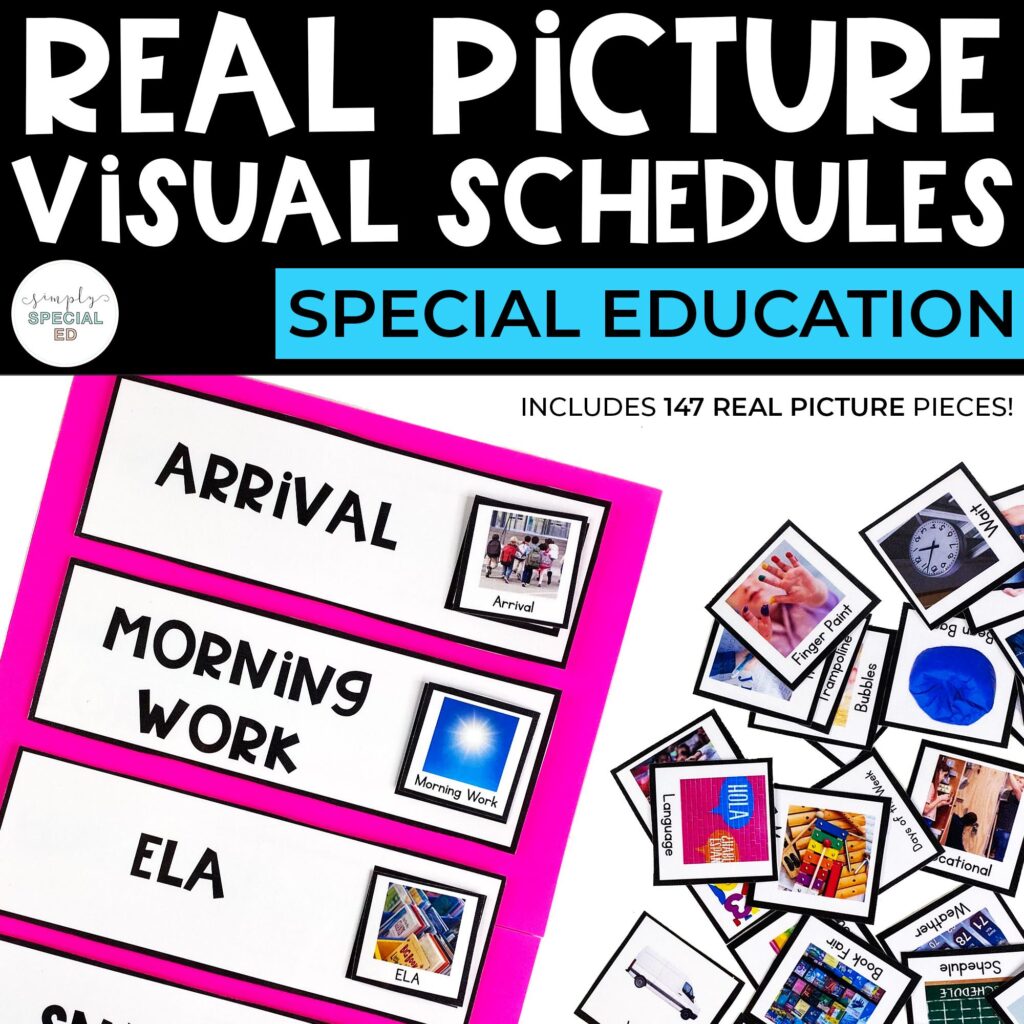
Another way to make your visual schedule more engaging is by using real life images. Instead of a cartoon image of someone eating lunch, having a real person in the visual can be helpful. This can help students make the connection between the picture and real life. Bonus points if you take pictures of your actual students and/or things around the classroom to include! Students love seeing pictures of themselves up on display.
For example, you can take pictures of your students doing morning work, playing on the playground, whatever you will be including in the schedule. For individual student schedules, you can take pictures of that particular student during each part of your schedule. If they receive any related services, you can include a picture of them in those services as well.
Many students also love when you include pictures of you and any other teachers/paras/staff they work with throughout the day. When it is time for speech, it can be helpful to show that student a visual of his/her speech teacher. You can show the picture and say “it’s time to go see (teacher name)!” As the student builds their comfort level and independence, you can have him/her find the picture to match with the person they are working with.
Simply Special Ed has a schedule bundle with real life images that you can use with your students.
Make it interactive
Visual schedules that are interactive can motivate students to want to use them. There are so many ways you can make them interactive.
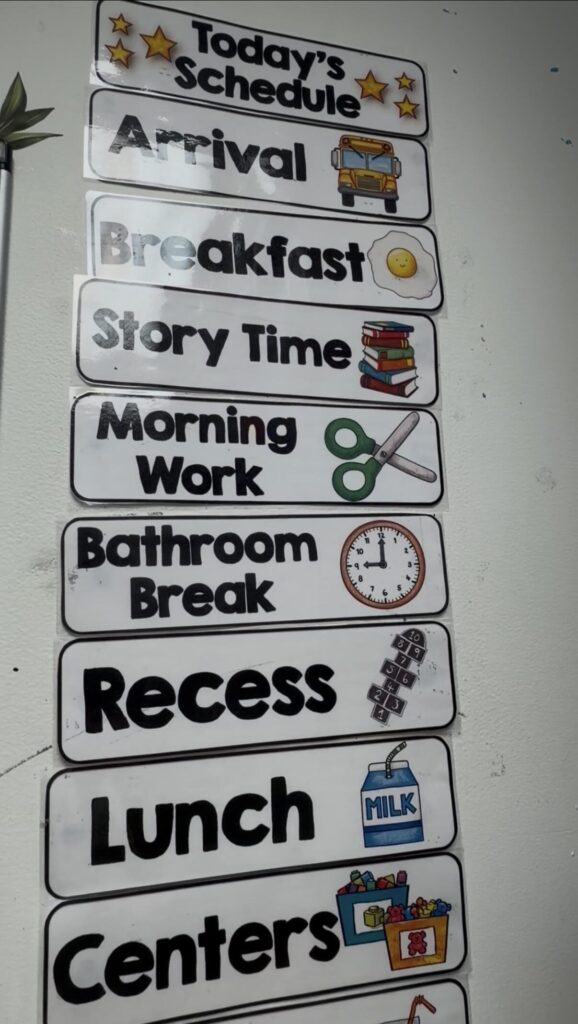
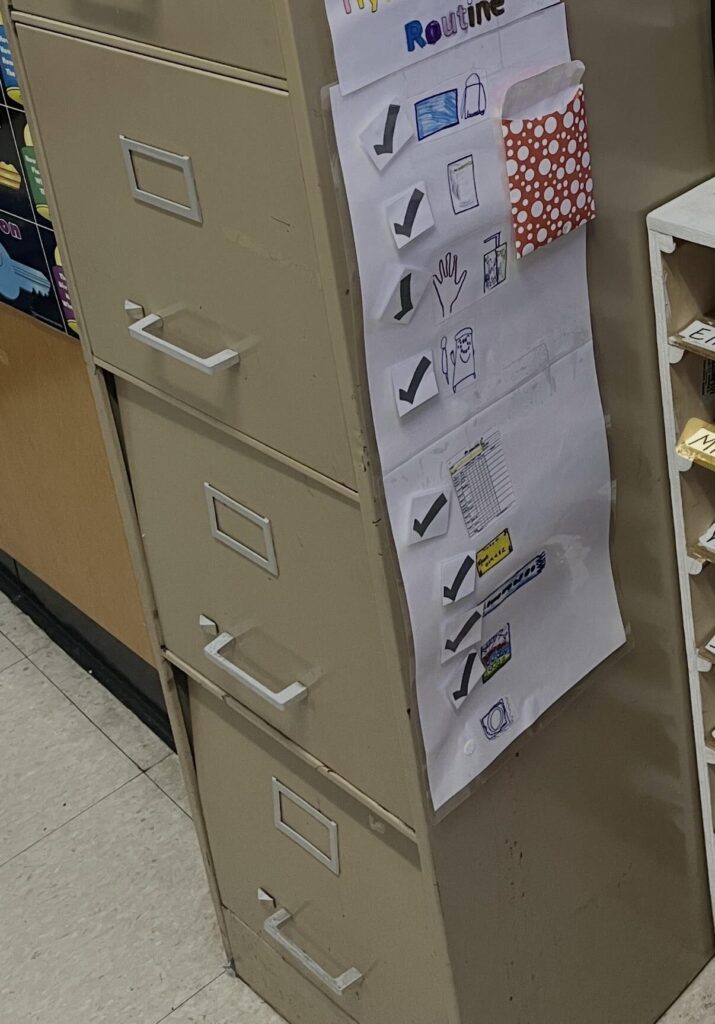
The image above shows a morning visual schedule for a past student of mine. Every morning, he would look at his schedule and as he completed the tasks, he would grab a checkmark from the attached envelope and put it next to the task (Velcro will be your best friend when it comes to schedules!)
You can also have students manipulate the pieces of their schedule. I had another student who would move the visual card from the “to do” side to the “done” side on the wall after the task was complete (pictured below). This is a great way for students to keep track of their day. They know what is coming next, how many more tasks until their favorite activity, etc.
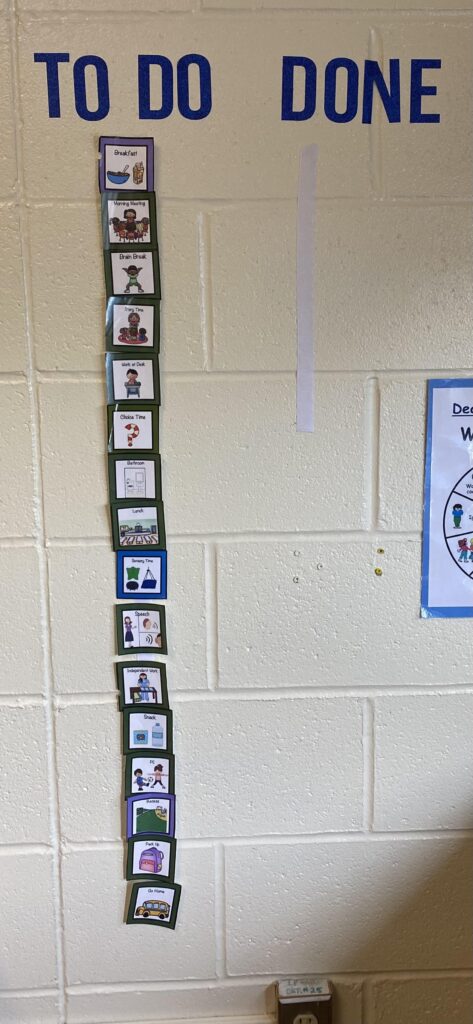
Students can keep their visual schedules on a binder or clipboard and move the pieces throughout the day. For a whole class schedule, you can choose a student to come up and move the piece to the “done” side, place a checkmark next to it, point to the next part of the schedule, etc. You can also make this a class job! Students love when they are actively involved.
There are so many ways to make a visual schedule interactive and engaging for students.
Include a clock visual if appropriate
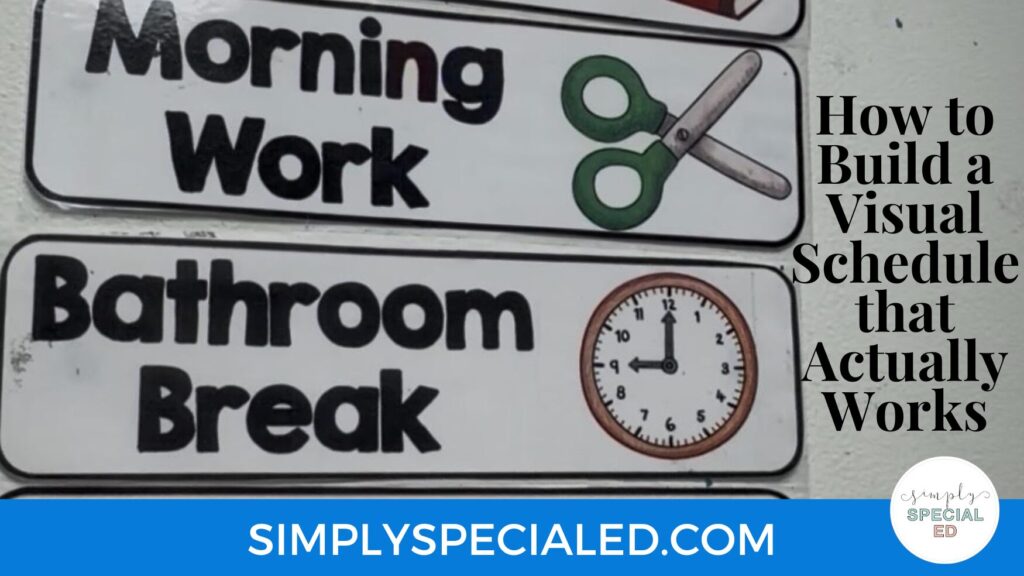
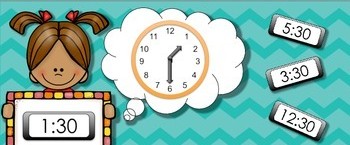
If students are working on telling time on an analog clock, it is a great idea to include an image of what the clock will look like at that particular time of day. Let’s say lunch is at 11:30. A picture of a clock with the hour hand on the 11 and the minute hand on the 6 is a great way for students to match the picture to your actual classroom clock.
When students ask, “what time is lunch?” over and over, instead of just telling them it is at 11:30, you can have them look at the schedule. You can say “does our clock look like the one in the picture?” Eventually, they will get the hang of it. This will help them build math skills and independence skills at the same time.
This is most likely beneficial for students around the ages of 1st-5th grade, but you know your students the best!
Simply Special Ed also has a great file folder game to help students practice telling time.

Implement the schedules from day one and stay consistent
The more practice students have with utilizing the visual schedules, the better. Start using the visual schedules from the first day of school. The schedule can be part of your daily routine. During morning meeting/circle time, you can go through the schedule for the day. This is also a great time to tell the students about any changes to the schedule, such as assemblies, early dismissals, etc.
You may also want to have your students build the schedule each day. For example, you may ask them to find the picture for “morning meeting” while you are doing morning meeting.
However you choose to implement the visual schedule, make sure you stay consistent with it. A whole class schedule should remain in the same place in the classroom where students can easily access it. It should also be easy for students to visibly see the schedule. If it is too high up and out of eye level, it makes it much more difficult.
Individual visual student schedules should be utilized the same way. Implement them from day one, or whenever you first start working with the student. Make sure they know where it is located. Even if it on a clipboard where they can physically move it from one area to another, they should know where it is located.
Visual schedules are a useful tool to help children, especially those with special needs, to build independence in school. They can take away a lot of anxiety about what is coming next, what part of the day they are on, etc. It can be fun to set them up and watch how your students benefit from them. Hopefully these tips can help you find success with building a visual schedule that actually works!