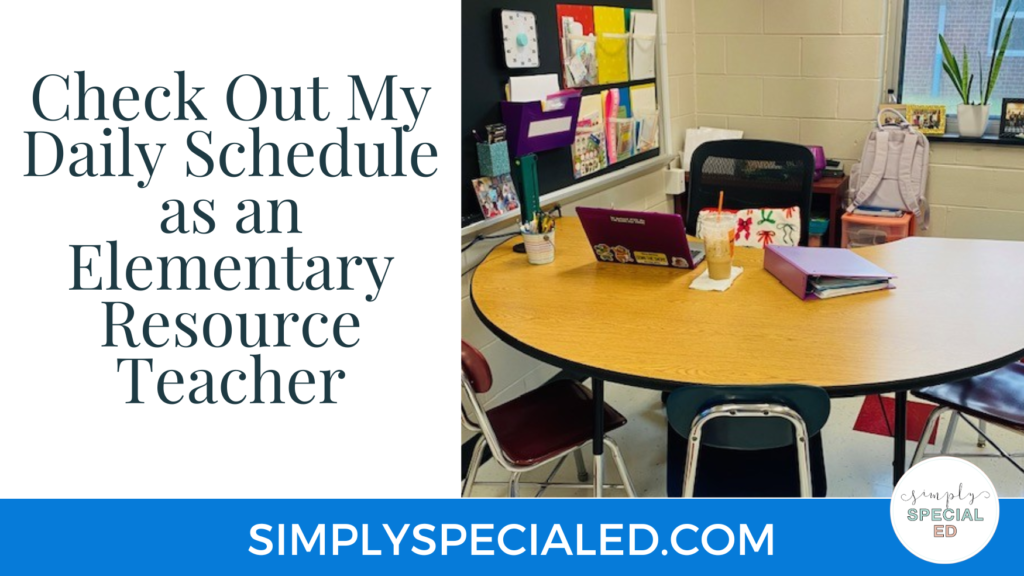
I am moving to a resource teaching setting after many years in a self-contained classroom. Change can definitely be intimidating, but I am excited about my new teaching schedule! Come take a look at a day in my life in the resource room!
What Does a Resource Teacher Do?
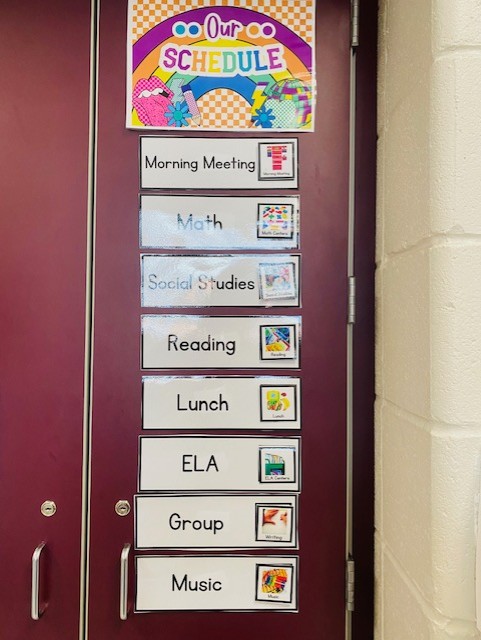
My official title in my district is POR teacher – meaning pull-out replacement. That means I am replacing the general education curriculum with adapted material to meet my students’ learning needs. I also support my students during in-class times of day.
The structure of resource rooms settings can be different from district to district. In some schools, resource rooms may be comprised of students from many different classes. Teachers may work with multiple grade levels. And in some schools, resource rooms are departmentalized. That means one teacher may cover math instruction while another does ELA.
My school’s POR model is a bit unique compared to those of other resource teachers I have met. In my school, I am part of one grade-level homeroom. (This year that happens to be fourth grade.) I pull a small group of students from that homeroom to work on reading, writing, word study, and math in the resource room. For the rest of the day, we are all in the homeroom for morning meeting, science/social studies, and a whole-group reading lesson, and other activities. I really like this model of co-teaching! I love being part of a homeroom and forming relationships with lots of different students. Plus, this hybrid setting allows me to form a strong bond with my co-teacher. We are able to plan together and share some of our teaching duties.
Morning Routine
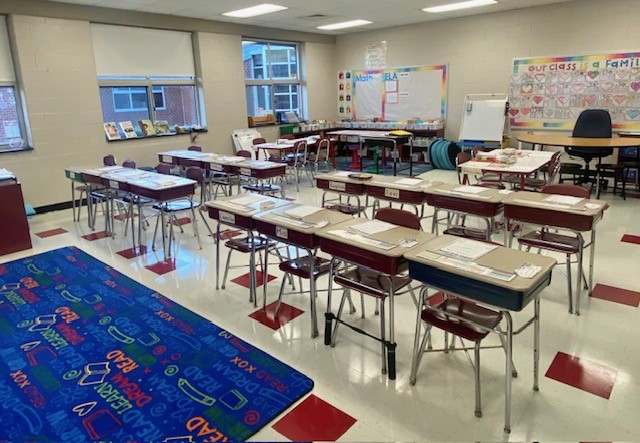
Good morning! Bom dia! Gunaydin! It’s time to start the day! My school has a very diverse population so it is common to hear greetings in English, Portuguese, and Turkish throughout the halls. As students start to make their way in, my co-teacher and I greet them at the door. We like to do a “soft start” in the mornings. After students unpack, they choose from a few different easy, relaxing activities to help them ease into the day. Some soft start activities our class likes include building with Legos/blocks, using play dough, coloring, reading, and puzzles. Soft start has been beneficial for our class because it helps students to become more independent and develops a sense of classroom community.
Once everyone has arrived, students clean up and go to the carpet for morning meeting. One student takes attendance, and we share any important information or schedule changes for the day. Then, we do an activity according to the day of the week. For example, on Mondays students share about their weekend. We also do Trivia Tuesday, Work Out Wednesday, Thoughtful Thursday (students answer a question prompt) and Fun Friday (with a whole-group game, like Four Corners).
After morning meeting, my students gather their belongings and we head to our resource room. Luckily, it is a short walk – it is right next door to our homeroom!
Math
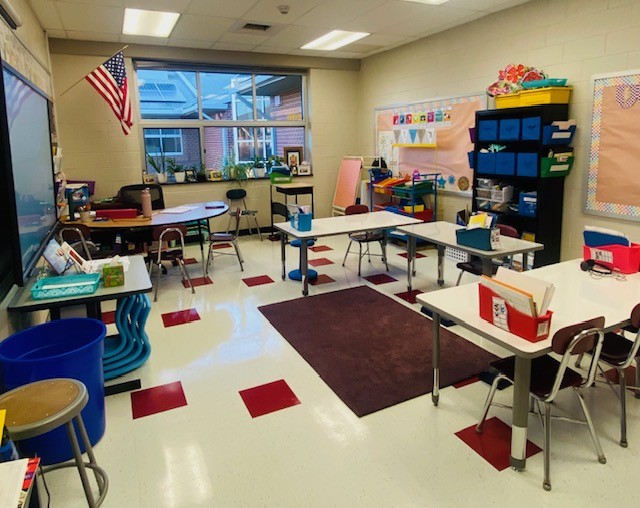
Math is our first subject of the day. After a whole-group lesson to introduce the day’s topic, we do math center rotations. The centers are to work with me at my table, complete problems independently, and to do math fact practice. I want my students to master their multiplication facts by the end of the year, and daily practice really helps! At my table, I work with one or two students at a time. We might practice some problems from the day’s lesson or remediate a previously learned skill.
Science/Social Studies
After math, we return to our homeroom for Science or Social Studies. We teach these subjects on a rotating basis. My co-teacher and I share the responsibility of these subjects. She leads Social Studies lessons and I lead Science. While one is teaching, the other supports the students.
WIN Time
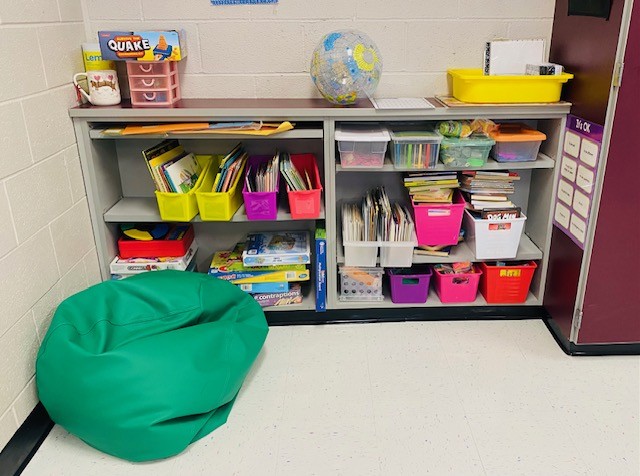
In my school, WIN stands for “What I Need.” This thirty-minute block of time is set aside for students to receive individualized instruction or supplemental services. Some of my students have ESL class during this time. Speech, OT, and PT are also scheduled during this block. With the students who remain with me, I usually use this time to work on progress monitoring one-on-one with students. The students who are not at my table might read or work on computer programs such as ST Math or iReady.
Lunch and Recess
I drop my students off in the lunch room and enjoy my midday break! I try very hard not to work through my lunch, and instead take the opportunity to relax and connect with my coworkers. Over the years, I have truly come to realize how important it is to have that time to recharge during the day. Our students get dropped off at the classroom by a recess aide when the period is over.
In-Class Support
After lunch, we take time to reset by doing a whole-class read aloud. My co-teacher and I take turns reading novels to the class. These books are not part of the curriculum—it is just reading to kids for fun! One of my favorite read aloud books each year is “The Wild Robot.”
Next, we have a whole-group reading lesson. My co-teacher usually leads this while I support the classified students. One way I do this is by prereading texts with my students before they are introduced to the group. I might also support them with annotating texts to help with comprehension. When we are doing written work, I might provide sentence starters and word banks.
Return to the Resource Room
After the reading lesson, we return to the resource room for a few more ELA blocks:
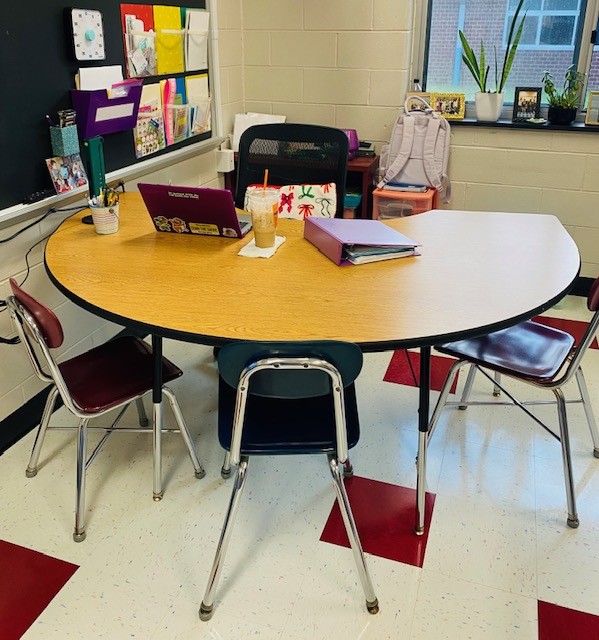
Small Group Instruction
First up, directly after reading, is a dedicated Small Group Instruction period. My students do three ten-minute center rotations during this time. The centers are to work with me at my table; read independently; and complete independent work either (in a workbook or task boxes).
Writing
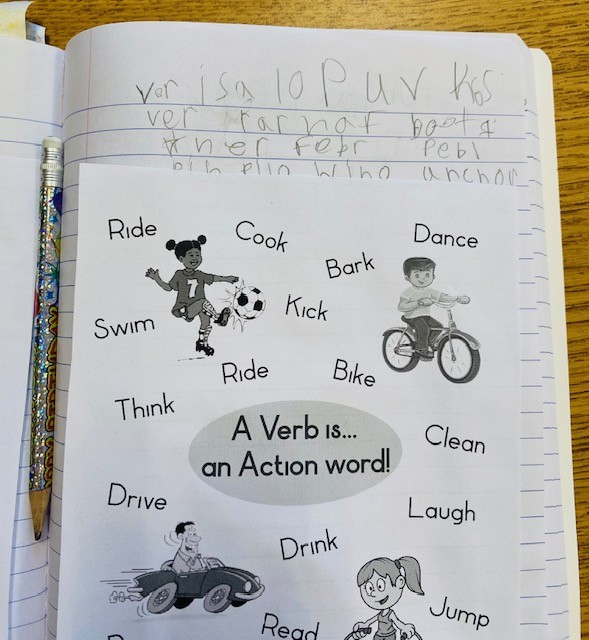
Throughout the school year we will learn about many different types of writing, including fictional narratives, personal essays, informational texts, and opinion pieces. I like to use different picture books as mentor texts to help my students make connections between familiar texts and their own work. I also incorporate grammar into our writing block. We learn about different sentence types, punctuation and capitalization rules, and how to revise and edit our work.
Word Study
My last teaching period of the day is Word Study. I teach students phonics and decoding skills based on their individual levels. I give a diagnostic spelling assessment at the beginning of the year to determine student levels. My fourth graders mostly test at around a second grade level for spelling and decoding abilities, so we focus on skills from that grade. Our Word Study period includes direct instruction, group practice, and independent practice activities.
End of the Day
After Word Study, we head back to our homeroom to pack up. My students have their special area class at the end of the day. I love having my prep at the end of the day, because it gives me time to organize for tomorrow! After specials, my co-teacher stays in the classroom for dismissal while I have bus duty outside. And that is a day in my life as a special education teacher! Have any questions about co-teaching or running a resource room? Ask them below!



Leave a Reply