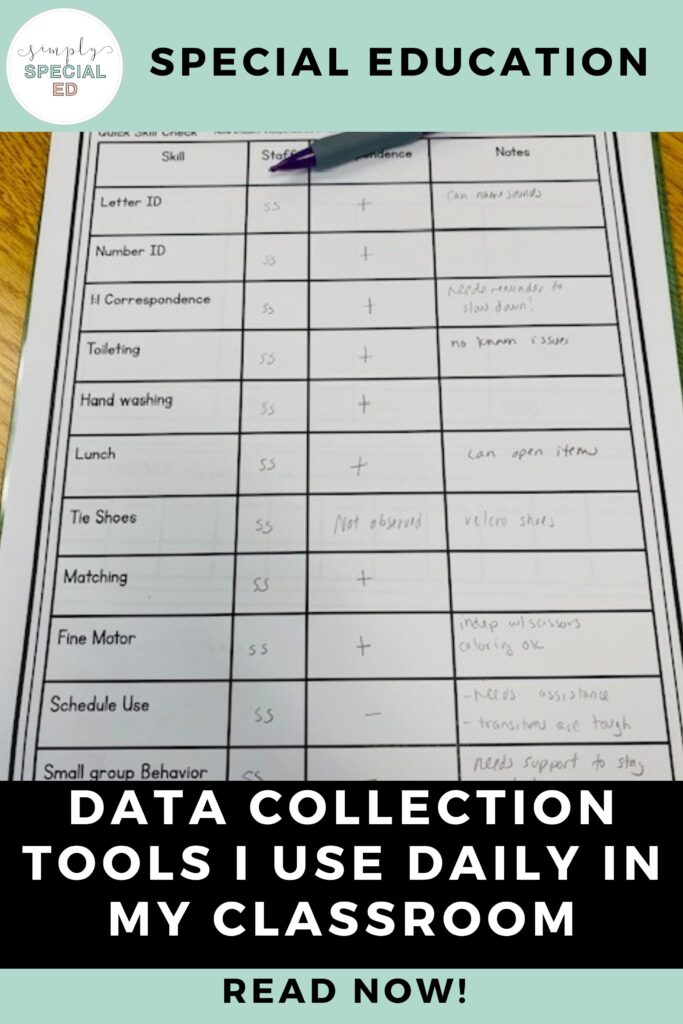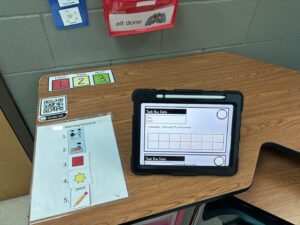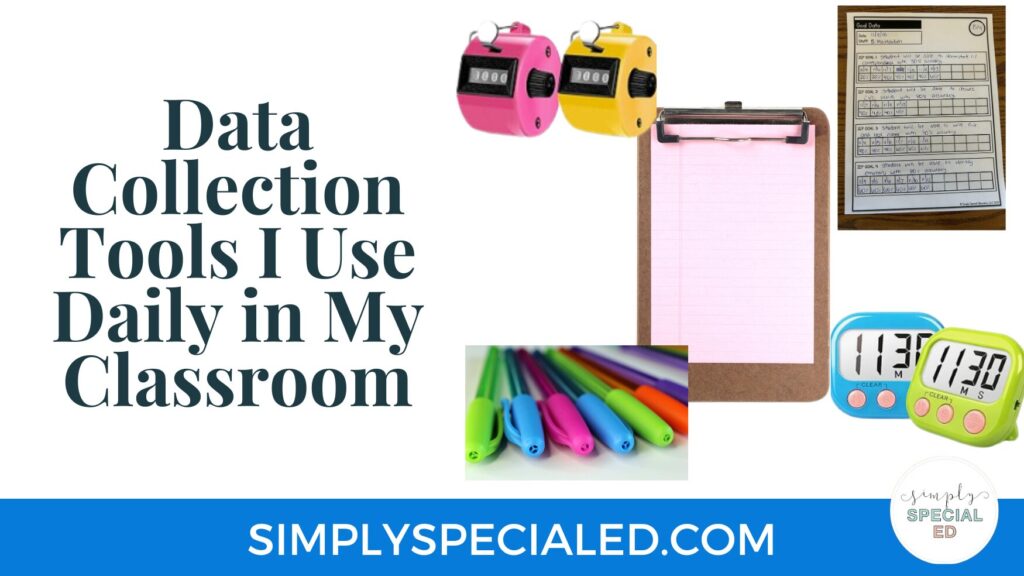
Hi there! Welcome to the world of data collection! What is a special education classroom without lots of data collection occurring? As the saying goes “data or it didn’t happen.” Let me tell you a few of my favorite items for data collection in my self contained special education classroom. I hope this will help you sort out some of your data collection kinks in your classroom!
Data Sheets
I know this may seem obvious, but it can be difficult finding data sheets. In special education we need many different types of data sheets! This blog is mostly about different items needed for data collection. So, hop on over to this other blog to check out everything you need to know about the Simply Special Ed data sheets and using them in the classroom. I will say to make sure that you have data sheets ready. You need them for each IEP goal that needs data collected and an organization system for them.
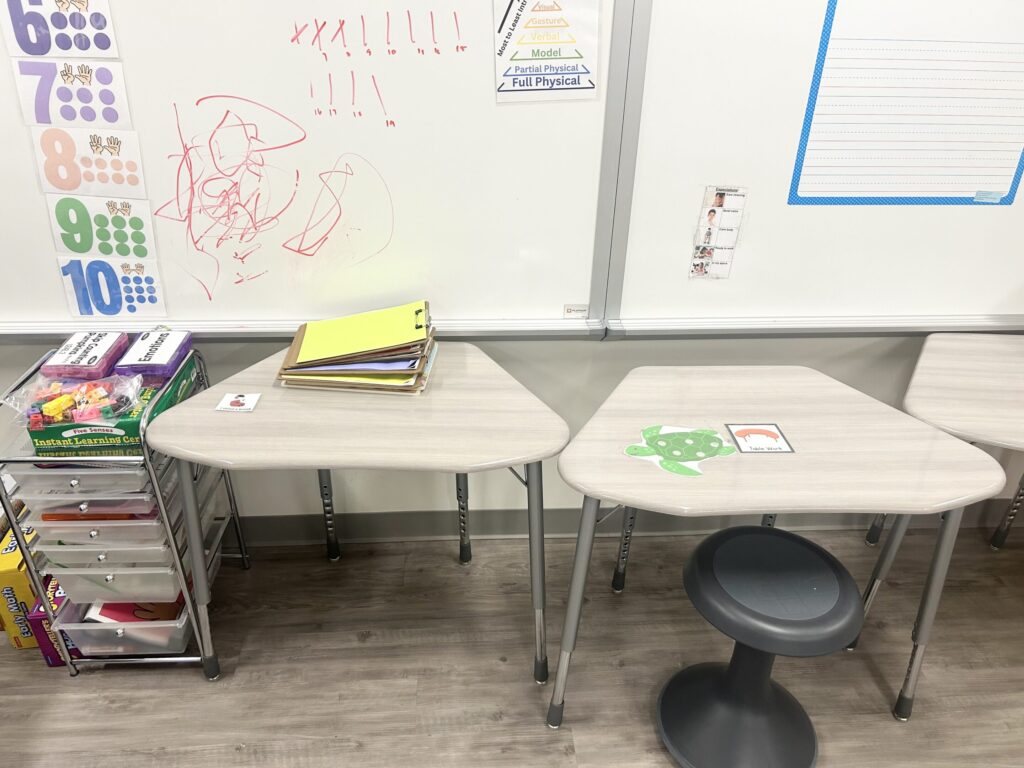
This may seem like a lot of work on the front end. But, it will make things a lot easier when you are running around day to day trying to collect data. Personally, I keep the current data sheets out on clipboards for my paras and I. I then have a binder for each student that houses all the data after the data sheet is filled up. Below you will see my data collection clipboards already set up at my teacher station.
Colors!
This is my favorite tip for any special education teacher, color coding! When you color code your students, it can go a long way when collecting data. For one, it can help you keep track of everything quickly without having to look for names on everything. On the other hand, color coding allows for confidentiality. You do not have to put students’ names everywhere, but you can simply put colored stickers, colored pen marks, or a sheet of colored paper on all of their data collection materials.
For example, I have a sheet of colored paper on top of my academic data sheets, and I have colored folders for each student’s daily behavior data as well. This allows me to quickly lay down a student’s data without having to worry if their private information is out and about for everyone to see. The easiest thing for me is to buy a bulk pack of different colored masking tape and put a small piece on everything for that certain student. So if it is something that can have their name on it, you just write the name on the colored tape! I also input a piece of colored paper in the front of each of their IEP data binders.
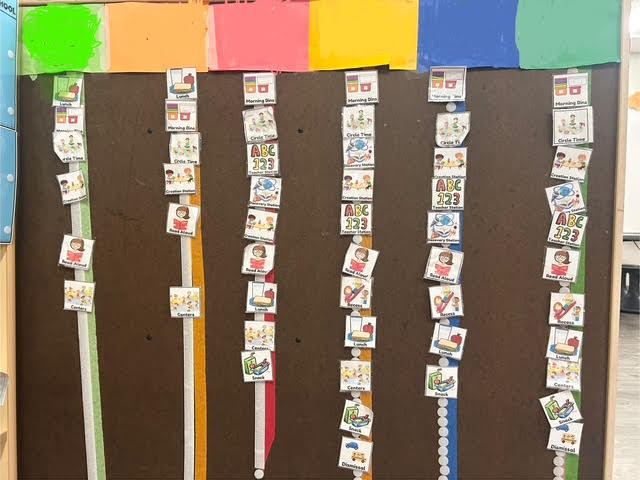
For more on color coding your special education classroom, check out this blog! Below is a snippet of my student’s schedules that are color coded, and these colors follow their data collection as well.
Timer and Stopwatch
Depending on the specific data you are taking will determine whether you need a stopwatch or timer. If you do need one to track a specific IEP goal, I would suggest keeping a small timer and/or stopwatch on you at all times. When taking behavior data, you may need a timer for interval tracking. Interval data is taken when an ongoing behavior does not always have a specific start or stop. It may occur too often to realistically take frequency data. With the timer, you would set a certain amount of time, such as 20 minutes. When that 20 minutes ends, you would only look at if that behavior did or did not occur during that set time. You would repeat this process for the entirety of your data collection period (whole day, specific class, etc.).
A stopwatch is always important for certain data collection procedures. This works really well for taking duration data on a behavior, such as the length of a tantrum or the length of on task behavior. You would start the stopwatch when the targeted behavior starts and stop it when it ends. Another example of when you might use a stopwatch is for latency data. This one is not seen as much in the classroom (in my experience), but it is always good to know! If a student has a goal about responding to directives or instruction, you could use the stopwatch to measure the time from when the directive was given to when the action was done by the student.
Below is a picture of some small timers that can be kept in a small crossbody or fanny pack when needed in a hurry. I personally like to use a fanny pack.

Behavior Clickers
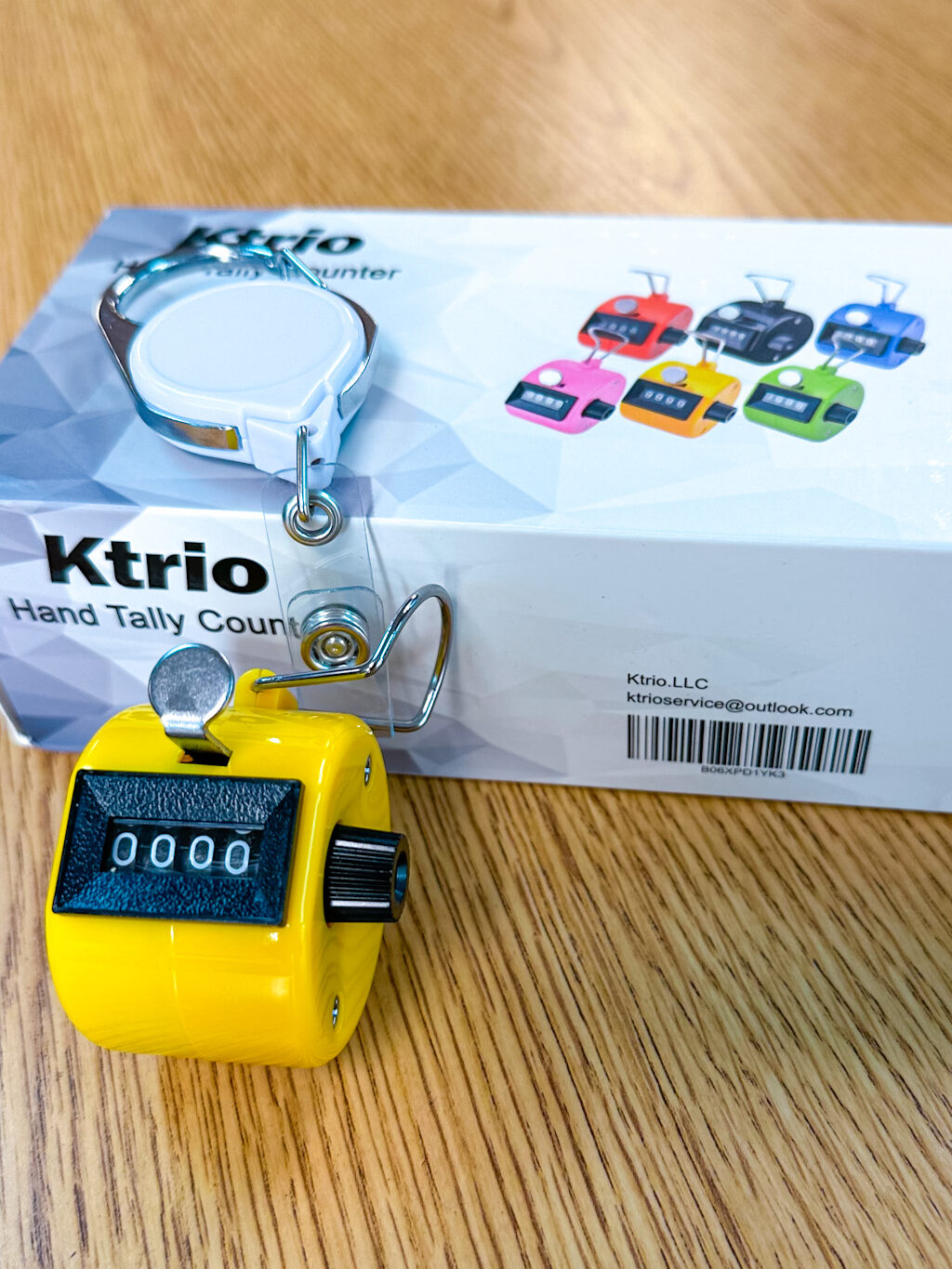
I am not sure of the technical name for these, but I will put a picture below so you know what I am talking about. These work really well for taking data on frequency behaviors. They usually come with a place to hang them as well, so you can put them on your fanny pack or lanyard with easy access. It can be time consuming, and difficult to maintain, putting a tally mark for every behavior occurrence when a behavior is occurring so frequently. These can easily be recorded then later be transferred to a paper or digital data version of that behavior.
You can get these different colors as well, so they can be color coded for each student. If one student has multiple behaviors that require frequency data, I will get a small piece of scotch tape and write the behavior name on it and tape it on the clicker. After a while, you tend to memorize which clicker is for which student and behavior without looking at the name. You can get these clickers on Amazon.
Google Sheets
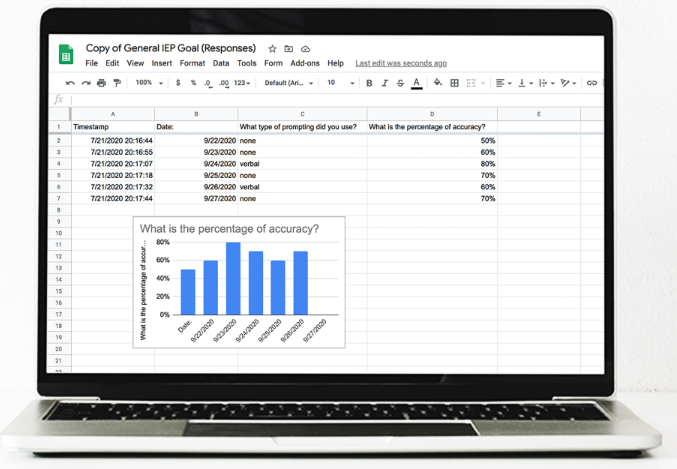
Although not everyone uses Google Sheets, and some use Excel, etc., everyone needs some type of place to create and keep data graphs. Graphs are imperative to recognize patterns in behavior. We can take these patterns to see growth, regression, and to see how we can adjust our behavior and/or academic strategies if progress is not being made. This can be kind of confusing at part, but the Special Education Data Sheets Bundle has a video that can walk you through how to make a graph using Google Sheets.
Conclusion
Collecting data in the special education classroom can feel overwhelming. I hope this blog gave you some insight on ways to make data collection easier, provided some tools, or was a nice data tool refresh. It’s time to refresh your data collection system; good luck!