
If you are a Special Education teacher, organization is an important skill to have. Special Education comes with lots of paperwork, so it can be helpful to have an IEP binder for each student.
Read on to find out how to organize your IEP binder and what to include!
Binder vs. folder
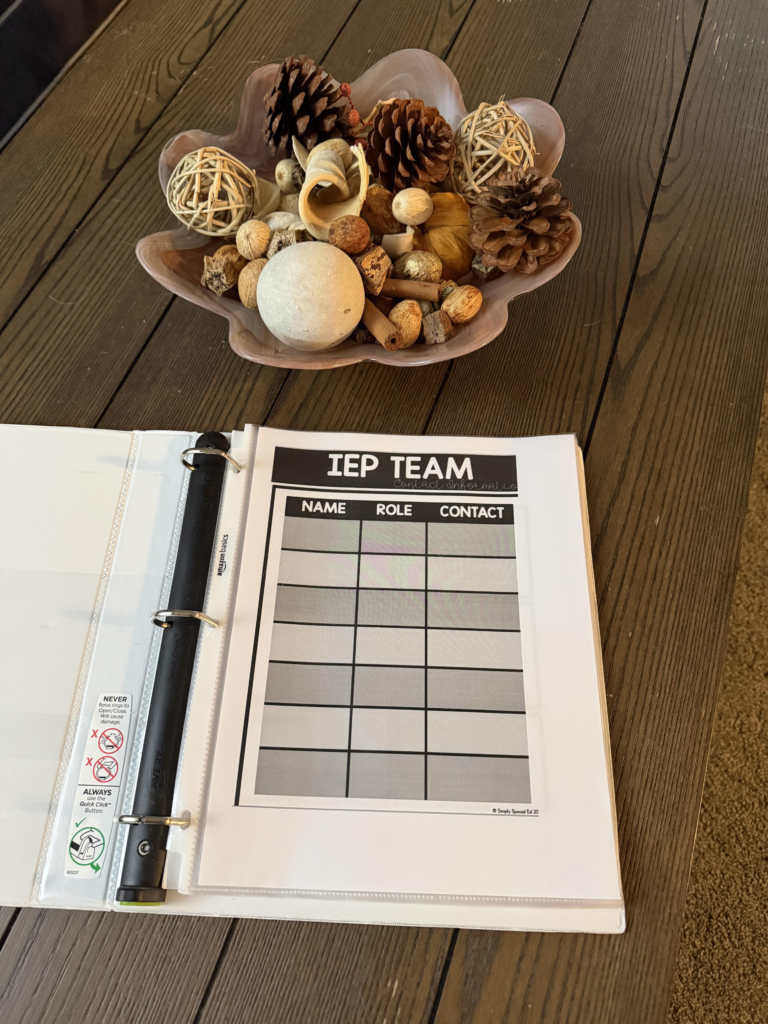
Teachers have different preferences for how to best organize IEPS and other relevant paperwork. Some may prefer a folder for each student, while some prefer a binder. Personally, I prefer a binder, preferably a larger one. At my previous school, this binder was expected to be passed on to the student’s next teacher and kept up with during the year.
Since the binder was meant to be passed on, I liked using a large binder. So much went into it year after year! My classes always had six students, so each of my students had a binder labeled with their name. I stored them in a drawer where I could easily access them throughout the year.
Binder protectors are helpful for storing papers that go into the binder. This helps it to stay organized and prevents papers from getting ripped. You can buy these anywhere, like the Dollar Tree, Amazon, etc.
Check out this IEP binder from Simply Special Ed- it includes everything you will need! It can be printed or use digitally. Personally, I am a fan of digital, but some schools, like my last one, may require physical binders as well.
Having a binder for each student is especially helpful if you have a large caseload. It makes finding information so much easier.
What to include
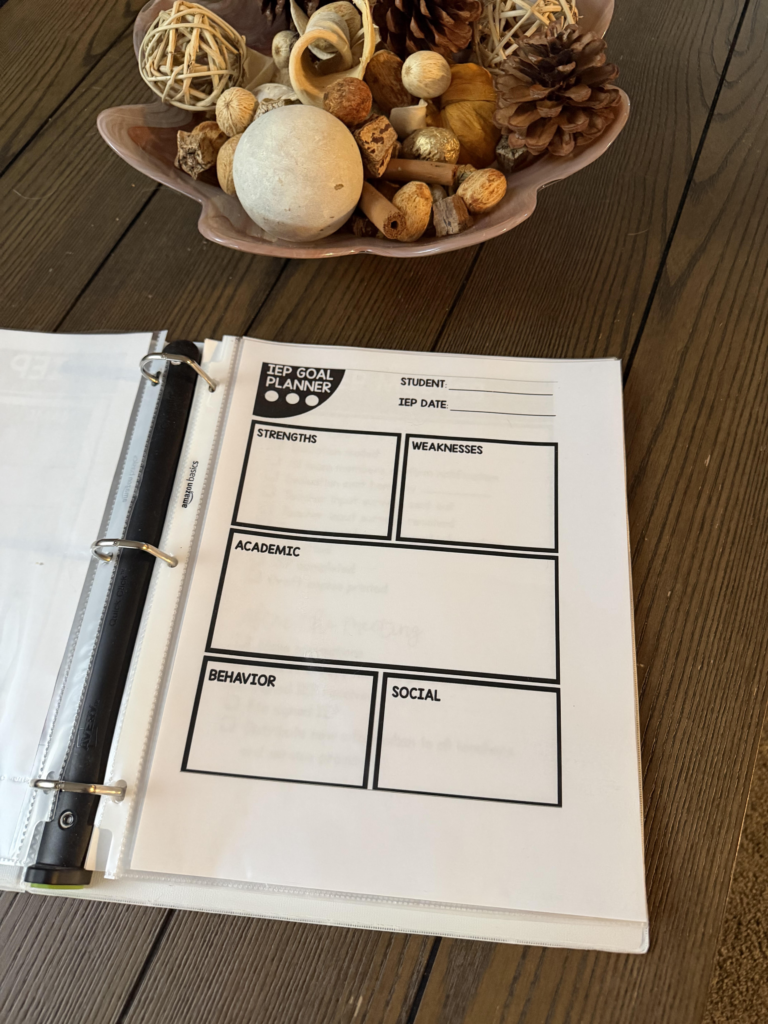
Here are some things that I make sure to include in an IEP binder. Yours may differ based on your students, if your school has certain requirements, etc. Hopefully, this can give you a good idea of where to start.
Student profile
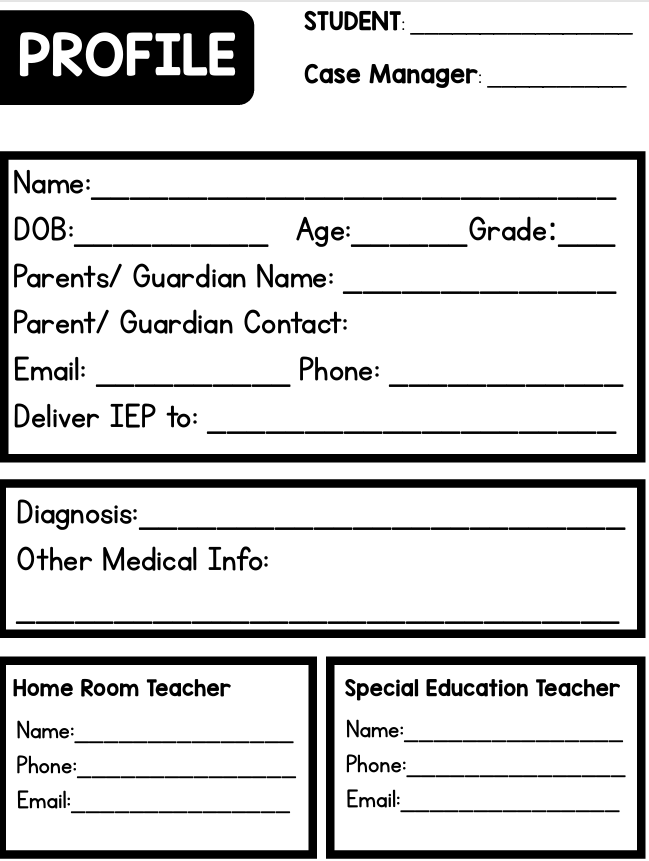
It is a good idea to include a page to quickly show important information about the student. This page should include things like parents’/guardians’ names and contact information. The child’s diagnosis and important medical information should be included as well. For example, maybe the student has an allergy and should always have their EpiPen available. Maybe they have diabetes, seizures, etc. That information is important to know, especially for someone who is working with the child who is not familiar with him/her.
You can also include the names of the child’s homeroom teacher/s, Special Education teacher/s, and how to contact them. Having these types of forms can take a bit of prep in the beginning of the year but save you so much time later on. This also comes in handy when you need to contact a parent quickly and don’t want to waste time logging onto the computer to find this information.
The IEP
It may sound obvious, but you should include the IEP in the IEP binder! The binder should be printed and easily accessible for anyone who needs to access it. Substitute teachers, administrators, paraprofessionals, related service providers, etc. may need to access the binder.
If you are a related service provider, check out this SSE blog about how service providers can organize their IEPS and IEP binders.
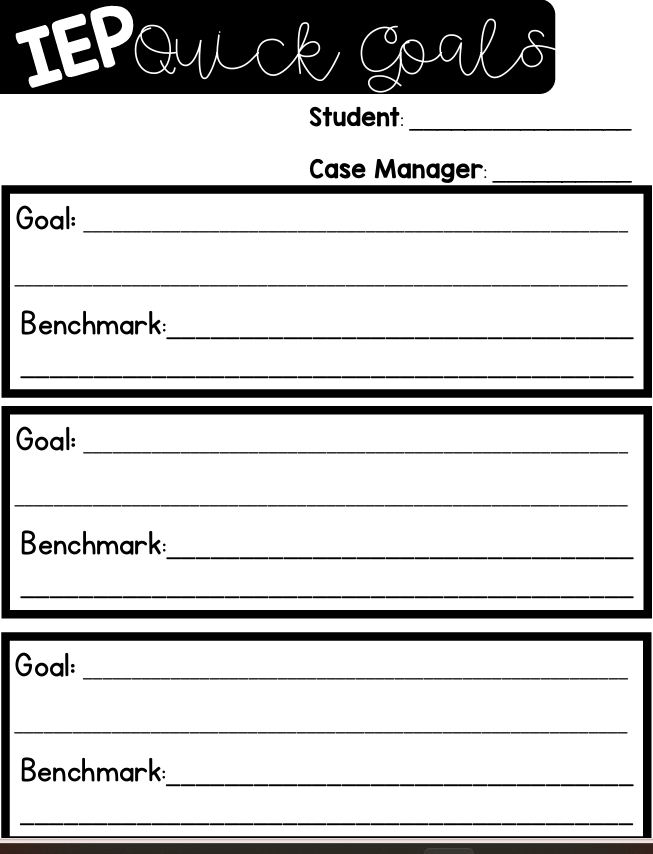
You may also want to include a snapchat of the child’s goals. This is sometimes called an “IEP at a glance”, “IEP quick goals”, etc. It is a one-page document that includes the child’s goals. IEPs at a glance also include any other relevant information to know. This one-page document gives whoever is working with the child a chance to easily see what the goals are. Additionally, it saves them from having to dig through pages of an IEP to find them.
Contact information
In addition to parent contact information on any snapshot sheets, it can also be helpful to include contacts for everyone on the IEP team. People such as Speech Pathologists, Occupational Therapists, Physical Therapists, counselors, behavior specialists, etc. should be included.
The best way to think about the binder is: what should I include so that a substitute or anyone new to the student can easily pick it up and utilize it right away?
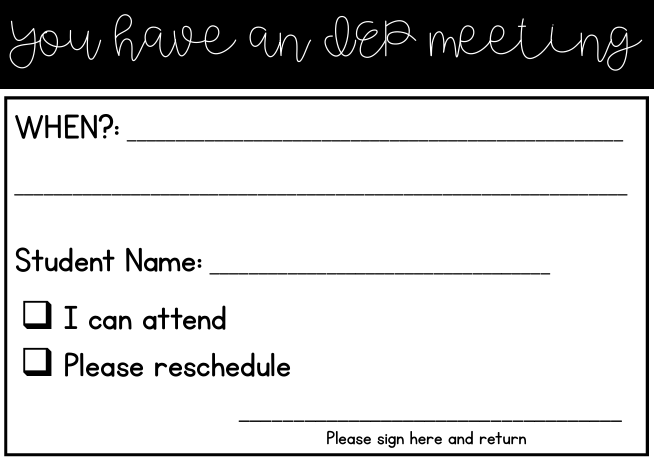
IEP meeting paperwork
An IEP binder really comes in handy when the student has an IEP meeting (amendment meeting, annual review, etc.). It’s helpful to include a blank copy of a reminder notice to send home. You can make a copy for the child’s family and send it home with them to sign and return.
You can also include a sign in sheet for everyone to use at the meeting. A meeting notes sheet is also helpful to use during the meeting. Someone can take notes on the important parts of the meeting and any follow up that needs to be done as well.
A meeting checklist can also be helpful to serve as a reminder for things to do before the meeting, such as sending out the invite, confirming everyone’s availability, completing the draft IEP, etc.
These can all help you so much when you are having “one of those days” where you’re running from meeting to meeting. Having everything prepared in a binder in advance can help you feel so much more prepared!
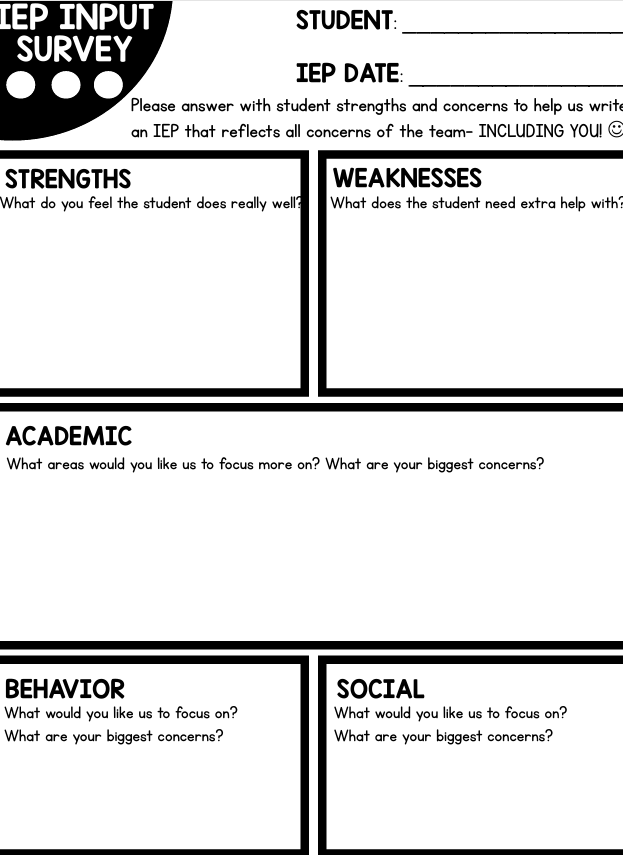
Parent Surveys
I always like to send out surveys at the beginning of the year to families to complete about their child. It is helpful to know what the child’s strengths, areas of need, and interests are from the parents’ perspective. They can also tell you what their goals and hopes for their child are so that you can make sure to focus on those throughout the year.
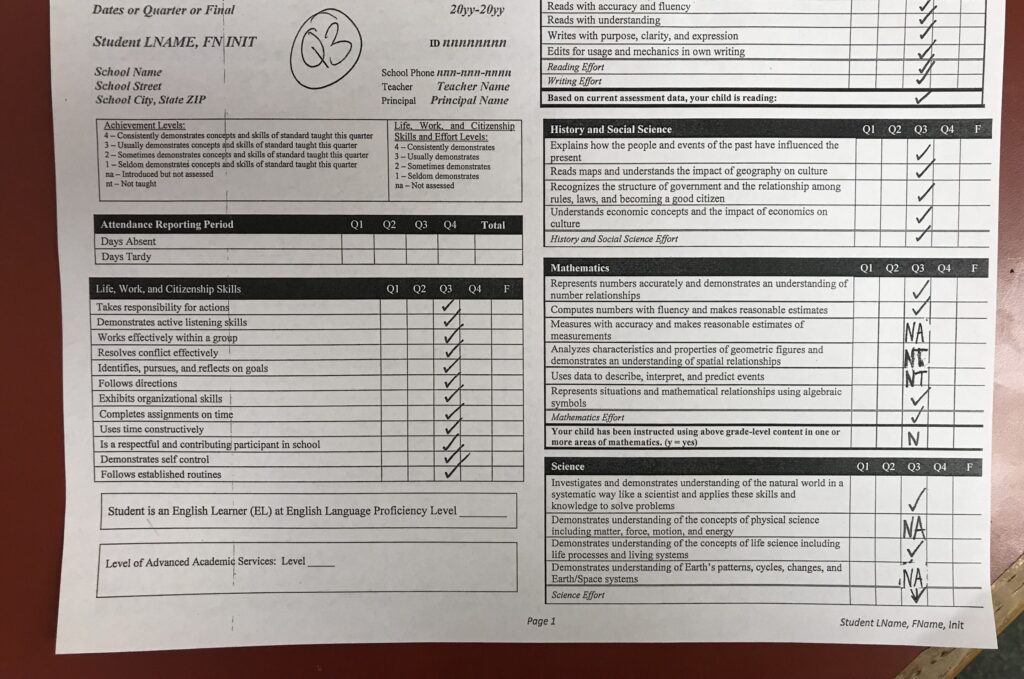
Report Cards and Progress Reports
Including a student’s report card and progress reports can also be helpful. It is an easy way to track the student’s progress and see how they progress through the course of the year. If you pass the binder along to the child’s new teacher, they can compare their progress from last year to their current progress.
Having this easily accessible in a binder can also help you when it comes time to write the student’s draft IEP. You can reference it for writing their present levels, goals, etc.
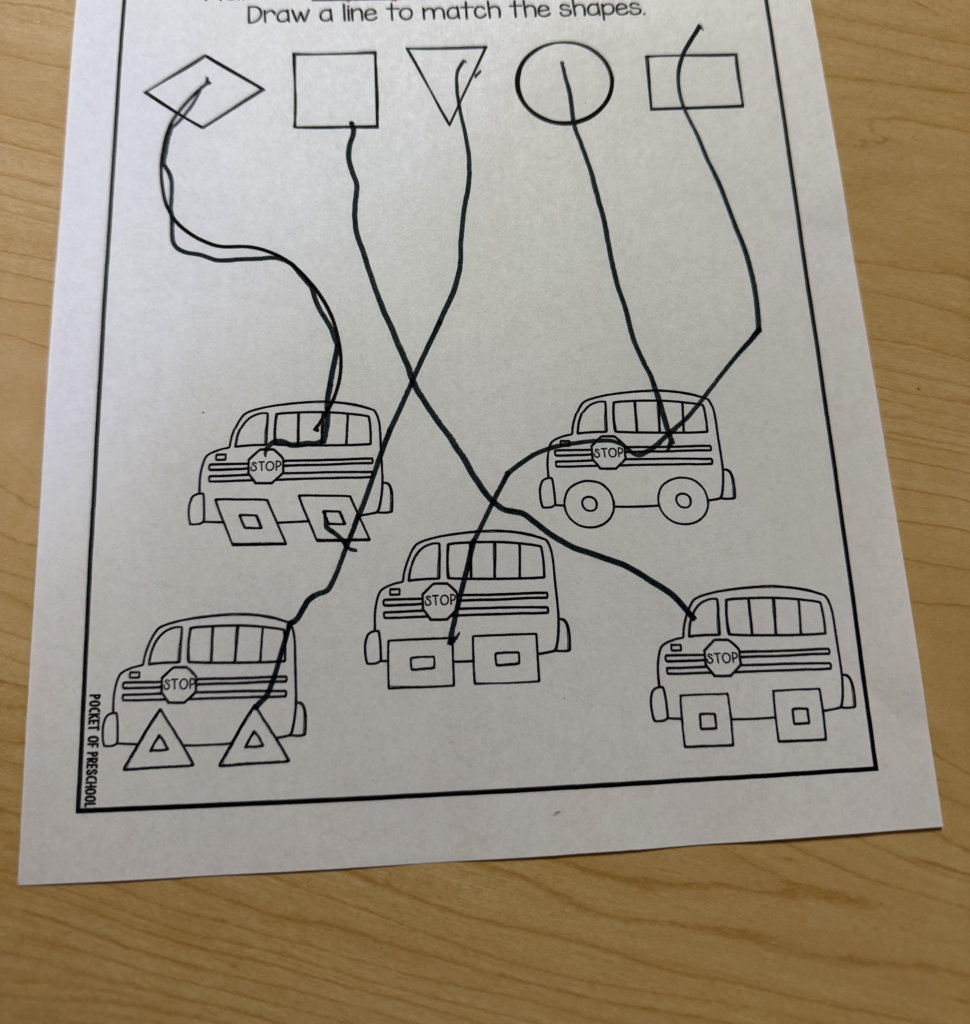
Student work samples
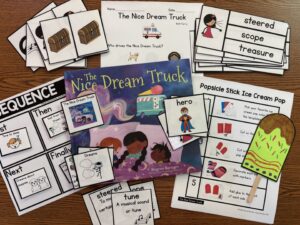
Work samples are also a great idea for what to include in the student’s IEP binder. You don’t have to include every piece of work the student completes, but choosing one work sample per month, or even per quarter, can be helpful. The work samples should be related to the child’s goals and areas of need.
For example, if the student has a goal of identifying shapes, you can include a work sample to show their practice with this (example pictured above). You can also include notes on whether or not the child completed it independently, with significant support, minimal support, etc.
I always loved looking at my students’ work from previous school years to see how far they have come! It is fun to show them as well.
An IEP binder is a helpful tool for tracking student progress and storing important information. Maybe you include some of these in your students’ binders, and maybe you include different things. Whatever you include, it is important to be organized to best support your students!


Leave a Reply