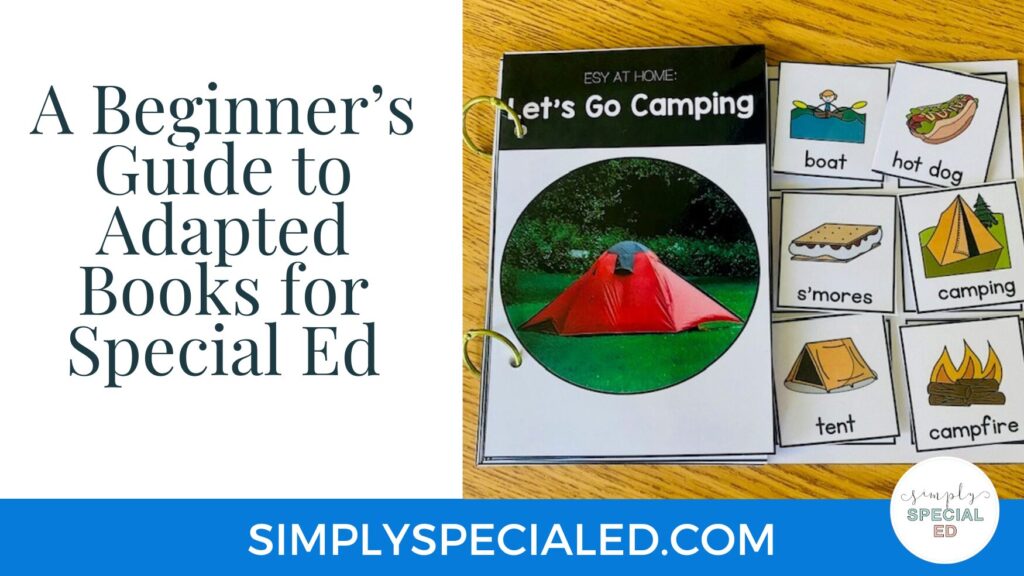
Hello there! I love a good adapted book! Adapted books are great for students with disabilities because they make them more accessible by providing additional visual and tactile supports. Although they may be time-consuming to prep, they have many different uses. Over your years as a special education teacher, you will prep and acquire many adapted books. Trust me, I have so many for different themes and topics. I am still looking for a good way to store them. Right now I have them all kept each in large Ziploc bags. Haha! Well, let’s jump on in and learn a little about how to get started with adapted books and a few ways that I love to use them in the classroom.
Prep
I have to admit that prepping adapted books is not fun. It is a lot of cutting and velcroing, because it involves small pieces. The good thing is that these can be stored to use for years and years. I have noticed that some adapted books come with very specific directions on where to cut and where to velcro, but some do not. If you have never used an adapted book, it can be slightly daunting.
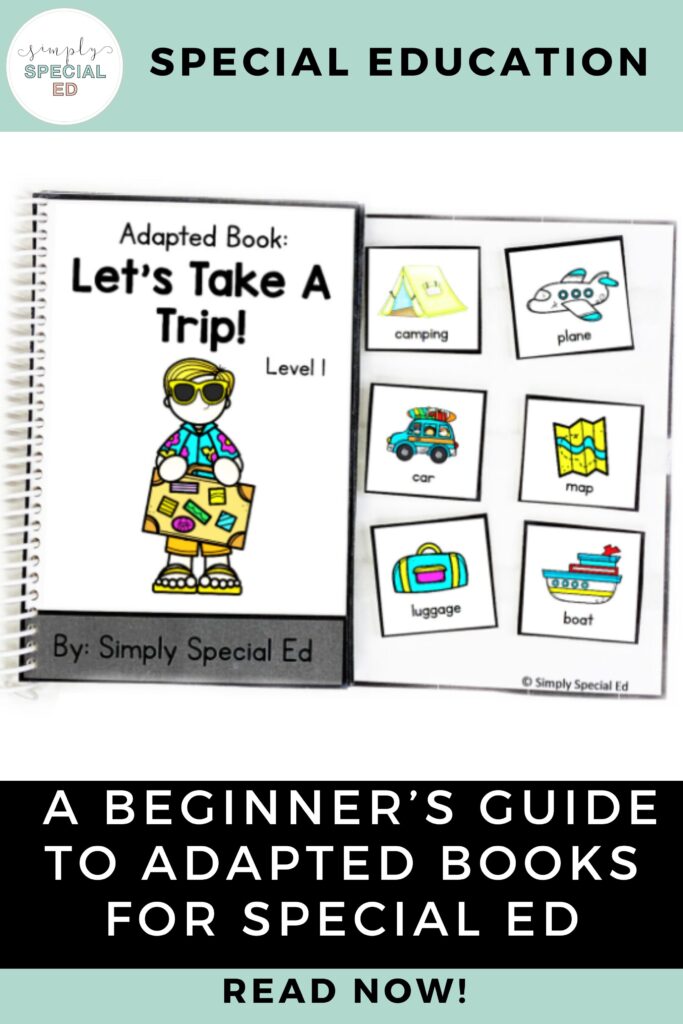
Start by printing out the adapted book, and don’t forget the pieces that go with it. I have started printing them as half pages, because it takes up less space when you have so many of them. It is your preference if you want to print out the full pages or print them as half pages. You will laminate each page on its own (you will only have to cut here if you printed them as half pages). You will cut out each of the small pieces that come with it. They typically go with the pages of the story in some way. Put velcro on each of the small pieces. You will also put velcro on each of the blocks throughout the adapted book that match it.
If the adapted book comes with a page at the end to put the pieces when not in use, you will put a piece of velcro on each of those blocks as well. I have downloaded some adapted books that do not have the back page for storing them. In this case, you can velcro a Ziploc bag onto the back of the book that holds all of the pieces, and you can take it off when it is being used.
Prep Contd…
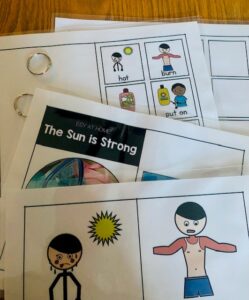
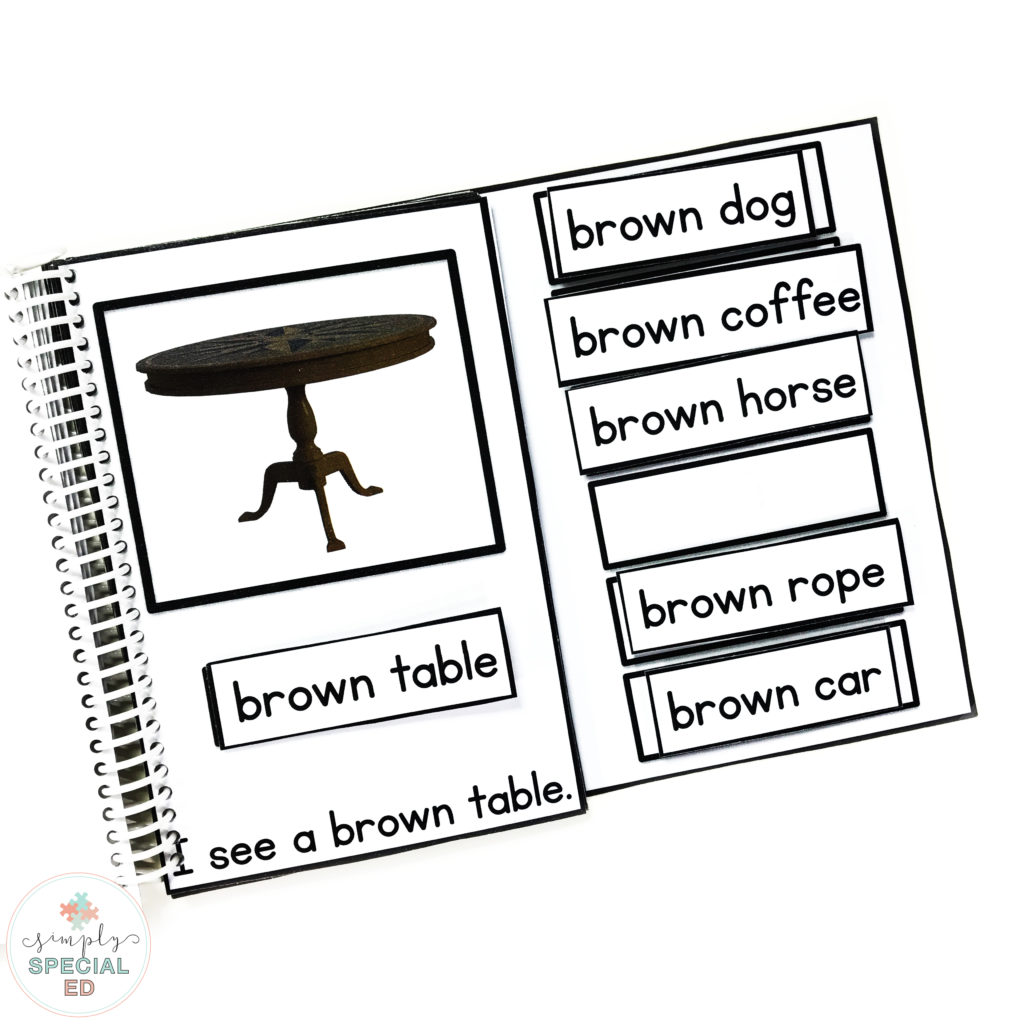
To bind the book, you can do two hole punches and use binder rings. If you really think you will be keeping them many years and you want to make an investment, you can also invest in a binding machine. This would be a good investment if you are making lots of adapted books. I still like to use the binder rings, and they work just fine. Below is what your adapted books will look like if you are using a binding machine.
IEP Goals
I love using adapted books for IEP goals! I think they work best for some of my lower students. The reason is that you can find an adapted book on any topic! To find some great one’s for back to school, check out Simply Special Ed’s August Adapted Book bundle. There are also bundles for other months and seasons available as well from SSE. Also, if you use the Unique N2Y curriculum at your school, they provide adapted books for each unit as well. Adapted books keep students engaged by giving them something to do with their hands, and they work on matching skills as the student matches the piece to the page.
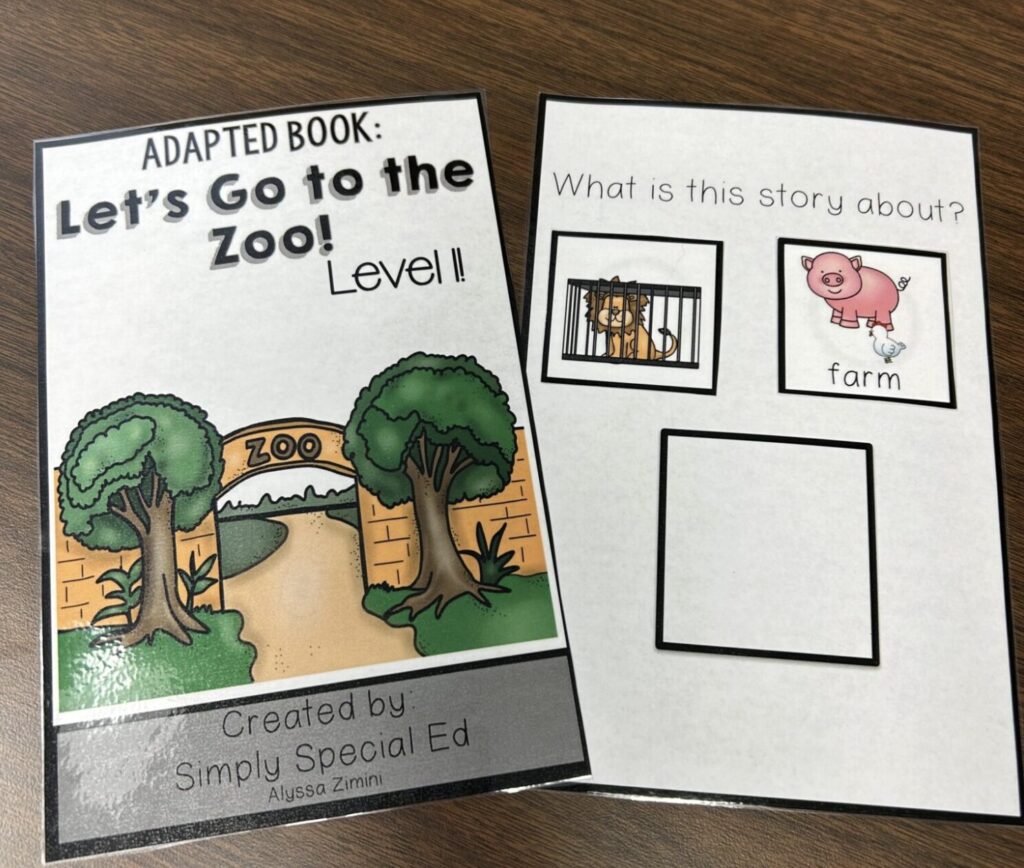
For any adapted book that is a story, I love to use them for WH quesion IEP goals. Before a student can answer the WH question about the story independently, an adapted book gives them answer choices, and you can limit the answer choices by only showing a few at a time if needed.
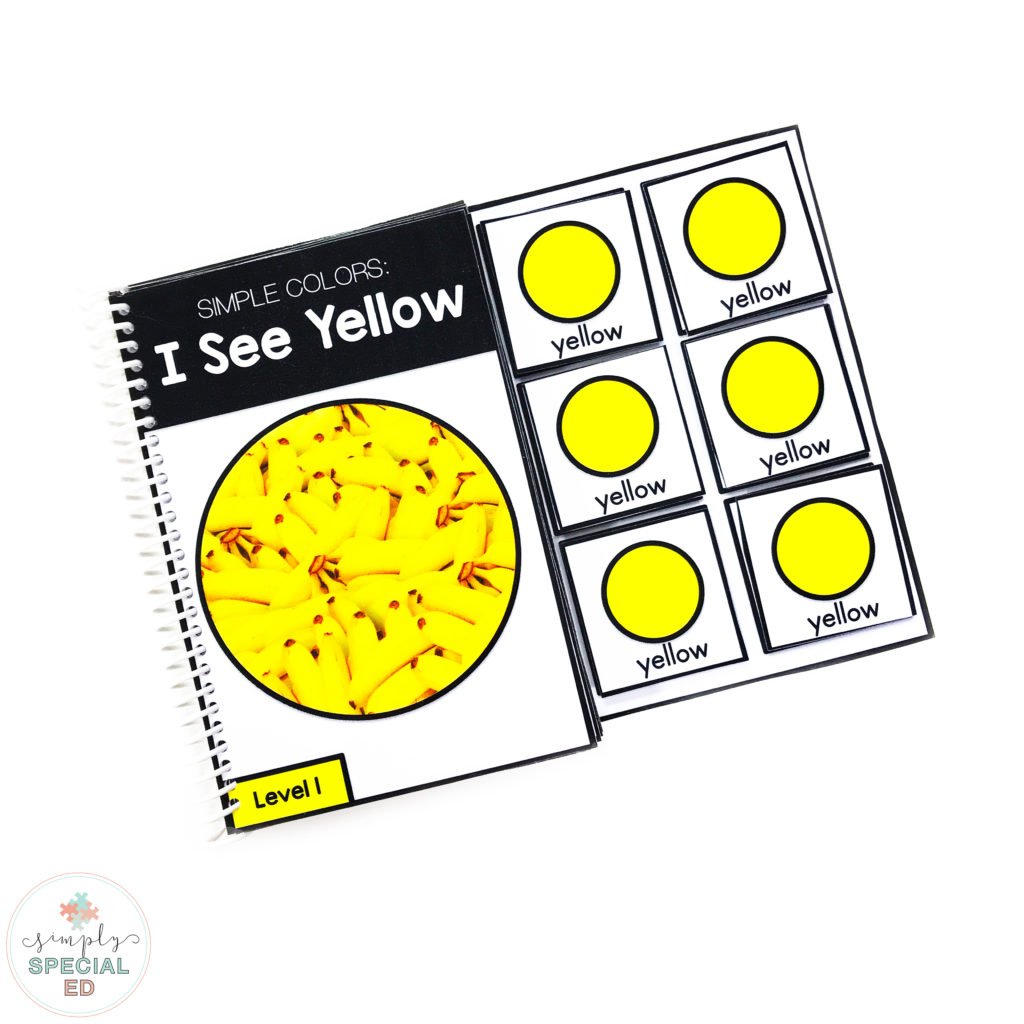
For a specific learning goal, such as learning colors, numbers, or identifying animals, there can be simple adapted books found for those as well. I like to read this repeatedly with the student, so it focuses solely on that topic. You can also make it errorless learning by presenting a question, such as “what color is this?” when pointing to a page, and then only setting out the piece with the correct answer. You then can increase the answer choices as needed with the adapted book. Below is an adapted book example that is only about the color yellow. So, this entire adapted book is an errorless book already.
Whole Group
Another way to use adapted books is in whole group lessons. As someone who has only taught self-contained special education classes, I do very short whole group times. I like to use adapted books during my science or social studies time. I find an adapted book on the topic I am teaching about, and I read it almost every day during that unit to start. This allows the students to become familiar with the topic, and they can take turns picking a piece off and putting it on each page. Throughout the book about the topic, I will ask specific questions related to the page, and the answer will be in the adapted piece that they put on the book page. This is pretty much the only way I use adapted books during whole group, but you could use them during story time or read aloud as well!

Small Group
Using adapted books for small group is similar to how you would use them for whole group. I would say the difference is that they can be differentiated a little more according to the needs of the group. Maybe one entire group needs the errorless version, and another entire group can read the words on the pages. Some of my higher level students still use the adapted books to read, and they use the moving pieces as added fun even though they may not need them.
Making Your Own
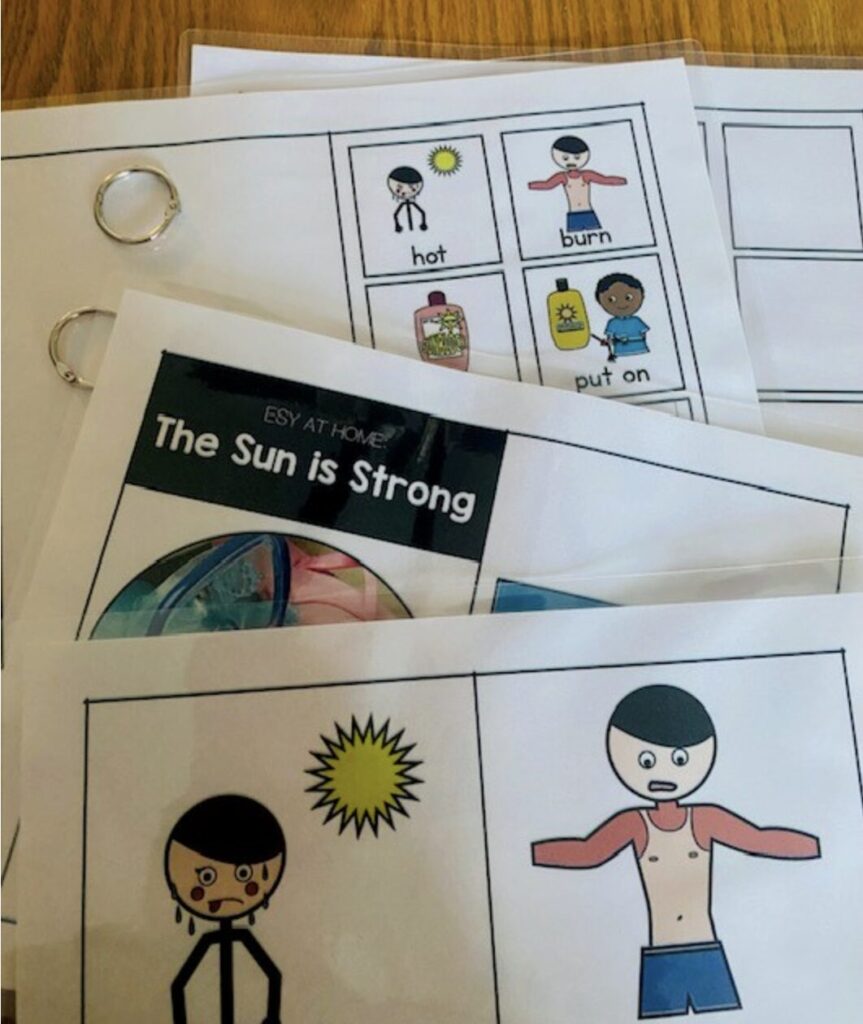
You can also turn any picture book into an adapted book! Make sure first that you are willing to put velcro throughout the book, because you probably will not be taking it out very easily. Once you have a picture book, you are going to need mini pictures of an item on each page. You can do this by seeing if you can find the matching images online or by taking a picture of each page and uploading it, then printing.
Once you have a mini version of an item on each page, print them out and laminate them. You will then put velcro on each piece and on each page of the book. Since there will not be a back page to store the pieces, you can velcro a mini bag to the bag or inside flap of the book to hold the pieces. Then you place the matching pieces on each page. I did this with the book Brown Bear, Brown Bear, What Do You See? and it was a hit! My students loved moving around the pieces to match on the pages.
Conclusion
To learn how to use adapted books for speech and language purposes, check out this blog. I hope this blog helped you gain some insight into using adapted books. Now it’s your turn to start prepping and try them out in your special education classroom!