There are so many reasons to add centers to your classroom. The biggest benefit is that centers allow you to differentiate with ease! However, differentiation doesn’t always come naturally, especially when you rely on a variety of staff members to run things. Keep reading to see how you can help centers staff create a differentiated learning environment that will work for all of your students!
Why Centers Work in Special Education Classrooms
Centers are the foundation of special education classrooms. They make such a difference in the classroom! For teachers, implementing center rotations allows you to provide targeted instruction to each student or small group of students. Additionally, they allow you to utilize paraprofessionals in an effective way by having them lead some stations and take data on student performance. For students, centers help to create a predictable routine. When students know what to expect from their routine each day, it helps them to build independence!
Differentiation During Centers

Differentiating is key to making centers work! Special education is definitely not a one-size-fits-all pursuit. Every student is unique and therefore needs work that is tailored to their needs and abilities!
During centers, students can work on the same skill at different levels. Take for example math lesson on addition facts. Throughout the center rotations in the math block, some students may be working on addition facts. Higher-level students may be ready to move on to two-digit problems. Some students may need remediation with using touch points. And yet another group might be working on basic 1:1 correspondence as a precursor to addition work. All of these students are working within the domain of math facts, but at the levels that they need!
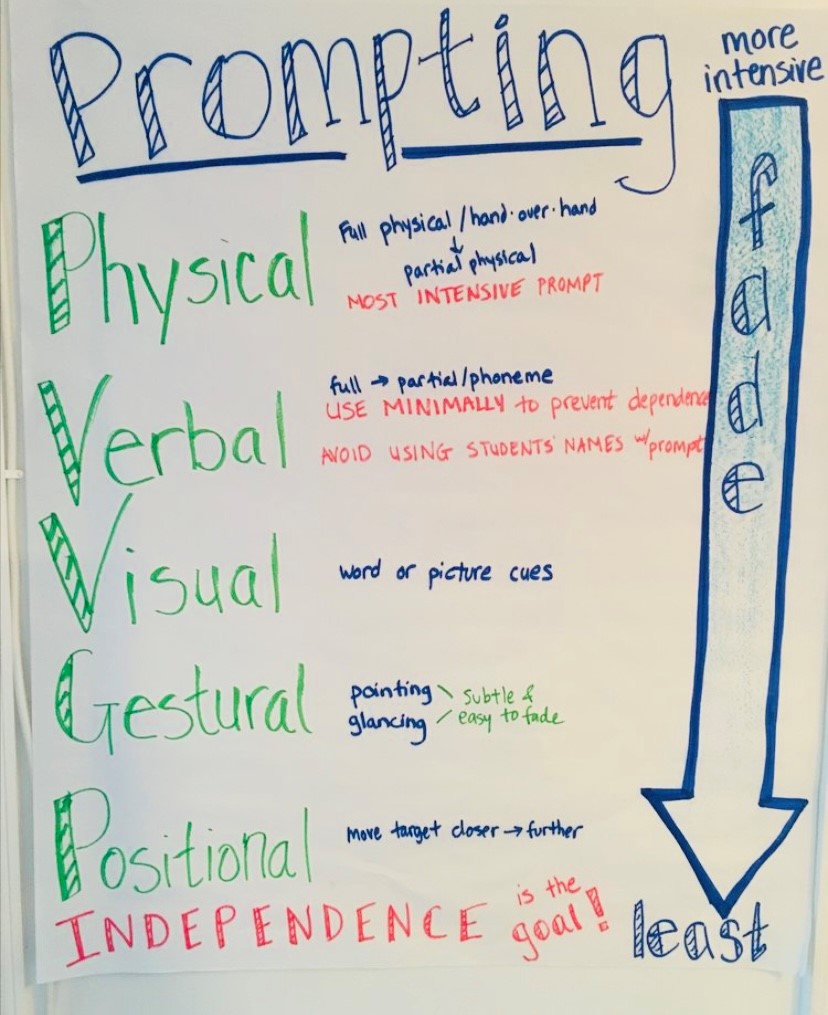
Staff can quickly differentiate the level of support by using the prompting hierarchy. The prompting hierarchy indicates the level at which we give students assistance. The goal is always to work towards student independence!
And of course, it is necessary to always have a back up plan prepared! Unexpected things can (and usually do!) happen in our classrooms every day. Luckily, there are things you can do to prepare for all possibilities. For example, have a man-down schedule ready for when there are absent staff members. Keep extra work available at each center for fast finishers. And, you can all work together to ensure that visual aids, schedules, tokens, etc. are prepared before starting the day so that there are no unnecessary interruptions during centers.
Staff Members Help Centers Run Smoothly
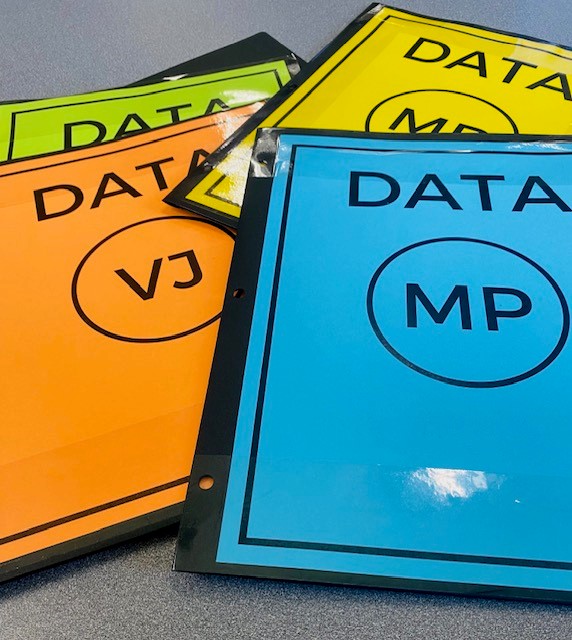
The number of paraprofessionals you work with will vary from classroom to classroom (or even change throughout the year). Sometimes you have one para working with you and sometimes there is a whole team. One year I had one para with me for the whole school day but several others came in to assist during centers. Sometimes paraprofessionals rotate to different classrooms on different days. And, having substitutes in the room can be a common occurrence. No matter the configuration, paraprofessionals are truly the key to making our classrooms run!
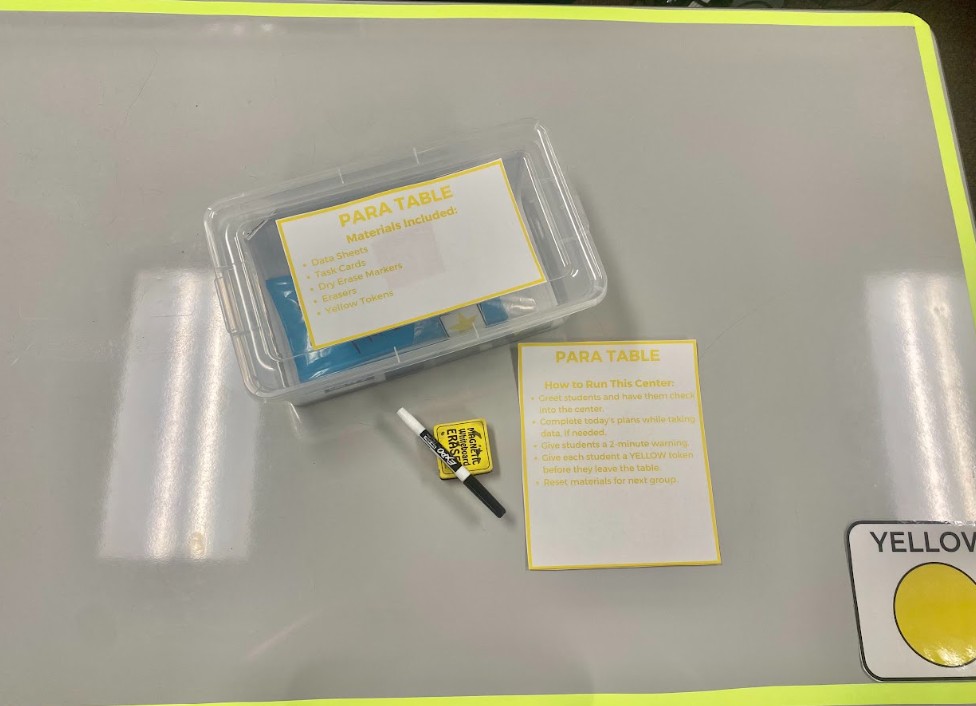
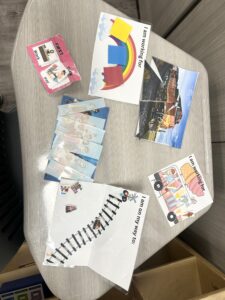
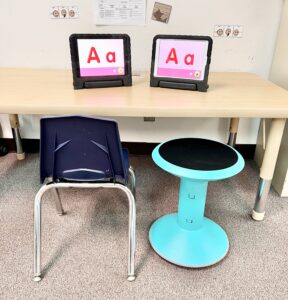
It’s important to help classroom staff understand their role in centers. One way to do this is by preparing labeled centers materials. Keep a prepared bin of materials at each center. Inside the bin, you can include directions about staff member responsibilities for the center. For example, include a description about what the goals are the day are, a copy of the centers lesson plan, directions for completing the activity, and any needed data sheets. Ensuring that every needed item is there and easy to understand will help staff feel confident about what they are doing.
Additionally, paras will be able to provide the teacher with invaluable information about students. Paras can take formal data on student performance with tasks. They can also provide anecdotal notes on behavior, demeanor, and any changes that they notice.
Tips and Tricks for Centers Staff
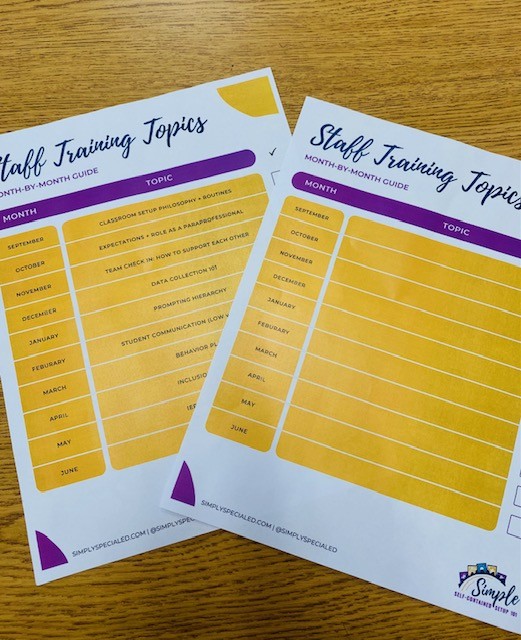
Here are some more tips for helping classroom staff run centers effectively:
First, take time to model your routines and expectations. Don’t assume that paraprofessionals will automatically know how you want to do things! Walk staff through the routine for centers that students will follow. At each table, show how the activities should run. And, be sure to model examples of differentiation for each center!
Another thing you can do is create references for classroom staff to use as a guide. A paraprofessional binder is a great reference point for you to have available. Visual reminders posted around the room are also useful! This is extra helpful if you ever work with substitute paras. The binder and visuals will help you quickly get subs ready for the day!
Finally, try to incorporate regular staff meetings into your routine. Even just five minutes before or after school can help make sure everyone is on the same page about how things are going– not just with centers but with everything that goes on in the room. These free monthly meeting planning pages can help you organize your thoughts and plan topics for discussion!
When teachers and staff work together, we can make magic for students! Differentiating work makes sure that all students get what they need.

Looking for more tips and tricks to run centers in your classrom? Check out the Simple Centers System course!