Special Education Teachers and Related Service Professionals know differentiation well! Especially in a self-contained special education class like mine, each student’s academics, life skills, social skills, and self-management goals are differentiated to meet their specific needs. If you have a large caseload of students, differentiating every single thing can take up a lot of your prep time, after school, and even on weekends.
Here are a few of my simple ways that I differentiate to meet my students’ needs.
Group Your Students
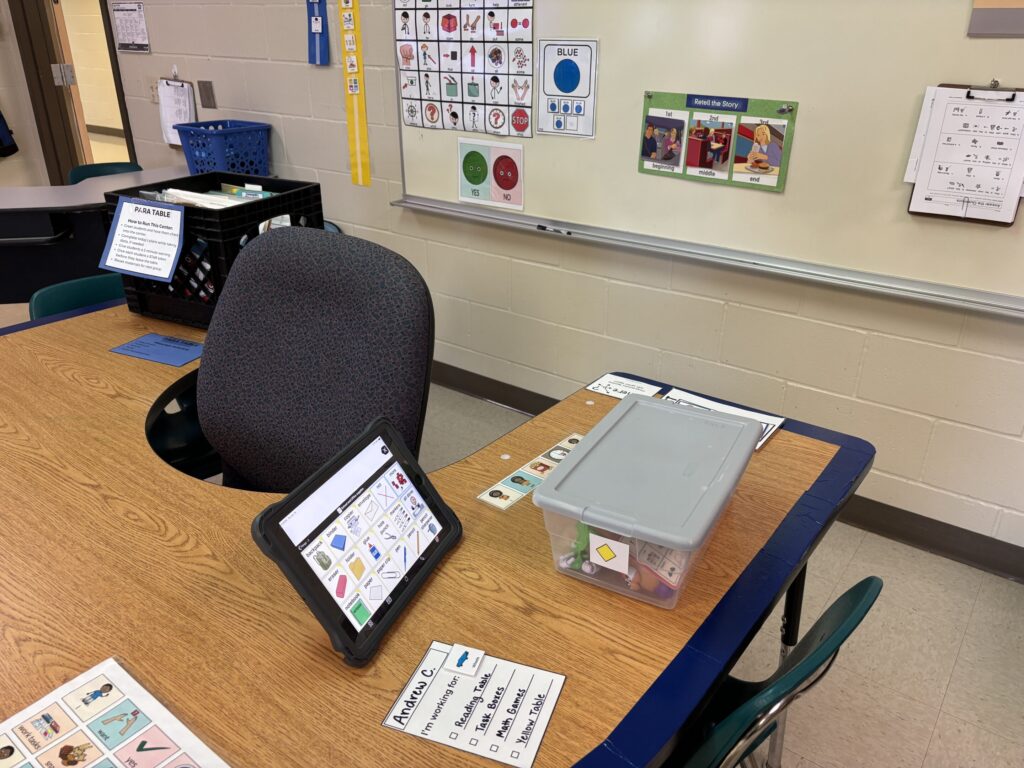
Of course, the easiest way to preplan to meet students’ needs is to create groups that will work well together. Then you can set your students up with rotating centers or groups that work together while you’re completing data or doing other things. There are a few ways to make this happen.
Students grouped by their same ability level will work well together because they can complete the same type of tasks. When you’re prepping work tasks for groups, you can create multiple copies of the same task. Students can work on tasks together when they’re matching.
Students grouped by differing ability levels can still work together, but in a different way. Some students can act as peer mentors for others, modeling tasks and helping other students see other ways of doing things. In the beginning, you can work on making connections between students by facilitating peer-to-peer relationships. You decide which type of grouping works best for your group of students.
Pre-Plan Your Work Stations
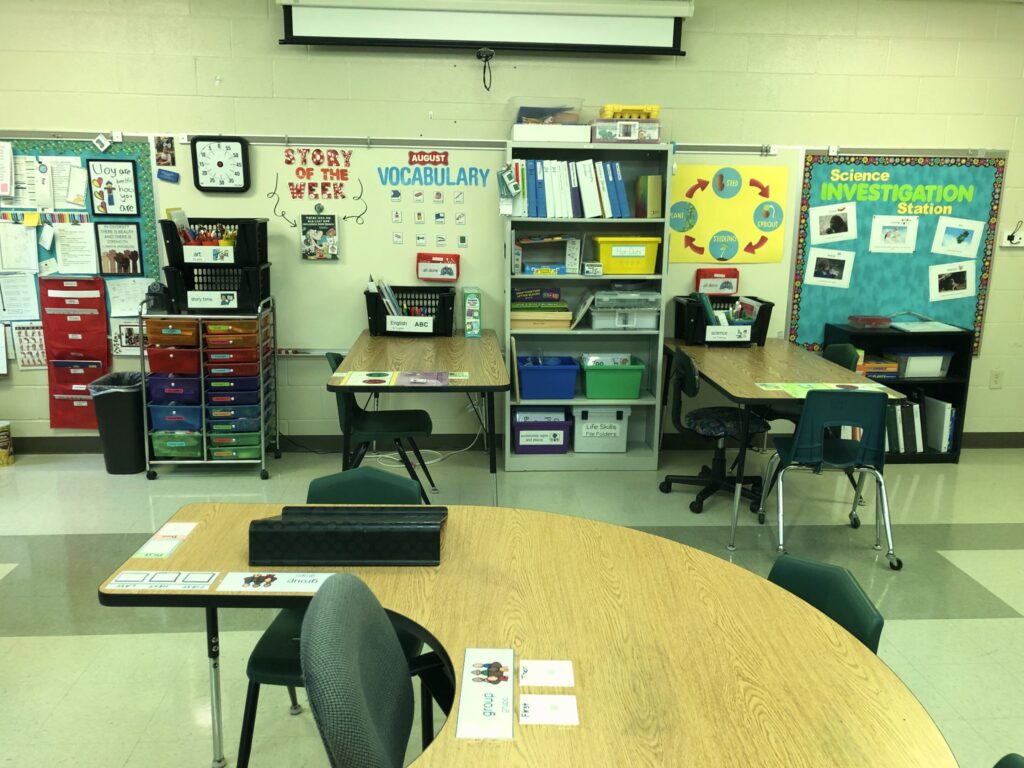
To keep differentiating materials simple, plan what you’re going to have each student actually do in centers or at workstations. When you have an idea of what each center’s purpose is, you can essentially swap out tasks each day, week, or even month.
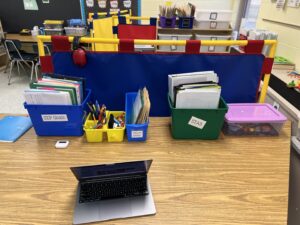
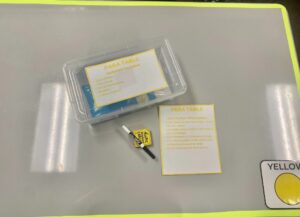
For example, I have my center tables and areas labeled by color. Each color center is going to have the same skill targeted each week, but with a different task. In my room, red is the functional vocabulary activities center, yellow is the reading center, blue is the functional math skills center, and green is the sensory station.
I know that my blue center is always going to contain functional math; therefore, I can have my instructions printed for students and paras to utilize in the center. The things that I can quickly change may be the materials themselves, or swapping out one tool for another – like the bucket of calculators for the bucket of clocks.
Here: Sabrina shares her Centers lesson plans!
Having Quick Tools Close By
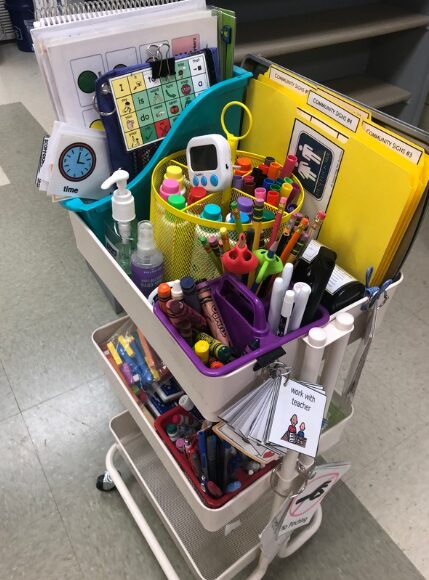
One of my favorite tools is the rolling teacher cart that travels with me around the room and keeps my essentials close by! For students who need those extra little differentiation “tweaks,” my cart is ready for grabbing visuals, highlighters, color overlays, writing utensils, numberline, behavior and calm down tools, timers, and anything random that I might need at a moment’s notice.
Quick Tricks to Adapt Materials
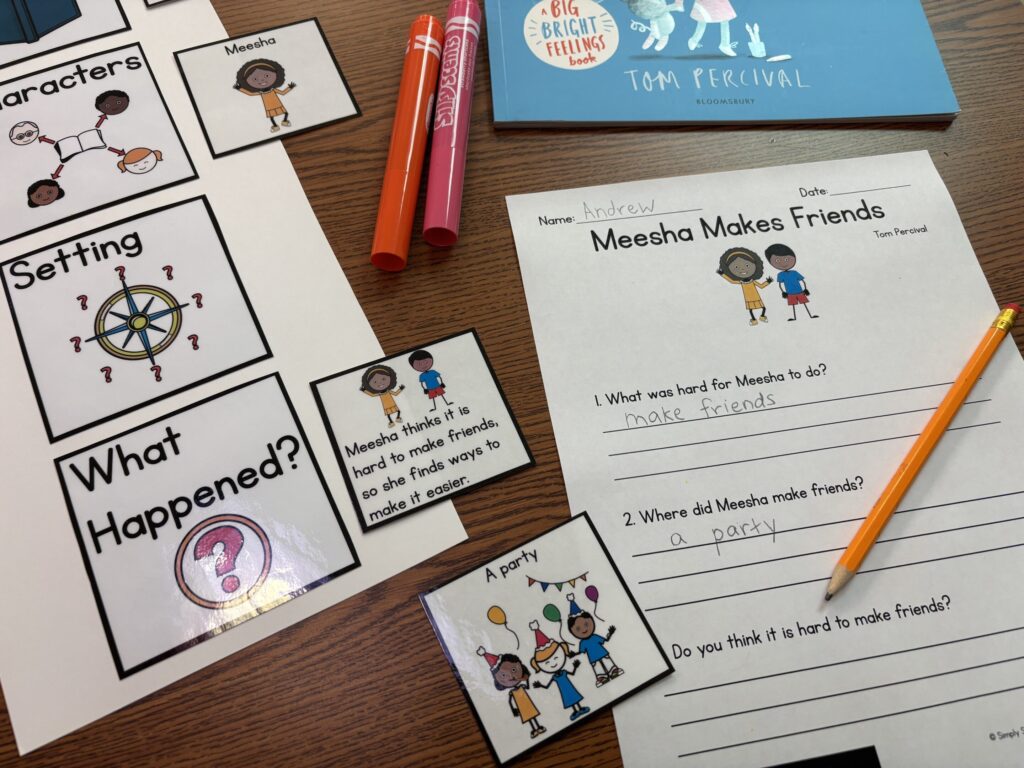
Sometimes, the work I have ready for students may be modified already, but it is still too challenging. Sometimes it may be too challenging academically, but sometimes a task just looks daunting and can cause behavior challenges. There are a few quick tricks that I use when students need an extra level of support.
- Use sticky notes as a quick “cut and paste” type option
- Write a word or letter in highlighter and have a student trace it
- Reduce the workload by cutting a page or task in half – literally
- Allow the use of fun tools like stamps or smelly markers
What else have you done to quickly change a task for accessibility?
Prompt Levels to Teach a New Skill
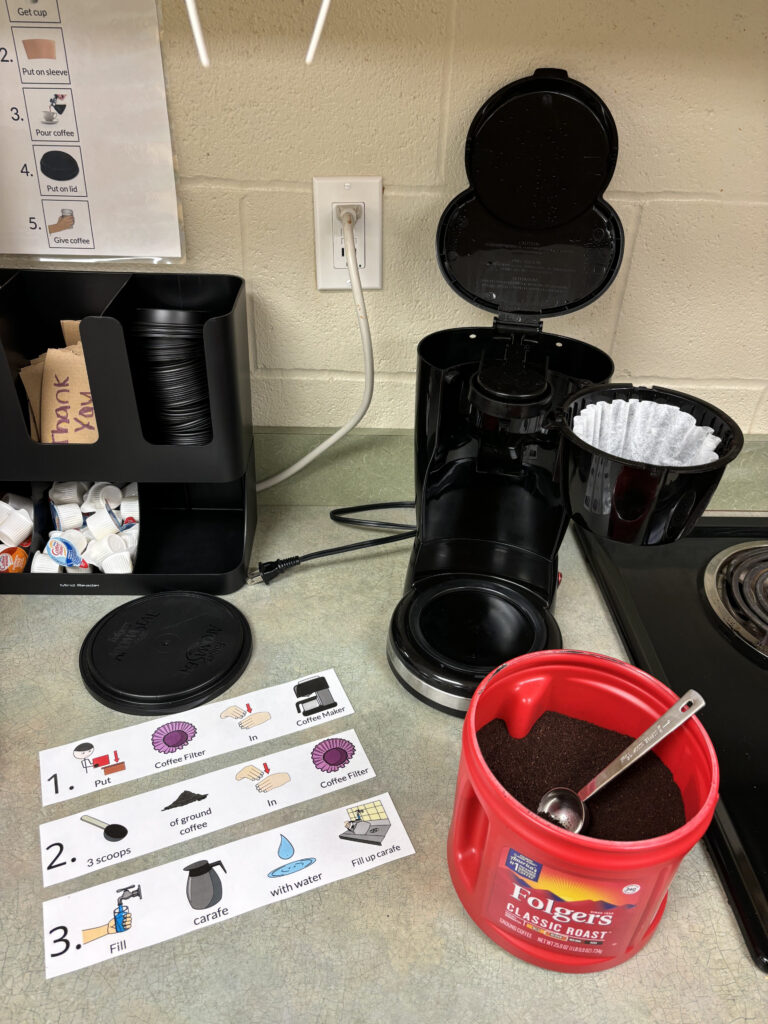
I also like to support students with various levels of support and prompting until they are able to complete the task independently.
Prompting is essentially the different supports you use to assist a student in completing a task. There are different levels of prompting. Typically, we utilize the following types:
- Visual prompts (showing a student visuals of a task being completed)
- Direct Verbal prompts (telling a student exactly what to do next – “Turn on the water.”)
- Indirect Verbal prompts (hinting at what would come next without saying the answer – “What should we do next?”)
- Modeling Prompts (modeling for a student how to do something so they may imitate you)
- Physical Manipulation (having a student assist you in completing the task by placing their hand on yours)
For more information, check out more about Utilizing the Prompting Hierarchy in Hannah’s blog.
Easy Ways to Differentiate Reading and Writing
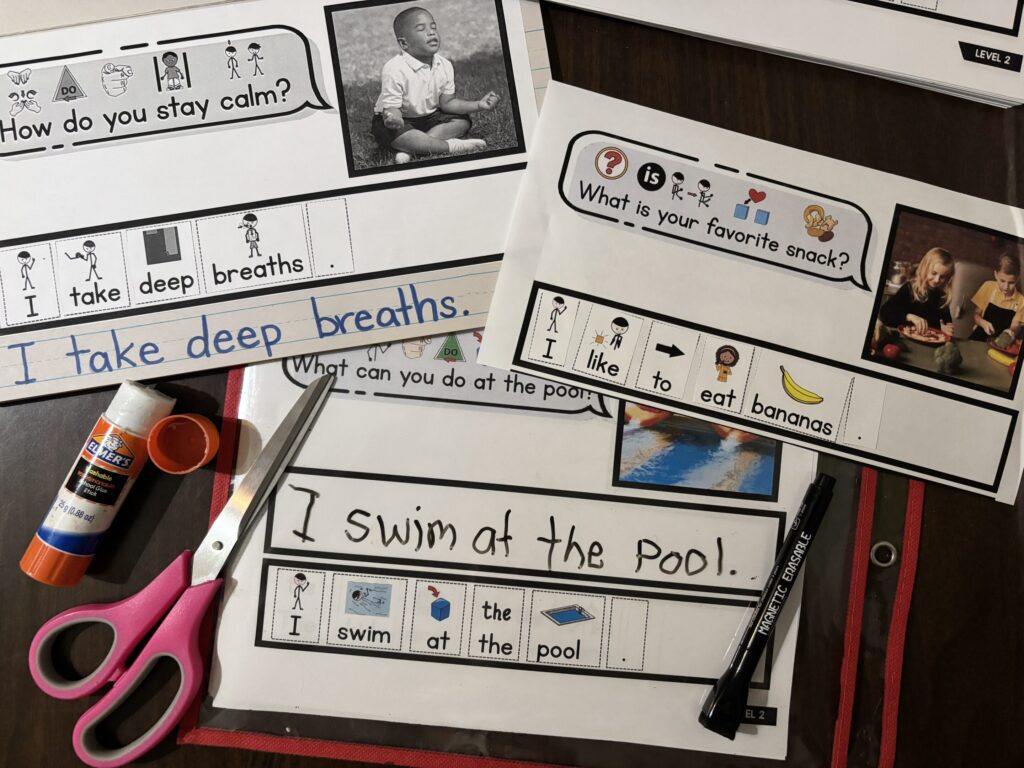
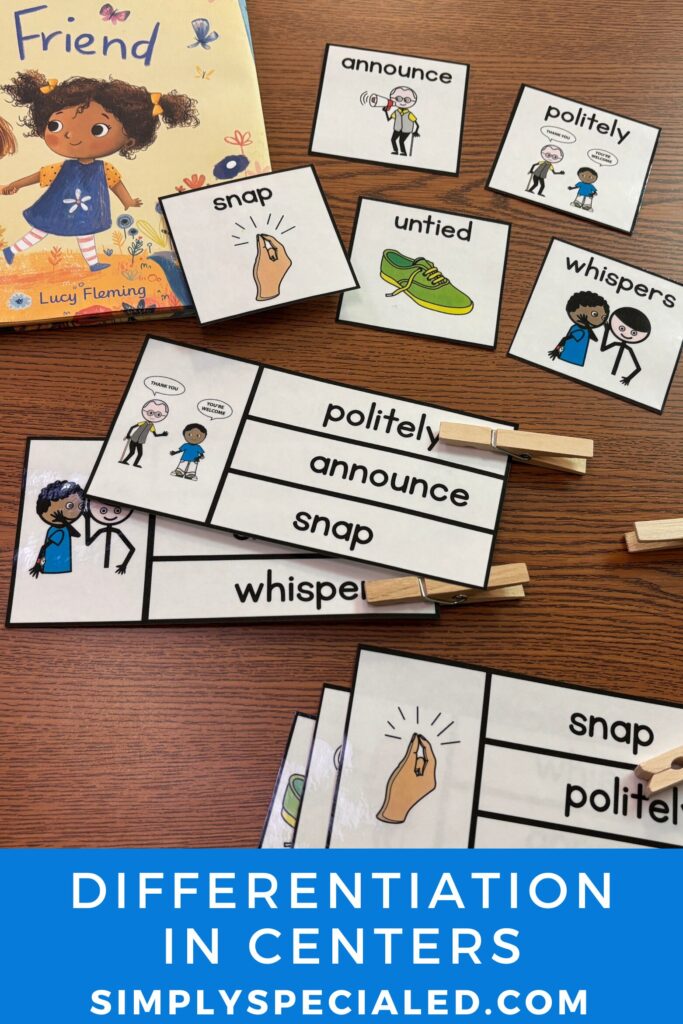
For students who are nonreaders, nonwriters, or who dislike language arts and have a hard time engaging in non-preferred tasks, I love to support ELA tasks with visuals, word banks, and sentence prompts. During our group meeting, I use a question of the day to practice answering WH questions and writing a response. For some students, their answer to the writing prompt may be completed with cut-and-paste visuals. For extra student support, I offer errorless writing with examples to place into a sentence stem. Each example would be correct, but the student gets to choose their own to answer a question instead of just being told what to put.
Another great resource for reading and writing is the Writing Journals available here, which are available in 4 different levels.
To differentiate reading, I use book companions! They may be my favorite thing to do in the classroom! Many of the book companions available from Simply Special Ed are simply print and go, and are leveled for various learners. However, you can use quick tricks to modify these materials, too. Book companions are great for use in centers because of their similar nature of tasks. Students and staff both know what to expect, and each week’s lessons are preplanned for you. Additionally, you can use book companions to target IEP goals while students participate in group reading.
Really Dig into Centers with The Simple Centers System

If you really want to dig into centers and make sure all your students are engaged with differentiated materials, The Simple Centers System really breaks it down for you with 40+ video lessons, an Official Simple Centers System Workbook, Toolkit, and Checklist, and 80+ downloadable resources totaling over 1,400 pages!