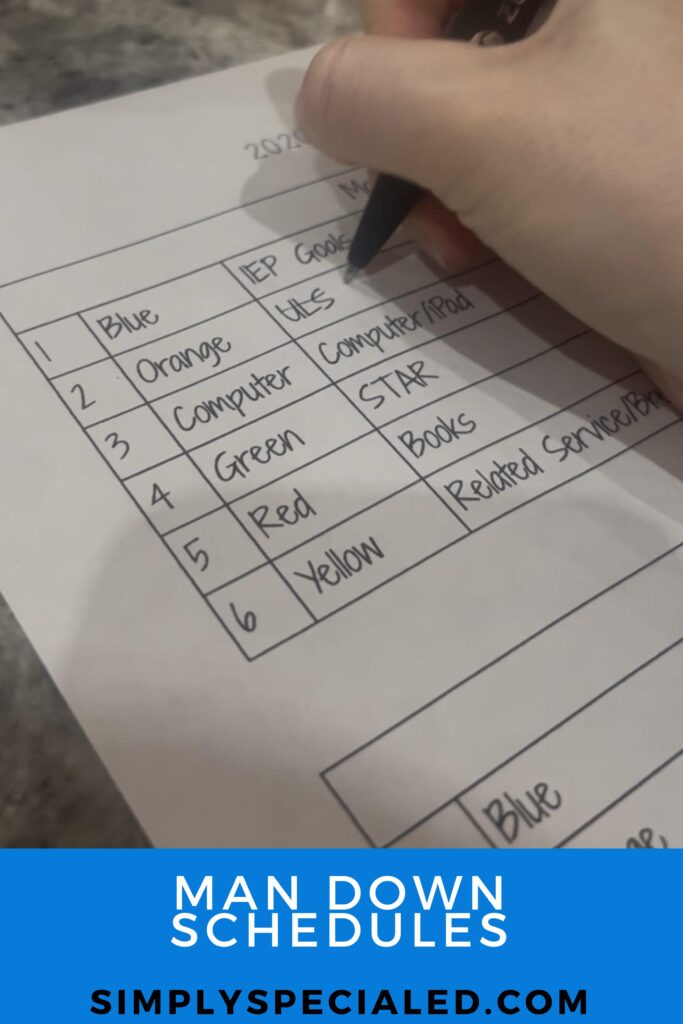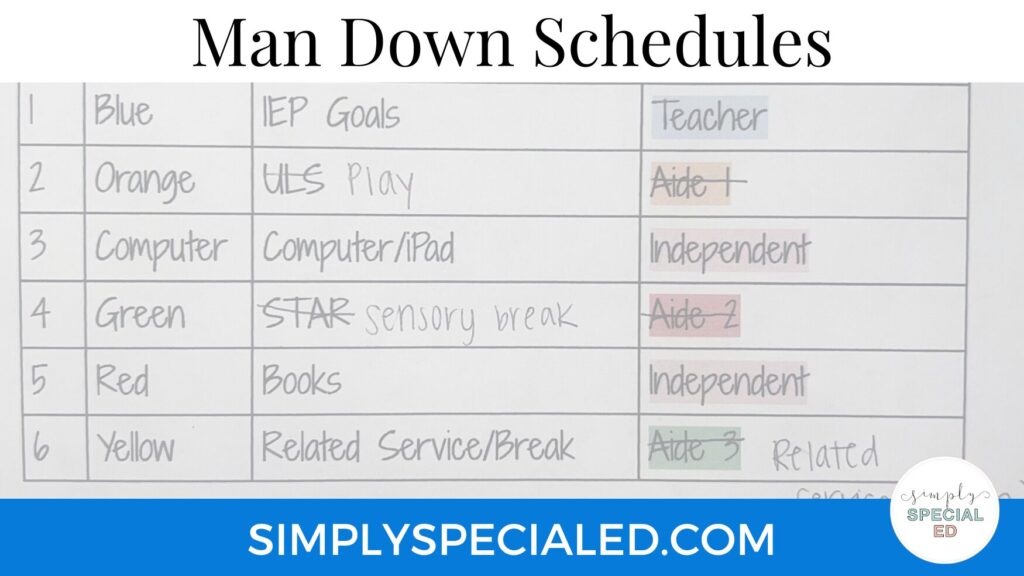
We all know we dread having staff out in a special education classroom. So many logistics have to go into covering our students when we are short staffed. It’s important to teach as much independence, structure, and routines as possible so that our students aren’t always relying on the adults in the classroom. That is the goal, right? Here are some tips on how to run your classroom when you are down paraprofessionals or staff.

Use Visuals for Morning Work
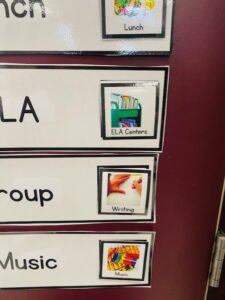
Students come into the classroom at all different times to start their day. They may ride the bus, walk, or take the car to school, which means they aren’t always on time. Create a system in your classroom that is the same routine everyday. For example, use a first/then to show students what needs to get done first before they can have choice time. The first/then clearly states what students need to do and allows students to not rely on an adult to tell them. You can simply add pictures to each step if you have non-readers in your classroom.
Use Sensory and Movement Breaks
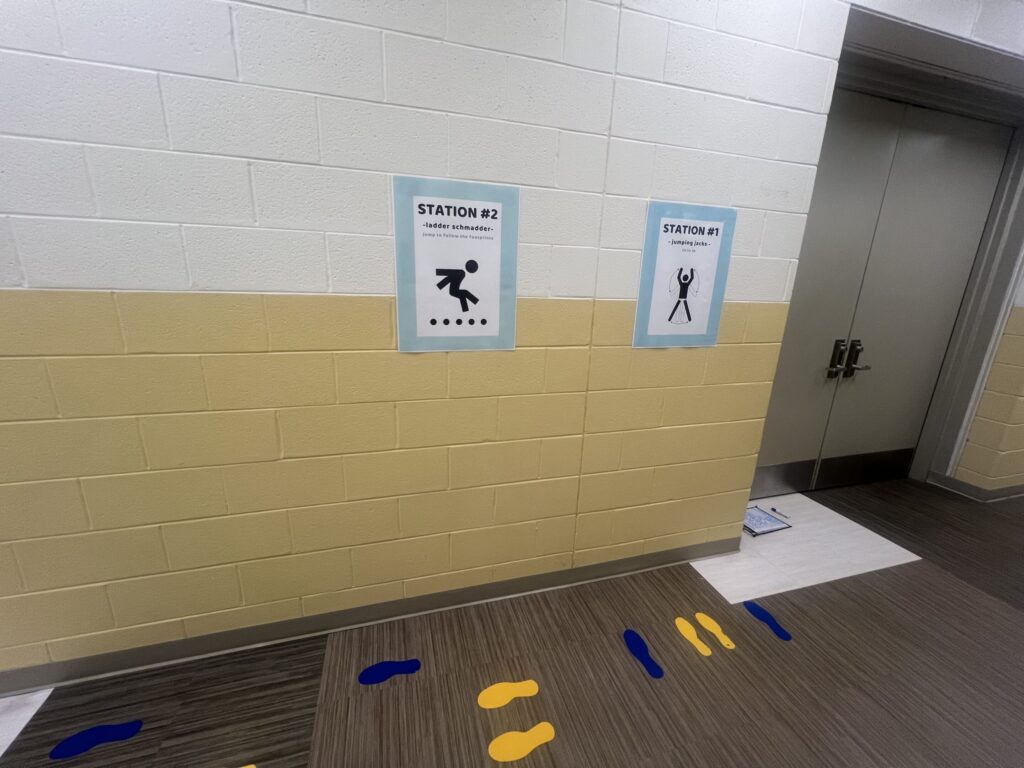
Sensory and movement breaks should already be embedded into your special education classroom. Utilize these breaks during the day when you are short staffed as a whole group. Students can take turns participating in a sensory walk in the hallway. Create visuals to post on the walls so students know exactly what to do at each station. The example above shows a visual of what to do as well as a short statement of how to complete the activity. Set a number or time for each station so students can rotate through like how centers run.

Run Center Rotations
Centers are so important in a student’s day. Rather than relying on adults for the center rotations, create activities that students can complete independently. Make task analyses for the activities at each center. You can make them written for your readers or use pictures for your non-readers (as shown above). After the student completes each step, they can turn the card around or flip it over to show they are finished and are moving onto the next step. To learn more about centers, sign up for the Simple Centers System Course!

Incorporate Play or Leisure Activities
Teach students how to use play and leisure items by creating visual steps on how to appropriately use that toy, like shown in the photo. Check out the Play Center Visual Supports resource for pre-made activities. Students can refer to the visuals rather than relying on an adult, so they can still use these items when the classroom is short staffed. Play and leisure should be a natural motivator for students to stay in their center without an adult.
Centers can help make life much easier when you are short staffed in your classroom. Utilize visual tools to make students more independent, like task analyses or first/then boards. Use consistent structure and routines so that students are not always relying on adult prompting. These strategies should be used everyday, not just when you are short staffed.
If you want to learn how to help students build independence in centers, read this blog post!