Your first year in the self-contained setting can feel like it’s going to be overwhelming and stressful, but it can actually be simple and fun! With a little planning and preparation, you and your students can have an amazing school year. Keep reading for some of the best advice to make it through the first year — straight from someone who has been there!
Before Your First Year Starts
You were given your assignment for the new school year: self-contained teacher. Now what? Maybe this is your first year of teaching EVER, or you are a veteran who is changing roles. Either way, self-contained can sound intimidating. But there are some things that you can do to prepare before the school year starts so that you can feel ready to go on the first day!

One of the first things you can do to prepare is think about your classroom setup. If you know what your classroom space will look like and have an idea of what furniture is available, you can start planning your space. Using a tool like a classroom layout builder can help you visualize your space before you even move any furniture.
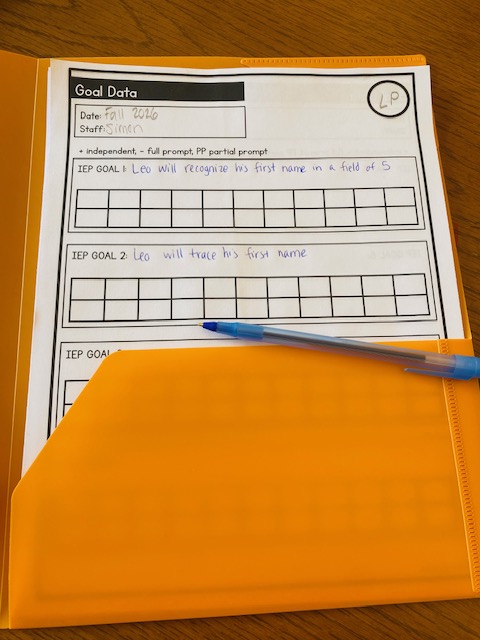
Next, once you have access to your students’ IEPs, start reading! Get to know the students you will be teaching by reading through their PLAAFPs and goals. Then, you can use that info to start prepping data sheets and goal bins! Doing this before school starts will be a huge timesaver and lets you start targeting goals right from day one.
Planning and Preparation
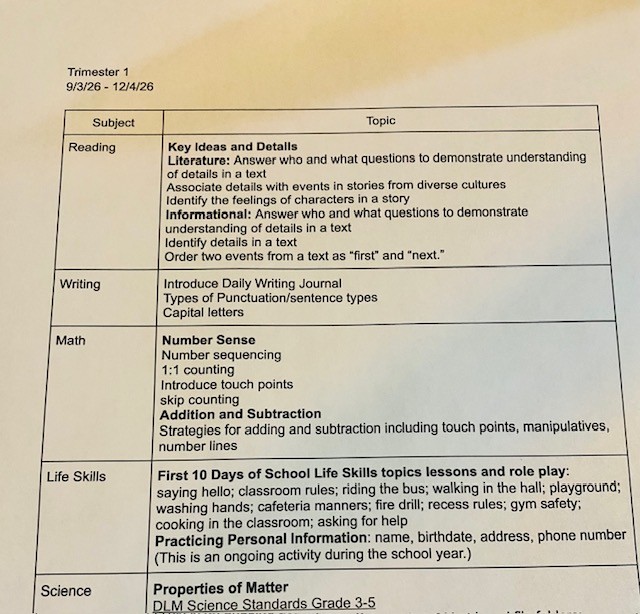
Another idea for getting prepared is to start planning your scope and sequence of lesson plans for the year. Many self-contained classes don’t come with a set curriculum, so it’s up to you to decide what you will teach. I use the DLM standards to plan what topics I need to teach throughout the course of year. Then, I map out my marking periods and fill in what I want to teach during each part of the year. Of course, life happens and the plan doesn’t always stick. But it is nice to have a jumping off point to help me see what needs to get done.
Finally, a great thing to do is to start prepping materials, and make extras! Whenever I make reusable materials, such as schedule boards or morning binders, I try to make extras. You never know if you might get a new student sometime during the year. Not to mention the inevitable lost items! Your future you will be grateful that there are extras are waiting!
During the Year
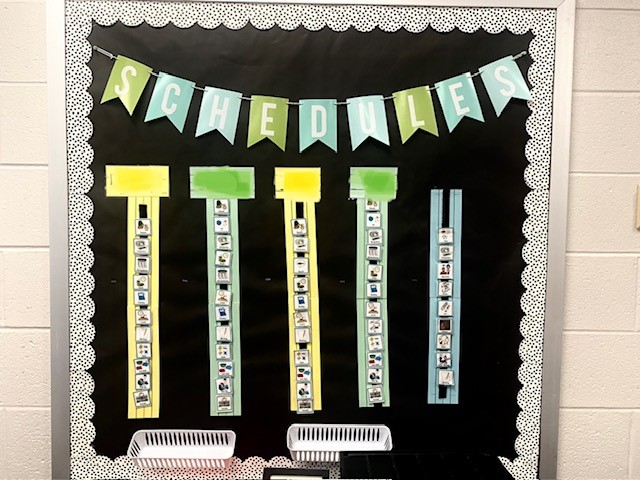
Once you start putting your plans into action, you will quickly realize what works for your class and what doesn’t. Take for example, your schedule. Before the year starts, you will need to create a schedule for One example for my class is snack time! After a few days of school, I realized that many of my students did not eat breakfast, so they were ready for snack much earlier than I had planned. Changing that time on my schedule made my day much smoother.
Another area that you may need to tweak a little bit is your centers or independent work routine. It can take some time to understand how much time your students are able to spend at centers. Using trial and error, you can design routines that work for your room!
Working With Paraprofessionals and ESPs
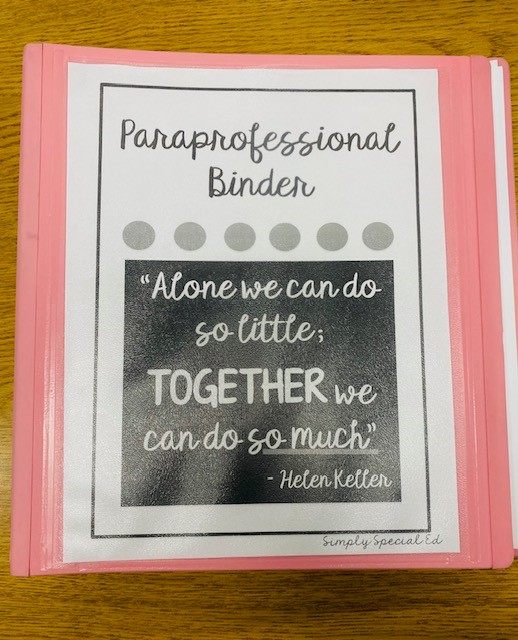
One of the most important things you will do during your first year is learn to work with the other adults who are a part of your classroom. Paraprofessionals, case managers, social workers, OT, PT, Speech therapists… Self-contained teachers must work with so many different service providers! This can sometimes feel very intimidating! But the people you and your students work with can be an invaluable resource. That is why it is so important to build a strong team!
You can foster relationships with paraprofessionals and service providers in many ways. One way to do this is by establishing regular check-ins with the team. When everyone is aware of what is happening, it helps to build trust. That allows the team to do their best work! Another important thing to do is to be sure to clearly convey your needss so that everyone is on the same page. A paraprofessional binder is a great way to establish those expectations!
What NOT To Do Your First Year

Here are a few “don’ts” for your first year that will just make your life a little bit easier.
First of all, don’t worry about having a picture-perfect classroom. There are so many other things you need to do your first year! Decorating should be low on your list. The important thing is showing up for your students! Pinterest-worthy décor can wait.
Second, don’t get too stressed over the details. If a lesson didn’t go the way you planned, that’s okay! Just start over again with the next one. If a recipe you really wanted to do with your kids flopped, just laugh it off. Life goes on, and the important part is that you just keep trying,
Third, don’t be afraid to ask for help! You don’t have to do everything on your own. Rely on other teachers, paraprofessionals, and service providers to help you navigate your classroom. Believe me, most people are happy to help!
Finally, don’t forget to have fun! Teaching can be such a joyful thing. Take time to have fun and laugh with your students. Plan a craft, do a fun read aloud, or stop for a dance break. Putting some fun in your day will not only benefit your students, it will do wonders for your own mindset.
Simple Self Contained 101
You may be wondering how in the world I know all of these tips and tricks. Some of it comes with experience. But a great deal of it comes from learning from the experts! When I started in my MD Self-Contained classroom, it was all brand new to me. I moved to self-contained from the resource setting, and there was no one in my school for me to learn from. And I don’t know about you, but my special education classes in college didn’t exactly prepare me for the self-contained world!
Luckily, I had Simple Self-Contained 101 instead! This online course covers EVERYTHING you need to know for your first year (and beyond)! From setting up your room to making a schedule, working with paras to dealing with change, the course truly covers it all. After taking the course, I truly felt prepared to begin my new adventure as a self-contained teacher. Even now, after several years in this setting, I still go back to the teachings from Simple Self-Contained 101 when I need to tackle a problem. Learn more about the course and join the wait list here!
With these tips and tricks, you will absolutely rock your first year in self-contained! Have any questions about self-contained teaching? Ask them below!