Whether you’ve been in a self contained elementary classroom for 20 years, or if this is your 1st year, welcome in! Starting the school year for anyone can be nerve wracking. I say this for teachers, students, and parents! But, starting the year in a self contained elementary class is a whole other ball game! I am going to give you a few tips and tricks about how I start my year in a self contained elementary classroom. I hope I am able to ease some nerves and you gain some tips on how to start your year off in your classroom.
The Classroom Setup
Now, this is not going to be an entire post over how to set up your classroom. For that, head over to my self contained classroom setup blog. But, it will be a generic idea of how the self contained classroom should look and feel for the first week.
In a high needs special education classroom, don’t worry about having the Pinterest perfect classroom! The students we serve require more functional decor, less visual stimulation, and a calming environment. That is not to say that the space cannot show some of your personality. But, it is to say to truly think of your student population when setting up your room space. On the other hand, don’t fret if the room is not perfect for the first week. Even the most experienced self contained teachers will be changing, adding, or taking away, some things as the students roll in and you get to know their needs better.
Continuing Classroom Setup
You can read the student’s paperwork all day long. But, it is not until you truly meet and get to know the students to know what they need in the classroom. For example, you may have perfect visual schedules set up for all of your students with pictures of each activity. You then realize that a student may need an object visual schedule. No worries! Take your time to slowly replace it, then show the student how to use the new schedule.
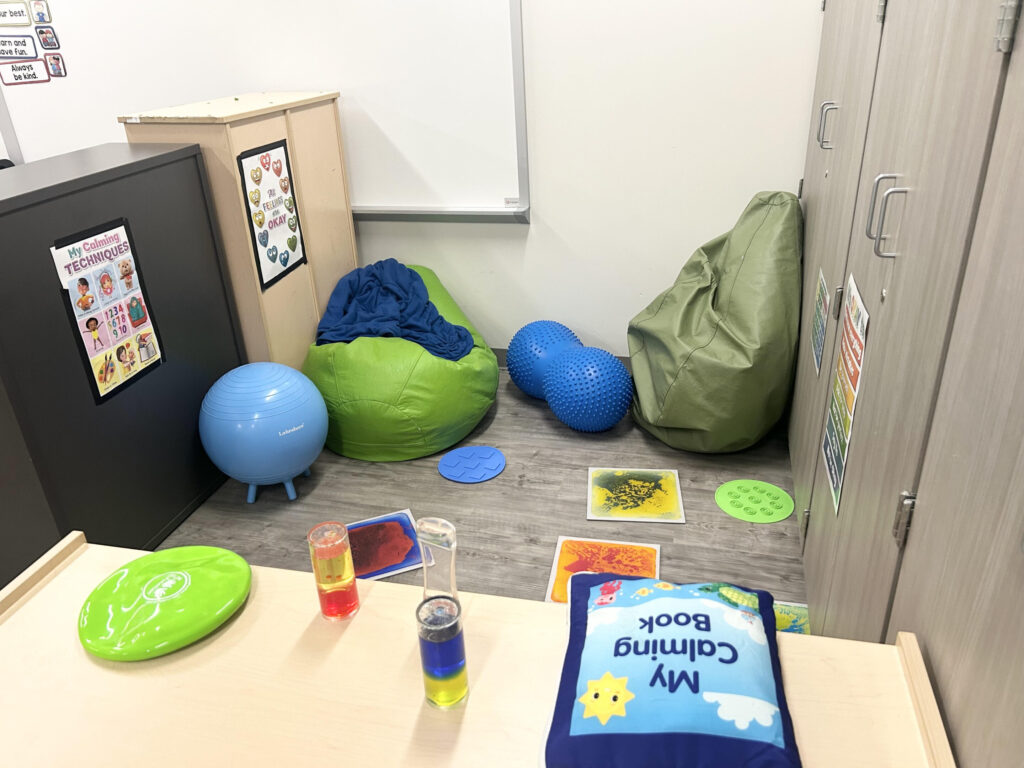
I run a centers based self contained elementary classroom, so I always know my center areas before school starts. I may change the way they are blocked off depending on certain behaviors that I see in the room even after the first week. Below is a picture of my calm down area from one year, but it has changed year to year depending on my students’ needs.
Centers
Teaching in a self contained elementary class is hard already with multiple grade levels! The first week is particularly challenging, because you don’t yet know your students and what to teach them. How do you fill up an entire week with things to do? When planning centers, be sure to check out the Simple Centers System course as well.
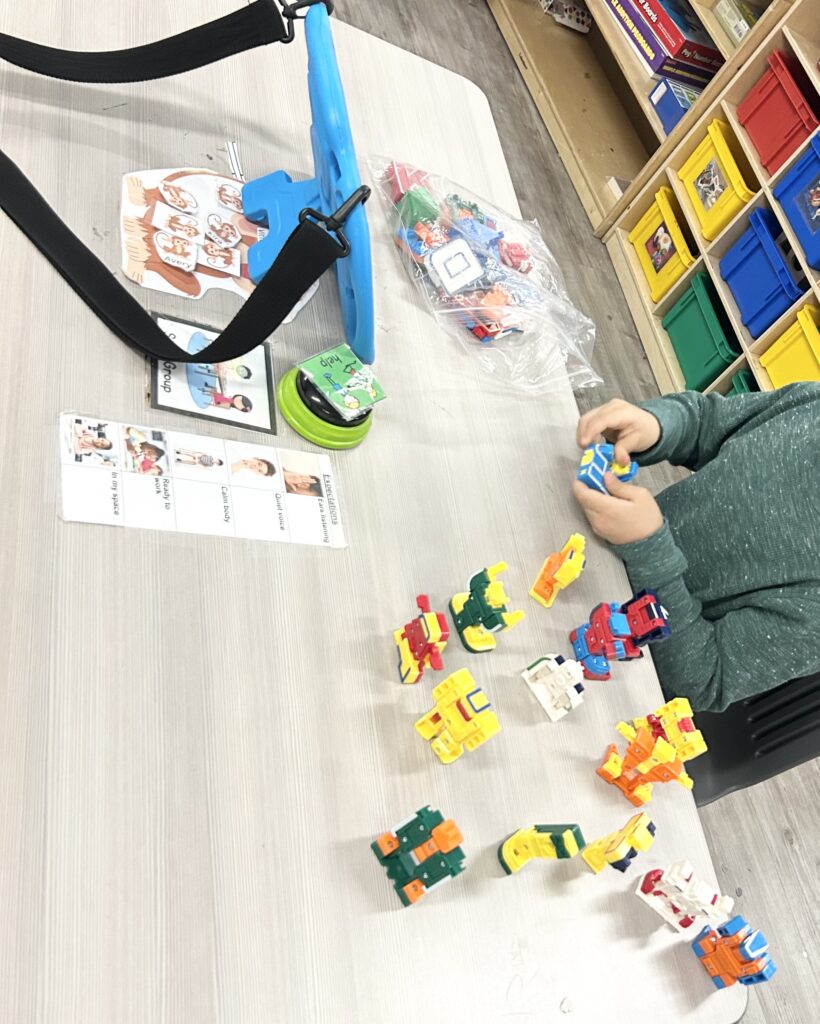
When you set up a centers based self contained classroom, and your schedule is set up for the times of each station and how they will rotate, what will they do at each center? My favorite thing to do the first week is play! As long as the play is structured, it allows the students to get a feel for the classroom, the teachers, the center routine, etc.. Have the centers set up already and thought out. For example, your teacher station may have learning toys, such as letter robots or number blocks to build with. The para station may have fine motor/ STEM bin type activities set out. The independent work station may have coloring sheets.
Paras at Centers
Each station should also be set up with unique expectations. I am not a fan of sitting the students at the carpet to review the expectations at each station. Self contained students tend to have a difficult time sitting and paying attention for extended periods of time. I would suggest to put an adult at each station. You could also have one para between 2-3 stations. Have the adult talk about the expectations for that station as the student is playing. Even if the student doesn’t appear to be paying attention, once they are reviewed consistently and daily, the students start to learn and follow them. Below is a picture of my para station where a student was playing with letter robots while we were learning letters.
Centers continued…
While they are playing is also a great time to form relationships with the students! Relationships have to be formed before behavior crisis interventions can occur effectively and before learning can happen. Play with the students, talk to them, talk about what they are doing, praise them, find out their interests. This is what we call “pairing” in the ABA world.
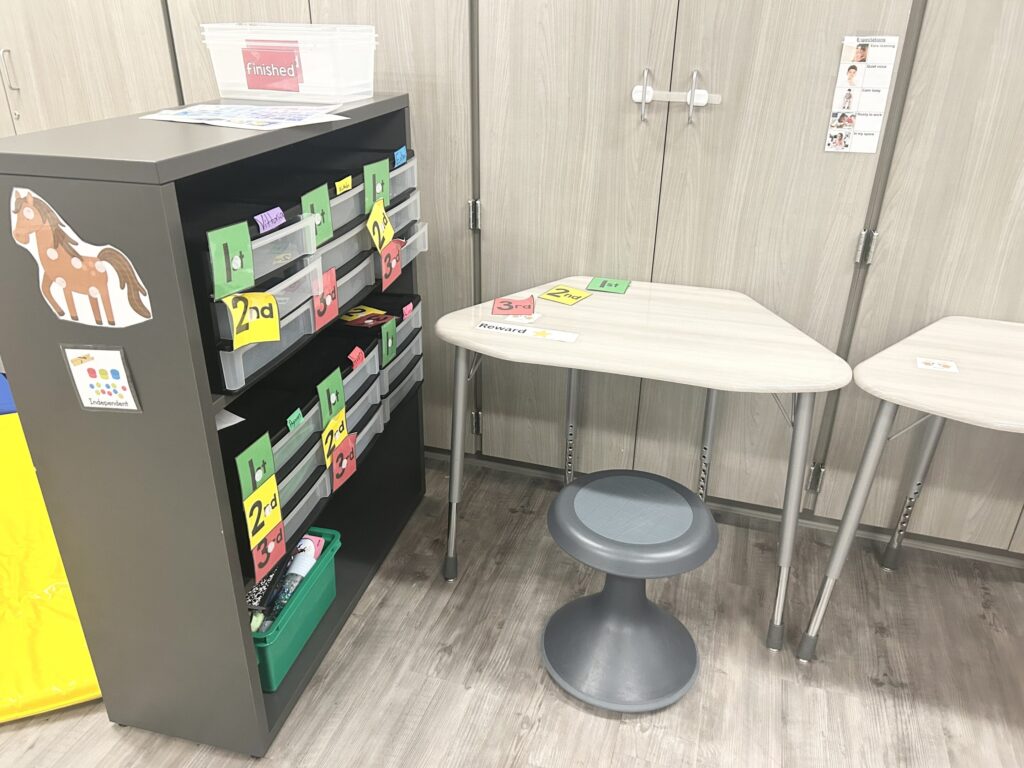
You can also be informally assessing students during this time. For example, if you are playing with letter robots, you can talk about the letters you see and watch if they point out any letters mentioned. A lot of times we get more out of our nonverbal, or higher needs, kiddos when assessing like this as opposed to verbally asking questions. This can also serve as baseline data for any IEP goals. Below is a picture of my independent work center. For the first week, you can have this set up, but put coloring sheets or something very simple in the bins.
Teaching
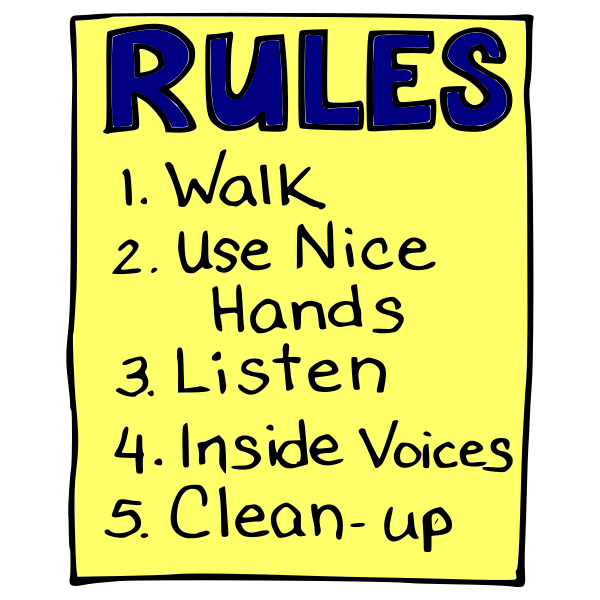
But what do we even teach during the first week of school? The first week of school should be all about learning routines and expectations. Like I said for centers, you should be talking about the different expectations during each activity and at each area. You can discuss basic classroom expectations during your morning meeting, or circle time. Although every student may require slightly different behavioral techniques in a self contained setting, you can still set a group of basic expectations for everyone. These can include things like “keep hands and feet to self” and “be kind.” Expectations like thesemay seem very simple for our self contained classrooms, but they are the baseline of every behavior that we are trying to change or shape. Below is a basic image of some simple rules you may have in your self contained elementary classroom.
Routine
Okay, so I have talked about how to introduce expectations during the first week and what to do during centers. Prior to the first week starting, you should have a schedule created and how and when the students will transition between everything. The best way to help students transition thorughout the day is by using visual schedules. The first week is going to be teaching how to use the visual schedules. They are not just decoration that you hope your students might look at. They should be used day 1 and consistently followed though with each day, even if it seems impossible at first.
When each student first arrives, direct them over to their visual schedule first to show them what they are doing at that moment and what comes next. After each activity time ends, show each student how to move over, or mark off their visual schedule and move on to the next activity on their schedule. During the first week, this may take a long period of time, as you and your paras are using a high level of prompting to assisst and teach each student how to maneuver their schedule.
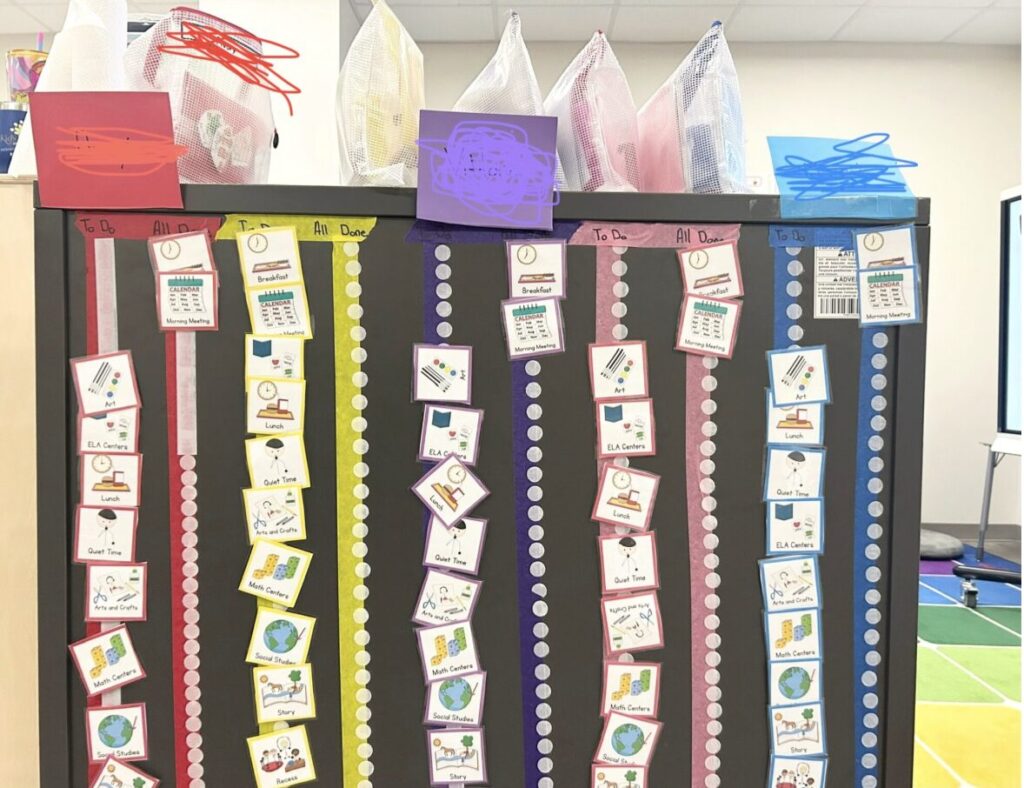
Again, this will seem very time confusing and frustrating at first. But trust me, these students thrive off visual schedules, and it helps their brains, and the classroom day move smoother once they are learned. For more information on choosing the correct visual schedule type and setting them up, check out this blog. Ready to set up your picture visual schedules? Head on over here to pick up your schedule icons and start prepping them! Below is a picture of my color coded visual schedules.
Your Turn
Now it’s your turn to conquer your first week in the self contained elementary classroom! You got it!