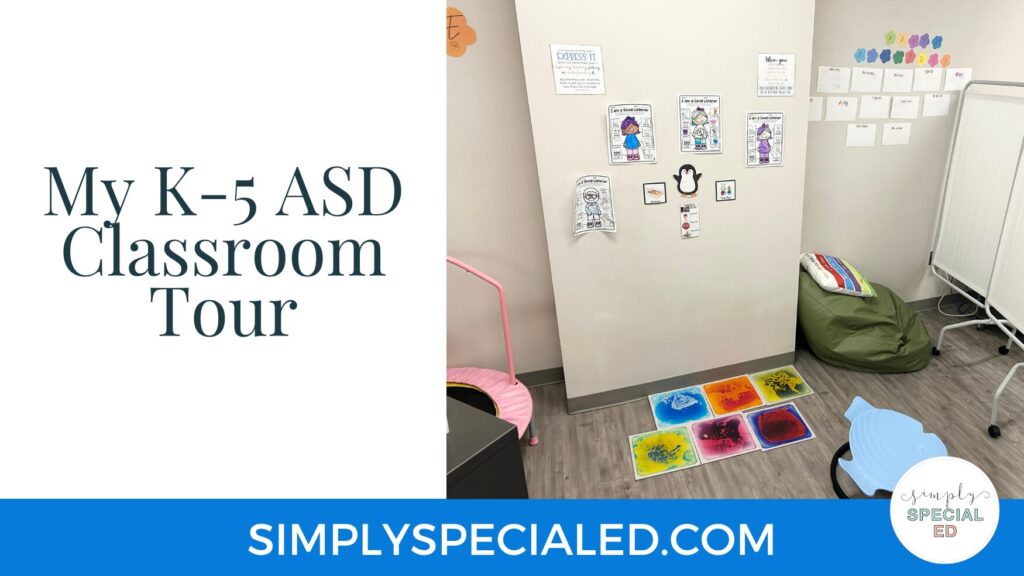
Come on in, and take a look around Mrs. B’s K-5 ASD classroom tour! I teach a self-contained elementary (K-5) class for students on the Autism Spectrum who exhibit deficits in communication, behavior, and academics. Classroom setup can be stressful, time-consuming, and overwhelming! Make a plan, get some example ideas, and read all about how I set up my K-5 ASD self-contained classroom! A few things you will notice throughout my classroom are the physical separation of areas, the color coding of students, and the animals that I used to label my centers instead of colors. I hope you enjoy. 🙂
Welcome in!
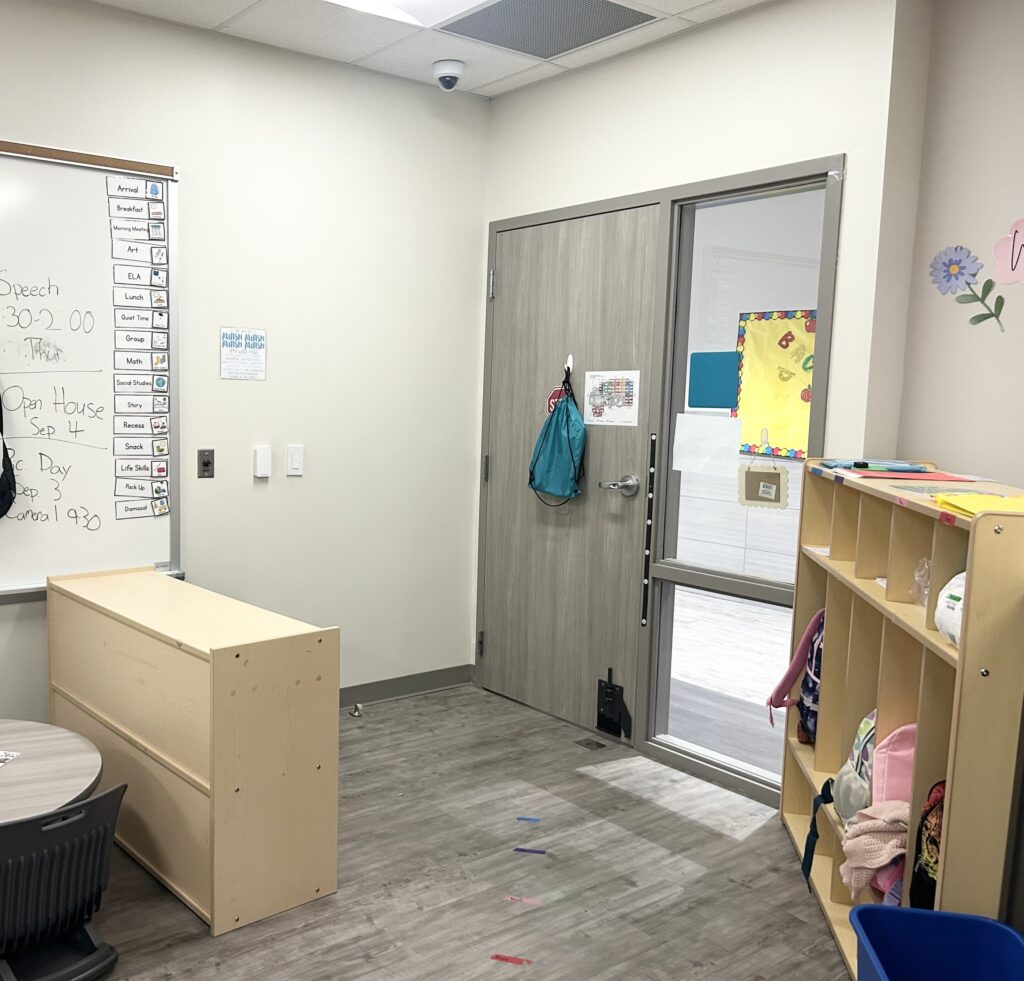
When you walk into my room, you see our large visual daily schedule on the whiteboard and reminders for adults next to that. There are cubbies on the right side of the picture labelled with their color. You see colored pieces of tape on the ground, and that is how my students know where to line up. They stand on their color, since my students are color-coded in my room. There is also a piece of furniture below the whiteboard, and this helps block our iPad station behind the shelf. I store extra supplies in there, such as gloves and wipes to grab quickly before heading out to the restroom.
Whole Group
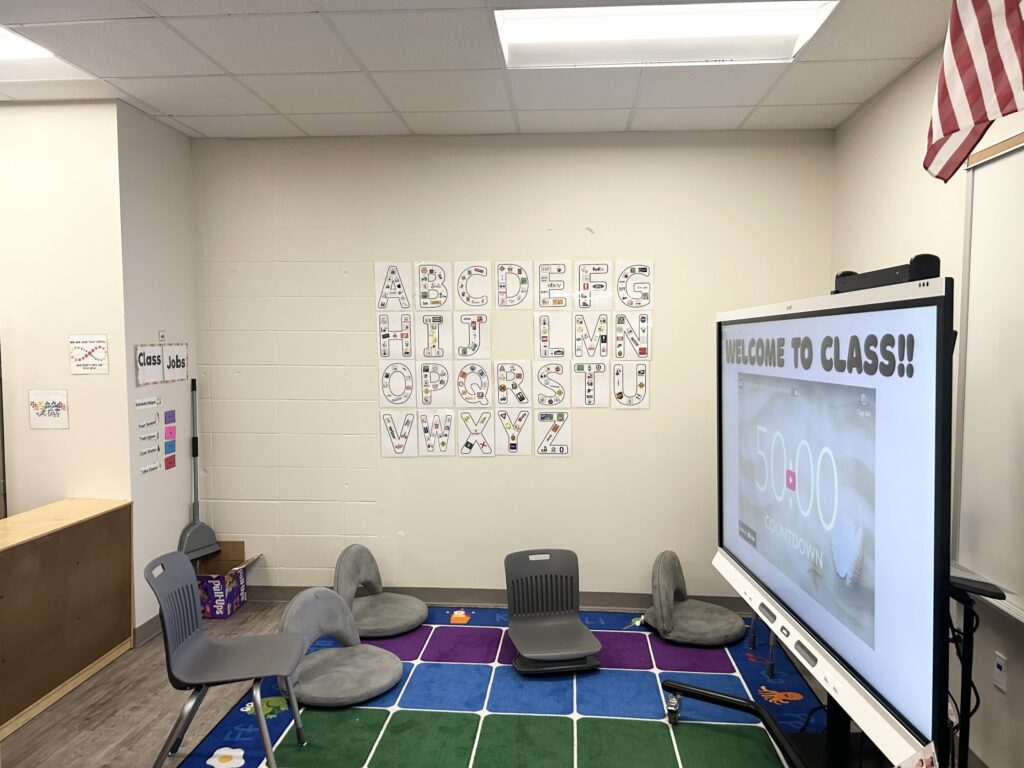
The above picture shows our whole group area where we have morning meeting, science/ social studies time, quiet time, and waiting time at the end of the day. Before anyone says anything, yes, I am fully aware that my letter “K” is missing on my alphabet wall, haha. You will also see a sign that says “Class Jobs” in the corner. That is where I put my students’ names next to the job they will be doing at the end of the day and supplies needed for those jobs. There is also a variety of seating options for flexible seating choices.
The last thing here is that my whole group area is very blocked off. There is a noticeable shelf in the picture, and there is another shelf that is not pictured. They have one way in or out of the area. This is how the majority of the areas of my room are to prevent certain behaviors, such as elopement. It also helps keep my students focused on the exact activity in front of them. You will also notice that I have very minimal decor around the room and on the walls. It helps lessen visual stimulation for our Autism students who may struggle with sensory overstimulation.
Visual Schedules
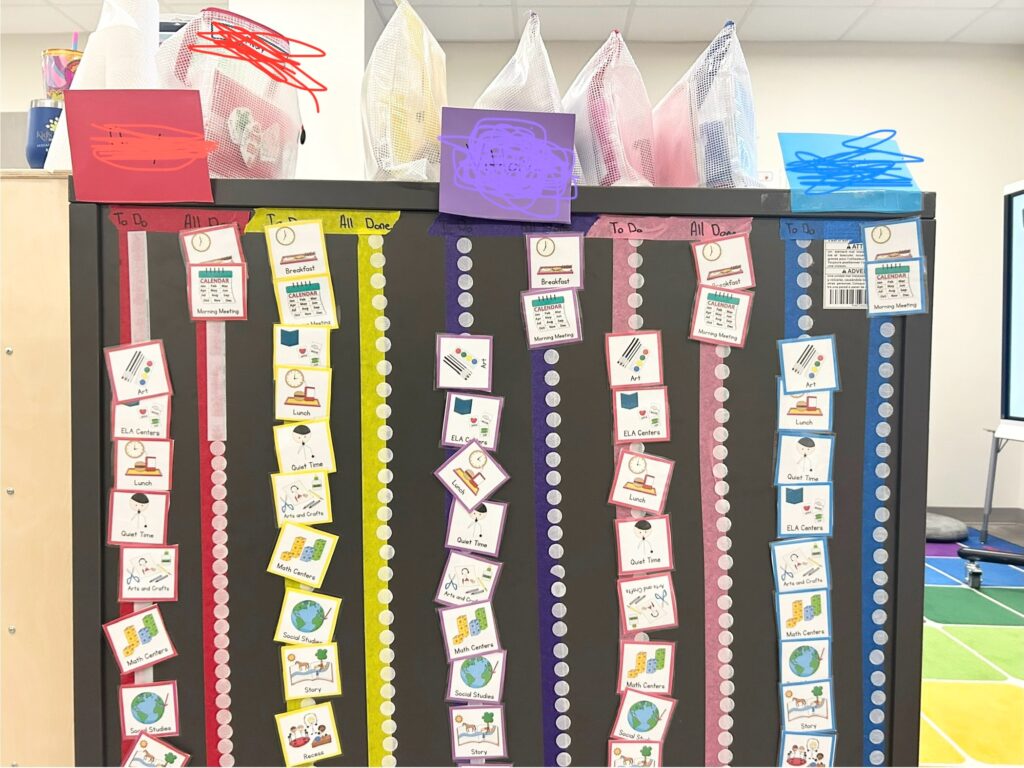
A must-have in any special education classroom is individual visual schedules! These schedules are from Simply Special Ed’s Simple Daily Visual Schedule Cards. They are perfect if you color-code the students in your classroom. Not all students will be on a picture schedule like this; it will depend on the needs of your students. For some higher-level students, they may have a check-off schedule that has words instead of pictures. You can learn all about the different types of schedules and how to figure out which is right for your students’ needs in the Simple Self-Contained Setup 101 course. Schedules can be a hassle to figure out, so go ahead and check out this free webinar on how to draft your own schedule.
Above each student’s schedule is a bag with their color. It holds their mini center schedules, any small reinforcement items, a pencil box, and any individualized behavior systems. These bags are carried with them through their centers, so they have what they need, and the teacher/para at each center can use any behavior items when needed.
Calm Corner
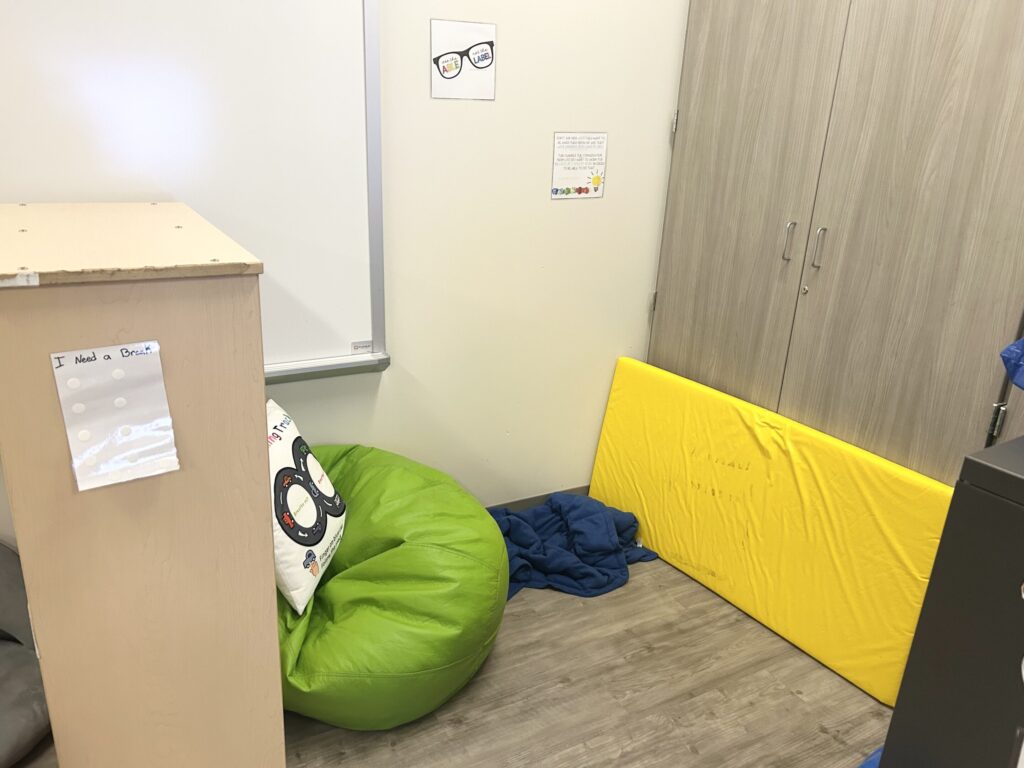
The calm corner is where students can go if they need to take a break or if they are showing escalated behaviors. Our students experience BIG feelings, and that is OKAY! We work on teaching explicit strategies about emotions, calming down, and regulating oneself throughout the school day, so they know how to better handle those feelings when they experience them. I only have soft objects, such as soft mats, so students do not hurt themselves accidentally when they are escalating.
There are no regulation tools, such as breathing or sensory tools, due to the possibility of harming the object or themselves with it. But an adult will always bring some needed options for the student when they are in the area. When a student is here, they have to be monitored by an adult for safety reasons, and it is NEVER seen as a “time out” for the child as punishment.
Center #1: Teacher Station
Before I take you on the tour of my centers, check out this Simple Centers course to help you create your own centers for your classroom!
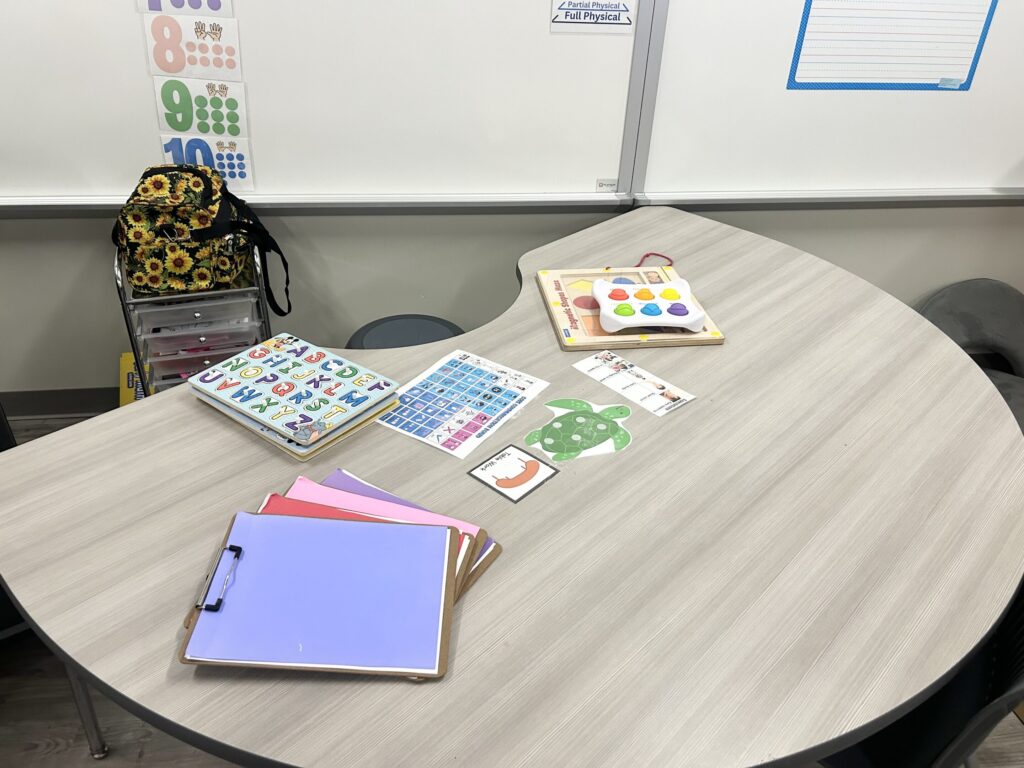
My 1st center is my teacher station. Its visual label is the turtle. Each student’s center schedule has the animals on it. They match their animal to the center they are at at the time, so they know where to go. I also have visual real picture expectations at each area of my room, not just the centers. At this center, I focus on IEP goals and direct instruction. I also take academic IEP goal data here. Each student has a clipboard for data collection with their color paper on top for confidentiality. The pull-out rolling cart in the back is separated by student goal work in each drawer. It is sort of a different way to do IEP goal bins.
Center #2: Para Station
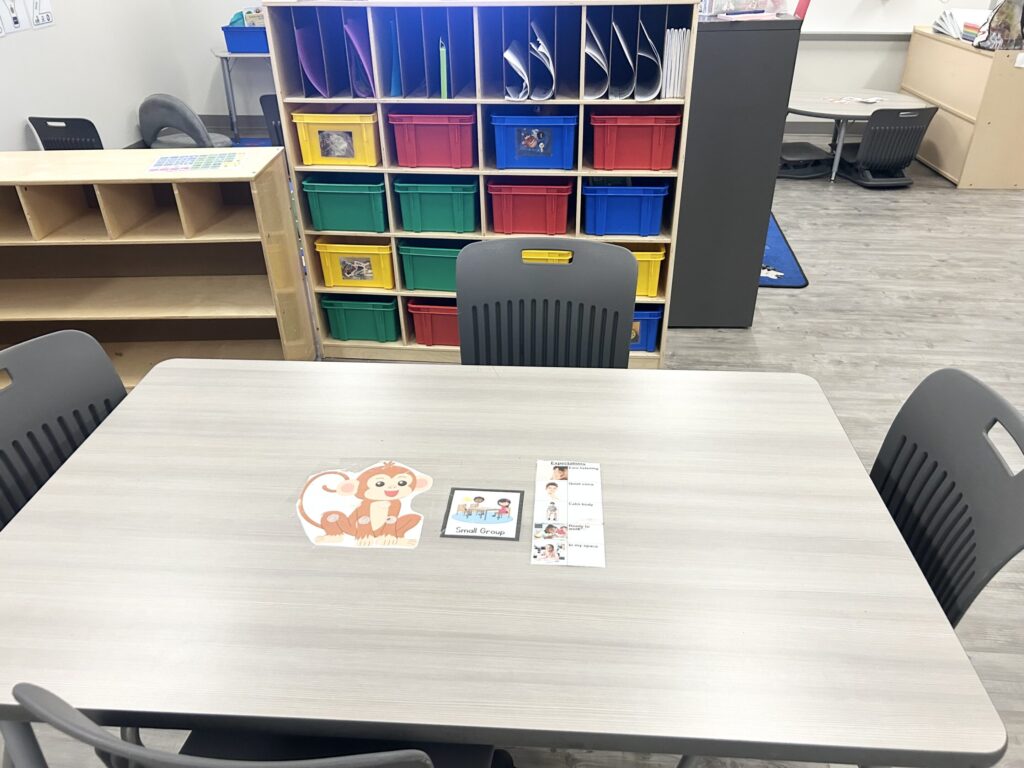
My next center is the para station. Its visual label is the monkey. At the para station, my paras do a group worksheet with the students that reviews something we have already learned. In the shelves, I separate all of the work for the week that is done at this table in order, so my paras can easily access it.
At this table, we also do morning bins. While all of the students are arriving in the morning, they come in and grab a colored bin with a fine motor activity in it to sit with until we start morning meeting all together. This table is also the area where we do any arts/crafts, science/ social studies worksheets, and eat snacks and breakfast. This is the only area in the room that is not fully physically blocked off, but since every other area is blocked off, this one naturally is as well, haha!
Center #3: IPad Station
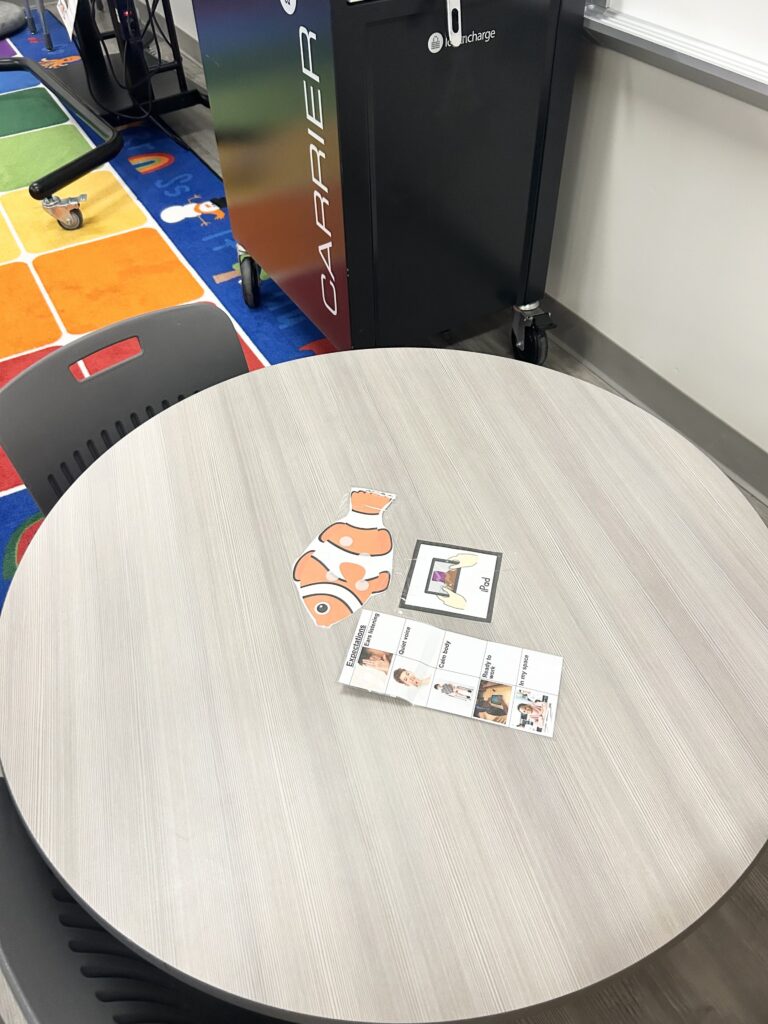
This is the iPad station, and its visual label is a fish. Each iPad has a colored piece of tape on it per student as well, so they can independently grab theirs when they arrive here. Each day, there is a specific learning app that they will be doing here, whether math or reading (and free iPad play on Fridays!).
Center #4: Independent Station
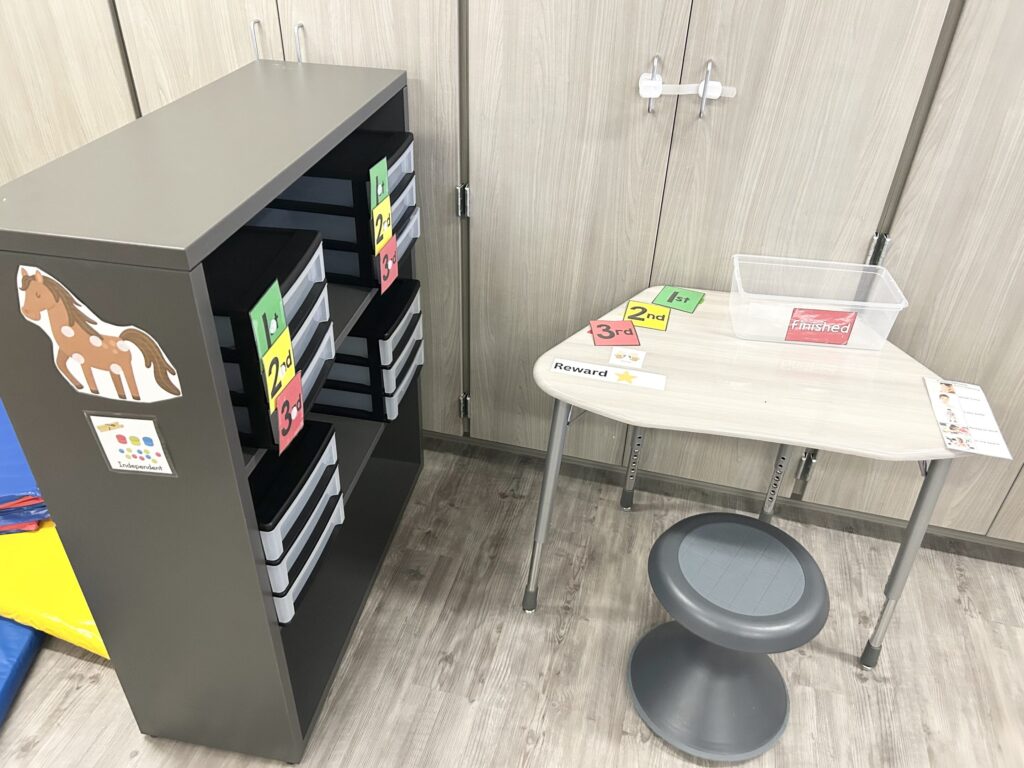
This is my independent station, and its visual label is a horse. The students have an activity in each drawer, labelled 1,2, or 3. They match it to the schedule on their desk, then they put each activity in the “finished” bucket as they finish. Finally, when their 1,2,3 schedule is done, they get a preferred reward. There are many different ways to set up your independent center, but this is what worked best for me. Read this blog post to learn more about independent work in a self-contained classroom!
Center #5: Play/ Sensory Station
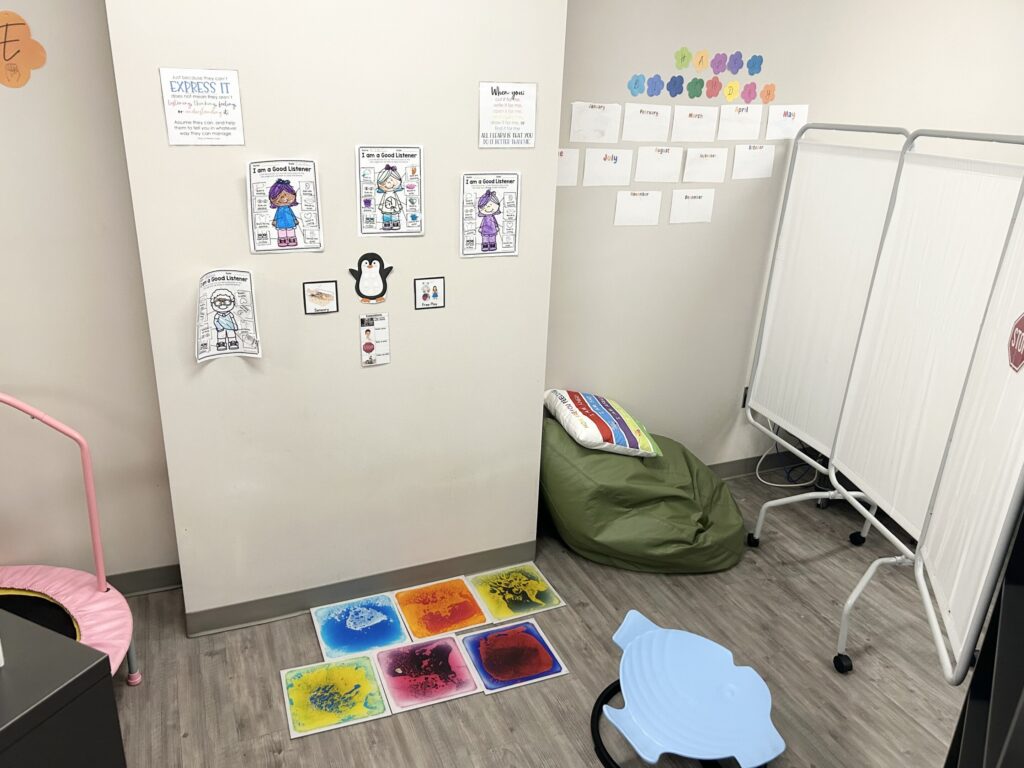
Welcome to everyone’s favorite area of the room! This area’s visual label is a penguin. It has many items for sensory needs and for playing. There is a trampoline, a bean bag, a spinning chair, sensory tiles, fidget tools, and multiple toys on the shelf. As always, this area is clearly blocked off, so students can only come in here when it is their time in the penguin station.
Well, there you go, that’s my K-5 ASD classroom tour! 🙂
Want to run centers in your self-contained classroom? Check out Simply Special Ed’s Centers course! This is how I based my centers off of, and then I tweaked them to fit my interests and my class needs. Still needing some inspiration? Here’s another tour of a self-contained special education classroom that I am sure you will enjoy.
I hope you gained some inspiration and examples from my classroom tour. It was great having you in my classroom. Have a great school year, and good luck with setting up your own special education classroom!