In my high school Special Education self-contained class, we don’t just love visuals – we thrive on visuals! There are so many great options for you to incorporate in your self-contained high school classroom to help your students conquer the day and grow in independence.
Visual Schedules

Visual schedules provide a structure and routine for students with disabilities. You can read all about getting started with schedule visuals here.
They also break down the day (which can seem long) into smaller chunks. Schedules help keep students organized, and when they know what is going to happen next, student anxiety is decreased, and independence is increased! You can prompt your students to check their schedule. Students can work to increase independence as they check their own schedule, find materials needed, go to the expected workstation, etc. Visual schedules help students understand and anticipate the daily routine.
In high school, build your student schedules with these real picture visual pieces.
If your schedule is going to change for the day, you can even put “change” onto your visual schedule to let students know that something different is coming.
Environmental Print and Frequently Used Words
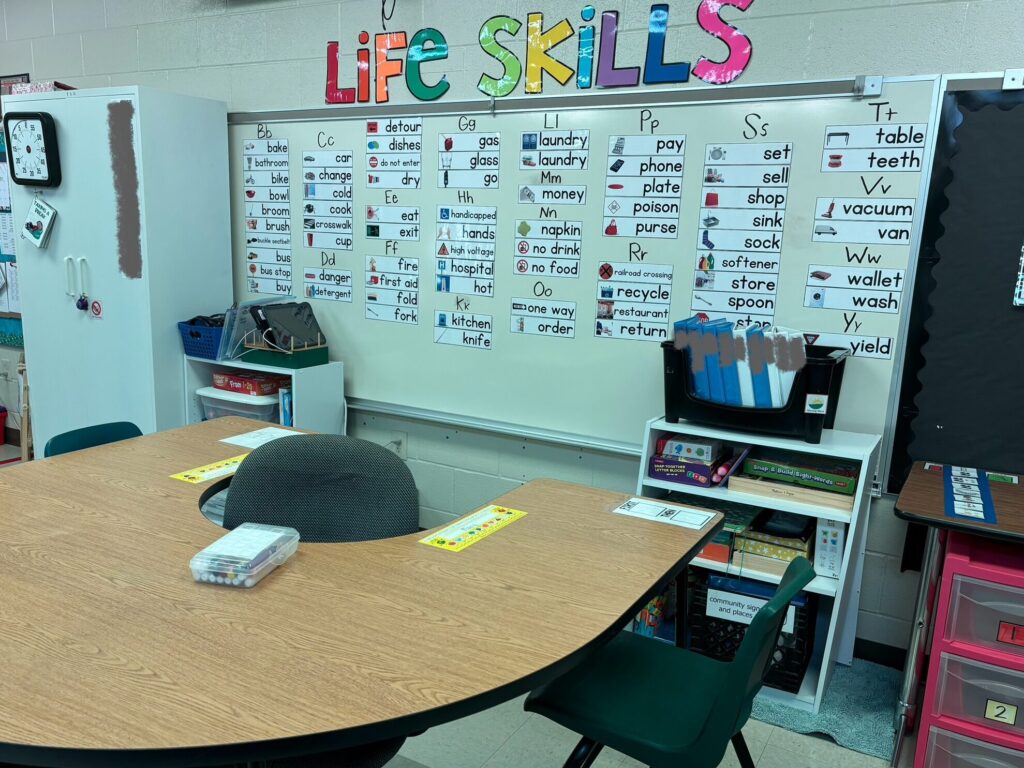
I love using environmental print to connect words and visuals for students who may be non-readers or emergent-level readers. For students who need increased visual support, it’s an accessible and easy way to connect everyday items with meaningful print.
Environmental print connects places and things to text, and can increase confidence in non-readers who recognize the familiar symbols and logos. I have students who get really excited when they are able to recognize a location they’ve been to or something they’ve seen before. That personal connection can also increase interest in language arts tasks. Label your areas (bathroom, rest area, free choice shelf, work table), but also make available print from the community and the world (maps, community and safety signs, brands, grocery store print, health office print materials).
Environmental print can also help to support student safety in the community. If they can recognize signs and other frequently used words in the community, this can increase their independence outside of school.
Classroom Expectations and Token Boards

Posting the classroom expectations with visuals is a good idea. Creating the rules and expectations together can give students a sense of ownership and shared responsibility instead of simply following rules set for them. After a behavior occurs, students can also reflect using posted classroom expectations. Use these visuals to address a behavior, support a skill, promote positive interactions, and build student independence.
You can go over these expectations every day and as needed. Visuals are there to remind students about being safe in the classroom, keeping their hands to themselves, following their schedule, and any other rules and expectations you have for your students.
Token boards are a great way to keep kids on track all day long. Token boards provide a visual for work completion and working towards a goal. Token boards support students with following directions and completing tasks, and then receiving their reward later (when their board is filled). These are especially helpful for students with Autism. Read more on token boards here.
Monthly Vocabulary

In our high school classroom, I like to use vocabulary words paired with visuals. These visuals can help foster communication and support instruction. Students can use monthly vocabulary visuals as an aid in academic centers. I use the vocabulary words for various academic tasks, like matching picture to picture or picture to word, using plastic letters to build words, building sentences, writing opinions, and more.
First Then Visuals

A must! First Then visuals are like a schedule broken down into small parts that are easy to digest. These visuals help students with behavior issues by displaying two visuals at a time. For students who become overwhelmed with completing a task (especially a non-preferred task), a First Then visual is a reminder that a reward or a preferred task or item is coming after completing work first.
This is also proven beneficial for students with Autism and students in special education classrooms to keep students on track before behavior occurs.
In addition, visuals like these support communication. I have First Then visuals all over my classroom so we can grab them when needed.
Communication Boards

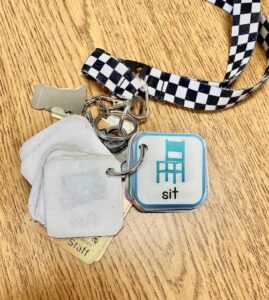
I keep communication boards with vocabulary in different subjects and in different sizes, available in various locations. Some are located on the wall so that students can access them at any time. Others may be on my rolling cart that moves from one workstation to another during the day, on my lanyard, or (for subject-specific communication boards), in academic binders.
Having communication boards available can be useful for many students! Nonverbal communicators can use these boards to communicate, answer questions about tasks, ask questions, give opinions, and more. Verbal students can also use these as a vocabulary bank for a specific topic or subject.
Use keyrings for small communication boards and single visuals like these.
Centers (Yes, for High School!)

Centers are a great tool for the self-contained classroom, and they run effectively with visuals!
Centers create a predictable routine for students, which students in self-contained settings thrive on. This is researched and proven! Centers assist students with transitioning and following a schedule, and you have a dedicated time during the day to work on certain skills.
Read more about setting up centers for high school here, and check out the Simple Centers System. The Simple Centers System really breaks it down for you with 40+ video lessons, an Official Simple Centers System Workbook, Toolkit, and Checklist, and 80+ downloadable resources totaling over 1,400 pages!
3 Drawer Workstation and Task Box Visuals

A 3-drawer workstation with visuals is a useful tool for increasing student independence in tasks.
3-drawer workstations only work with visuals in place! (Grab these for FREE!) Visuals placed on the table assist students in completing 3 tasks independently before receiving a preferred item. They are put in place to increase independence, not having your student check in with you between tasks. Check out more on 3-drawer workstations here.
I LOVE task boxes! Additionally, grab the visuals for your task box system! With labeled task boxes, students will be able to utilize the visuals to find which box to work on. Download your own set of task box visuals and make two copies: one for the boxes and one to place on your student’s visual schedule. Students complete their schedule of workboxes using the visuals as directions.
Calm Down Corner and Feelings Visuals

I really like to incorporate a calm-down corner, a free-choice station, or a sensory area where students can go to feel safe and comfortable during leisure time or when they need sensory support during the day. This area of your classroom will also benefit from the use of visual tools!
I include visuals that show different types of feelings. This can assist students in identifying how they feel. I also include visual supports to help calm down and visual tools to use for regulation. Give your students access to self-regulation tools in your classroom with this set of self-regulation visuals, choice boards, and request boards!