Centers? In high school? Yes, please!
Structure: Knowing What to Expect
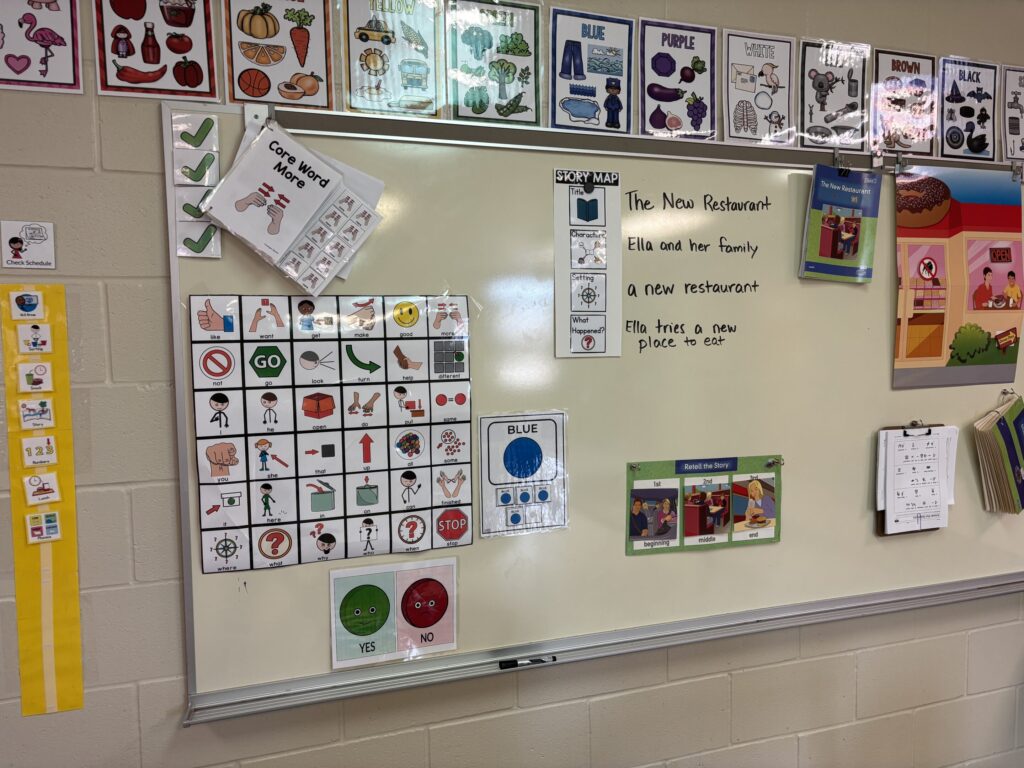
Why even use centers in the first place? Centers create a predictable routine for students, which students in self-contained settings thrive on. This is researched and proven! Centers assist students with transitioning and following a schedule, and you have a dedicated time during the day to work on certain skills.
Centers also allow a decrease in some of your precious planning time! I know that planning periods can be few and precious. If you have centers set up for your classroom, it will decrease some of this time needed to plan for new topics- your centers are ready for you, and all you have to do is switch out materials!
Centers also allow students to practice in small groups or independently. If one of your centers is dedicated to independent work, students will have a consistent time to practice this important skill more frequently.
Lastly, centers create the opportunity for students to move around- literally. Movement increases engagement for our friends in self-contained settings. So let’s get moving and plan some centers!
Create Your Centers Groupings
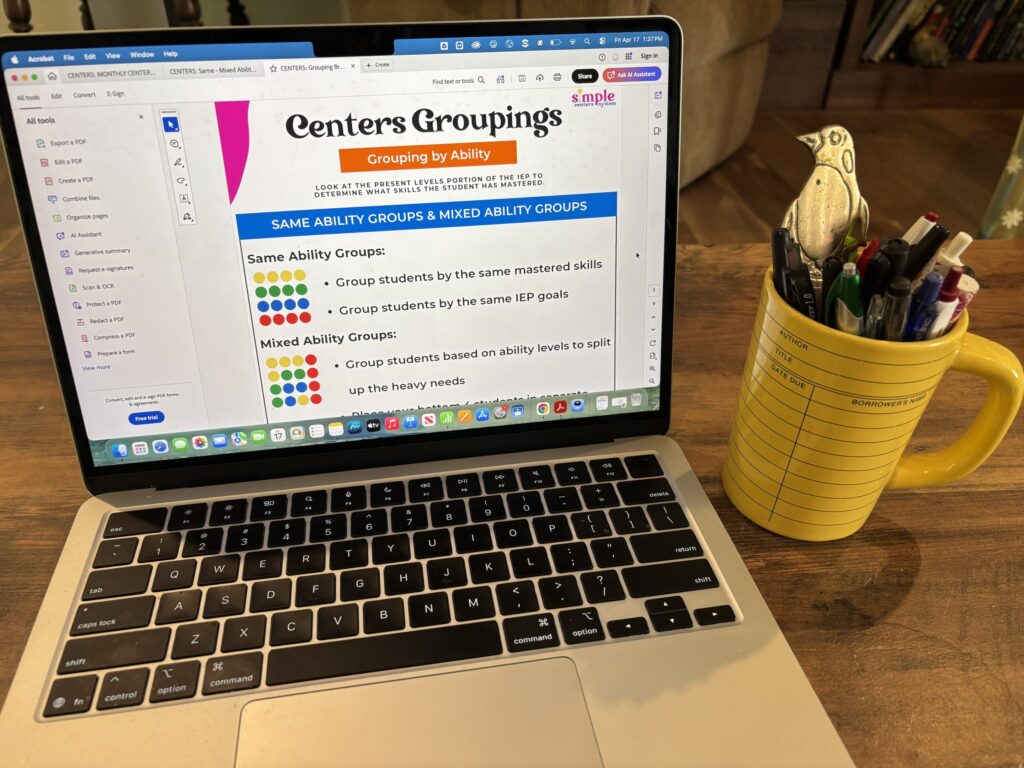
First, think about your specific group of students. Every class is different. Plan which students go well together, and how long your centers should be.
There are a few options – you can group them by similar level to teach skills in small groups. Optionally, you could think about “peer mentors” and which higher-level students could help others in groups.
Depending on your specific set of students and their needs, you can do just a few groups or create several rotations. You can have short, highly supportive centers with pre-planned breaks in between, or you could create 15-20 minute centers where students rotate through multiple types of tasks. You can start with shorter centers and increase the time as students get the hang of it.
Centers can work in a variety of ways. It’s always about your students and what supports they need to succeed!
Label Centers Areas
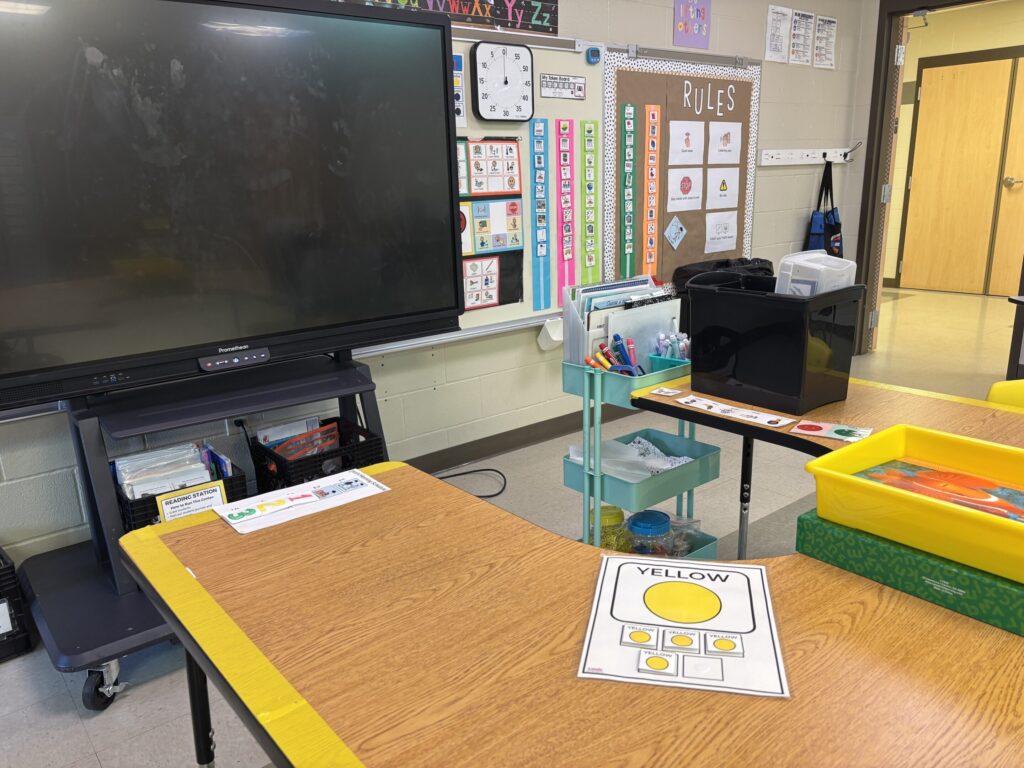
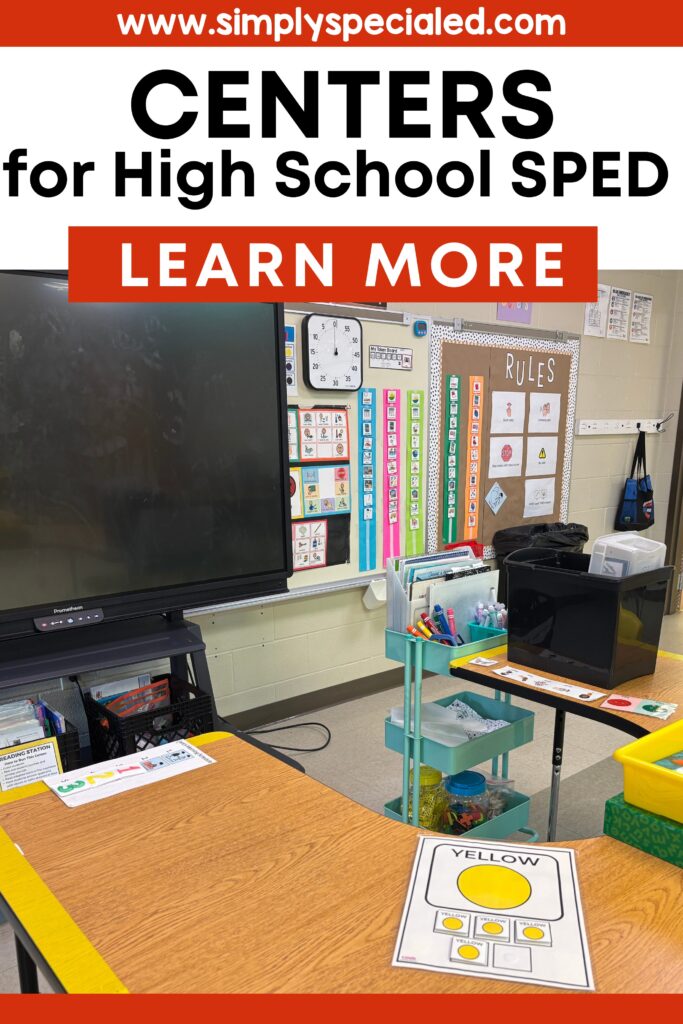
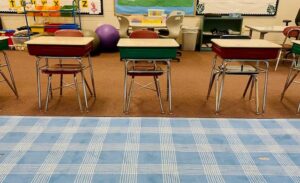
Next, you’ll need to create visual boundaries for your center areas. You can use furniture to assist with building areas, or simply use visuals and color coding of areas. Both of these label your center areas and help students know where to go next, where to find the task to complete, and what each center is.
Add the appropriate labels to define each space. Make sure that your labels match what your students’ schedules say!
Visual Directions and a Routine for Centers
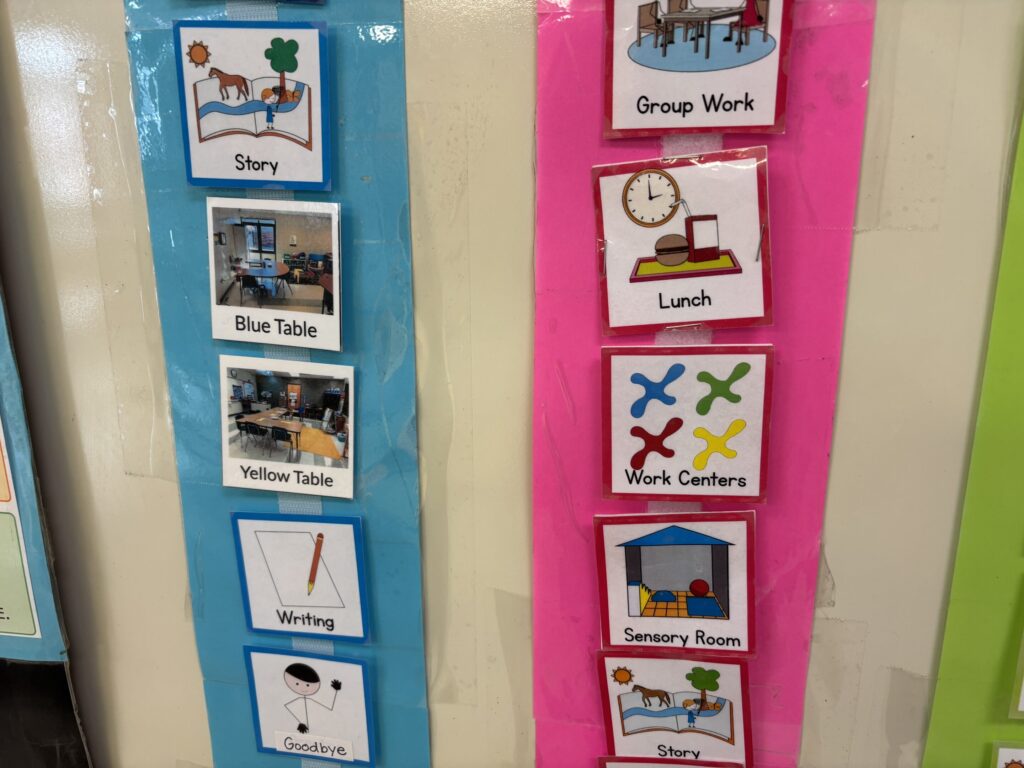
Using visuals for centers helps to enforce your routine and give students the comfort of predictability. For students using a visual schedule, add centers visuals to their schedule.
Higher-level students can complete centers using a schedule (a list without visuals, if appropriate for them).
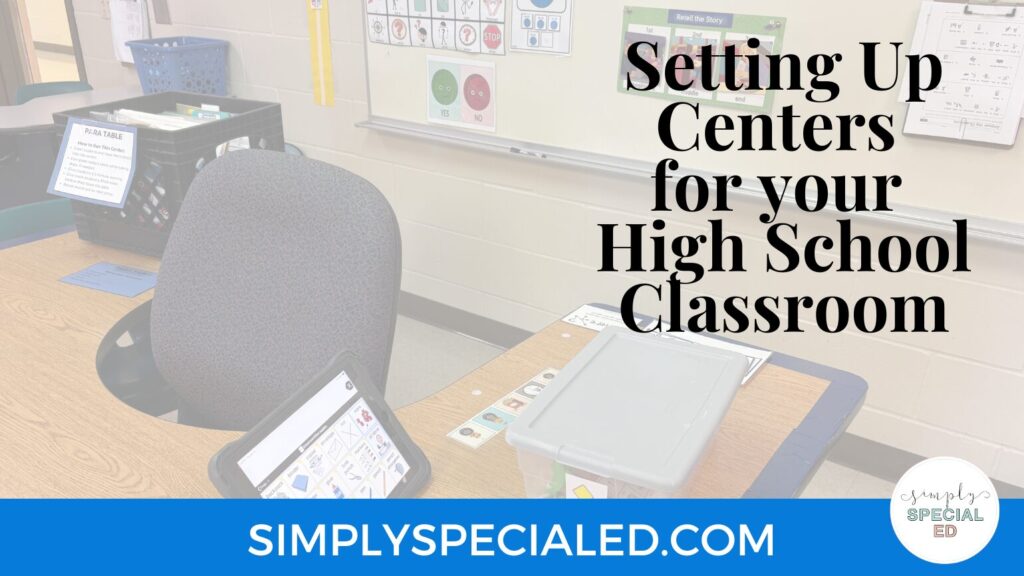
Centers also run smoothly when you have the content labeled as well. Your center visuals should clearly show students what to work on and how to complete it, while also guiding staff on how the center should be run. I like to create bins that match the center and contain the materials needed for students to complete the work.
Using Timers for Centers
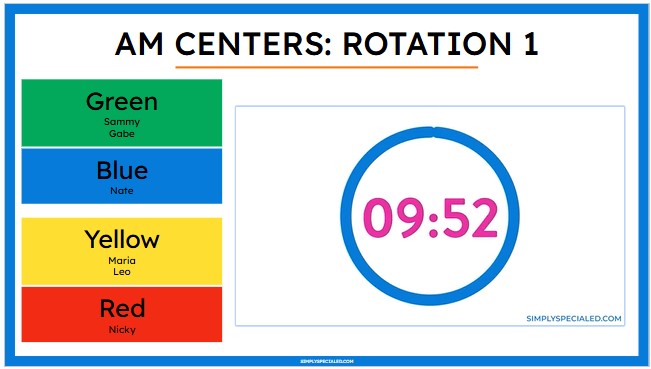
Timers support transition, and transitions can be difficult for students with disabilities because they often require multiple skills—cognitive, sensory, emotional, and physical—all at once. I absolutely love using timers for many things in my high school classroom. If you use timers for centers, students have that transition support through a visual reminder – how much time total they’re spending at a center, and how much time is left are displayed for them, and they can be more prepared for moving on to the next thing.
You have options!
- Use a whole group Time Timer (I love these because you can see the time)
- Use a Promethean/touchscreen board to display timers digitally! (This is great because you can also display what happens when the timer is done!)
- Use classic “kitchen timers” that buzz
- Use a sand timer to see the time pass (without a loud beep)
Plan What You’ll Teach at Centers
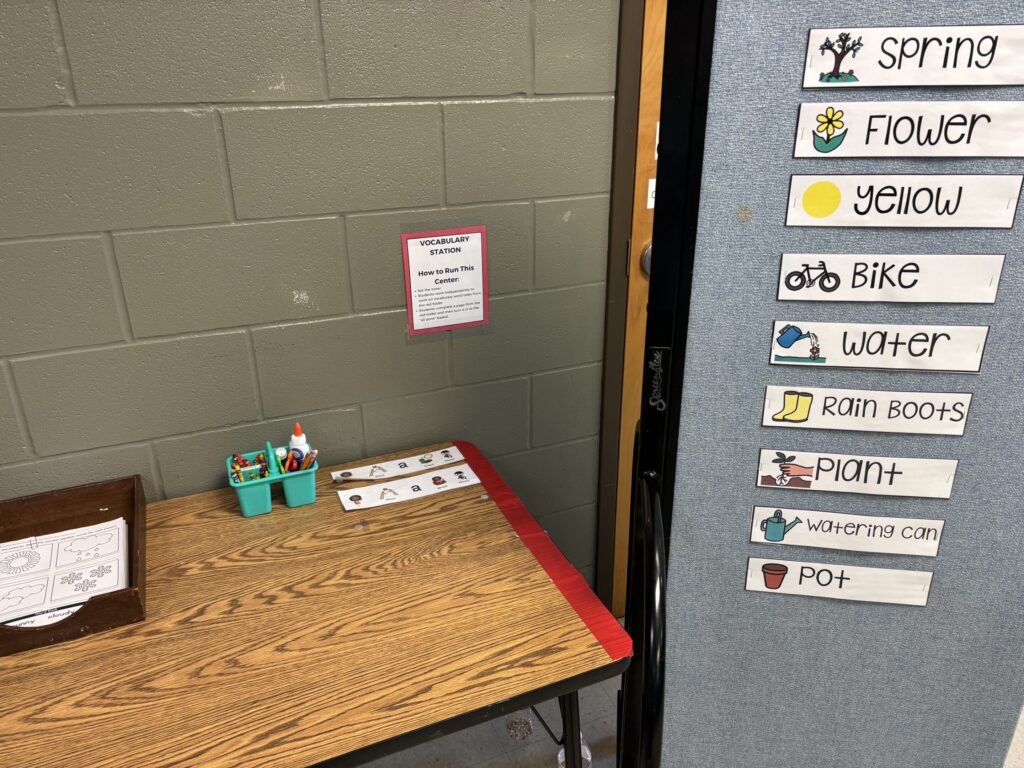
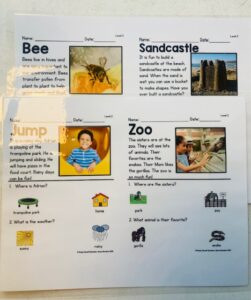
Next, when setting up centers for your high school class, think about what exactly you want to be completed during each center. A great option for your centers is to create labeled bins for each center’s work. This will not only help students understand expectations, but also help keep you organized!
Here are some ideas:
- A teacher-led station
- A para-led station
- A computer station
- An art station
- An independent station with errorless work or work at the student’s level
- A leisure/free time station
- A sensory station with a sensory bin
- A fine motor skills bin station
- Teach ELA/Reading in small groups
- Work on math skills with a teacher or independently
Create and Print Centers Visuals
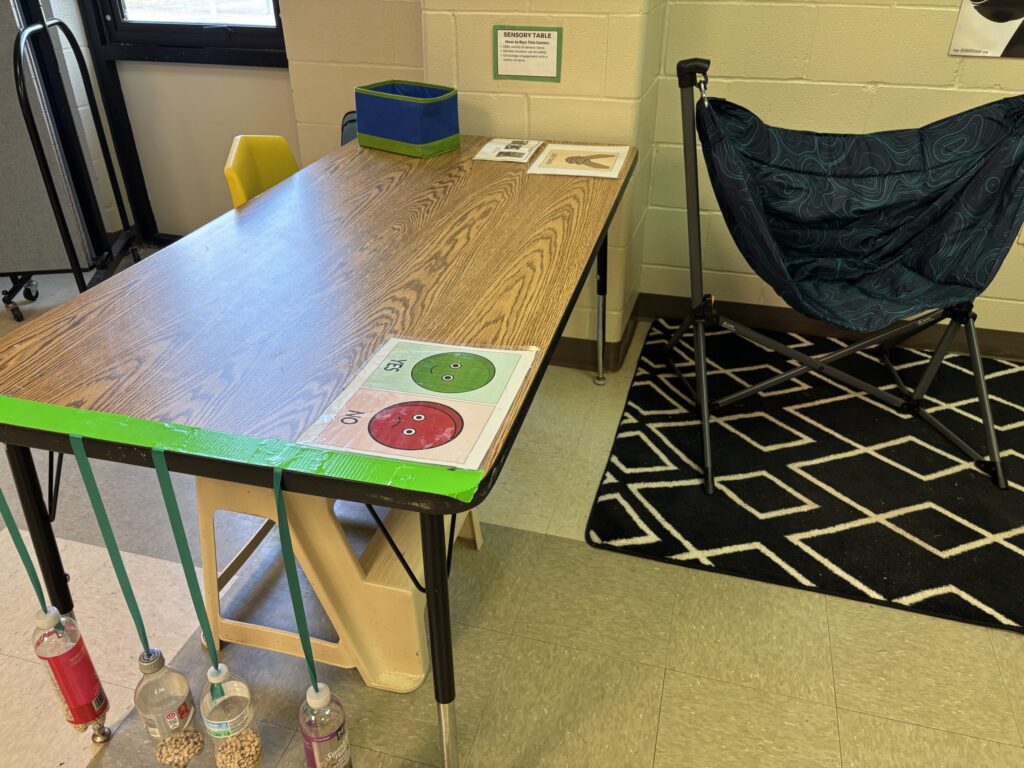
Visuals for centers are available from Simply Special Ed and are ready for you to print, laminate, and make your centers ready for student learning.
There are different approaches for different student levels. However your high schoolers thrive, you can use visuals and planning to make centers run smoothly.
For the highly visual needs- print token boards and check-in visuals in color. Students can match their schedule piece (color) to the station they’re going to. Students in high school may also have their own schedule to follow from center to center.
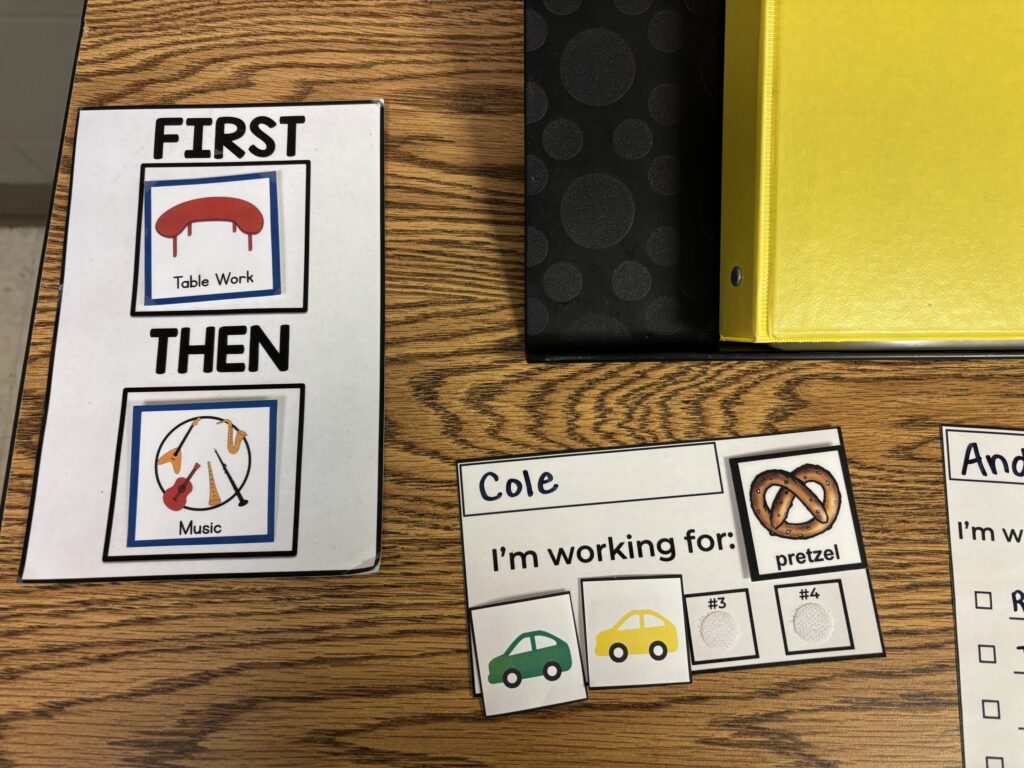
For higher-level students, their visuals can be words on a checklist. This is a valuable tangible schedule. They can also carry these from center to center as they complete their schedule.
Use the Simple Centers System!

Do you want to really dig into centers and how to best make them work for your classroom?
The Simple Centers System really breaks it down for you with 40+ video lessons, an Official Simple Centers System Workbook, Toolkit, and Checklist, and 80+ downloadable resources totaling over 1,400 pages!
This go-at-your-own-pace professional development course goes over 9 video modules and covers the following topics in depth:
- The Reason for Centers
- The Pillars of Success
- The Simple Centers System Format
- Structuring Centers for Success
- The Magic of Centers Transitions
- How to Plan for Centers
- Staff Training
- The 10 Day Plan
- Brainstorming Pitfalls
I recommend placing centers on your high school self-contained schedule!