Creating a calm corner can be beneficial for all students, especially those in a self-contained setting. It can be used to help students regulate and process their emotions. The calm corner can also allow them to take a break to maintain their safety in the classroom. It can be a preventative or reactive tool, depending on how it is used.

Read on to learn some tips for creating a calm corner that your students actually want to use!
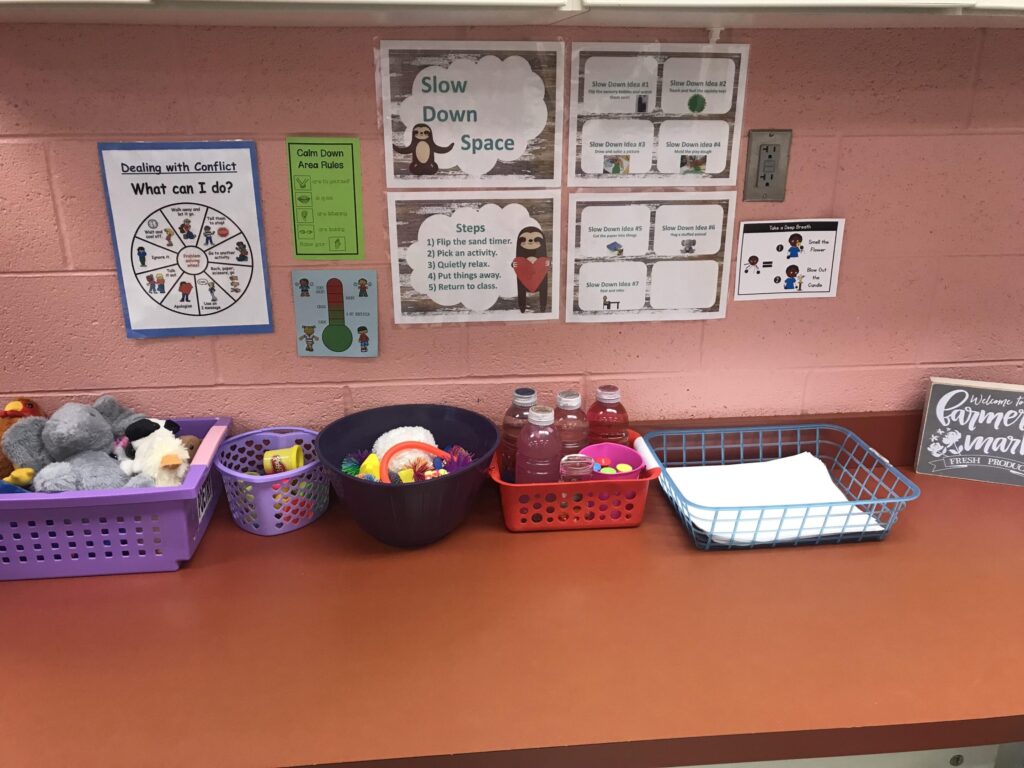
Create a designated space in your room
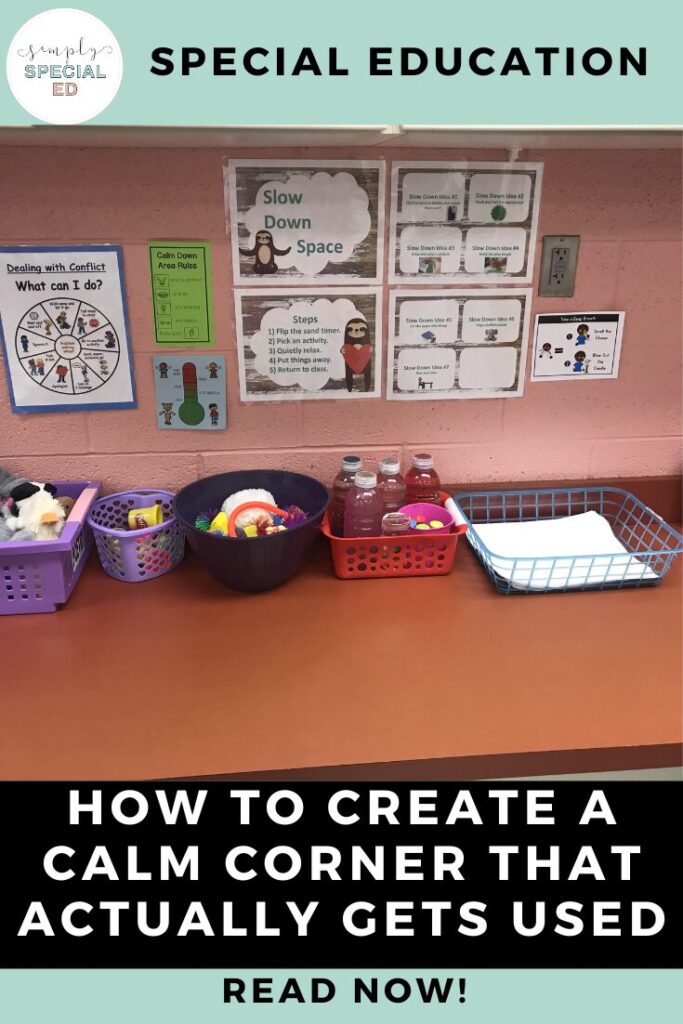
When you are setting up your classroom for the year, it is important to think about exactly which spot in the room can serve as your calm corner. Ideally, it should be a space that is away from distractions and clutter. Students should know exactly where it is located from the first day of school so they can easily access when needed. Think about your students with physical disabilities as well- can they access it easily?
In my classrooms, I have always chosen to put mine as far away from the students’ desks/work areas as possible. I have found it helpful to label it as well, so there is no confusion for students or even other adults that may come into the classroom and want to utilize it for a student (counselors, admin, substitutes, etc.).
This type of corner can have different names- I have used the terms “cozy corner” and “slow down space”. You can even match it to your classroom theme! For example, a camping themed classroom would look great with a tent for a calming space. No matter the name or theme, the corner serves the same purpose.
For younger students and/or students who are non-readers, the more visuals in the designated calming space, the better! Students can decorate and design their own signs for the calm corner to give them more ownership.
Check out SSE’s course on setting up your self-contained classroom for more tips on how to set up your physical space for student success. It will walk you through all sorts of things you may not have thought of and can help make your classroom a calming place for students.

Introduce the calm corner in a lesson
Just like any routine in school, using the calm corner should have rules that are introduced as early as possible and then practiced! During the first week of school, I introduce the calm corner as a whole group lesson. I start by reading a book about staying calm, understanding emotions, etc. We make a poster of the rules, such as the sensory toys only staying in the calm corner. Students can even sign their names on the poster to foster ownership of the rules.
This SSE blog post gives some great ways to teach students about emotions, as well as book recommendations.
Some of my favorite books to introduce the calm corner are I Am Peace by Susan Verde, A Little Spot of Feelings by Diane Alber, and Breathe Like a Bear by Kira Willey.
Give students time to practice
I then call students over one at a time to try out the calm corner for a few minutes each. They practice using a timer. I like these sand timers from amazon that have various times available. Students also explore the sensory toys. Some toys I always include are play-doh, stuffed animals to cuddle, stress balls, etc.
Check amazon for resources, such as these breathing technique visuals, liquid bubblers, and more to include in your calm corner.
While each student is practicing using the calm corner, the other students are working on a social-emotional learning assignment. Examples include coloring or drawing a picture related to the book we read, making their own calming book with strategies for calming down that they can bring to the calming corner, etc.
Review calm corner rules and revisit
After students have been introduced to the calm corner and had a chance to practice, I explain that the calm corner is not just a place to go play and avoid schoolwork. We discuss scenarios where the calm corner can be helpful.
For example, students may use the calm corner when their brain needs a break from their work, when something upsets them in gym class and they need to calm down before returning to class, etc.
We also discuss that once the timer goes off, the expectation is that students return to what they were doing. We have a discussion about keeping the area clean and cleaning up after ourselves when we are done using the space. If they are not able to follow these rules, then they take a break from the calm corner until they show they can use it again. Some teachers’ thoughts on this may differ, but this has always been the rule in my classroom.
It may take a while to get the routine down of using the calm corner. Once the novelty has worn off, I have noticed that the constant asking to go to the calm corner decreases and it becomes a helpful space. It can help to revisit the topic throughout the year, especially if you notice that it is being used incorrectly or not being used at all.
Make sure you praise students for using the calm corner correctly! This doesn’t have to be a tangible reward, simply giving students a verbal praise or a high five can encourage the student to keep using the calm corner correctly.

Make it cozy and inviting
It sounds obvious, but you want the calm corner to look cozy and inviting for students. The more visually appealing it is, the more it will get used.
Things like bean bags and pillows make it feel safe for students. Students love to cozy up with a blanket and pillow for a few minutes. Adding things related to student interests, such as posters of certain characters, movies, etc., can also help encourage students to utilize the space.
You don’t have to spend lots of money, or any money at all. Talk to teachers who are retiring to see if they have any items they are parting with. You can also ask parents if they would be willing to donate any items. Set up a Donor’s Choose or amazon wish list- people love to help out students and teachers!
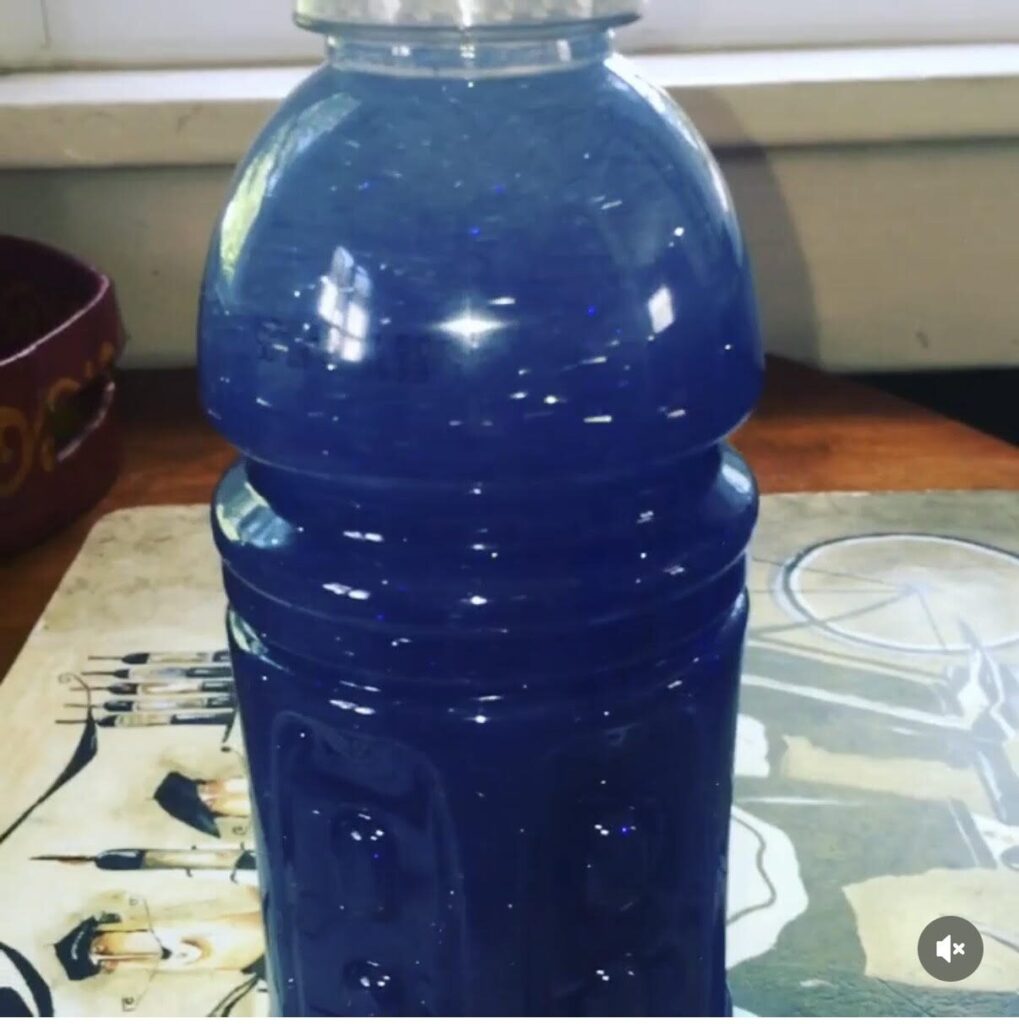
It is fun to incorporate the decor of the calm corner into a classroom lesson/activity. You and your students can make colorful sensory bottles to add to the corner to make it more appealing. I made my first sensory bottle (see above) almost 10 years ago and it is still holding up (pro tip- super glue the cap shut!)
Teachers Pay Teachers also has free and low-cost calm corner packs that you can download to decorate your corner, such as this rainbow one from Miss Gabby’s Corner.
Your students will love your calm corner if set up and used correctly! It is a great space for students to learn to regulate themselves and simply take a break during the chaos of the school day. It can be as involved or as simple as you want, as long as you give students the tools to utilize it in the correct way.