Transitions throughout the school day can be difficult for students with special needs. Read on to learn some tips for facilitating smooth transitions in the classroom.
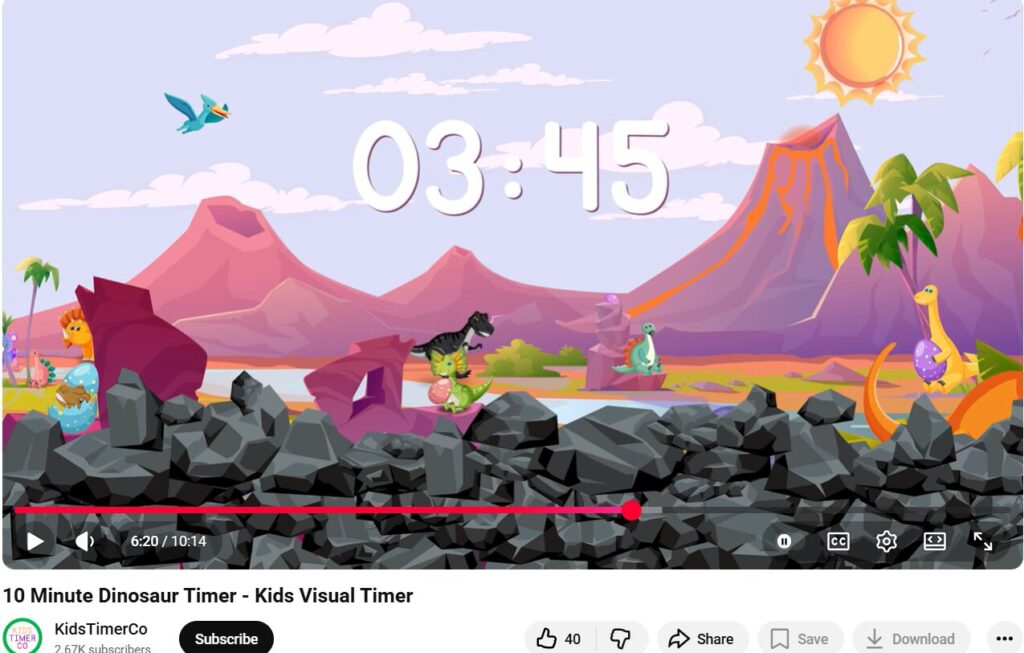
Students love to choose different themed timers on Youtube!
1. Use timers
In my opinion, timers are a necessity in a Special Education classroom. Visual timers can be a great tool for helping students understand time management.
Personally, I like to put timers up on the SmartBoard for all students to see. You can search on YouTube for different timers (ex: 20-minute timer, 10 minutes, etc.). Youtube also has different themed timers (ex: Spring, dinosaurs like the one shown below, etc.). I have one student who will always ask me if we can put on a Spongebob timer, or whatever he is interested in at the moment!
There are also some cool visual timers you can purchase, such as a sand timer. These can be used for the whole class. They can also be used for individual students as they complete a task or take a break.
Timers are a good tool to use to give clear directions involving transitions. For example, “you can play with the toy until this timer is done. Then, we will clean up for the next activity”.
2. Give verbal countdowns
Along with visual timers, it can also be helpful to verbally tell students how much time is left before a transition. I like to say “okay, we have 3 more minutes left to play”, or “in 5 minutes, the timer will be at zero and we will clean up”.
This helps direct their attention to the timer that is already going. Giving advanced verbal warning can help lower anxiety. This can also minimize students feeling caught off guard when the timer does go off if they weren’t paying attention.
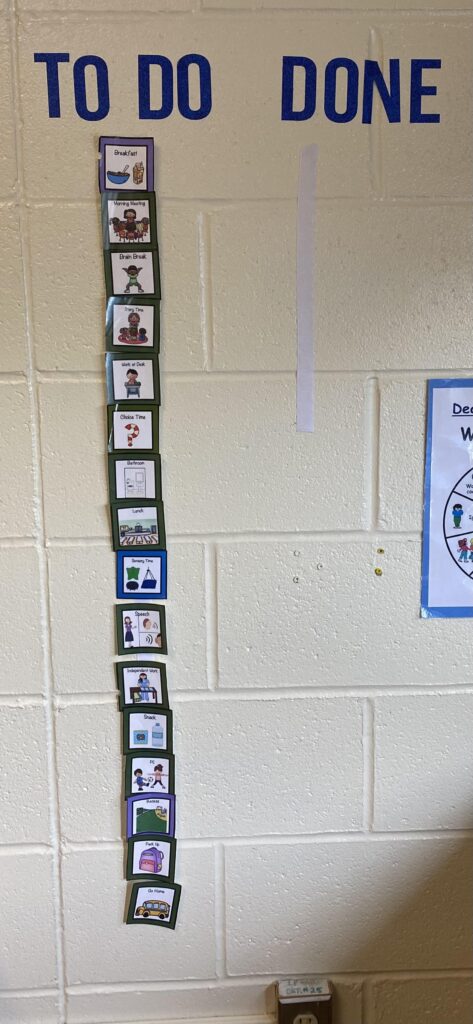
Pictured above is a visual schedule from my previous K-2 self-contained classroom. You can also find schedules in the SSE TPT shop, like this one.
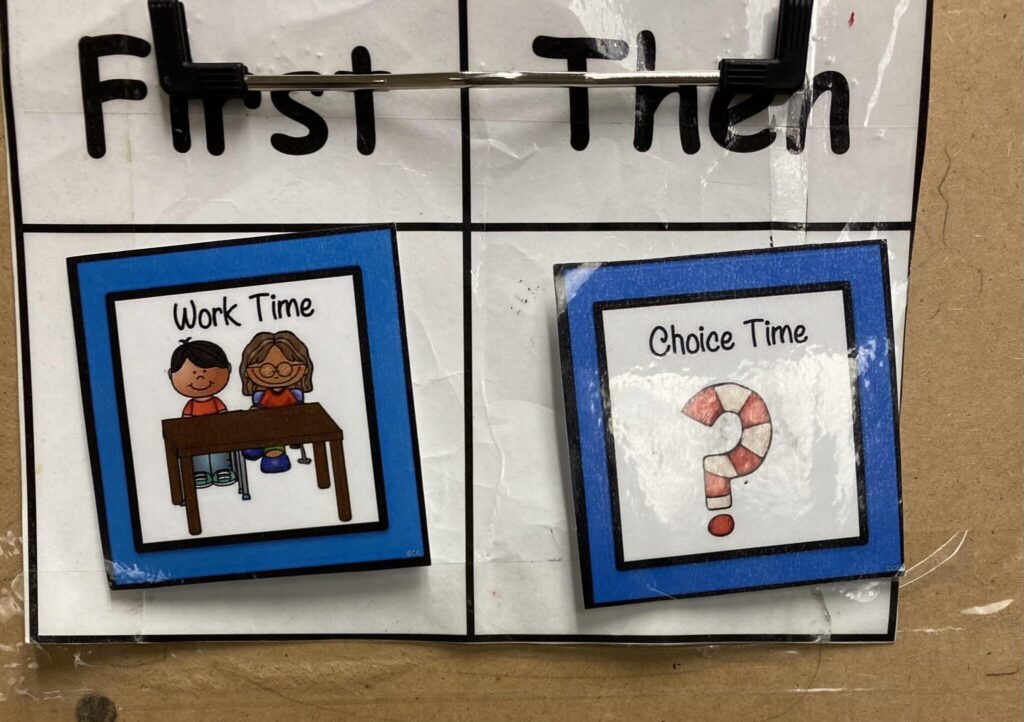
Pictured above is a first/then schedule one of my 2nd grade self-contained students used.
3. Use visuals
Going along with a visual timer, it can be helpful to use other visuals to help students with transitions. A visual schedule helps them to anticipate when a transition will happen.
A “first/then” visual helps students understand when it is time to transition to the next activity. This is helpful if you are expecting the student to complete a non-preferred activity. It can be followed by a preferred activity that they earn (ex: “first we will do our math, then you can play with the Play-Doh”).
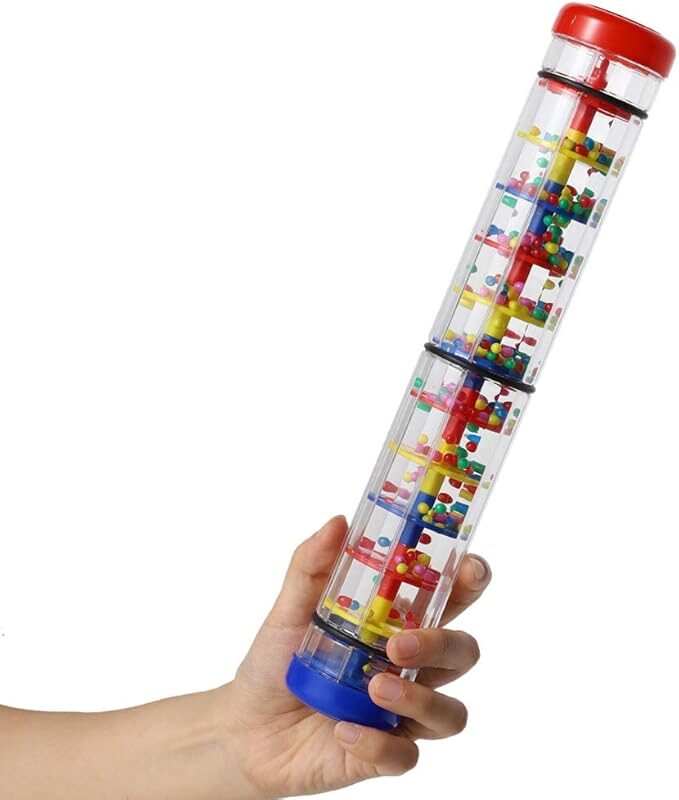
A rain stick can be a fun auditory way to help students transition.
4. Use transition cues
Establishing a specific for transitions can be helpful. If you always play the same clean up song, students will get used to that song as their cue to transition.
A signal such as a bell, a rain stick, etc. can signal transitions. This should be taught ahead of time and practiced at the beginning of the school year to get students used to it.
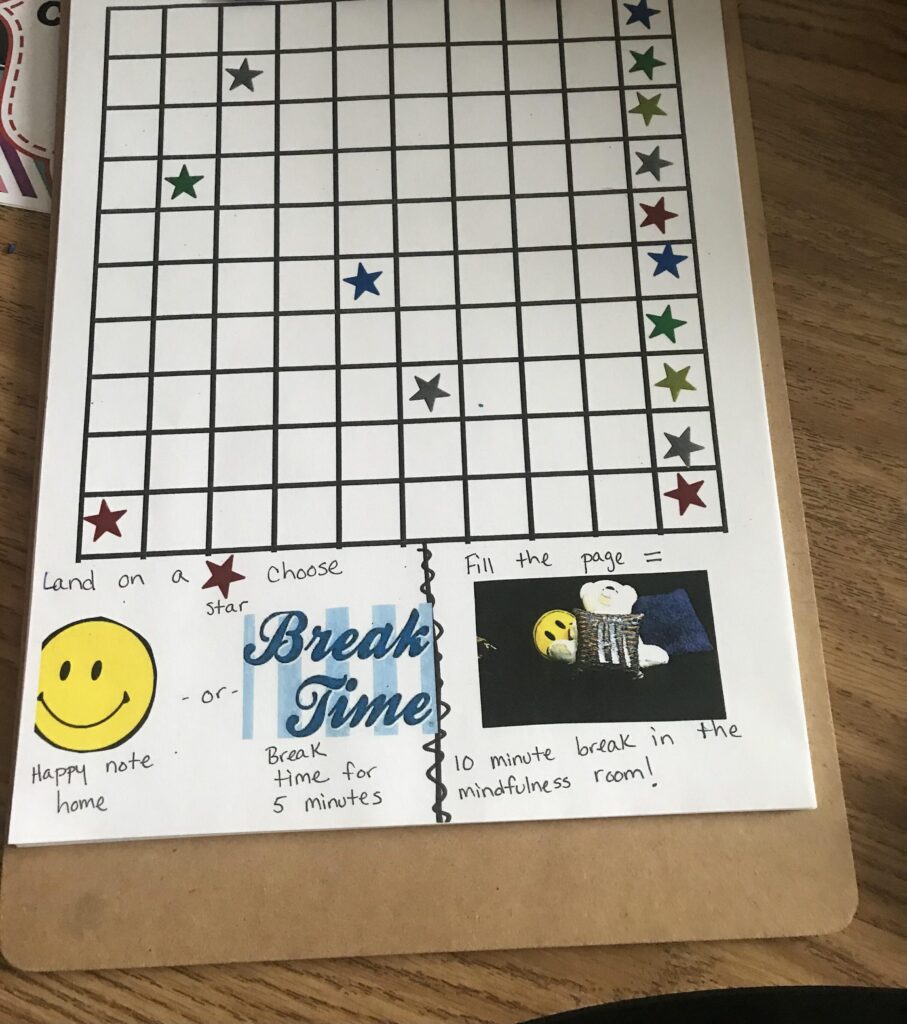
Pictured above is a star chart a previous student of mine used for positive reinforcement.
5. Positive reinforcement
Providing positive reinforcement during transitions can be helpful. Some students may even have IEP goals related to transitions. These may include minimizing the amount of time it takes to transition from a preferred activity to a non-preferred activity.
It can help to have a behavior chart to reward students for successful transitions (shown below). It should be individualized for the students and his/her goals.
Whole class positive reinforcements can also help aide transitions. It can be as simple as adding marbles to a jar each time a transition goes well so that the class earns extra recess.
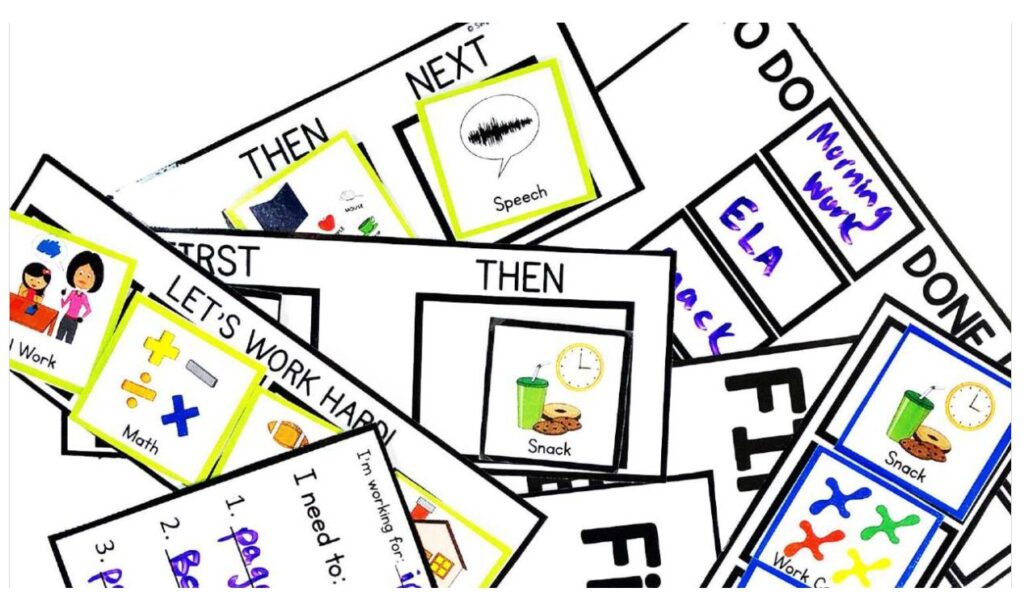
Pictured above are some first/then boards from Simply Special Ed, along with other behavior supports.
6. Assigning jobs
Students can be assigned a special job for transitions. For example, they can be a line leader, pass out materials for the next activity, etc.
Tell the student, “First, we will complete our reading center. Then, you can be the line leader to music”. The if/then method works for this as well. Tell your student, “If you clean up all the toys before the timer goes off, then you can be the line leader to lunch”.
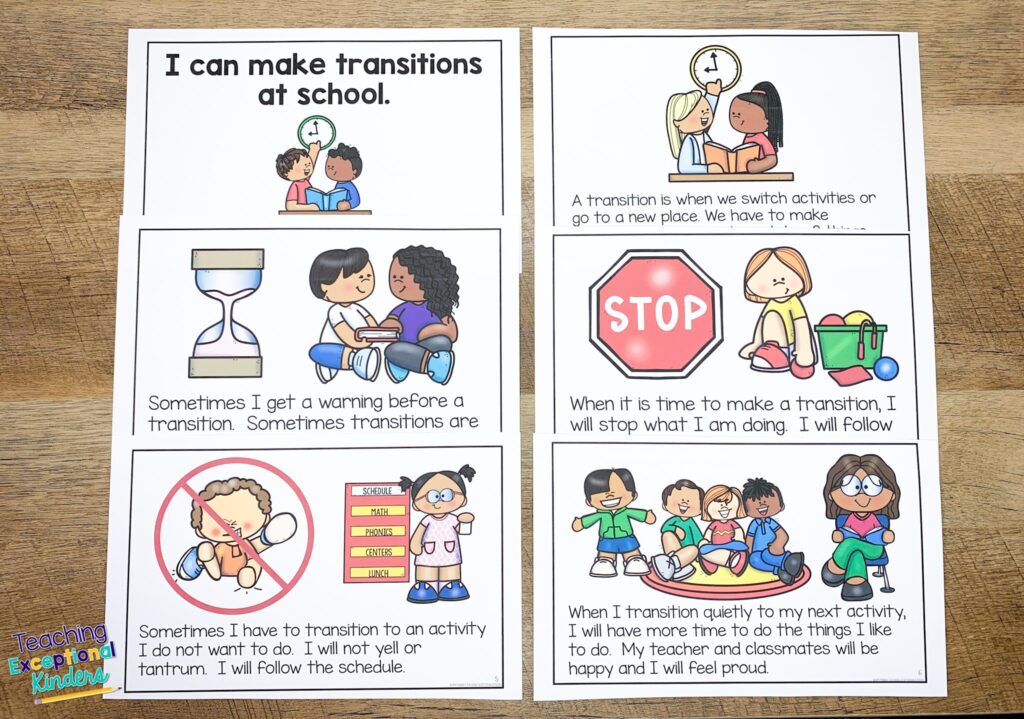
Above is a social story to support students with transitions.
7. Use social stories
Social stories are another great visual tool for Special Education students. Look up transition social stories, like this one on TPT, or you can make your own.
Read the social story to your student/s before a transition to help them prepare, and revisit it as needed. It is a good idea to use real pictures of the student in the social story to help them connect the ideas.
8. Practice transitions
The more practice students have with transitions, the more successful they will be! Have the entire class practice a transition, such as lining up to go to specials. In addition, you can practice with individual students as needed.
This is especially helpful at the beginning of the year, as well as after breaks from school when routines can become rusty.
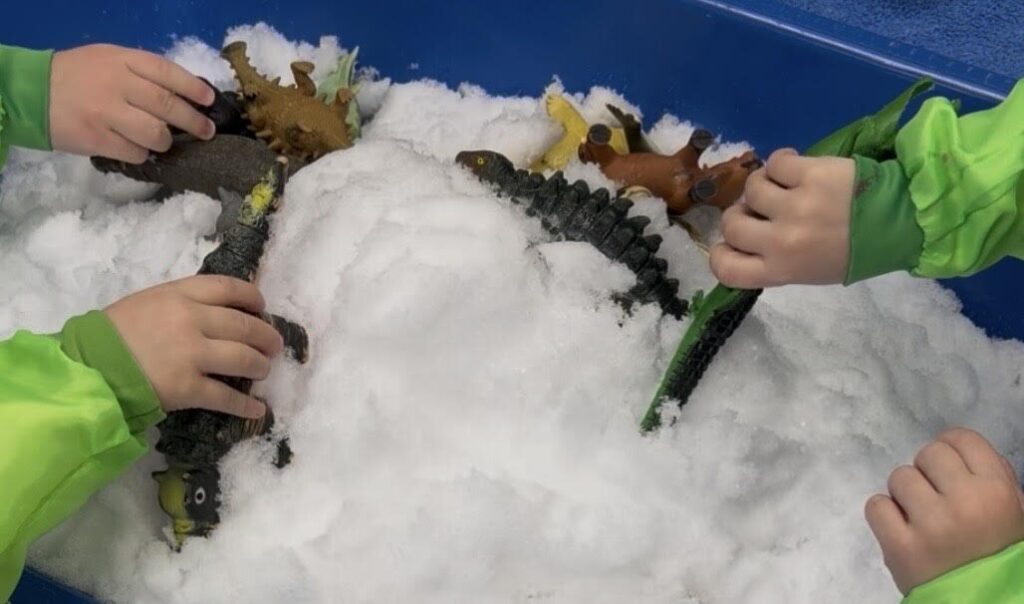
Pictured above, preschool students have fun playing with dinosaurs in a snow sensory bin! One of the students keeps this dinosaur with him for transitions.
9. Allow non-distracting objects
If a student has a comfort object, such as a sensory fidget or favorite dinosaur toy, you can allow him/her to hold it during transitions. This can be helpful if they are transitioning to a place/activity that they do not like.
As long as the object is not a distraction that deters the student from transitioning safely and correctly, it can be helpful.
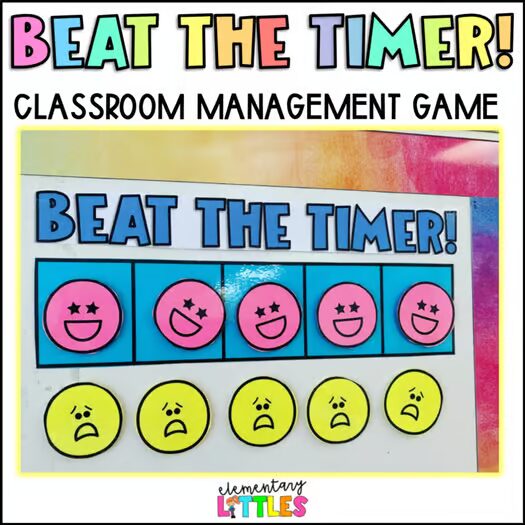
A game like “beat the timer” can be fun to help encourage quick transitions.
10. Make it fun!
Most kids love when you make things into a game. You can turn transitions into a game, too! Encourage students to clean up as quickly as they can before the timer goes off. You can also see who can do transitions the quietest, have your students tiptoe like mice to get in line, waddle like a penguin to the next center, etc.
You know your students best, so do whatever works best for you and your class!