As a teacher of students with moderate to high support needs, it has been extremely helpful to have a “go bag” at the ready. What’s in a “go bag”? Well, everything that I would need if I was to need to evacuate my classroom. I like to call it a “go bag” because this is what I will say to my staff in case of an emergency… “Get the bag and go.” Keep reading to find out more about what is inside, where it is kept and when I grab it.

What is inside a “go bag”?
Though it is hard to see (many of the items have personal student information!), this is the view inside my bag. I keep everything that I would need to keep my students happy, relaxed and engaged. See another teacher bag post here!
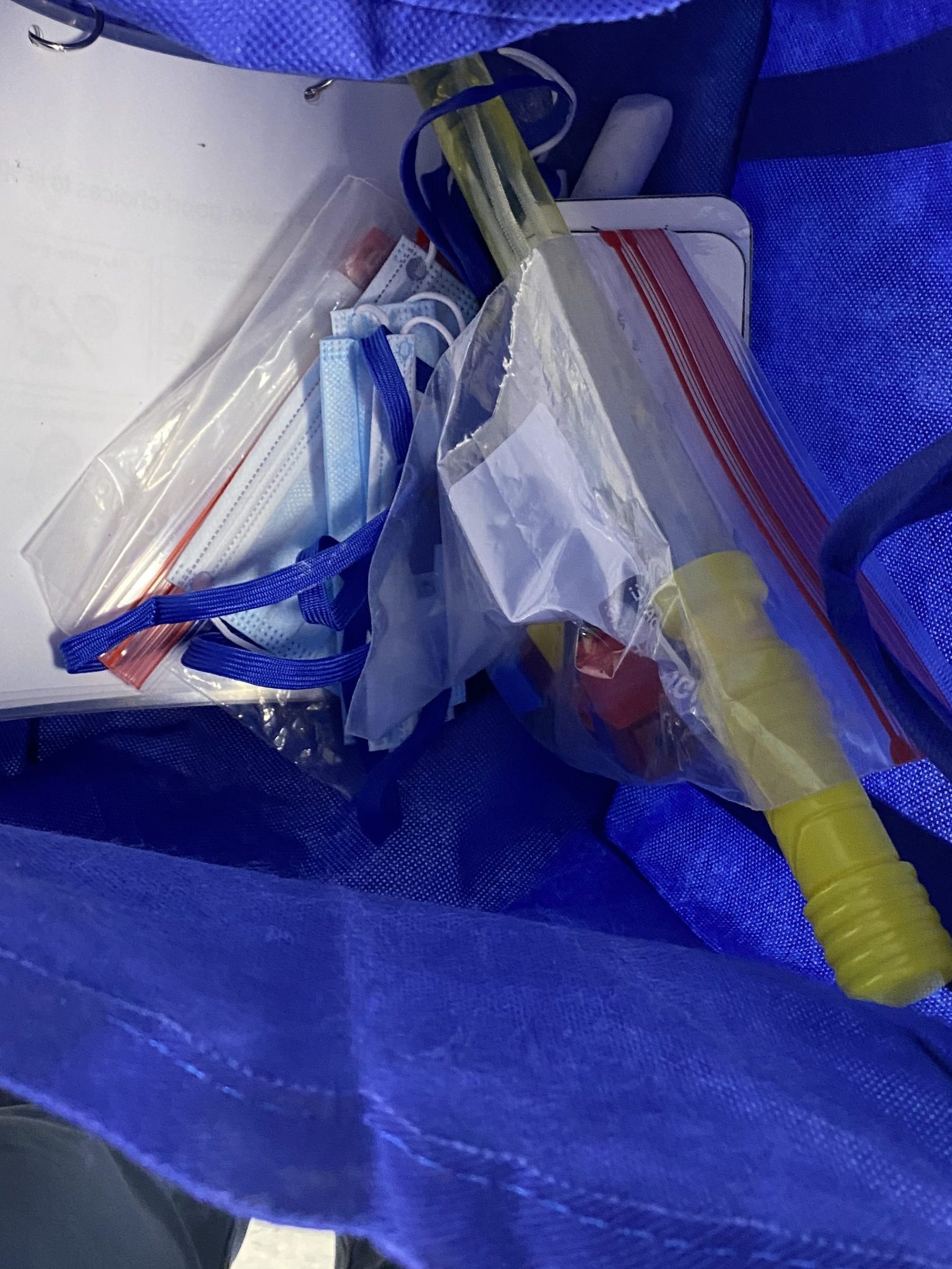
Items pictured include:
– social stories (personalized for students)
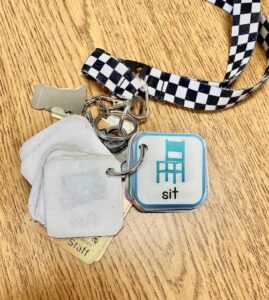
– behavior support visuals (in addition to our keyring visuals we wear)
– student ID badges (in case of an evacuation drill/ if a student gets separated from the class)
– extra masks
– side walk chalk
– bubbles/other sensory activities or fidgets
– learning tools/manipulatives
Items not pictured but included:
– walkie talkie
– dry erase board/eraser
– behavior momentum errorless tasks
– first aid kit/hand sanitizer/wipes
– token boards/reinforcer checklists
When do we take the bag?
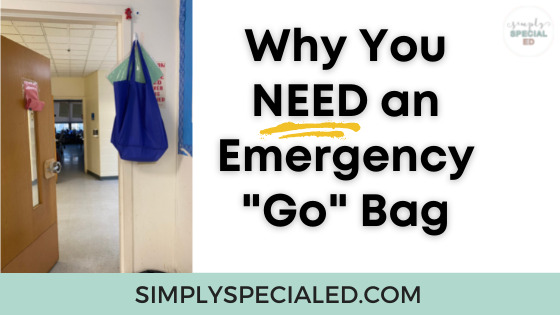
As you can see from the picture in the header, we keep our go bag on a hook by the door. This is because we take the bag ANY TIME we leave the classroom. Why? If we are anywhere outside of our classroom, we want to have the materials to help our students be successful anywhere in the building.

Why do I have this bag ready?
Three simple reasons why I have this bag.
1. Student Safety
2. Easy Redirection
3. Antecedent Procedures
Student Safety
The main purpose of this bag is to make sure that all of the materials needed to keep our students safe are in this bag. Once they are safe, we can make sure they are happy, relaxed and engaged (HRE). One of the realities of working with students with moderate to high support needs is needing to evacuate the classroom if a student is engaging in physically unsafe behaviors. Evacuations can be challenging for the other students in the classroom, as they are not on the schedule and many of my students do not have concept of danger (they will run directly to the student engaging in challenging behavior). Having this literal “bag of tricks” helps us maintain as much control as we can within a chaotic moment.
Easy Redirection
In addition to student safety, these tools also provide support in redirection. Visuals, stop/go signs and behavior momentum activities all come in handy. I have a stack of visuals that I keep in the bag (line up, walk, stop, quiet, etc) as well as a first/then board with first typically being “walk” and then being the activity we are going to. Behavior momentum activities aka high-p, low-p activities are easy, in repertoire tasks that can help a student follow directions.
Let me give you an example: You are walking in the hallway with a student. Suddenly they fall to the floor and refuse to move. I would use a behavior momentum task, such as matching, errorless velcro tasks or stacking unifix cubes to avoid a power struggle. Once a student engages in the high probability behavior (matching, stacking, etc.) they are more likely to engage in a low probability behavior (standing up) when requested.

Antecedent Strategies
An antecedent is what comes before a behavior. This can include what is happening in the environment, what is said to or around the student and/or direct action toward the student. By having this bag, we are able to identify the potential triggers and mitigate them. Remember, we have everything that we would use in the classroom in this bag. This includes social stories, token boards and more!

Do you have an emergency bag in your classroom?
Let me know if you have any other must haves in your “go” bag!