Predictable routines and consistent schedules are more important than you might think! Routines are intended to assist students with expectations, reduce behaviors, and keep disruptions to a minimum.
Maybe your students have had a long break, or maybe they just finished up ESY and are returning for the new school year. No matter how long they’ve been out of the classroom, the beginning of a new school year can bring a bit of anxiety for our students, who can benefit from a refresh of routines!
Routines are Important
Why are routines such a big deal?
Studies have shown that all students, especially students with disabilities, thrive when they are in an environment that has predictable and consistent routines. Routines provide a feeling of a safe environment, and especially for students with Autism, the comfort of an expected routine can be priceless.
Research indicates that routines in the classroom have a positive impact on learning and academic success. They make class time more enjoyable for the students and staff alike.
It is definitely important to establish your routines from the first day of school in order to not only support students but also reduce behavior challenges that come from this time of transition.
Make a List of Routines You Value
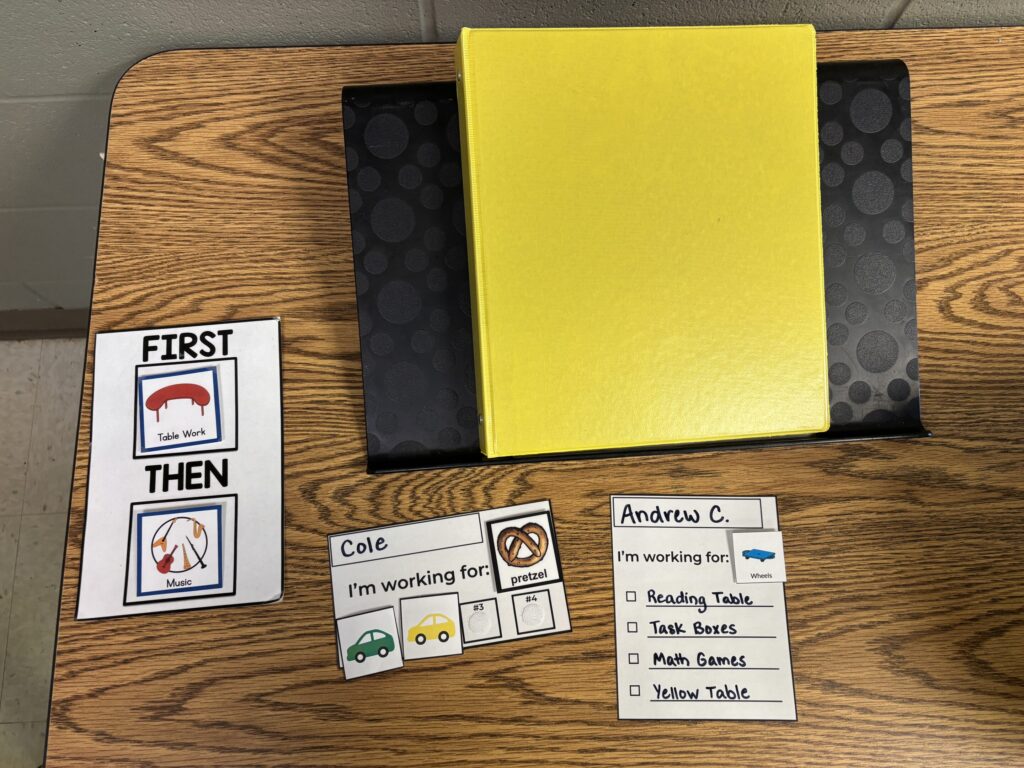
Are you traveling to the cafeteria? Will students be splitting up for classes or electives? Are you teaching independent work stations or expectations on group instruction? Go through your entire school day and make a list of routines you may need to address in the first days of the school year.
Some routines you might want to include:
- Arriving from the bus/parents’ car
- Entering and exiting the room for drop off and pick up
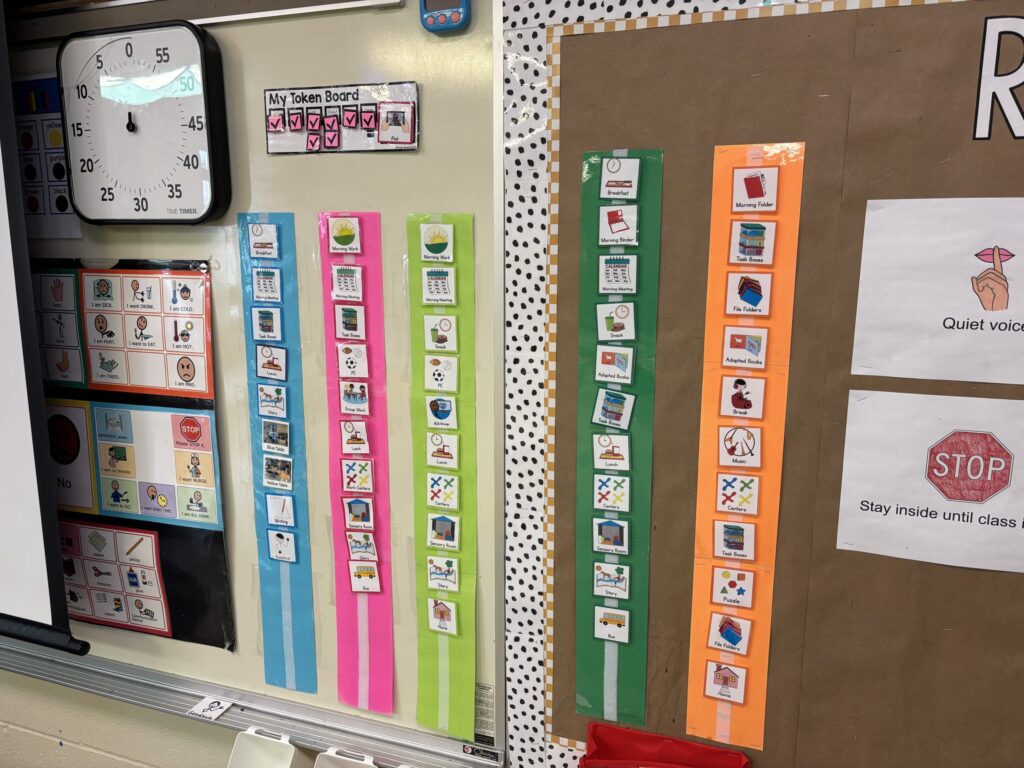
- How to find and utilize your schedule
- Having breakfast at school
- Morning work, Morning Meeting
- How to Navigate Centers
- How to work independently
- How to find the tools you need to complete work
- How to use any technology appropriately
- Entering and exiting the room for electives, specials, or therapy
- Hygiene routines
- Having lunch at school
- Having free time or using a sensory area/requesting a break
Ultimately, some routines may seem small and insignificant, but touching on everything at the beginning of the year will prove to be important!
Start on Day One
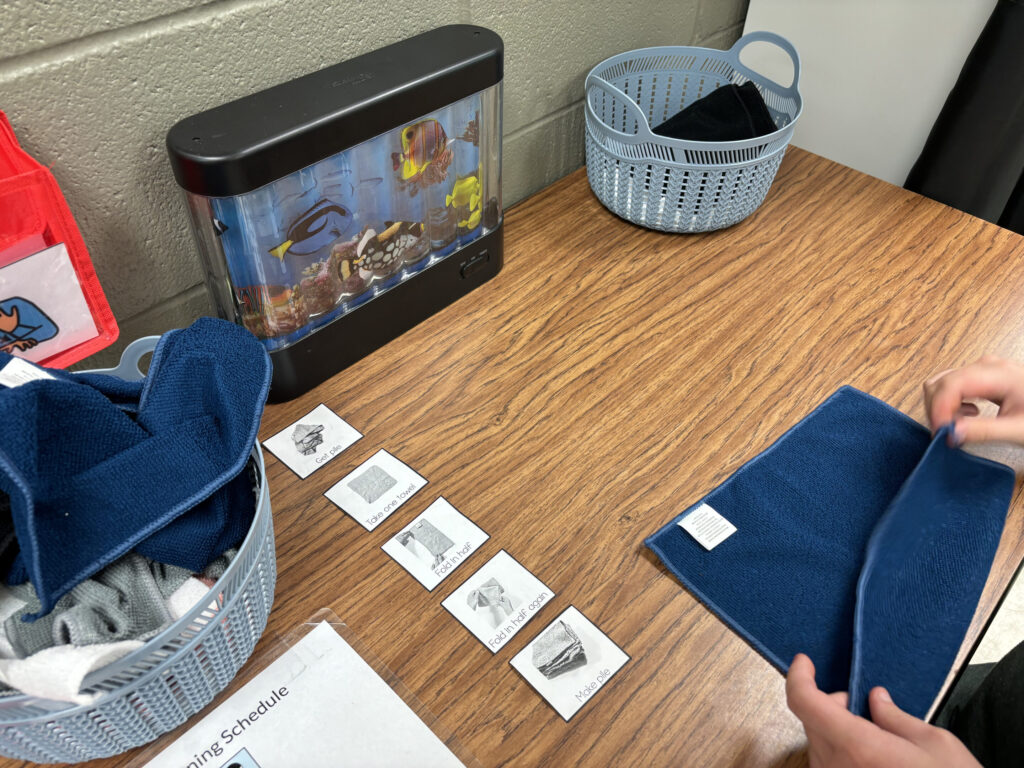
If you’re getting new students, start from the beginning, and practice starting on day one. Routines teach the students how they are expected to act during certain activities and in certain places.
Although I teach high school, any new incoming students have been in a different classroom with other teachers and paraprofessionals. They will need instruction on how to navigate routines in a new classroom.
Maybe our room has changed, or the school has set new rules for the coming year. Anticipate behavior challenges by starting the year off with routines and practicing daily.
Refresh Returning Students
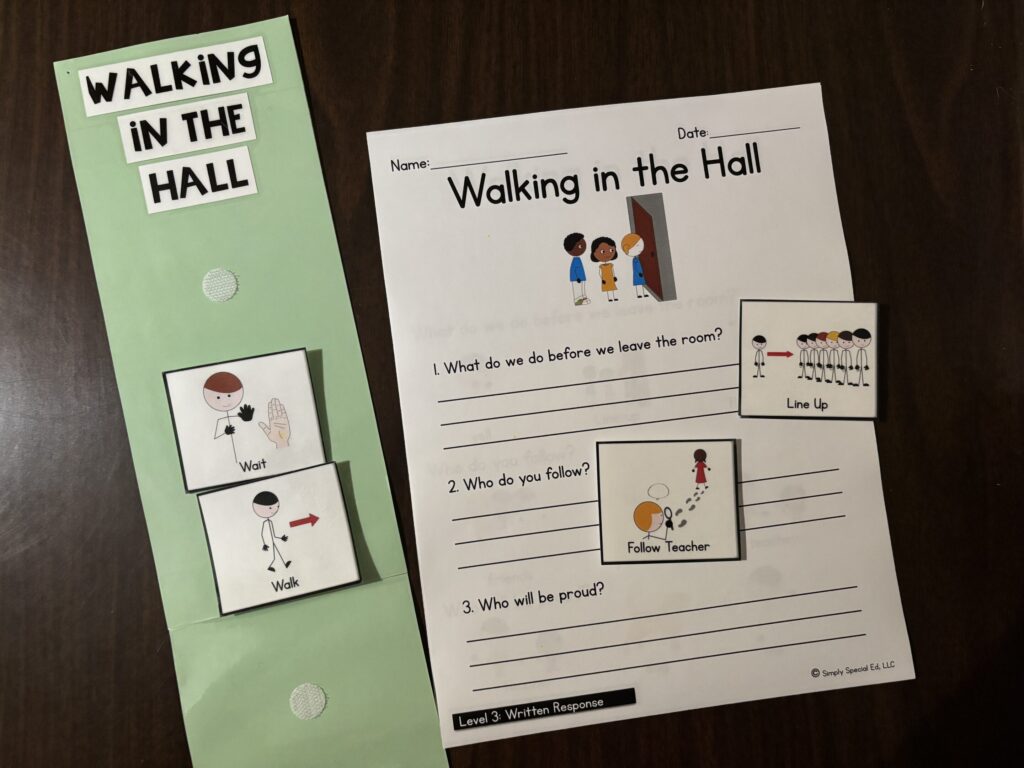
Even if you have had your students for a few years, and they are familiar with you and your classroom, it does not hurt to start from the beginning. Even returning students need a refresher. After a summer break, students will benefit from the reminder that school is not the same as home. We have expectations, we have routines, and we have to share this space with others. Don’t assume they remember everything from the previous year.
Use Visual Schedules and Prompting
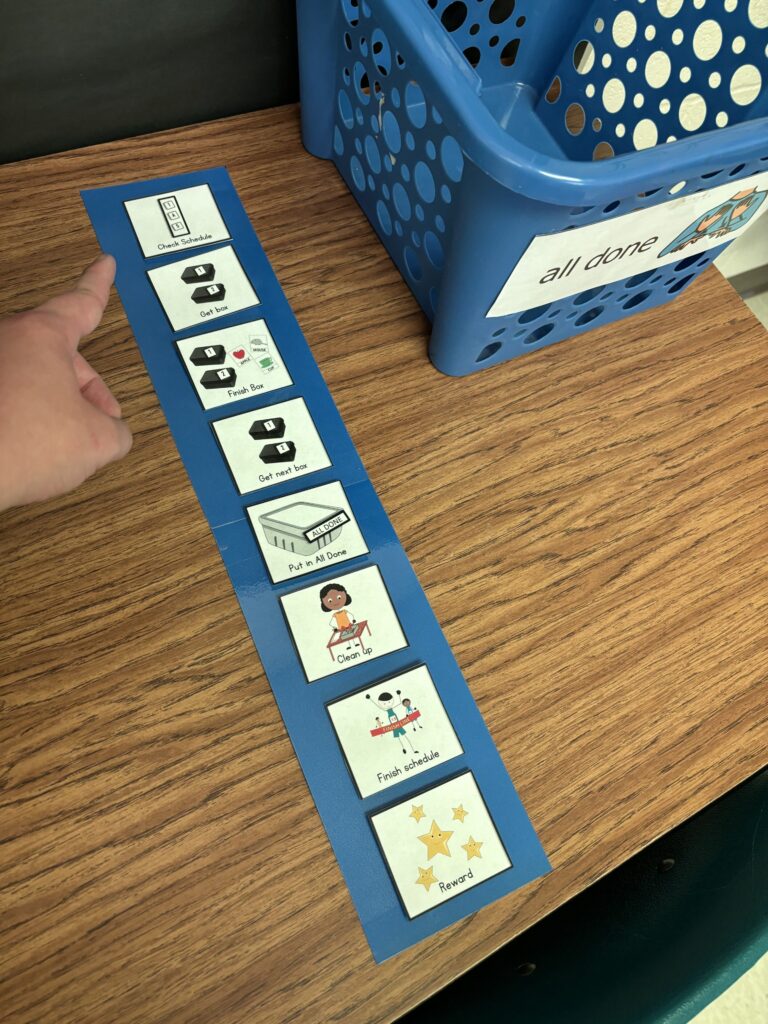
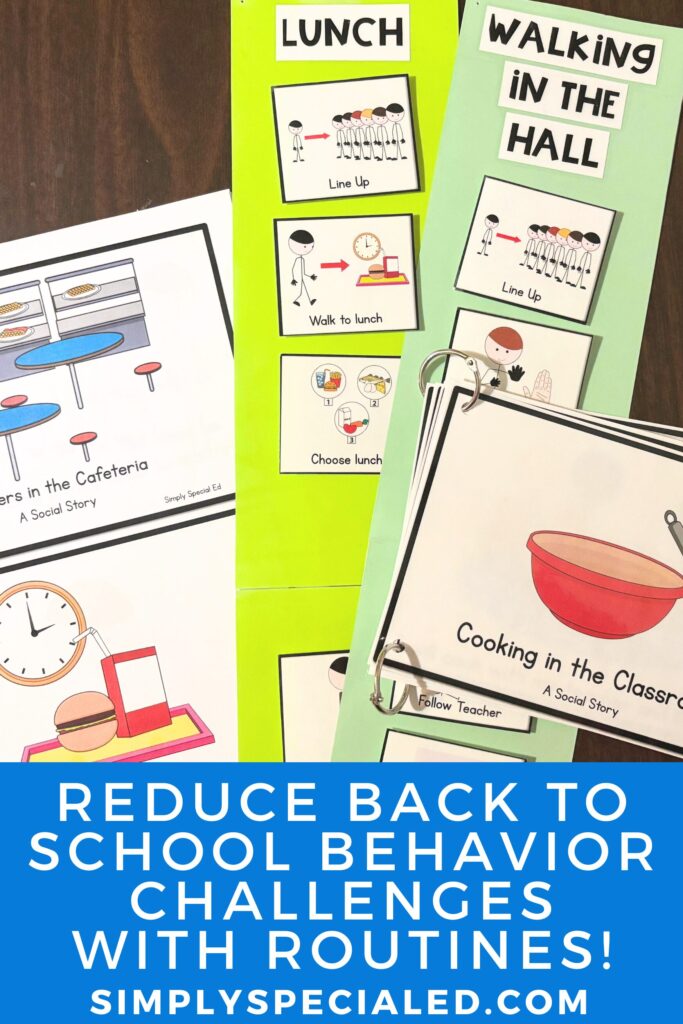
Teachers and staff can utilize a small visual checklist or task analysis to teach routines at the beginning of the year. Breaking these routines into small chunks is a good idea to help reduce behaviors when a long routine can feel overwhelming.
First, review every piece of the routine. Practice them every day. Students can also keep the task analysis with them for reference during practice.
Use Social Stories
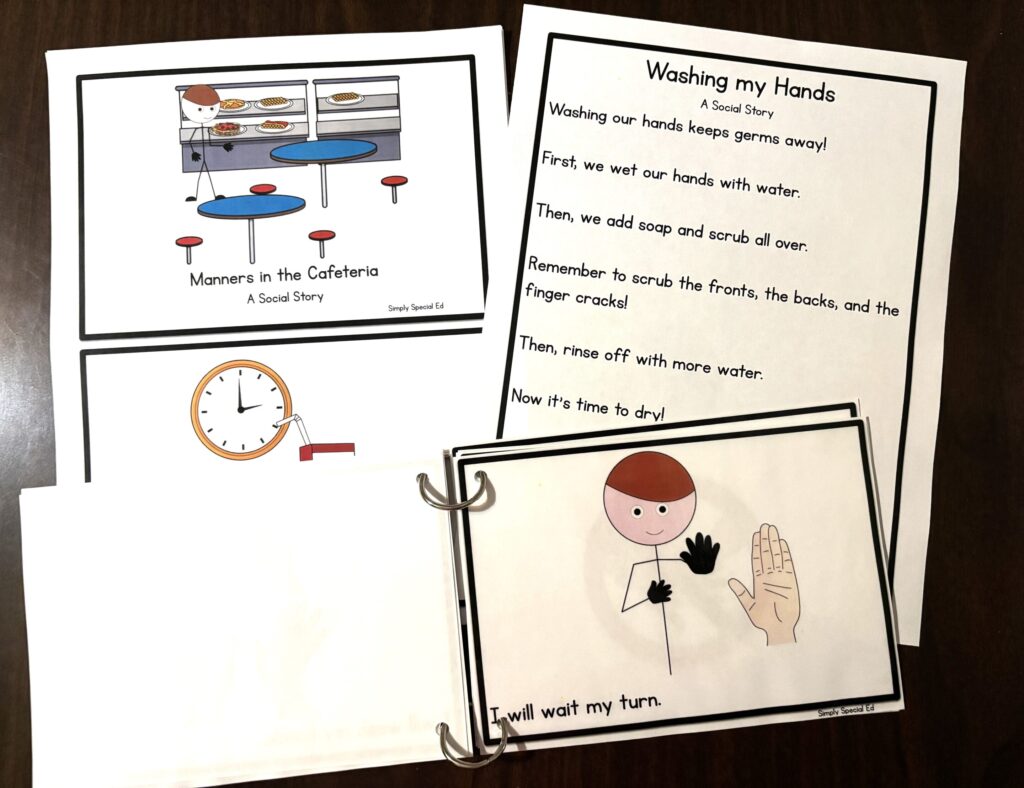
For students who have a particularly difficult time with changes, particularly students with Autism, social stories are a big help! Social Stories have visuals and clear language to support students during transitions or new events. They support back-to-school routines by explaining plainly to students what to expect. Also, they can help support behavioral challenges when getting back into school, which can cause frustration and big feelings.
There are social stories for almost any topic – teaching new school routines or even refreshing on already learned routines is a perfect subject for a social story.
Give it Some Time… But Don’t Be Afraid to Fine-Tune
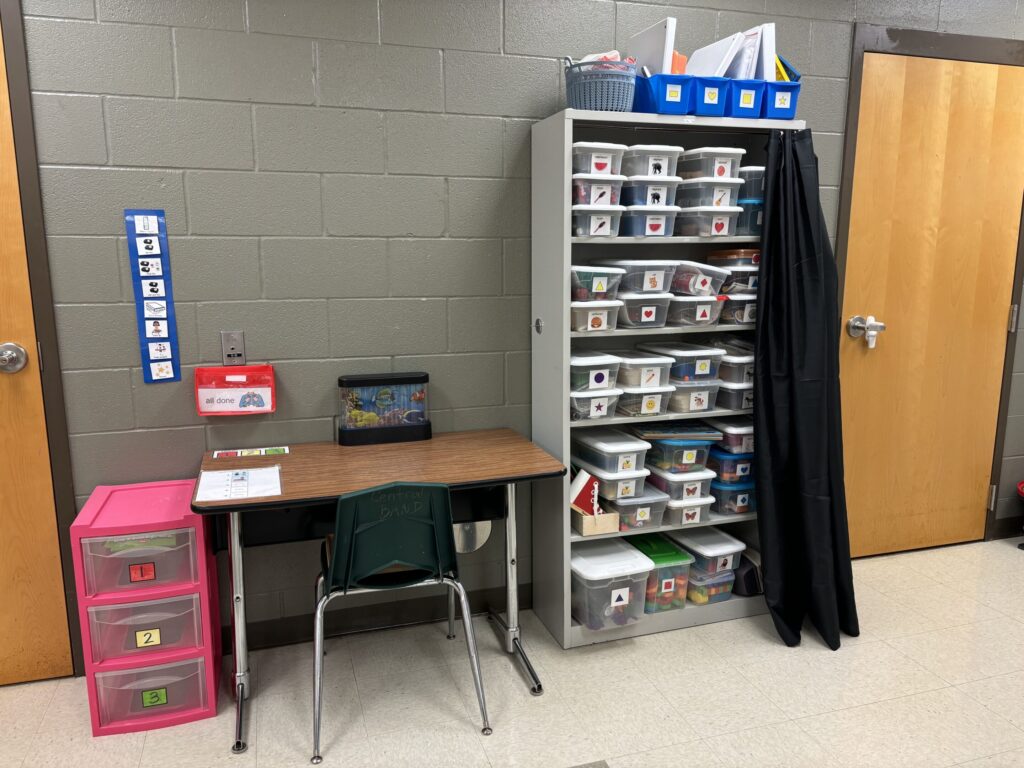
So, you’ve taught a routine, and it just isn’t working out. The first rule of thumb is to give it a few weeks. Try it out with fidelity and stick to your routine for 2 weeks. If it still is not working out, then don’t be afraid to make changes. Just because you’ve set a routine at the beginning of the year does not mean you’re stuck if it does not end up working. Be flexible, but strong!
If you do end up changing a routine in any way, start back from the beginning and teach the new steps to your students again. Utilize visuals, have them participate in practice, and answer questions about the routine.
The First 10 Days
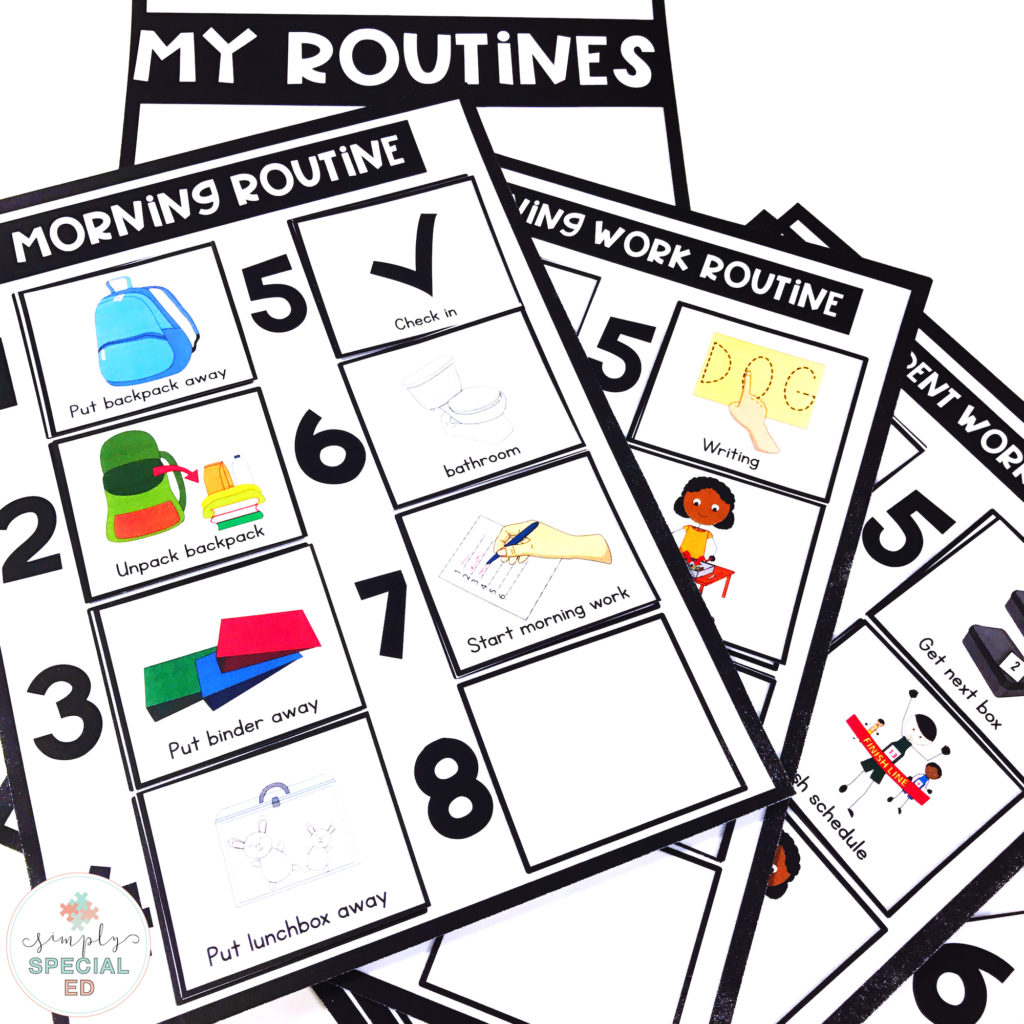
Overwhelmed about teaching routines and starting the year off right?
Don’t be! The beginning of the school year is already planned for you! Directly teach routines and grab this set of activities and lesson plans to set yourself (and your students) up for success.
Work through teaching each routine explicitly with direct instruction materials provided. Keep up with the practice during the first 2 weeks of school to avoid reteaching routines all year long!
Routines included:
– Morning Routine
– Morning Work
– Independent Work
– Walking in the Hall
– Lunch Routines
– Center Routines
– Rewards Routines
– Clean Up Routine
– Dismissal Routine
– My Routine Book
There is a suggested calendar of plans included for you, too, so grab The First 10 Days resource here!