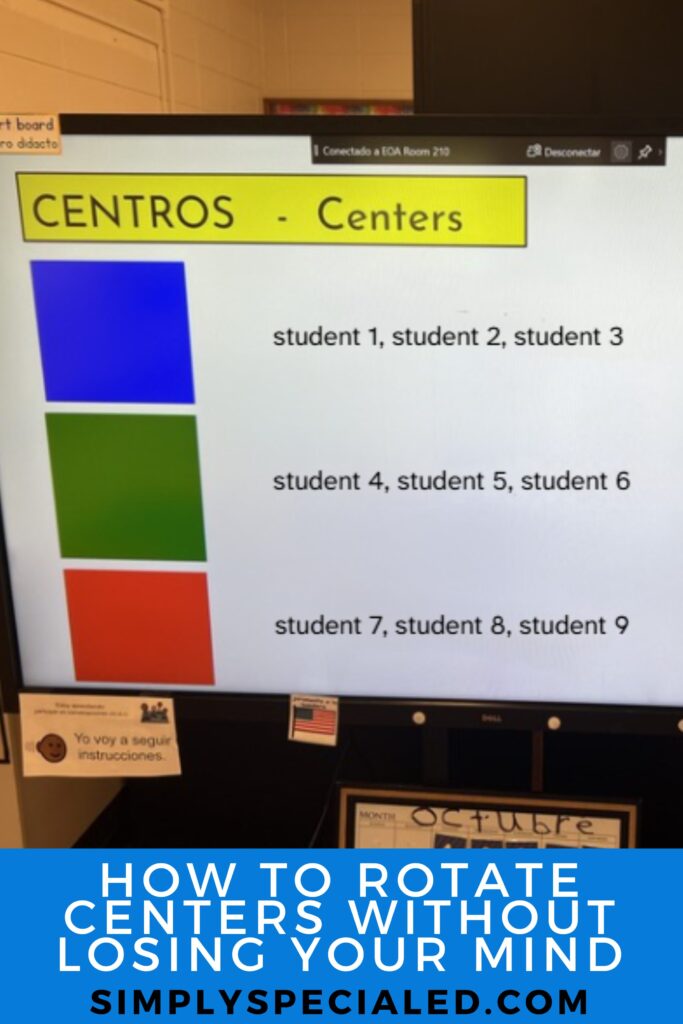
Centers in your self-contained or general education classroom can seem intimidating to start. The first step is coming up with a consistent routine and teaching students how to follow that routine. There are many moving parts to centers to ensure it is all planned for. There could be any number of centers in your classroom. For example, you might have 4 centers or you might have 6 centers. Each of those centers takes time to teach not only the students but also the adults how to rotate efficiently.
Create Schedules
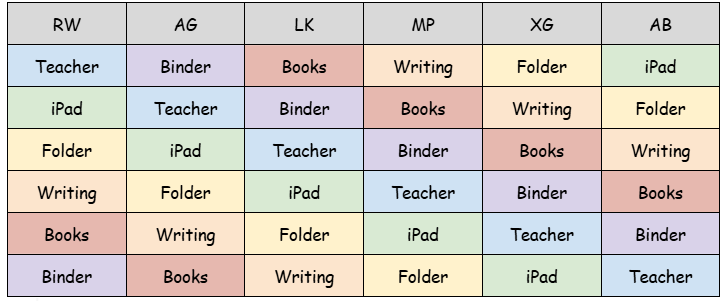
Step 1 to center rotations is to create a consistent schedule for students to follow. Above is an example of what that might look like. In my classroom, I had 6 students, 6 centers and 3 paraprofessionals so each student worked individually at each center. I had 2 paraprofessionals running a center to teach new skills or maintain already learned skills. My 3rd paraprofessional would float between independent centers and technology, while I taught IEP goals at my own center. Related service providers often push in and take over a center once or twice a week as well.
My first year teaching centers was chaotic to say the least. I had no rhyme or reason to where students were rotating to. The students didn’t know where to go and neither did the adults. I walked into one of my colleagues’ classrooms and saw her students rotating clockwise. I felt so dumb for not thinking of having students just rotate either clockwise or counter clockwise so that it is easy for the students and the adults to know where they are going. If blue is your first center and green is next to it, then whatever student starts at blue would rotate to green next, and so on.
In addition, I post the order of students in rotation on a piece of paper and tape it up at the centers so that any adult knows exactly who is coming to their center next. This makes it so much easier for the adults, especially if a related service provider is pushing in and doesn’t have the schedule memorized. If a student needs prompting to transition, then that adult knows who to help. We want to promote independence and less prompting with everyone in the classroom including adults! Posting the schedule reduces adults asking the teacher, “who do I have next?”
If you need help creating a master schedule, look at Simple Schedule Templates.
Teach the Center Routine
Teach students how to independently rotate using visual schedules. Centers schedules should be consistent so that students can build independence and reduce prompts from adults. This doesn’t mean you can never change the rotation. You totally can and should every once in a while to teach students to be flexible! However, we want the rotation of center transitions to be short and quick so that we can optimize instruction time.
In my classroom, I like to have a separate centers visual schedule for students to carry around with them when they rotate. They can check their master visual schedule that has a “centers” icon, which will then prompt them to get their centers schedule. These schedules can look differently based on student need. If your centers are colors, you may just need each center written in list format in each different color or you may need icons of the color depending on student reading ability.
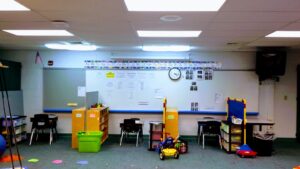
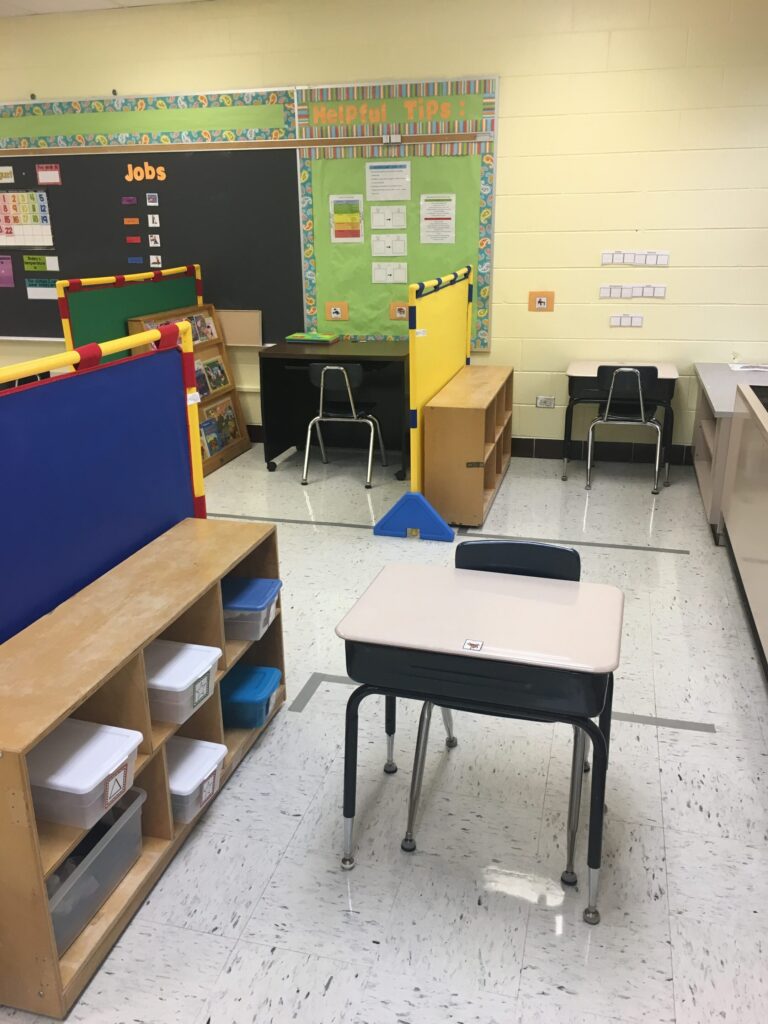
In the photo above, I would have my students rotate counter clockwise. If they would begin at the desk and chair closest to the front of the photo (blue center with the blue divider), then they would rotate straight back to the center behind there next (yellow center with the yellow divider). After that, they would rotate to the left (green center with green divider), and so on until they completed the rotation.
Have Materials Ready to Go
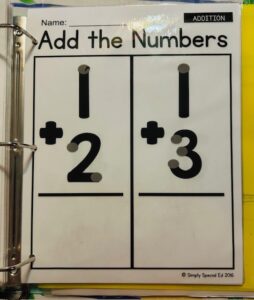
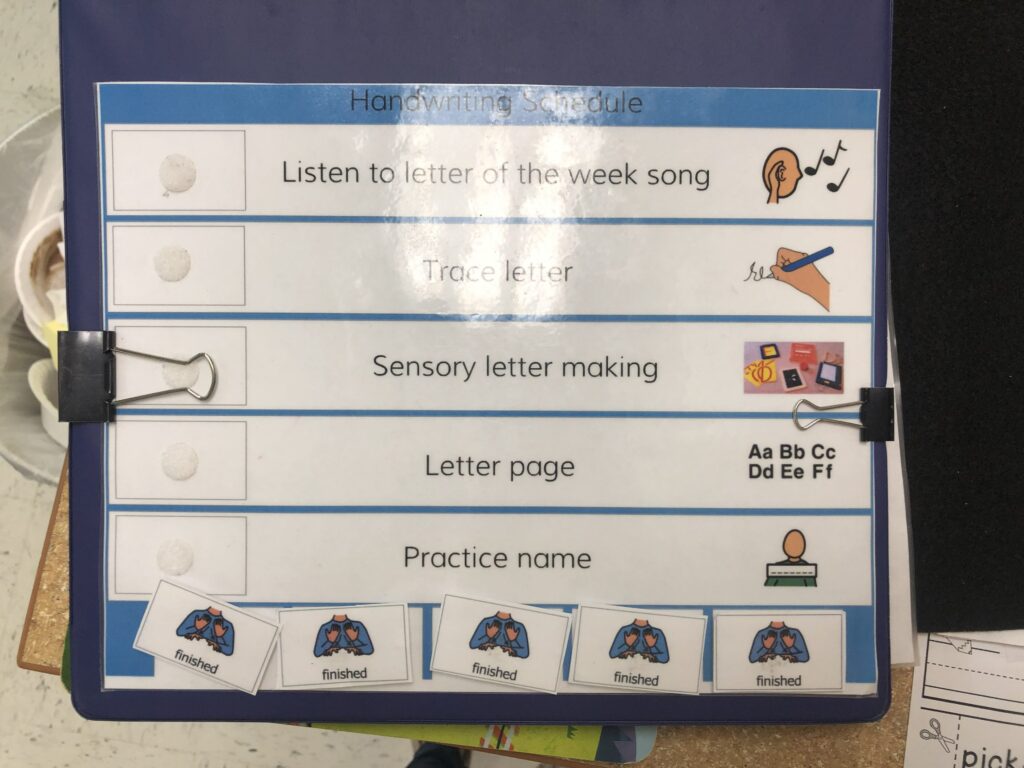
It always helps to have your materials at each center ready to go! It decreases transition time and increases instruction time. One way to help teach the rotations is to also teach consistent routines at each rotation. This creates predictability for students. Above is an example of a handwriting center and a schedule to go along with it. When materials are already out when the student transitions, they can get to work right away.
Another advantage to creating a consistent routine at centers is that adults know exactly what to do. Let’s face it, we are always short staffed in special education classrooms. By creating a routine and a visual schedule to go along with it, substitutes or new adults will know what is expected. The goal would be that students can complete the routine without an adult even needed as well!
If students are getting bored of the routine or activity, switch them out! You can find some really great activities in the Fine Motor Centers Seasonal Bundle or the Life Skills Centers Bundle.
Use a Timer to Rotate Centers
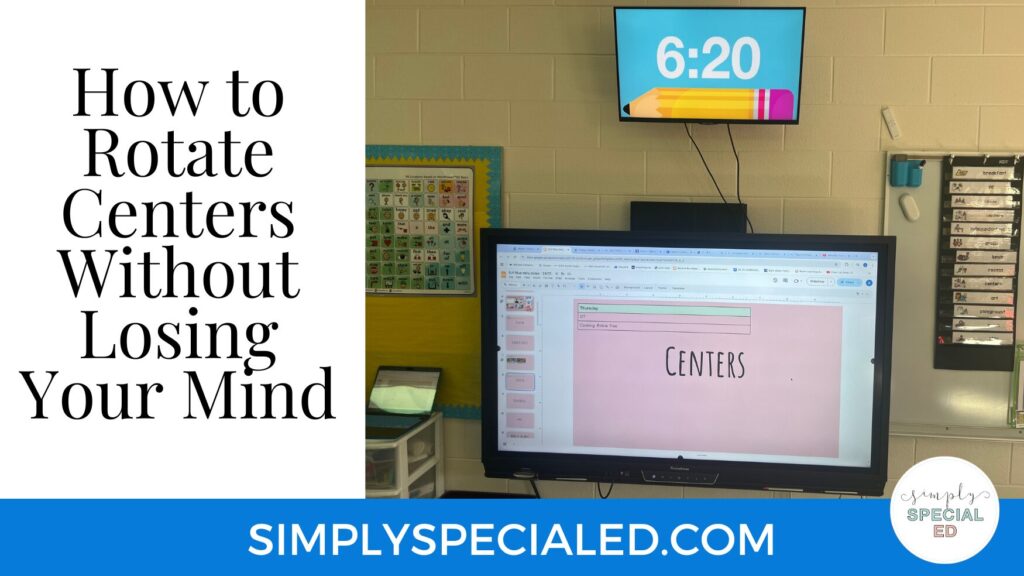
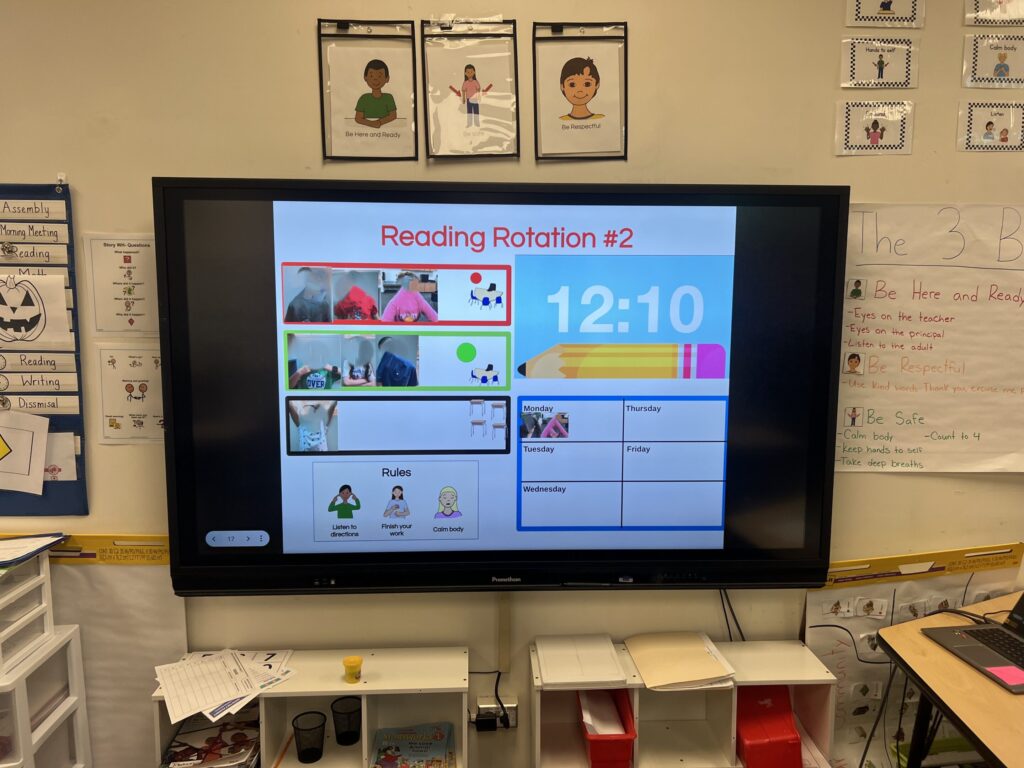
Utilizing a timer will help cue all students and adults in the room that it is time to transition. There are many different kinds of timers or signals you can use. You can use an auditory timer or visual timer. Youtube has a ton of options that are both visual and auditory. I am in many classrooms that use Google Slides or Canva to display their center rotations with the timer as shown above. If you have students who perseverate on numbers, you can find some without the numbers but rather a circle getting smaller and smaller.
In my own classroom, I used an auditory timer and constantly had the adults in the room asking, “how many minutes are left?” of the center. They often wanted to know to determine if they should begin another activity or give students a reward for working. For example, if there are 2 minutes left in the center, they give students a reward because the timer works as a natural transition away from a preferred item. Now that I have seen visual timers displayed in the classroom, I wish I would have used those for my own classroom so that it didn’t take time away from me working with my students.
I have always worked really hard to ensure students are transitioning independently when rotating through centers in my classroom. I have found success by creating schedules, teaching the routines, having materials ready to go, and using a timer for transitions. These tips will hopefully help you and all the adults build independence in your classroom as well without losing your mind!
If you are looking for more information on beginning centers in your classroom, check out the Simple Centers System course!
There is a centers timer included inside this course.