Back to school is an exciting but chaotic time for teachers, students, and families. All the changes can trigger behavior challenges in all students, especially those in a self-contained setting. Read on to learn some strategies to reduce those behaviors by having a predictable routine for different times throughout the day.
Arrival and morning routines
Students should know what is expected of them from the moment they walk in your classroom door. While this takes time, it is important to start these routines on day one so that back to school is smooth for everyone involved.
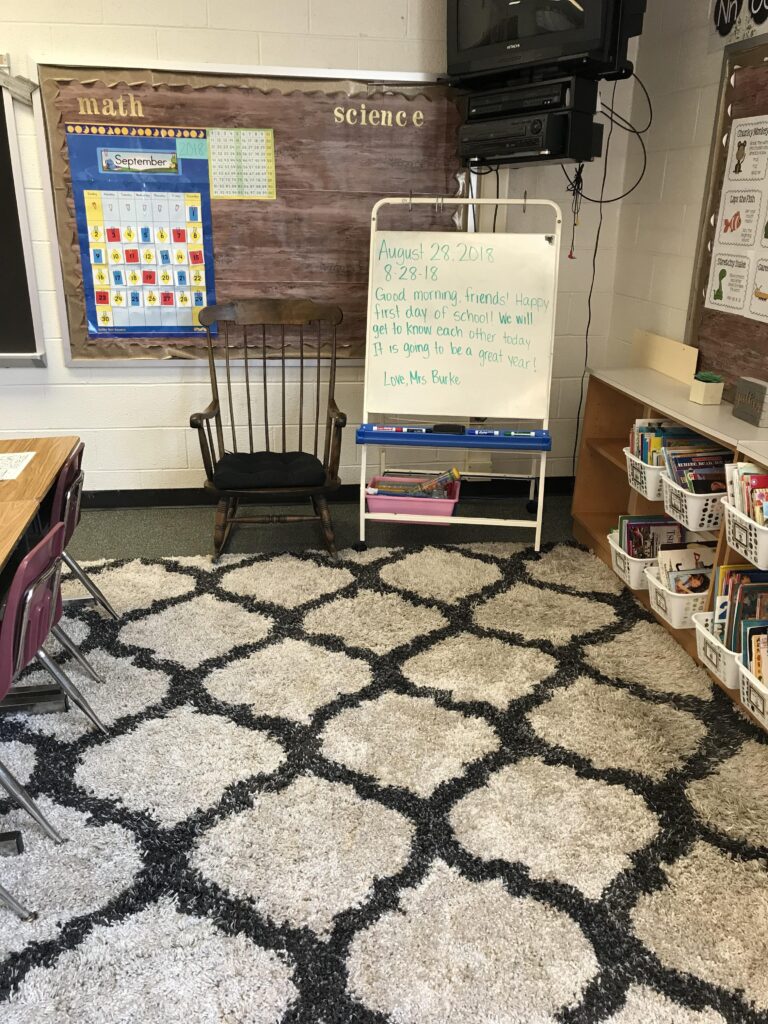
Your room should be set up in a way that makes sense with the flow of your day. You should decide, where will the students be hanging their coats/backpacks? Where will they keep their lunch boxes? If you are using take home folders or notebooks, where they should they turn those in each morning? If they have morning work, will that already be out at their seats, or will it be someone’s job to pass it out?
On the first day, start walking your students through your arrival routines right after you greet them. It is also helpful to have posters and visuals displayed to show the routines.
In my previous classroom, I always had students hang up their backpacks in their cubby, turn in their take home folder on my aide’s desk, and then go to their seat to eat their breakfast. When they were done with their breakfast, they could choose to color, read, or do a quiet sensory activity at their seat.
Keeping the arrival routine consistent everyday will help students catch on quickly. In my opinion, it is best to keep it simple. Most students are sleepy in the morning and may need some time before they are ready to jump into academic work. This is why I prefer to do a “soft start” to the day before morning meeting. This may also help decrease negative behaviors in the morning if students know they can give their brains some time to wake up and get ready for the day!
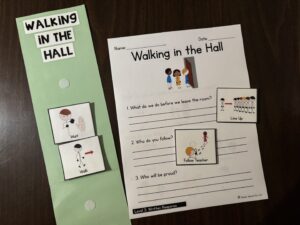
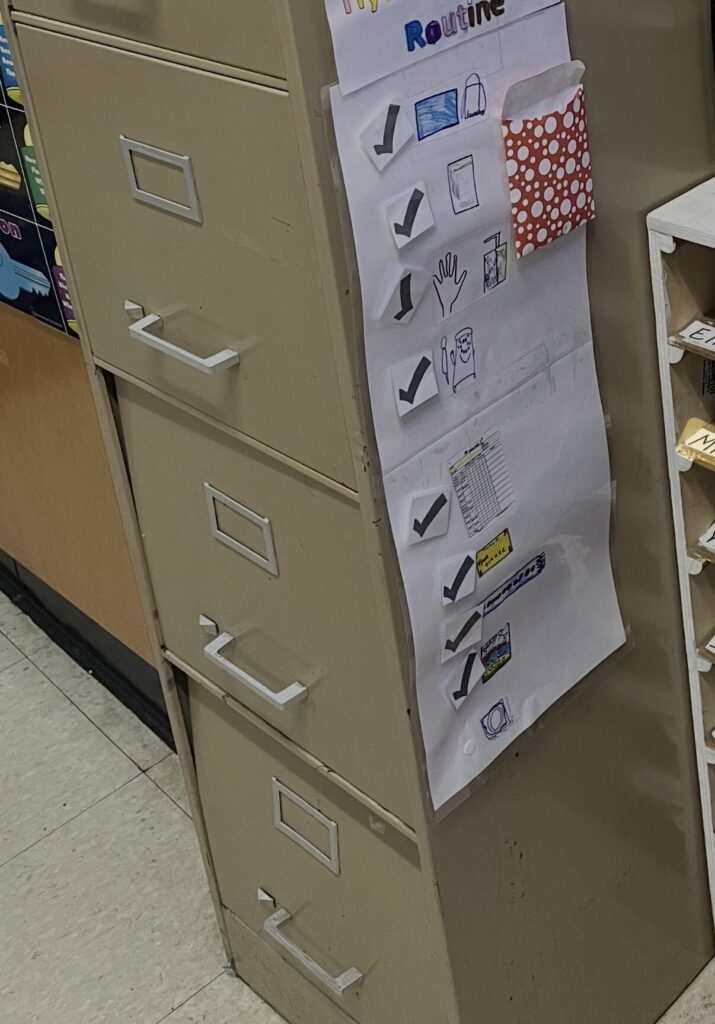
Some students may have their own individual morning routine that can be displayed for them visually (pictured below).
Read this blog to learn more about different ways to start the day in a self-contained classroom!
Morning meeting/circle time
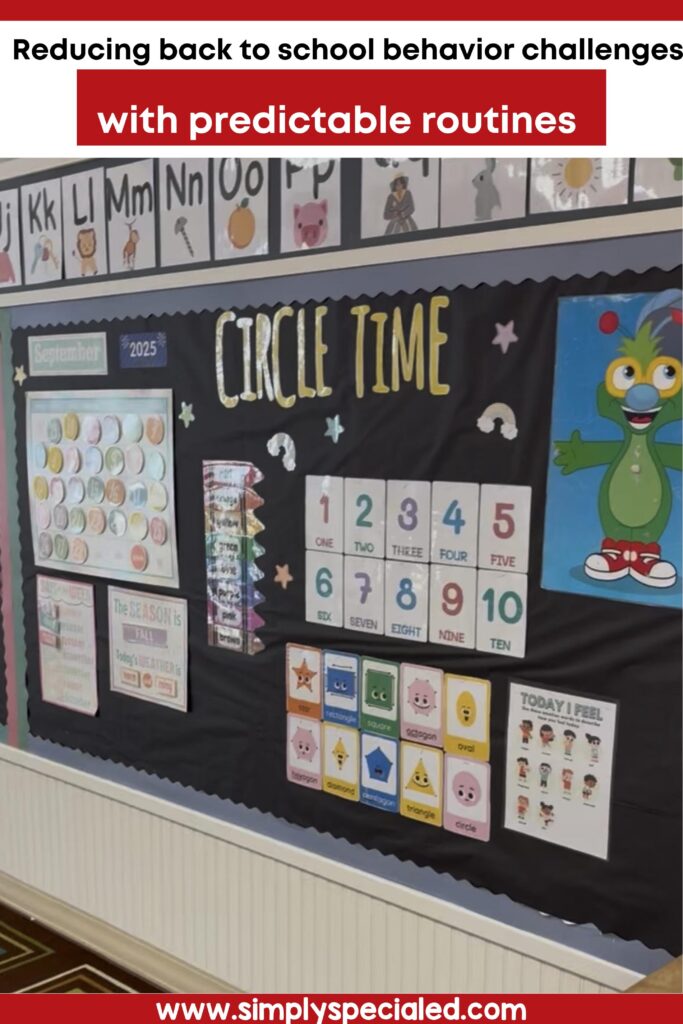
Going along with arrival routines, having a morning meeting or circle time routine can help start the day on a positive note and reduce behaviors.
This can be as simple or complex as you want and should depend on the age of your students and their needs. You can do feelings check in with students, discuss what day it is on the calendar, discuss the weather, etc.
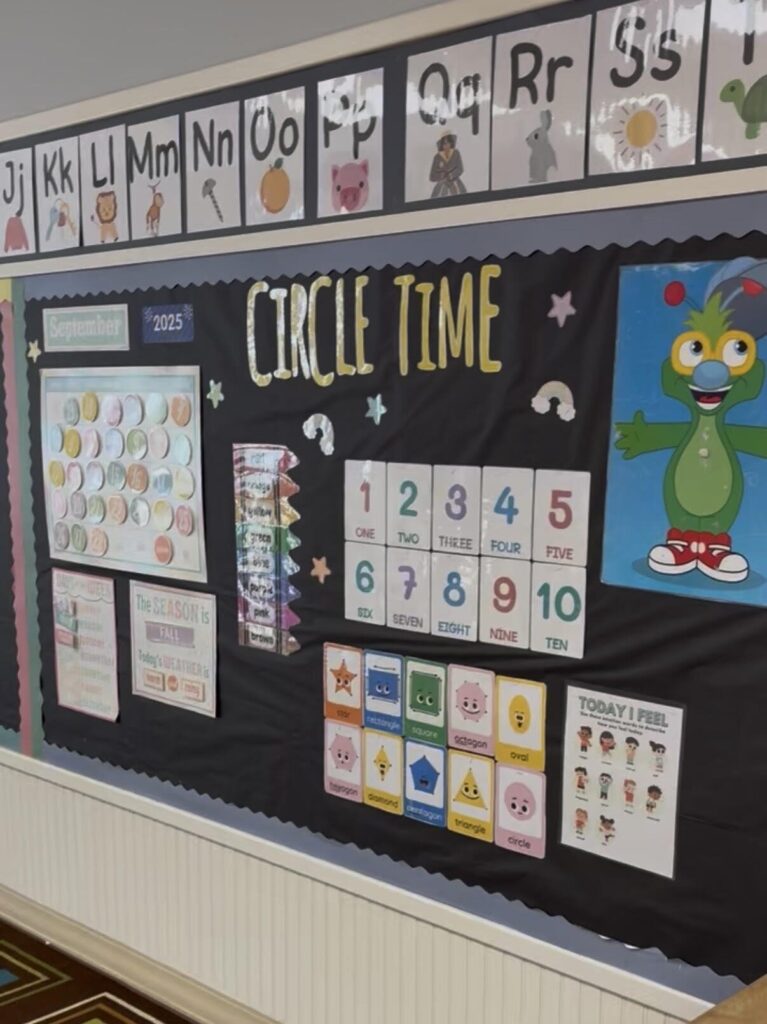
The image above shows a circle time bulletin board in one of my current student’s classrooms. Having a dedicated board/space for the circle time routine helps students know exactly where to go and what they should be focusing on.
Morning meetings/circle time should have the same structure every day, although the content may change from day to day.
It can also be a good way to ease into the day before the students have to do any unpreferred tasks, such as writing, math assignments, etc.
If you teach preschool, SSE has a great circle time resource here.
Classroom jobs
Having jobs in the classroom can also help establish routines. Students like to take ownership of something and knowing that they have a special job can help eliminate behaviors.
This is something that can be established on the first day of school and continued every day of the school year.
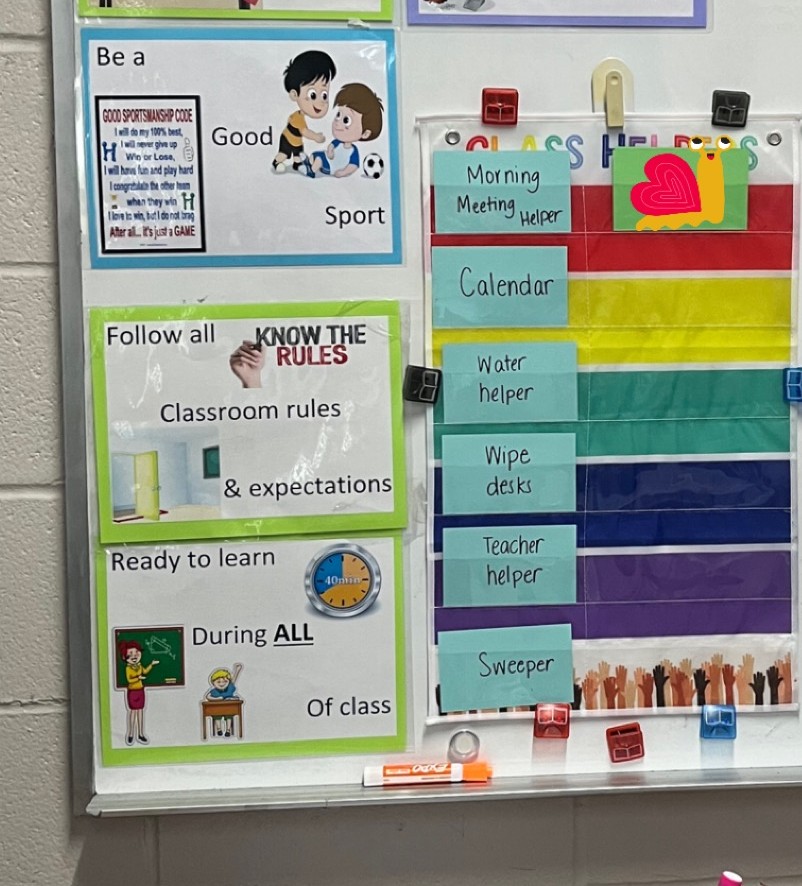
In my previous classroom, I switched jobs every Monday morning during our morning meeting. Since I had six students, there were six jobs available. The teacher helper helped to pass out materials and whatever the teachers needed. The calendar helper switched the “today” card to the correct date and wrote the date on the whiteboard. The morning meeting helper read the morning message aloud to the class. The desk helper wiped off all of the desks at the end of the day with a Clorox wipe. The sweeper swept the floor at the end of the day. The water helper went with a teacher to fill the water jug for the class every day.
During our morning meeting, I would spin a wheel with the students’ names on it. When it landed on the student’s name, they could choose their job. My rule was that they could not choose the same job they had the previous week.
You can create a wheel with your students’ names on it using this website.
The students learned quickly when to do their jobs and it became a regular routine. If a student became upset that they didn’t get the job they wanted, I reminded them that this is something we do all year and that they will have another chance next week to choose a different job.
You can find Simply Special Ed’s classroom job resource here.

Transition routines
Establishing routines for transitions can be helpful in reducing negative behaviors. Things like lining up to go somewhere and putting away ELA journals after doing an assignment should have a specific routine for students to follow.
Think about how you want students to line up for lunch, specials, etc. Will you have the same line order throughout the day, or will it change each time you line up? I found that establishing a line order for each day was helpful, since students were becoming upset when they didn’t get to stand where they wanted.
I used the wheel of names during our morning meeting to spin for the line order. If someone was line leader the day before, they could not be the line leader the next day. I then wrote down the names on the whiteboard in the order they would line up.
Establishing a predictable routine with the line helped so much with behaviors.
You should also consider where you want students to put materials when it is time to transition to the next activity. I always had a set spot for finished work (a bin on my desk), and for ELA and Math notebooks. This remained the same from the first day of school to the last day of school.

Dismissal routines
Having a routine for the end of the day is just as important as the start of the day. It can get chaotic at dismissal, so having predictable procedures is helpful.
I always had students collect their take home folders/belongings and sit at their desks. If they had a good day according to their daily school note, they could play school appropriate games on their chromebooks. If they did not earn chromebook time, they had the choice of reading or coloring.
Students were also expected to monitor the SmartBoard to check for their bus number to appear. Depending on the age and needs of your students, they may need something more structured. Some teachers like to put on an educational show or videos for their students all to watch together.
Reading books about the bus at the beginning of the year can be helpful for younger students and help them become more comfortable with getting on the bus. SSE has a book companion to go along with the book The Bus for Us by Suzanne Bloom (pictured above).
Find what works for you, and then stick to that every day!
Establishing predictable routines can help eliminate anxiety and uncertainty for students, especially during back-to-school time in a new setting. Have a great year!