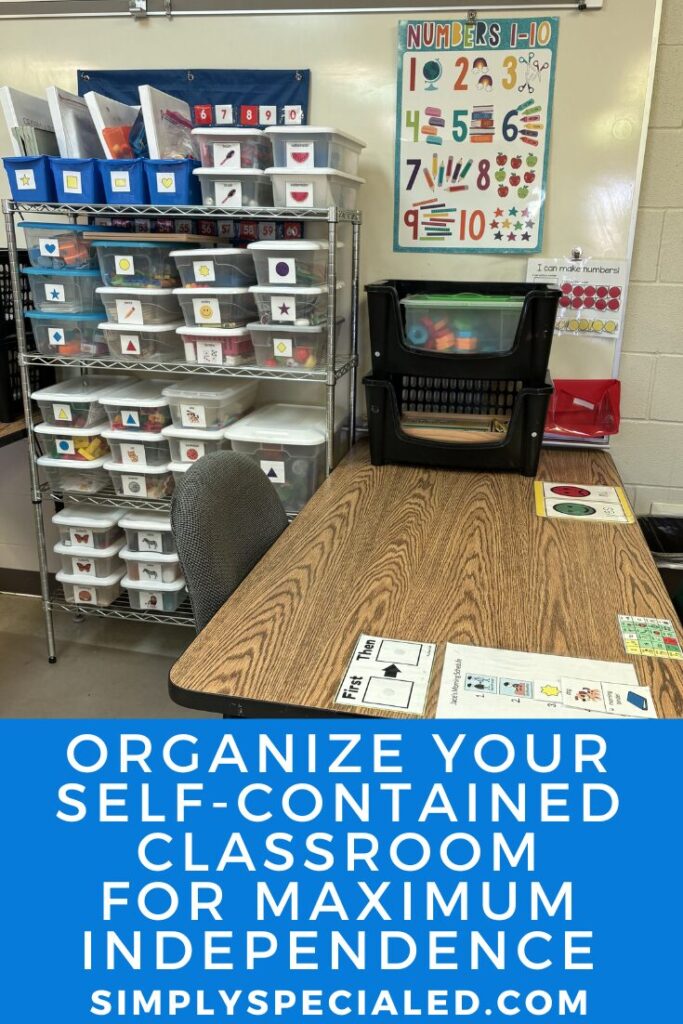
If our job is to help students grow in independence, let’s start by setting up a space that’s made for them to work toward that goal!
Here are some ways you can set up your self-contained classroom for maximum independence. Your students will be building endurance, confidence, and independent living skills!
Create Visual Boundaries and Areas
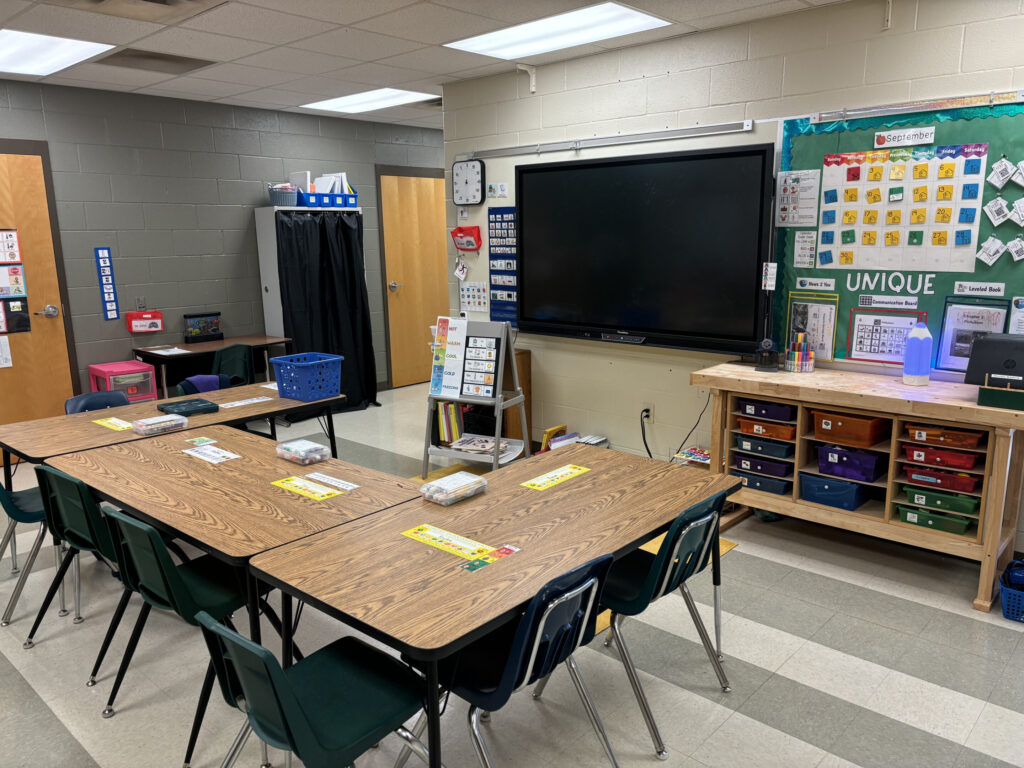
It all starts with how you place the furniture in your classroom.
Your tables, desks, flexible seating, cabinets, and bookshelves… arrange classroom furniture and storage areas to create visual boundaries that help students understand expectations and locate materials independently.
Set Up Schedules and Visuals
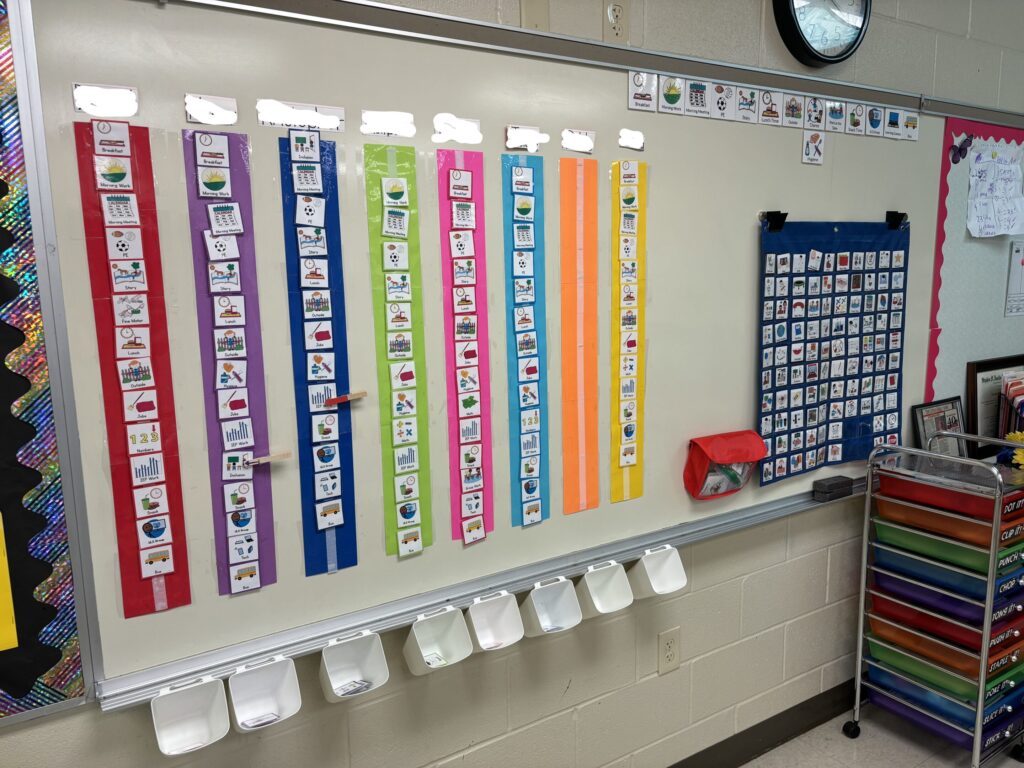
To add further to the furniture-created boundaries, add visual schedules and visual directions to different areas. Students can utilize these to increase independence in completing a daily routine.
First, teach your students how to use their schedules, and then they can increase independence by checking them on their own to complete the school day.
At independent work stations, simple visual prompts can assist students in completing tasks independently.
Keep Your Schedule Consistent
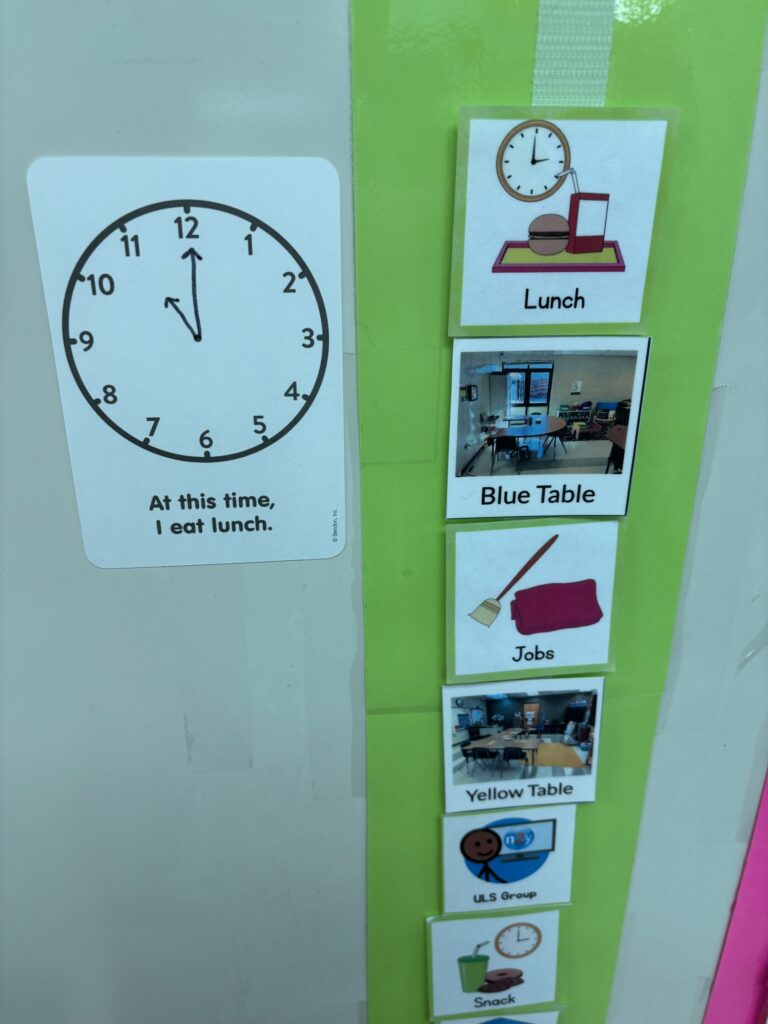
Create your schedule and stick to it. Of course, we remain flexible as things do happen that we cannot avoid, but if we keep our classroom schedule consistent, students know what to expect. A routine that is expected can help our students gain independence; they know what’s going to happen next, and they will not have to wait for adult direction at all times.
Routines and a consistent schedule can also help to reduce behaviors, as students with disabilities feel comfort from a routine they know. I personally feel more comfortable when I know what to expect, and students are like this too. In this way, you’re supporting their emotional regulation as well as their independence.
Utilize Task Boxes
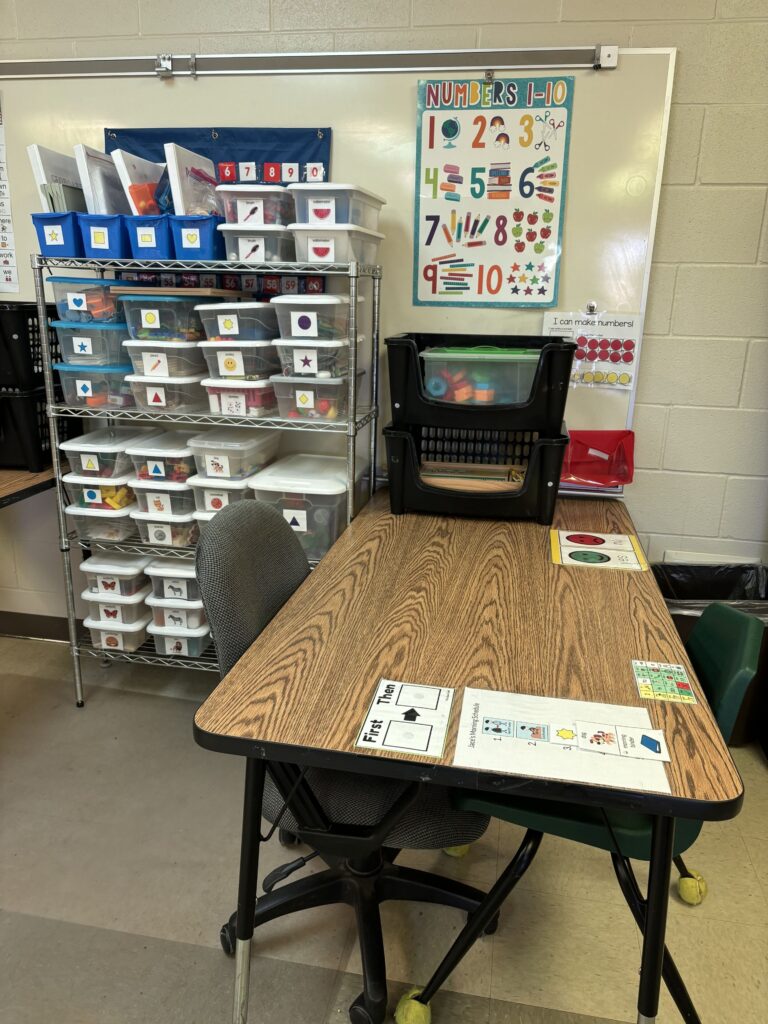
A task box system is my favorite way to increase independence in my self-contained classroom. You can place almost anything into a labeled box or bin, allowing students to independently practice a task that you assign for them or one that they’ve selected on their own.
First, take each task box and add a label or icon. Next, give your students a visual schedule for task boxes, and add the matching labels/icons that correspond to the boxes you want the student to complete. Students can increase independence by using their schedule to find the correct box and complete it.
Browse these task box ideas and start creating your own today!
Utilize a File Folder System
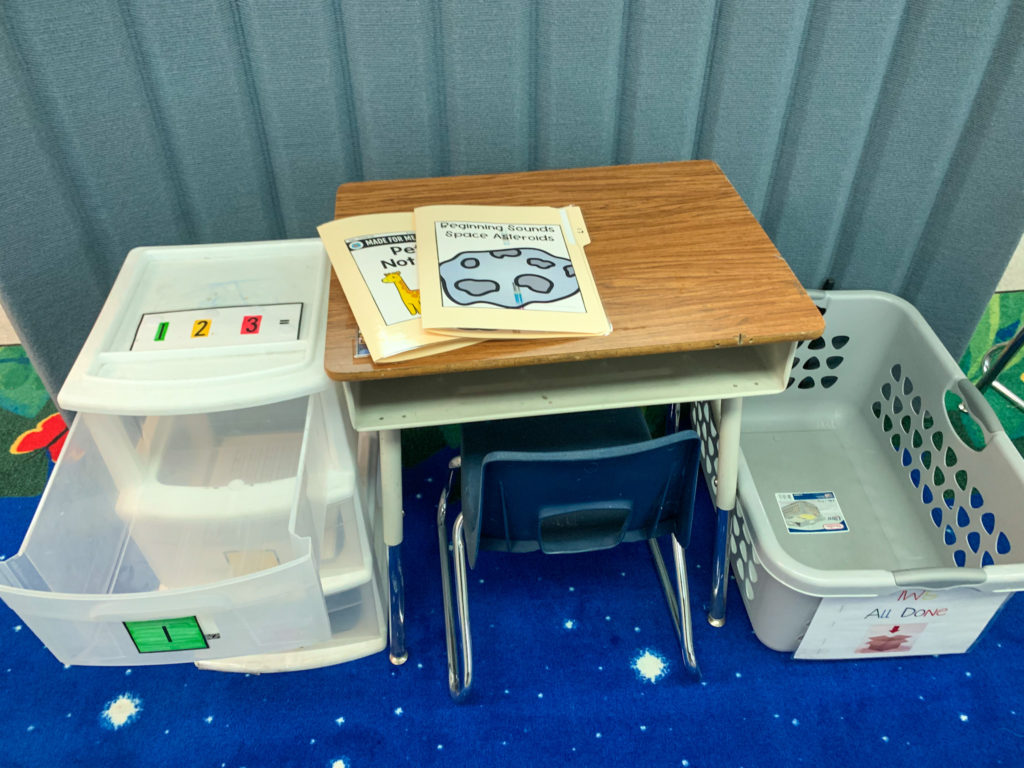
Just like a task box system, a file folder system uses labels, colors, or icons to assist the student in finding a file folder to complete. Students typically use laminated, reusable file folder systems to practice skills independently. Teachers can create file folders with errorless activities, or students can complete and turn in file folders for review. File folders cover almost any topic or skill you can think of!
Color-code your file folders by skill addresses, and label them with numbers, letters, shapes, or pictures. Like a task box system, students find the file folder to complete by matching the icon on their schedule.
Download this ready-to-use independent file folder system and print and laminate it for your classroom!
Plan Your Centers Now
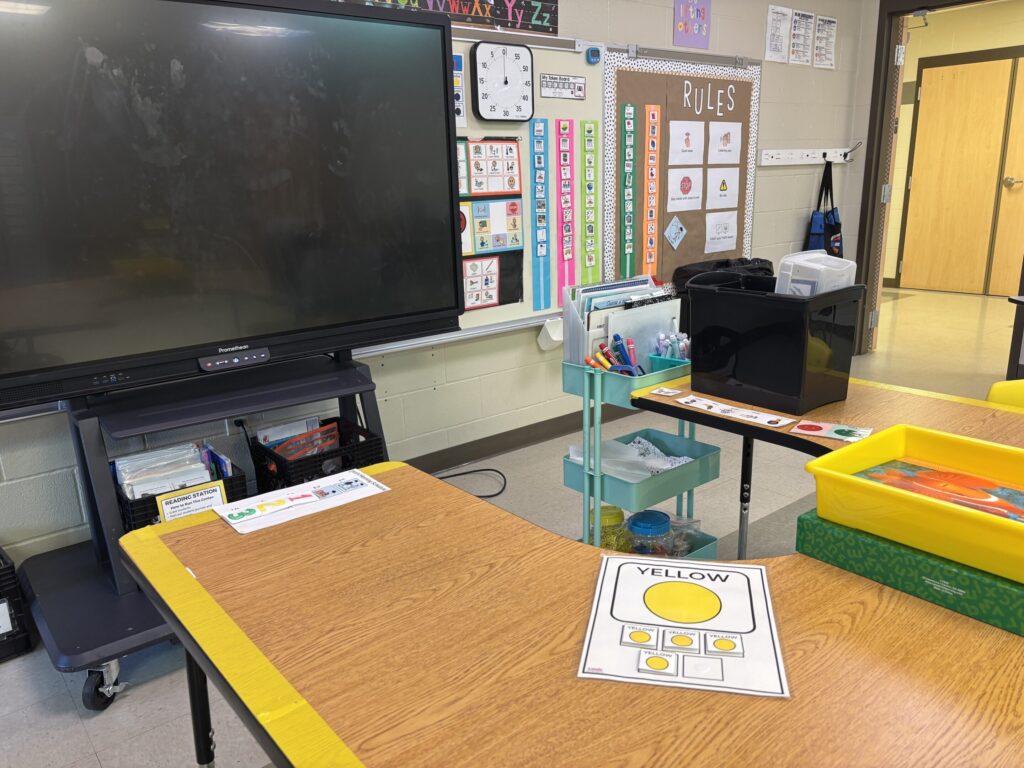
Next, as you are organizing your materials, go ahead and plan what you will teach at centers in your classroom. Think of tasks that students can learn to do at an independent station – these may be simple or errorless tasks, playing a game, completing an art task, or even watching an educational video. As a student’s independence grows, the tasks can change, and the demand can increase.
Sabrina has more ideas for independent work in her blog, here.
Organize Your Teacher Supplies, Too
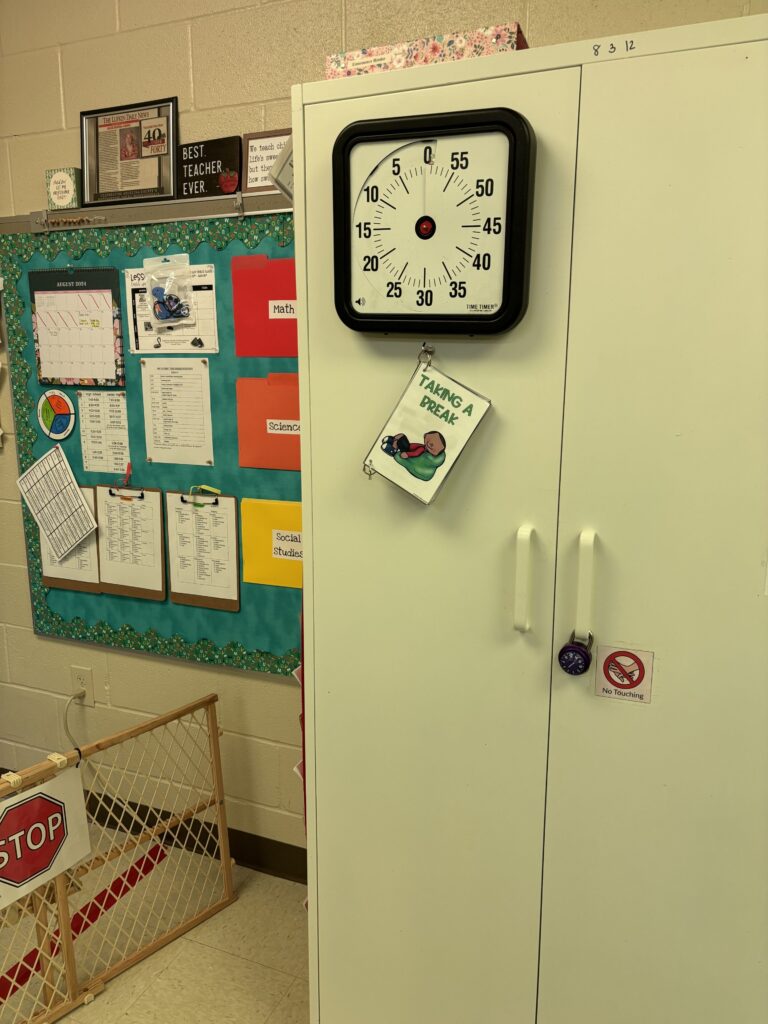
Lastly, it seems simple… but take the time to organize your teacher supplies now so you can quickly access anything when needed. During the middle of a lesson and you think, “I need a ___?” You know exactly where it is, and you don’t have to waste time searching for it.
Think about all the things in your teacher’s closet:
- Curriculum pieces and lesson plan resources
- Books and book companions for read-alouds
- Office supplies
- Extra sensory tools
- Manipulatives you aren’t using yet
- Technology supplies
- Extra cleaning supplies
- Monthly decoration and bulletin board materials
Keep Your Expectations High
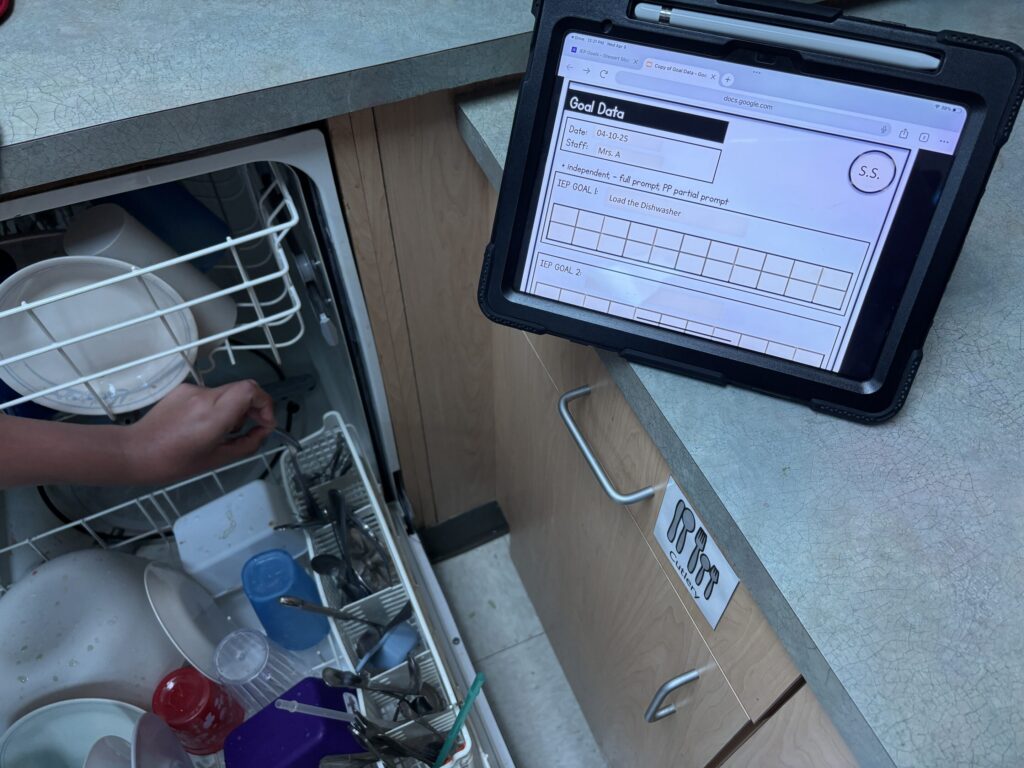
Believe in your students, and they will surprise you! Keep your expectations high and give them time to work on tasks. It may not come quickly or easily, but with continued work and your routine schedule, your students’ independence will increase. Celebrate the victories, big and small! Congratulate them on tasks they are able to complete independently. Let them know that you’re rooting for them…. after all, that’s what it’s all about, right?