
Setting up a self-contained classroom can feel overwhelming, especially when you are supporting students with a wide range of academic, communication, and behavioral needs. Many teachers assume that if things feel chaotic, they simply need more materials, more visuals, or more adult support. But in many cases, the real issue is not behavior and it is not a lack of resources.
It is a lack of clear classroom systems.
Systems create predictability. Predictability helps students understand what is expected of them, where to go, and how to complete tasks. When those things are clear, students are more likely to stay regulated and work independently.
If you are setting up a self-contained classroom or trying to improve the flow of your day, these are seven systems that make the biggest difference.
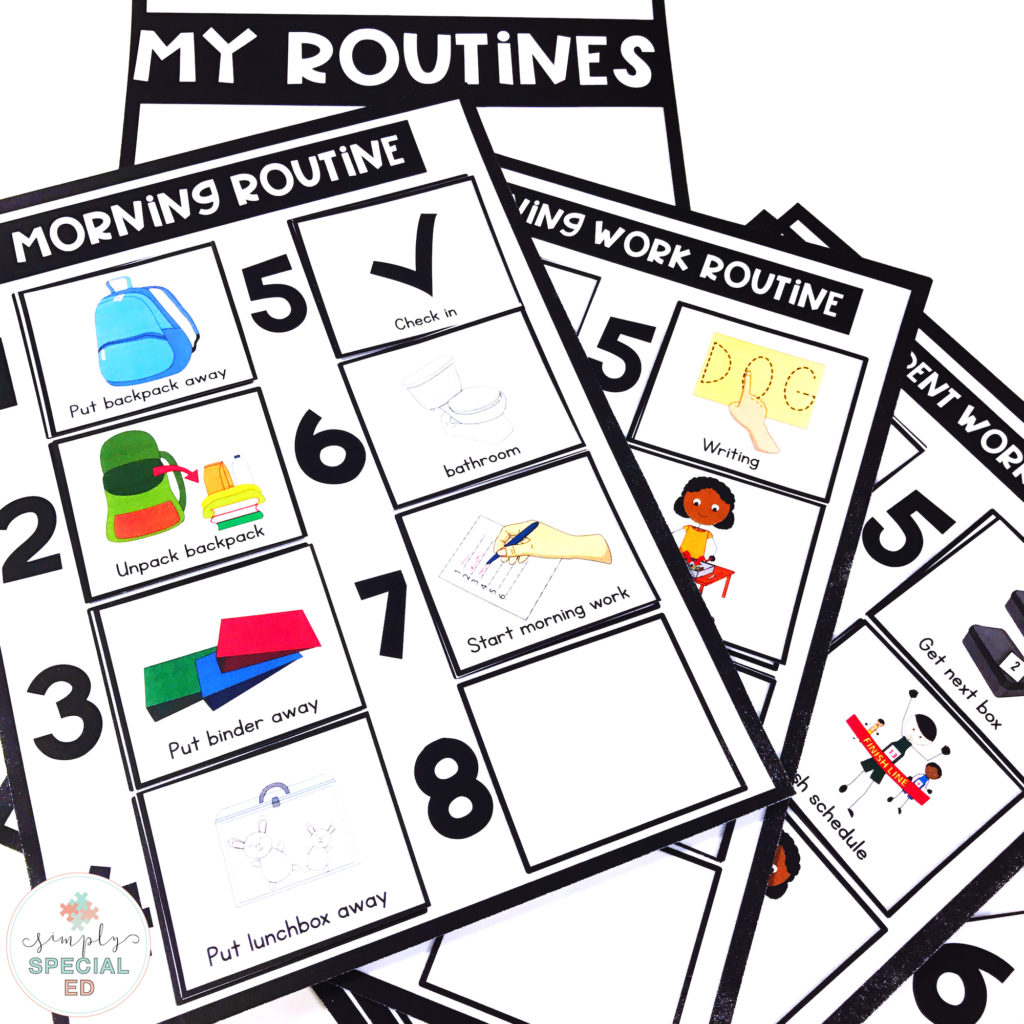
1. Morning Arrival Routine
The way students enter the classroom sets the tone for the entire day.
Without a clear arrival routine, students may wander, ask repeated questions, or rely heavily on adult prompting to get started.
A predictable arrival system helps students know exactly what to do when they walk in the door.
This might include things like:
- putting belongings away
- checking their visual schedule
- completing a short morning task
- signing in or choosing a work bin
The goal is for students to move through the arrival routine with minimal adult support. When students know what happens first every day, the morning becomes calmer for everyone.
2. Independent Work System
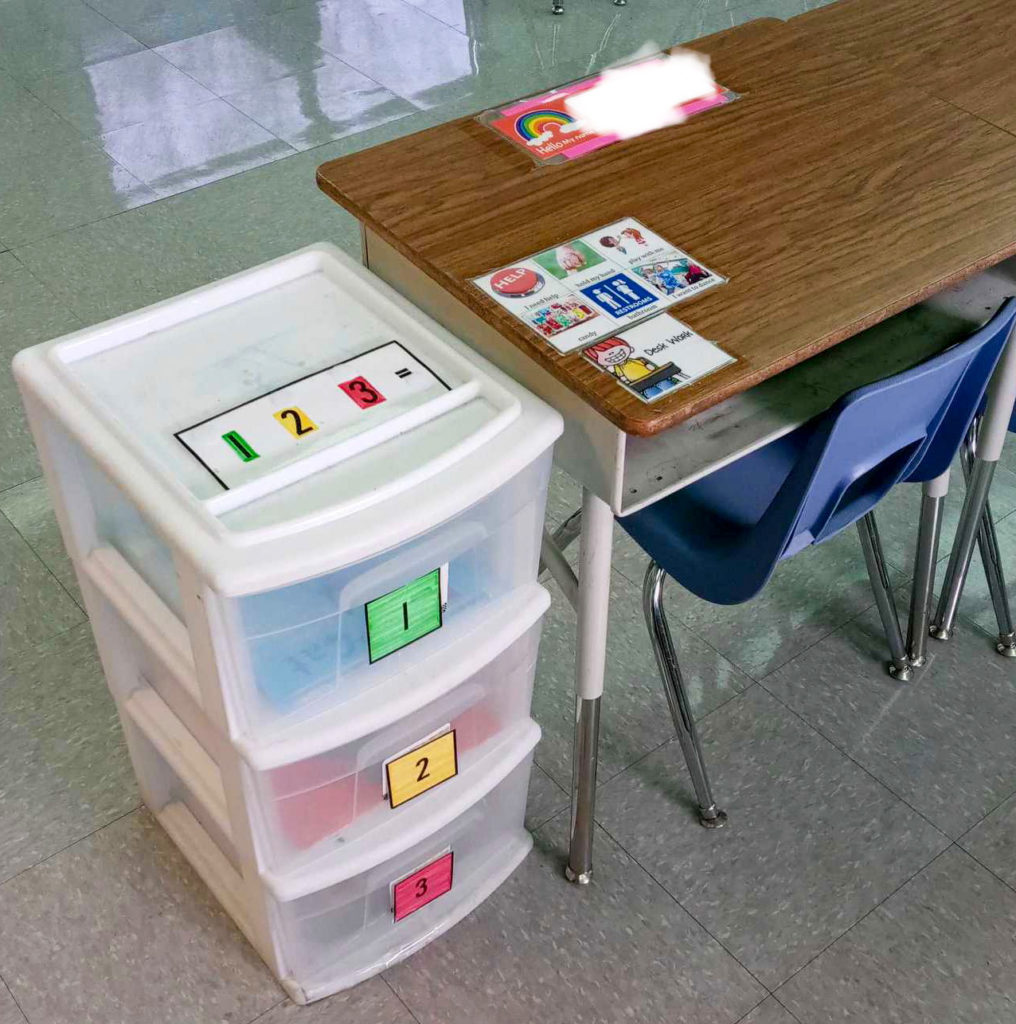
Independent work is one of the most important parts of a self-contained classroom. It allows students to practice skills while teachers work with small groups or support other learners.
However, independent work only works when students understand the system.
Students should be able to answer these questions without relying on an adult:
What work do I do?
How much work do I have?
Where do I put it when I finish?
What happens next?
Many classrooms use task boxes, work binders, or structured work stations to make expectations clear. The key is consistency so students can build independence over time.
3. Centers Rotation System
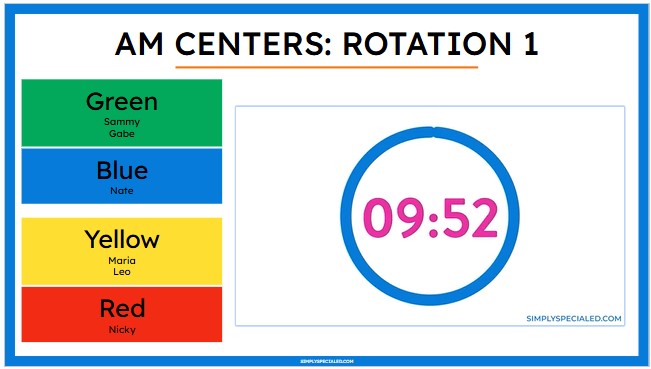
Centers are a powerful way to differentiate instruction, but they can quickly become chaotic if the rotation system is unclear.
Students need to understand:
- where they go first
- how they know when to rotate
- where they go next
- what to do when they finish
Visual rotation charts or schedules can help students move through centers without needing constant reminders.
When the structure is predictable, teachers are able to run small group instruction while students stay engaged in meaningful work.

4. Finished Work System
One of the most common problems in self-contained classrooms happens when students complete work and do not know what to do next.
This often leads to wandering, calling for help, or interrupting instruction.
A simple finished work system solves this problem.
Students should always know exactly where completed work goes and what the next step is. For example:
- placing work in a finished bin
- moving to the next task
- checking their schedule
Clear endings to tasks reduce confusion and help students transition smoothly to the next activity.

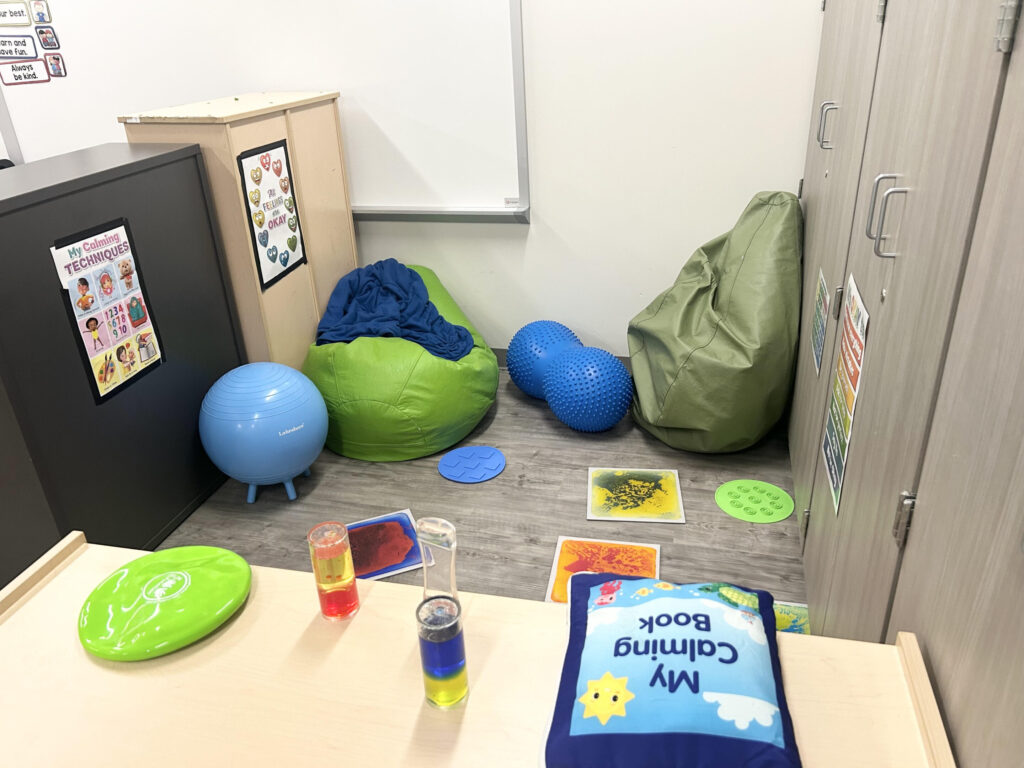
5. Behavior and Regulation Supports
Students in self-contained classrooms often need support with regulation, but that support should be built into the environment rather than relying only on adult intervention.
Some classrooms include things like:
- calm down areas
- sensory tools
- visual regulation strategies
- break systems
These supports give students structured ways to regulate when they feel overwhelmed. When regulation supports are predictable and consistently available, students learn how to use them more independently.

6. Visual Schedule System
Visual schedules are one of the most important tools in a self-contained classroom.
Many neurodivergent learners rely on visual information more than verbal explanations. A visual schedule helps students understand what their day looks like and what will happen next.
A strong schedule system allows students to:
- see upcoming activities
- anticipate transitions
- check what comes next independently
Schedules can be whole-class, individual, or both depending on student needs.
The most important part is that students are actively taught how to use them.
7. Staff Communication System
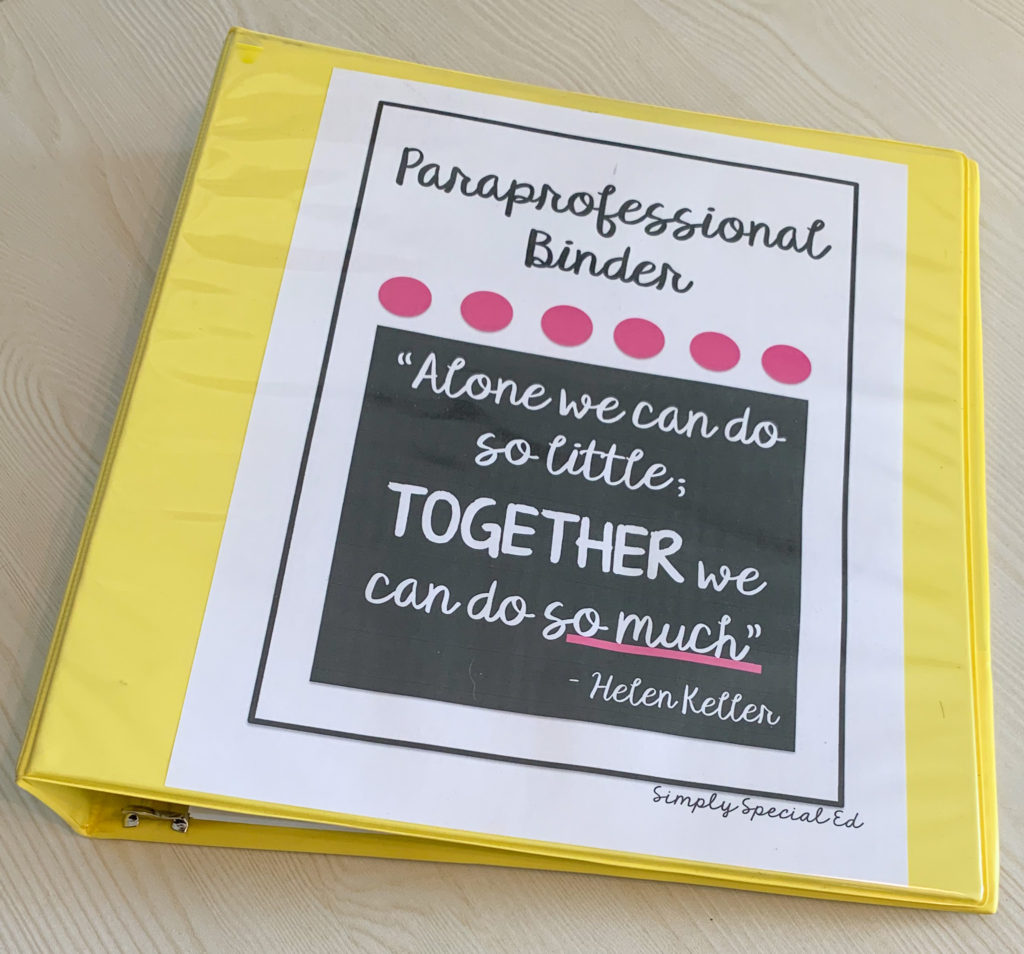
Self-contained classrooms often involve multiple adults supporting students throughout the day.
Without clear communication systems, staff members may feel unsure about:
- what students are working on
- how to support centers
- behavior strategies
- daily schedule changes
A simple staff communication system can make a huge difference.
This might include:
- daily plans posted in the classroom
- rotation charts for staff support
- shared notes or communication logs
When adults are on the same page, the classroom runs more smoothly and students receive more consistent support.
Systems Create Calm Classrooms
When classrooms feel chaotic, it is easy to assume that behavior is the main problem.
But often the bigger issue is that students do not have enough predictable systems guiding them through the day.
When routines are clear and consistent, students rely less on adult prompting and begin to develop more independence.
If you are trying to build stronger systems in your self-contained classroom, this is something I teach step by step inside Simple Self-Contained Setup 101®.
Inside the course, I walk through the exact systems that help self-contained classrooms run smoothly, including how to design your classroom layout, build predictable routines, and create structures that support student independence without adding more work to your day.
You can learn more about the course here!
