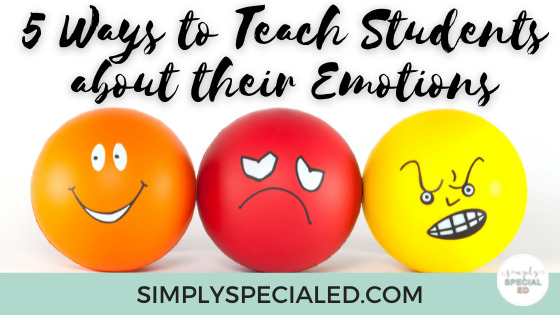
As special education teachers, our job is not strictly to teach academics. We are tasked with teaching our students about their emotions, how to understand others emotions and how to respond in certain emotional scenarios. These are five of my favorite ways (in no particular order) to teach about emotions.
1. Social Stories/Social Narratives
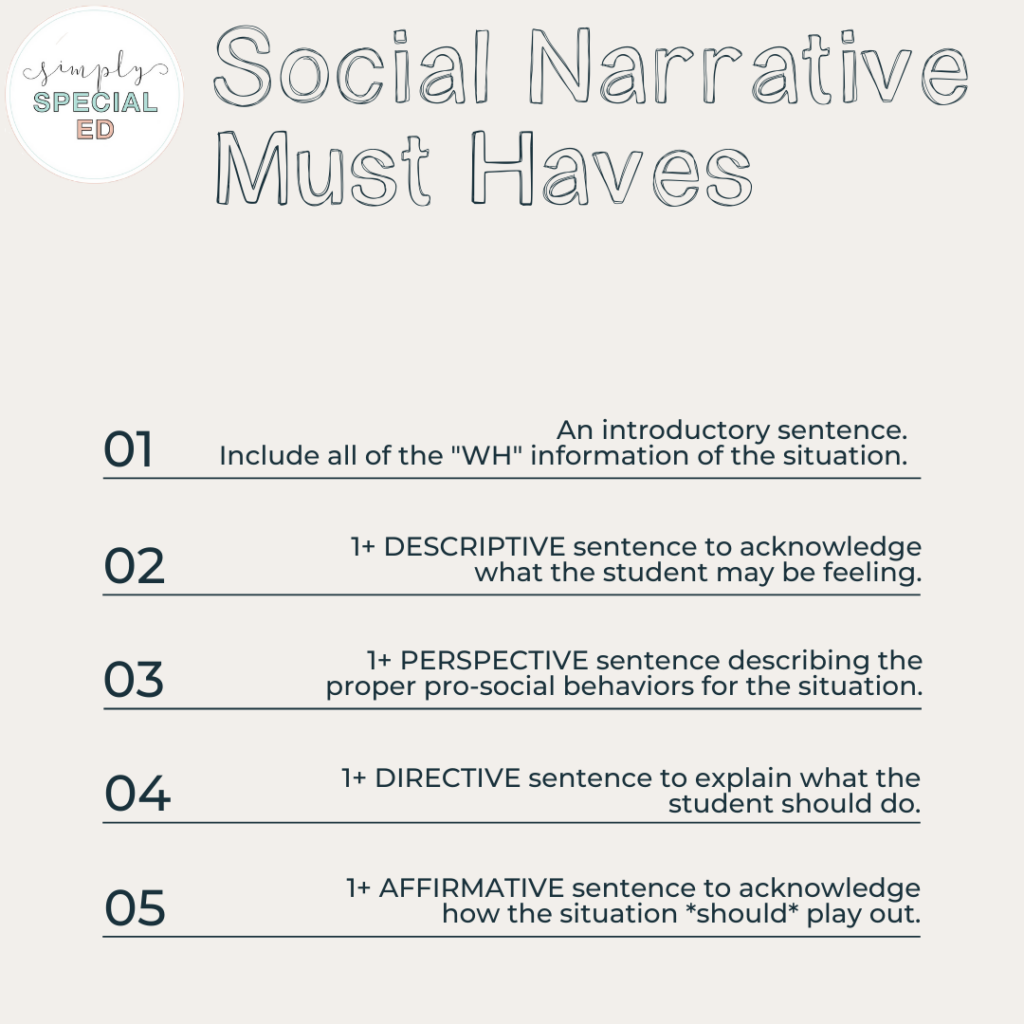
Note: I will be using the term “social narratives”, as Social Stories is a copyrighted term by Carol Gray. While they are essentially the same, social narratives do not have to be written by Gray or abide by the 10 part criteria of writing (though it is best practice) Curious if your social narratives are Social Stories? Use this checklist!
What is a social narrative?
A social narrative is a visual depiction of a scenario or situation designed to teach an individual something new. They often have a strong voice, with the point of view being that of the learner. A social narrative should be short, but detailed enough to provide examples and non-examples of what the learner should be doing. I tend to write my own social narratives, but there are tons on TeachersPayTeachers.com (like this one!)
2. Five Point Scales
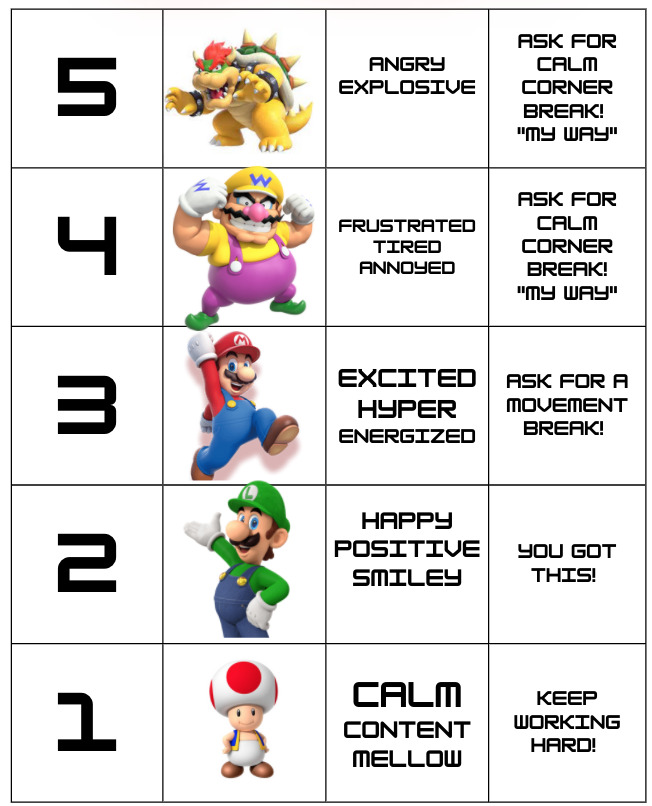
Five Point Scales are a tool in which behaviors or ideas are broken down into 5 easy to understand components. Similar to a social narrative, five point scales are customizable based on what your individual student is working on. Depending on your student’s reading ability, you can include visuals, explanations and/or solutions for each element of behavior. When designing a five point scale to teach emotions, I use a 1-5 rating. Starting from the bottom, choose a progression of emotions your student feels, identify signs of that emotion and how you can either stay in that emotion or move on from it.
I also find that five point scales are a great place to include special interests for your student. If your student has characters that they like, this is a great place to show a student how to “be like ____” in displaying certain emotions and behaviors.
3. Picture Books
There are SO many books out there that are specifically written to help teach about emotions at all different levels. Some speak about all emotions generally, while others go deep into a particular emotion. My list of favorites (with links!) is below.
Best Picture Books to Teach About Emotions
- Listening to My Body by Gabi Garcia
- Today I Feel… by Madalena Moniz
- Tough Guys Have Feelings Too by Keith Negley
- When Sophie Gets Angry, Really, Really Angry by Molly Bang
- Big Feelings by Alexandra Penfold
- A Little Spot of Emotions by Diane Alber
^ Above are amazon affiliate links, I find the best prices for you!
4. Model The Language of Emotions
Regardless of where your students’ verbal language abilities are, modeling the language of emotions is super important in teaching emotional regulation. Whether you do this through role playing or in-situ, identifying and pointing out the body language and facial expressions of a particular emotion can help students begin to identify emotions in themselves and in others.
What does this look like?
If you are working with a student to identify emotions through role playing, model exaggerated forms of the emotions. Trying to teach happy? Show them your smile, have high energy and stand tall. Trying to model anger? Stomp your feet, scrunch up your eyebrows and put your hands on your hips or your head down on the table.
If you are trying to help a student identify their emotions in a moment of crisis, point out those physical traits that signal emotions to you. “I notice that you are stomping your feet and yelling. Your body language is telling me that you are feeling angry, is that how you feel?” Once they are able to identify what they are feeling, they may know where to go to help them find a solution.
5. Use Visuals!
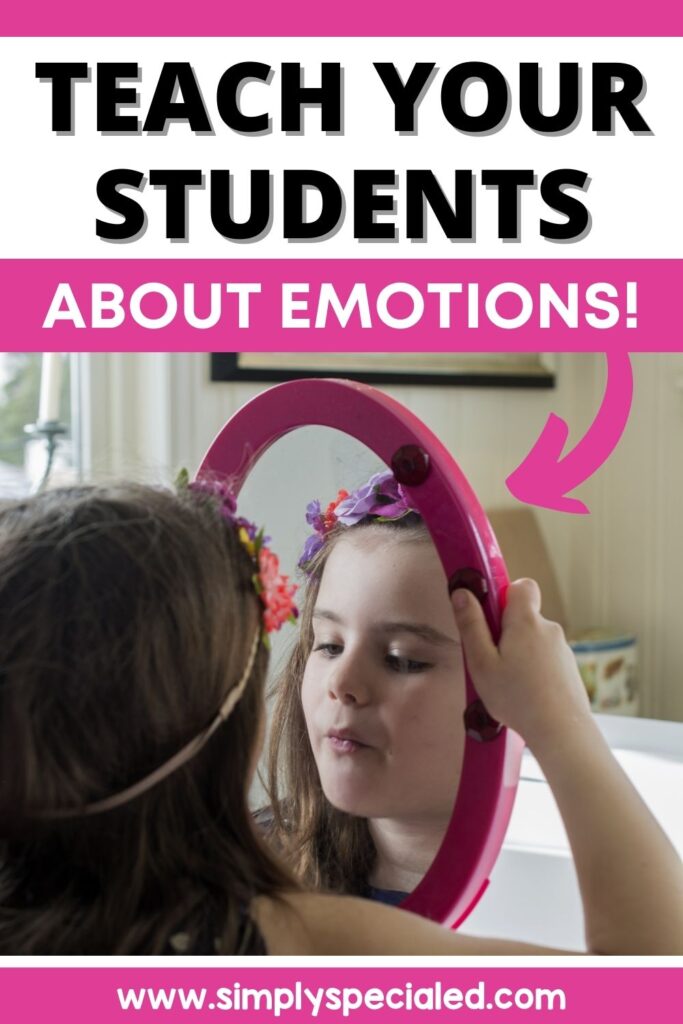
As special education teachers, we know the importance of a visual support. But have you thought of using your students as the visual supports? Take photos of your students making the facial expressions of a variety of different emotions. Use these to help them understand the different emotions. Can’t take photos of your students? Use a mirror!
Another bonus tip is to use file folders to help students match the facial expressions to the emotion word! Check out this FREE emotions task box from the Simply Free Library!
How do you teach about emotions?