1. Compassion over Compliance
Let’s learn how to incorporate some neurodivergent affirming tips into our classroom as special education providers!
In a nutshell, this phrase means prioritizing empathy and understanding of where our students are. We accomplish this by not only forcing them to comply with rules and guidelines but also by providing them with clear expectations and guidance. The way neurodivergent individuals were treated in the past came from a place of training and teaching them to conform to the “right” and “wrong” ways of society. Putting compassion first allows one to understand the person for who they are. It gives them autonomy. Compassion first respects their dignity. And it also fosters meaningful connections and relationships. Real, long-term, and beneficial progress happens when we understand, support, and celebrate each individual. This approach is rooted in meeting the emotional and individual needs of each student, enabling true growth to be achieved.
My next nine tips will focus on creating this environment for students. This may sound easy, but it can be challenging to achieve in a special education classroom.

2. Utilize Hand Under Hand
You have a student who is learning a new skill. You then utilize hand-over-hand prompting to assist them in completing the task. We want to be using hand-UNDER-hand prompting instead to be more neurodivergent affirming. This prompting method allows for greater autonomy for the student, and it is a less intrusive version of physical prompting. If a student needs the intrusive level of prompting that hand-over-hand requires, that task is probably too high for them.
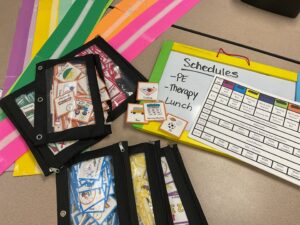
You might think, “How will they learn this new task if I am not fully prompting them?”. This is why explicit teaching of new skills and strategies, and visuals, are great tools for neurodivergent learners. If the task is new, you can continue to break down the task until you can create clear models and visuals for what is required. Once the learner is comfortable with the smaller tasks, they may still need physical prompting to guide them on the new task. This is where hand-under-hand prompting comes in. Place your hand under theirs and allow them to follow through with the task as you are doing it. Visual schedules and visual cues are vital to this process! Otherwise, you will be utilizing hand-over-hand prompting for everything until they learn all of their structures and routines.
If hand-over-hand prompting is being utilized due to the student not complying with the given task, then that goes back to my point #1. We are still always going to follow through, of course, with the directive at hand. But what is the reason why they are not complying with the task? Let’s take a step back and look at the antecedent (what happened directly before the behavior). We will also look at the setting event (any prior circumstance that has influenced the likelihood of the behavior). Now that we have looked at this, we could decrease the rigor of the task, increase our waiting time, or present choices on how they want to complete the task. Overall, hand-over-hand prompting and highly intrusive prompting should be utilized in rare situations, or when the child is in harm’s way.
3. Honor ALL Forms of Communication
This is a phrase used to acknowledge any way a person chooses to communicate best. This could be verbally, through AAC, through gestures and pointing, through ASL, etc.. We should respond to any form of communication from a child in a way that shows understanding and validation. Sometimes we don’t know what they are communicating, and that is okay! This is important in a special education classroom because we tend to have students at different levels of communication abilities (including nonverbal). We can be neurodivergent affirming by showing learners that we value them as individuals with autonomy. They are like anyone else, despite having language challenges and difficulties. Here are some great Simply Special Ed visuals to share with parents and families. These will help them continue to honor and teach all forms of communication to their neurodivergent family member!

4. A Sensory Object is Not Reinforcement
This tip stems from the idea that a student may want to work for a fidget or a sensory object as reinforcement. Every human has to be regulated in their own way before they can effectively learn and manage their daily lives. This goes for our special education neurodivergent students as well. Some of our students with sensory needs need to regulate themselves utilizing a fidget tool before they can learn effectively. The child is not needing that fidget tool to play around. They are utilizing it to help them regulate their sensory needs.
Now, there are times when a child may want to play with that unicorn pop-it as a reinforcement, because it is a cute toy to them. In that instance, yes, allow them to work for it as a tangible reinforcement. When the child needs the fidget to allow them to calm down and regulate, allow them to hold on to it while they work, or to have it near them if the work cannot be done while holding the fidget. Sensory and emotional needs are imperative to be met before meeting academic needs.

5. Ignore the Behavior, NOT the Child
I’m sure we have all heard of the term “planned ignoring.” This can be a very powerful behavior strategy if used correctly. Now, I will not delve into a comprehensive section on how and when to use planned ignoring. What I want to emphasize is that when you are using that strategy, it is essential to never completely ignore the child. When a child is engaging in maladaptive behaviors, their emotional brain is not working and thinking as it usually would. Even if you are using planned ignoring for an attention-maintained behavior, you should minimize attention as much as possible, but not completely. We want the child to understand that we are still there for them even in their hard times and challenging moments. We want to validate the child’s feelings, even if they are not what we want in that moment.
Another reason we do not want to completely ignore the child is for safety. Refer back to point #1; we always want to show compassion over wanting them to simply comply to be truly neurodivergent affirming. Even if all you are doing is sanding or sitting by that student and making sure they are safe, and using minimal language, that child is being shown that we are not going to leave them alone, even in their challenging moments. When a child is in that scenario, you are not always sure how fast it could escalate to unsafe behavior, and if we are ignoring them, then we won’t be able to keep everyone safe as quickly.

Now you have learned a few research-driven tips to help affirm your neurodivergent students. Try to think of how you can implement them this school year. I hope you learned something new, and never forgot to use compassion over compliance!
Do you want to know how to better serve your neurodivergent students in unique and research-driven ways? Check out this blog post on how to incorporate a “sensory diet” for a student with sensory needs. That is another great neurodivergent affirming strategy!