Sensory supports are crucial for a self-contained classroom. Sensory supports help to regulate students and keep their bodies calm. There are so many sensory supports available but I’m going to share some of my students’ favorites! Collaborate with your OT or click here to find more student specific sensory supports for your classroom.
Flexible Seating
I personally don’t love to sit flat in a chair with my legs on the ground, so I don’t expect my students to sit that way either. I’m constantly sitting on my feet or sitting cross legged because it’s just what my body needs. Sometimes, I need to get up and stand too if I have been sitting too long. It’s important to be flexible with how our students need to sit.
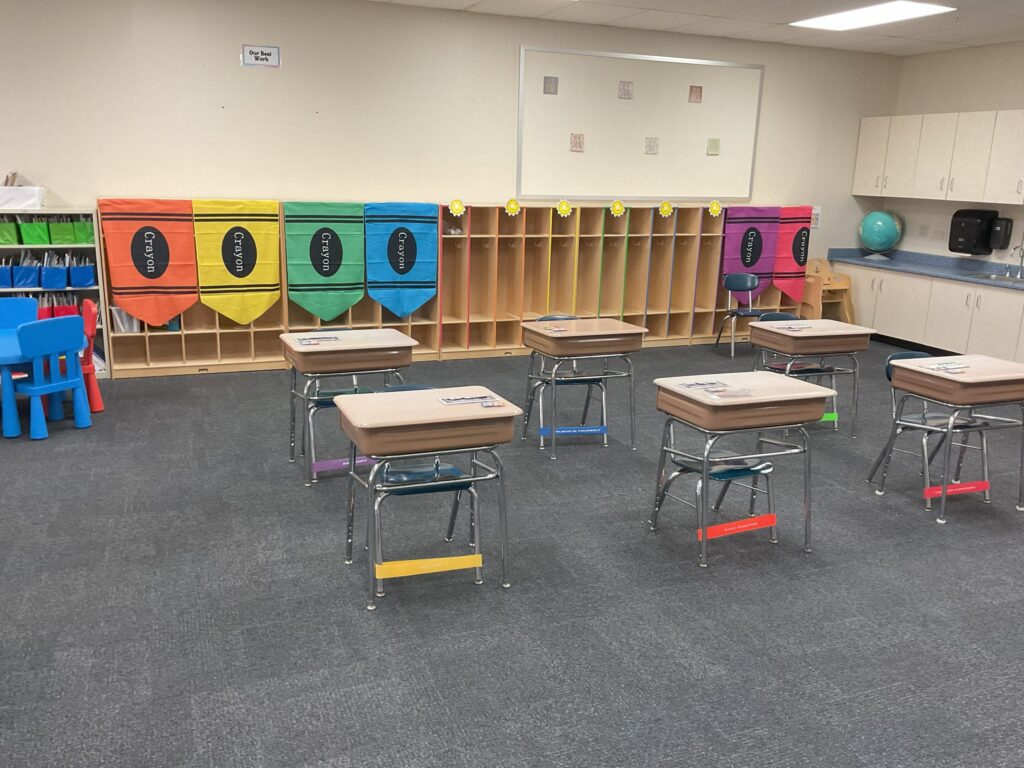
There are so many ways to incorporate flexible seating into your classroom. Flexible seating helps to keep students’ bodies moving while keeping their brains engaged. As shown above, you can use chair bands for students feet to fidget on. Your district also might have wobbly stools, chair wedges, or bouncy ball chairs available. You can experiment to see what works best for your students.
I had a student who did not like sitting in general. I created a box out of tape on the floor around the table to show him he needed to stay in the box while we were at group time. He was able to use a wobbly stool, regular chair, or stand as long as it was in the box. This visual helped him stay in his space and remain engaged in the lessons.
Sensory Break Area
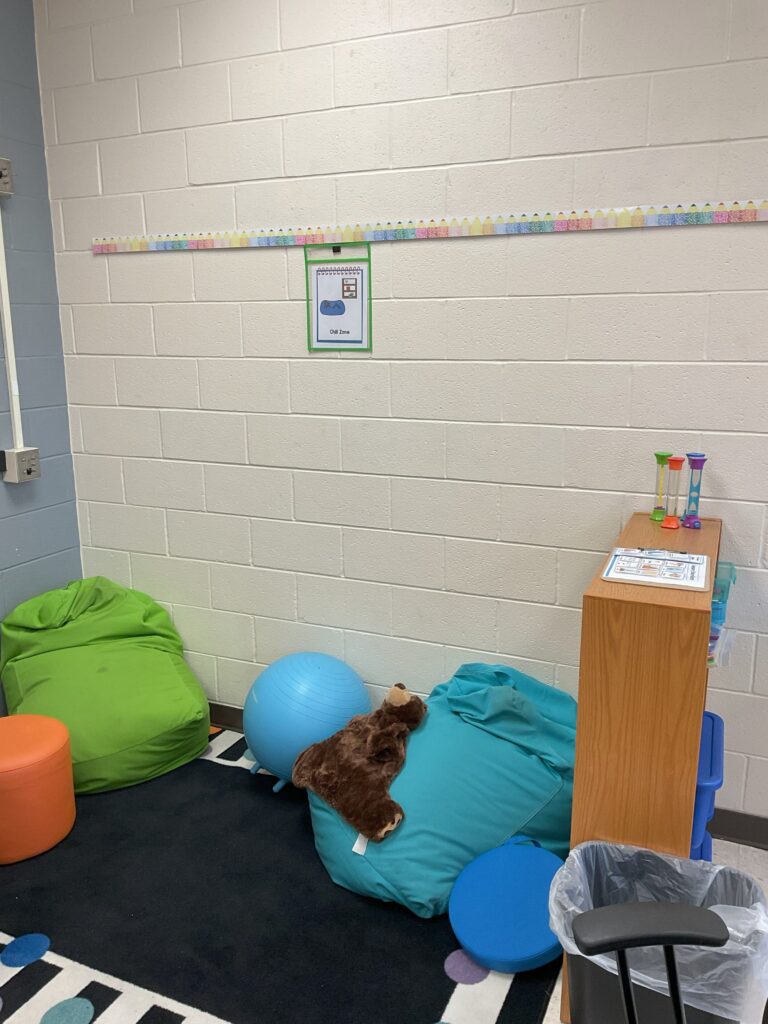
Every self contained classroom should have an area where students can have a break with sensory supports! You can put different types of sensory items in this area, like tactile, visual, proprioceptive, etc. I always love to have bean bag chairs in this area for students to relax on. Here are some sensory support hits from my own classroom:
For tactile items, try putty or gel pads. For visual items, try oil timers (as shown in the picture above) or light up spinners. For proprioceptive items, try a weighted blanket or weighted lap pad. For auditory items, try rainmakers. You can separate these items by category (visual, tactile, etc.) or by student (ex: James, Louise) by putting them in bins on a bookshelf in your sensory break area. That way, when you have students in that area, you can know exactly what sensory items are beneficial to that student.
You can incorporate the sensory break area in a few ways. You can have students request it when they feel they need a sensory break or you could embed it into students’ schedules. It could be a center rotation to proactively give students the sensory supports they need.

Fidgets
Fidgets are a sensory support that should be used for students in any classroom, special education and general education. As adults, we fidget all the time! Often, we don’t even recognize when we are fidgeting. You can use a school box or bin to store your fidgets. This fidget pack has 50 different kinds of fidgets for students to choose from. If you don’t want students to access all 50 at one time, you can pick a few at a time and give choices. Make sure the fidgets you are choosing don’t have a choking hazard if you have students that mouth items! Fidgets are also super easy to take with to other settings in the building for general education classes.
Fidgets don’t have to look like the spinner toys or pop its. You can use the stickers, like the ones in the photo above, and stick them onto students’ desks. These are more discreet but help with tactile input. Some of the stickers are scratchy but also have calming strategies embedded into them. For example, the rainbow sticker has breathe in on the left side and breathe out on the right side. So, when students trace the rainbow with their finger, it is teaching them deep breathing strategies as well.
You also don’t have to spend a crazy amount of money on fidgets. One of my students loved the Mardi Gras necklace from the dollar store to fidget with. He would request we cut them so that it was a long string rather than a necklace. He would use that to fidget with at his desk during group times.

Sensory Bins
Sensory bins are probably my favorite thing to have in the classroom! I know some teachers don’t want them because they make a mess. However, there are so many options out there that can be easy to clean up, like paper shreds or feathers. Some students may like a specific type of texture, like beans, and another might like a texture like sand. I kept this big bin (as seen in the picture above) in my classroom that held smaller sensory bins inside. Students could choose which sensory bin they wanted to play with: feathers, pom poms, beads, or sand. If you need help getting started with sensory bins, Amazon has premade ones that are always a hit, like this ice cream sand bin!
I create a themed sensory bin per month so that students don’t get bored of the same one all the time. This is super inexpensive by shopping at the dollar store for some cheap items! You can also buy items like rice or spaghetti noodles (full list of fillers here) and use food dye to dye them a specific color. So for St. Patrick’s Day, you can dye the rice green to fit the theme. Here are some spring sensory bin ideas!
I also like to incorporate academic activities into sensory bins. If students are working on letter identification, you can hide letters inside the sensory bin and have students find the letter you ask for. You can do this same concept with math and numbers.
Noise Cancelling Headphones
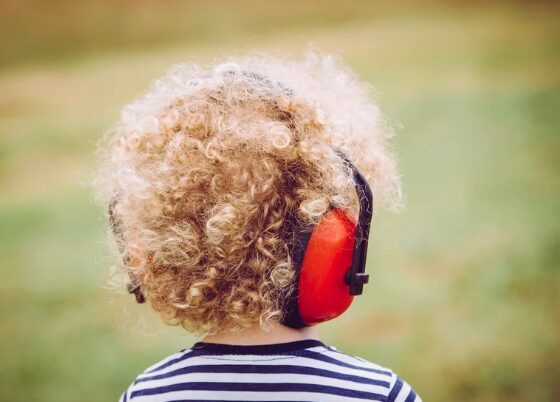
I work in many classrooms across several districts, and I see noise cancelling headphones in every self contained classroom I walk into. When in a self contained classroom, there are often undesired behaviors from students. Some behaviors may include yelling or crying, which can be really distracting for students who are ready to learn. Noise cancelling headphones help students to focus by blocking out the other noise. In addition, these are great to travel with to other classes, especially if students push out into the general education classrooms. I have spent a lot of time in PE, music, and band classes, and I know it can get super loud in these environments. Therefore, I would make sure my students took a pair with them to have available as an option!
Noise cancelling headphones can also help students when they are out in community. Collaborate with parents and families about using headphones in overstimulating environments, like the grocery store or at a restaurant.
Students in the self contained classroom have sensory needs that may differ from their general education peers. We need to give them sensory supports to help them regulate their bodies. These sensory supports also help students to focus and remain engaged in their tasks. Your occupational therapist is a great resource to talk to about sensory supports!