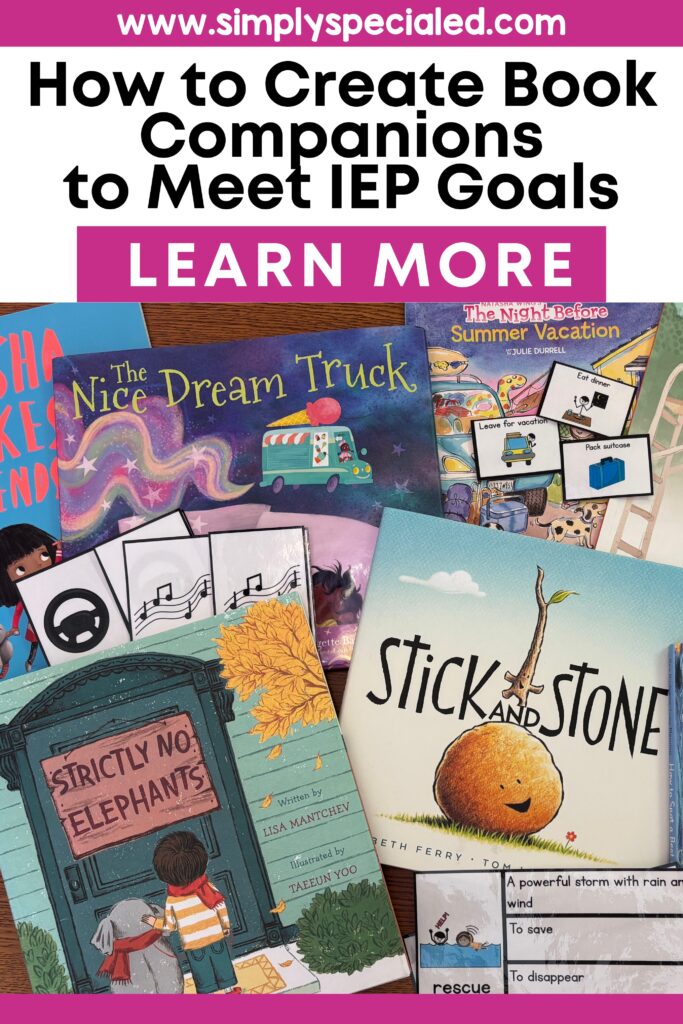
Book Companions are one of my favorite tools to use in the Special Education classroom! There are so many great books that you can read with your students. Book Companions help make all stories accessible for everyone!
What are Book Companions?
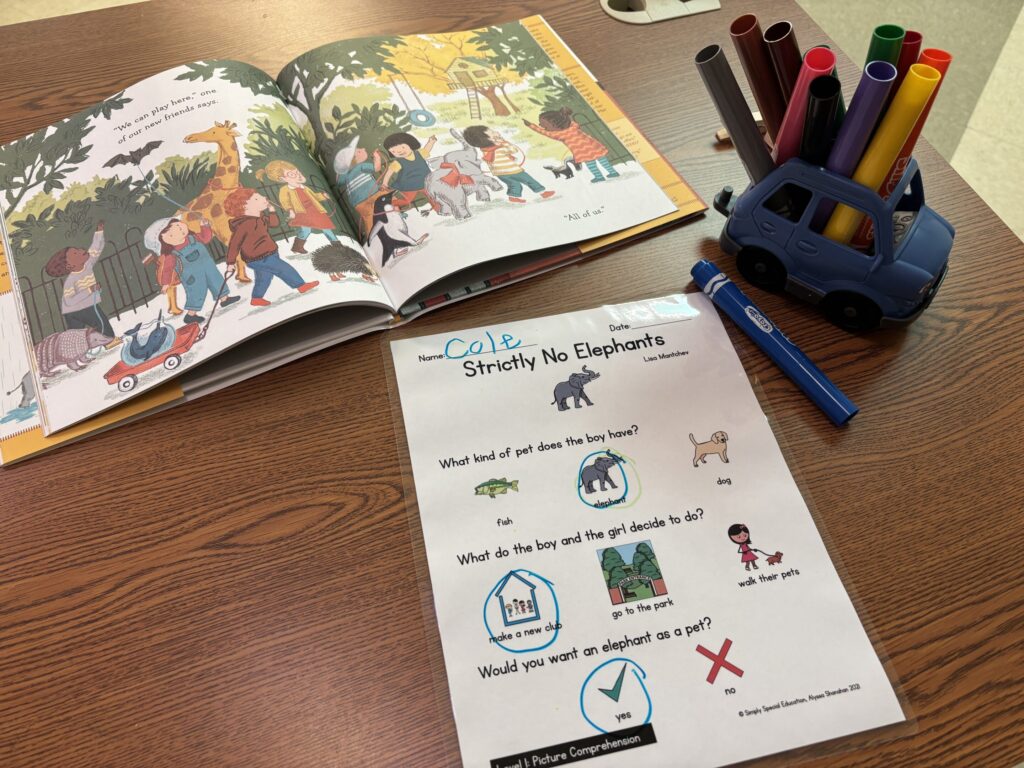
Book Companions are supplemental activities that accompany a storybook. They come in all genres and types of books. Additionally, they come in different levels and can also be further modified to fit your students’ needs! They are a great way to engage your students with the story you’re using in your classroom. Do you have students who can read independently? Book Companions can engage them with the story and help them practice important skills while reading. Do you have non-readers or students who have difficulty attending to reading? Book Companions are for them, too! Book Companions paired with a story of your choice are a great way to target IEP Goals. Here’s how.
Parts of a Book Companion
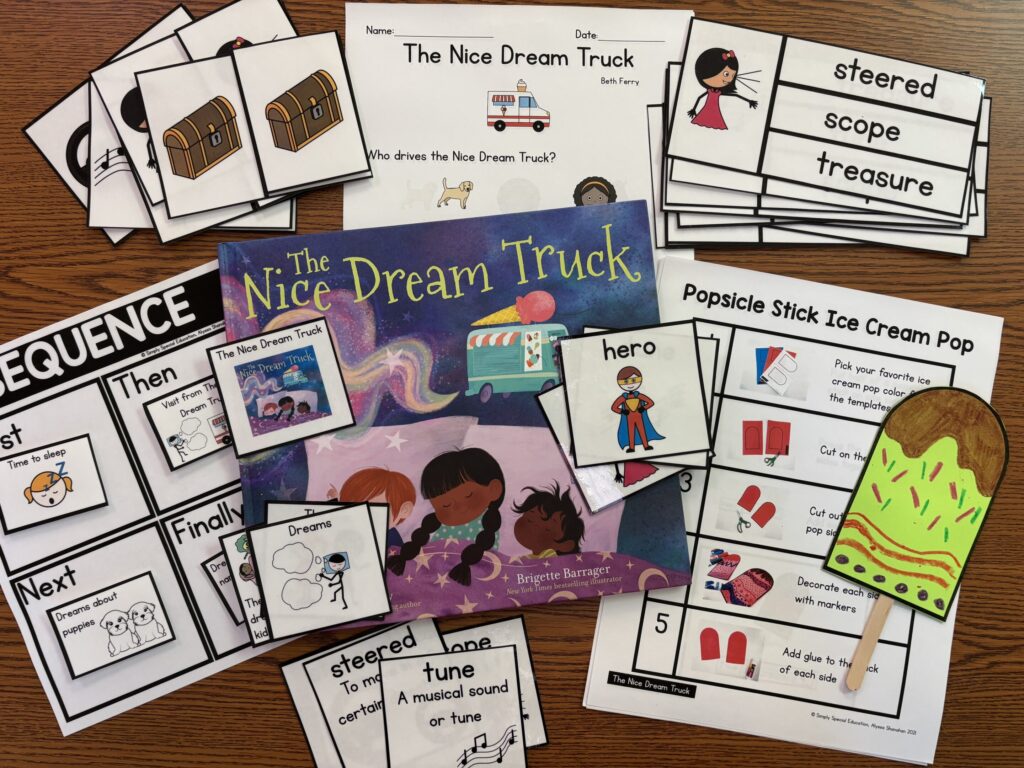
Book Companions pair with a book that can be read aloud, in a small group, or even individually. Actually, you don’t have to purchase the book. Visit your local library! Or, in a pinch, these stories also have a video option. After reading or listening, students use the book companion to help understand what they’ve read, work on important parts of a story, and connect it to their personal lives. It’s the tool that helps you make reading fun (and crafty)!
All of Simply Special Ed Book Companions come with the following:
Leveled Comprehension Quizzes
– Picture Comprehension
– Written Response
– Blank Response
Visuals
– Craft (with real picture visuals)
– Whole Group
Vocabulary
– Clips Cards
– Matching Cards
Worksheets
– Craft Sequencing
– Sequencing
– Story Map
Teacher Planning Guide
– Suggested Schedule
– Suggested Materials
How to Create Book Companions
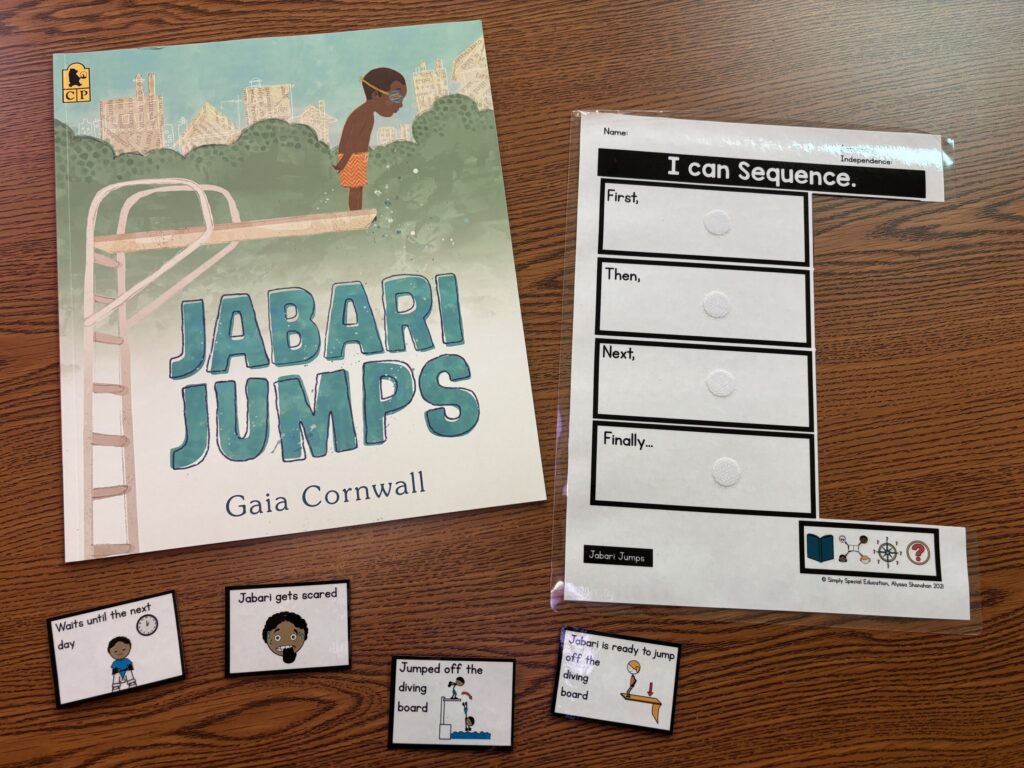
Book Companions come with several different materials already prepared for you. Print and go!
But you can also prepare your book companions for diverse learners.
First, print your book companion pages. I like to print in color when I can, then laminate for sturdiness and multiple use. Lamination is great when using dry erase markers. You can use the same page again and again – just wipe clean. Also, you can add velcro and create tasks that can be used for hands-on engagement. I might laminate:
- The Story Map and answer pieces
- Sequencing with visuals
- Vocabulary cards
- Vocabulary matching
- Clip cards
Optionally, I might even laminate my preferred version of a comprehension worksheet so a student may practice test and then use it again.
Next, make copies for your students to engage in while reading.
That’s it! Gather your writing utensils, bingo daubers, scissors, glue, and book, and get ready to read.
Ways to Use Book Companions
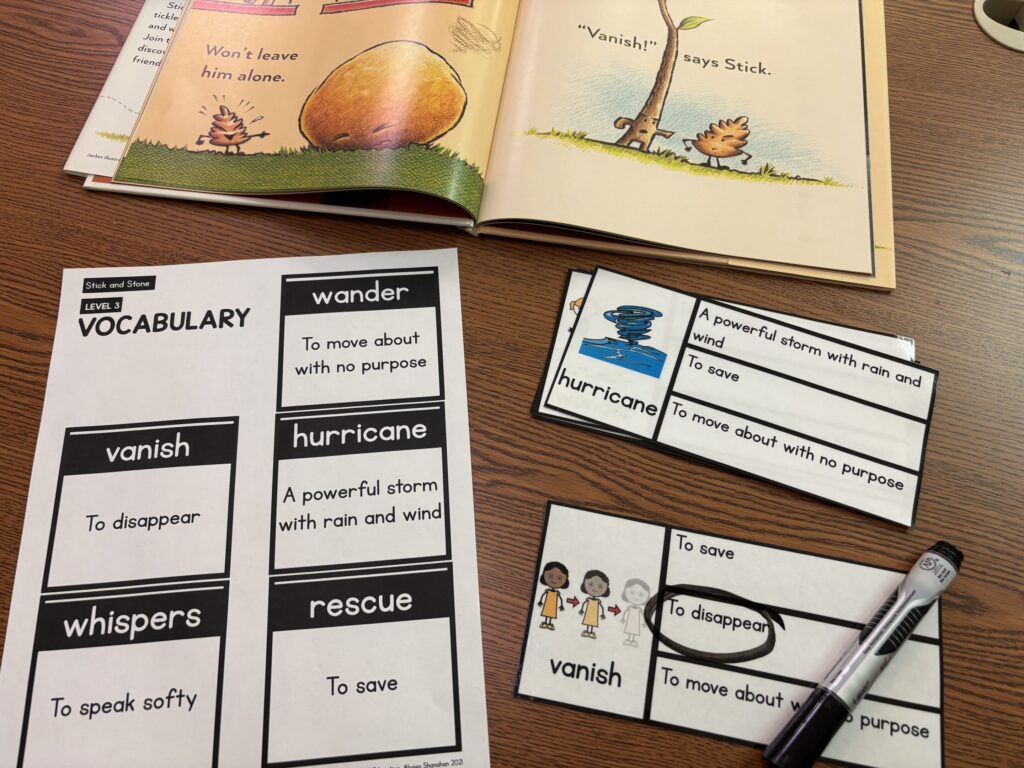
The materials themselves are great and ready to print and go as is. However, you don’t have to use them in just one way. I like to modify things further for my students and use the various pieces in different ways.
For example, I printed several copies of the vocabulary clip cards for a story, but I didn’t laminate or cut them! Then, I used the vocabulary word cards to have students find the word and circle it on their sheet. It was vocabulary practice! You could even have them use a marker to black out the incorrect words on the clip cards. There are so many options. Get creative!
In addition, book companions can be used in small groups/individually or for a whole group lesson.
Level Your Book Companions
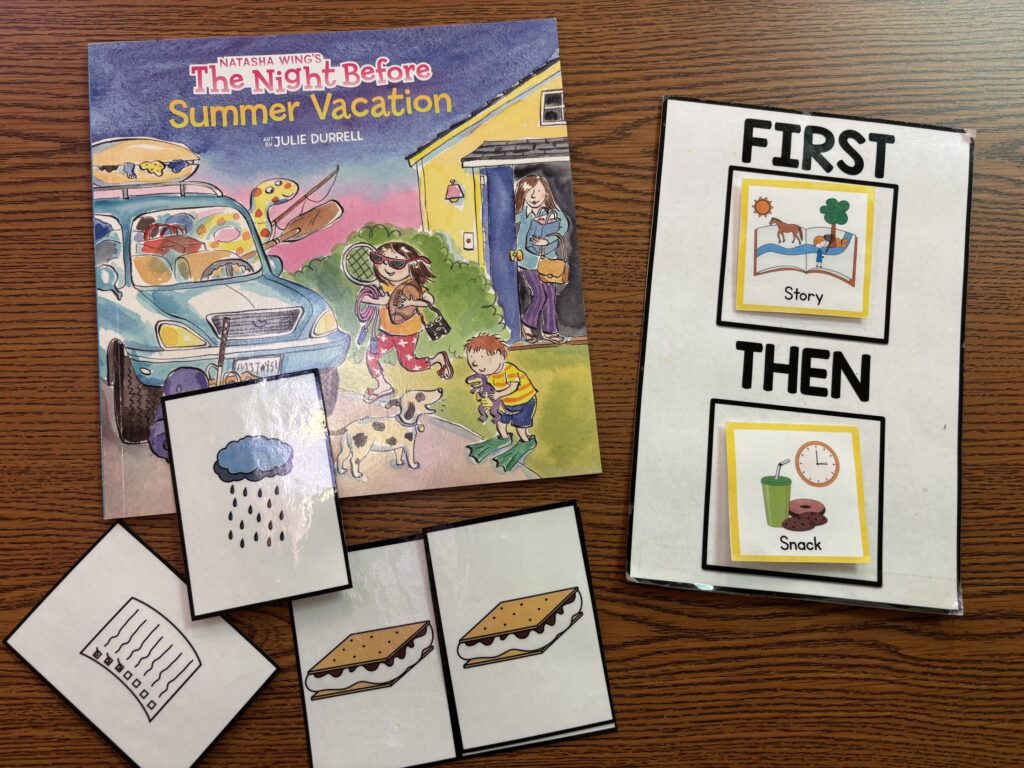
As I said before, the book companions are great and ready to go as is. They all contain options to meet students at their level. I have printed and given each student their own copies of the story mapping pages, vocabulary, and comprehension sheets (which are all leveled, too).
But you don’t have to just print and go! Laminate and add Velcro to your book companion pieces for multi-use in story comprehension, building vocabulary, story mapping, sequencing, and even completing sentences.
IEP Goal Ideas in ELA and Reading
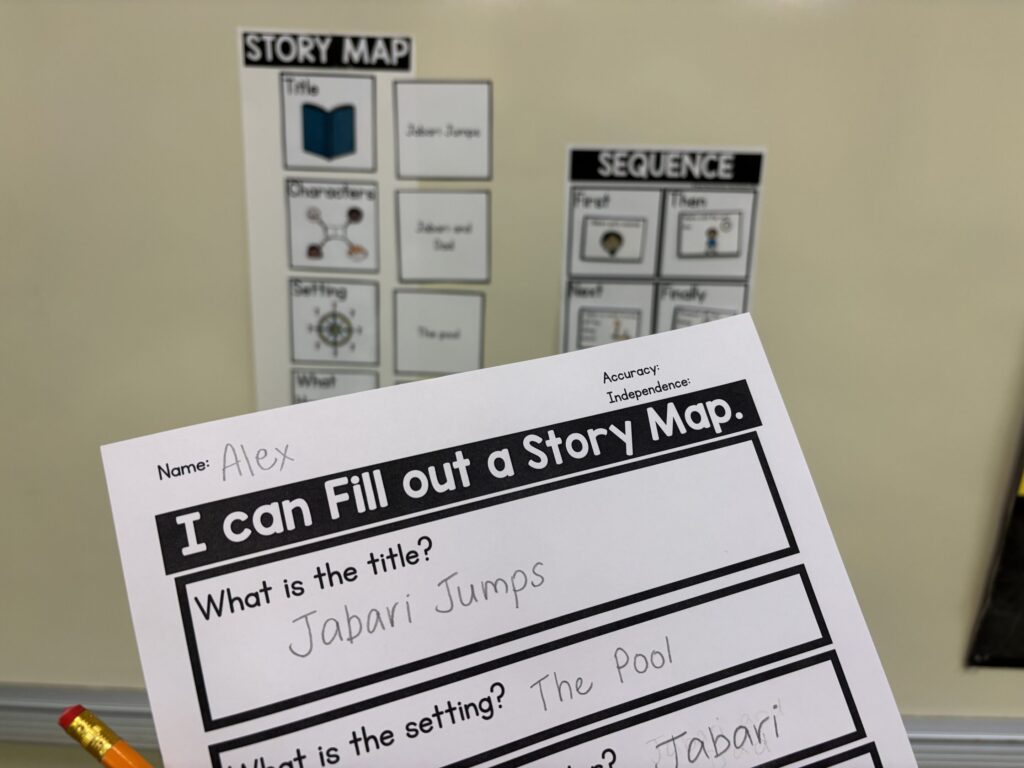
If your student is working on a goal in ELA or Reading (which they probably are), book companions can be used to target certain areas and goals.
- Story Comprehension
- Main Idea, Parts of a Story (Setting, Characters, Plot)
- Placing the events of a story in order
- Vocabulary
- Spelling
- Using Context to Figure Out Vocabulary Words
Check out some IEP goals for ELA here.
However, you can still use these materials for other subjects! Like:
- Making a timeline
- Using scissors
- Matching visuals
- Handwriting
- Shopping for materials for the craft project
Taking Data with Book Companions
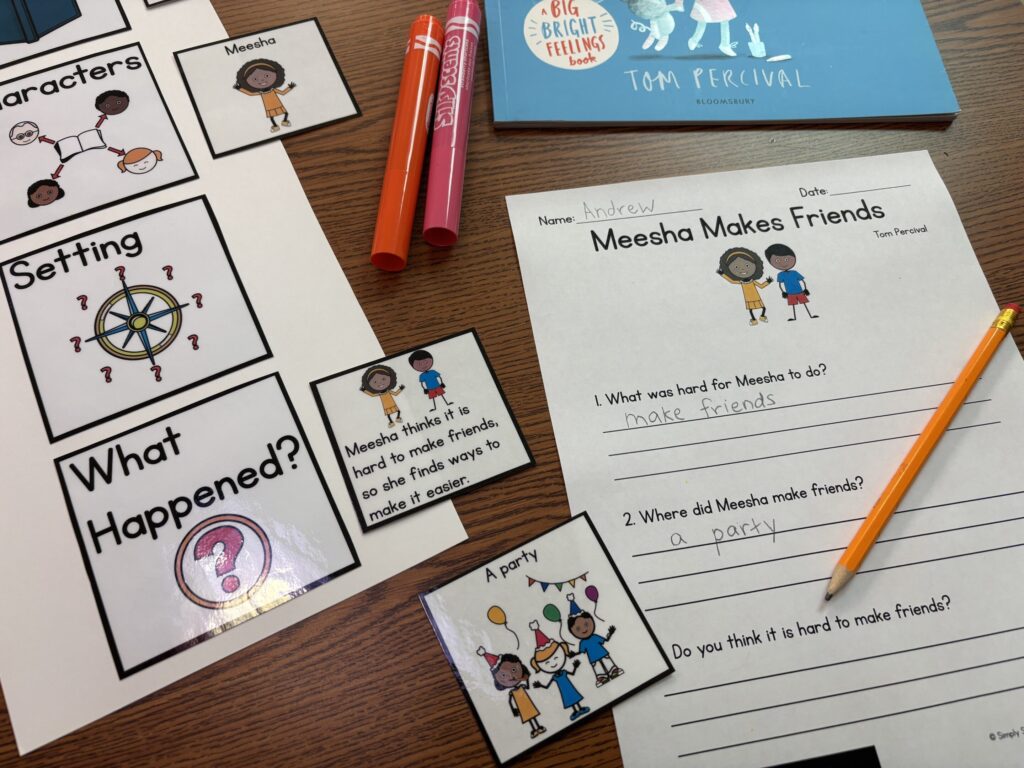
Because all book companions contain similar materials, you can differentiate what tasks your students are working on with the books they’re reading, while still taking consistent data on their IEP goals. It is easy to take a comprehension sheet from a September story and compare it with a December story to see how much growth your students have made over the semester and what levels of support they needed to complete the tasks.
Utilize the data collection resources here, which include data collection sheets for various areas. Utilize the FREE Progress Monitoring Schedule here! Take the paper copies of student work to your meetings for tangible work samples to show parents and related service providers what the student is working on in the classroom.
Read more about digital data collection using QR codes.
Connect It All With a Craft
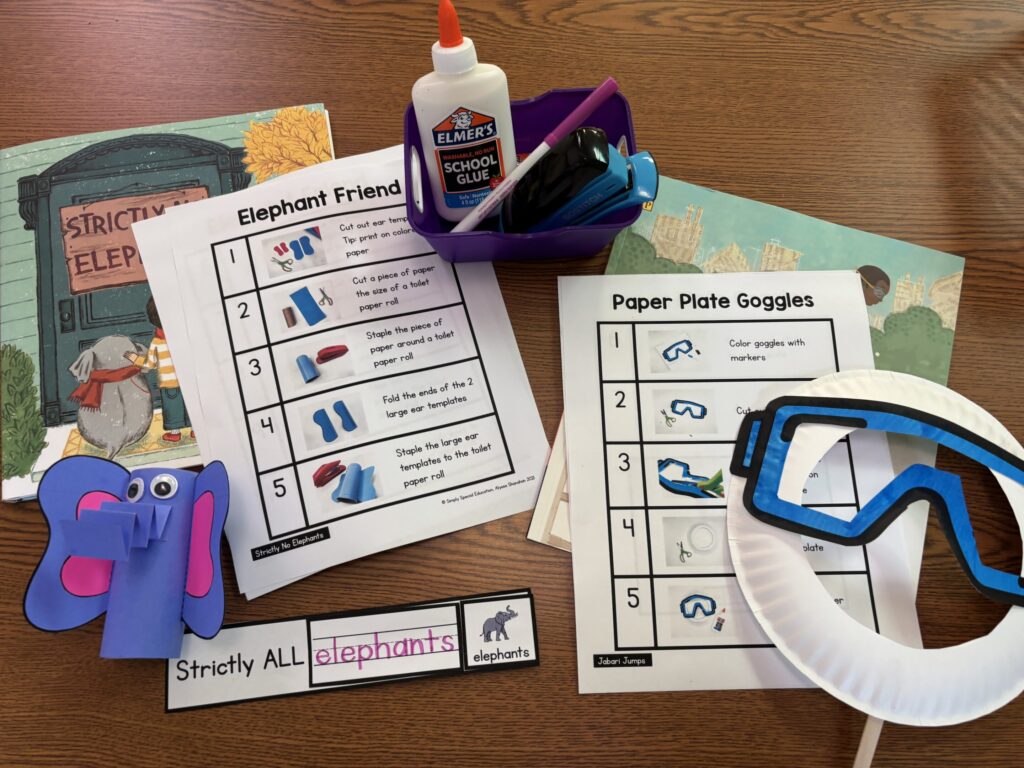
Another great feature of the book companions is the craft activity that pairs with each story, with a list of materials needed and visual steps to complete the craft. After you’ve read and practiced important skills, you can use the craft to get creative and work on reading and listening to directions.
Related services providers might love you for working on fine motor skills with visual crafts too!
Next, add some activities of daily living by shopping for items with your students in life skills – take the list of materials and shop for craft supplies. Now, you’ve covered so many goal areas with one book companion.
Book Companions Can Target Social Skills
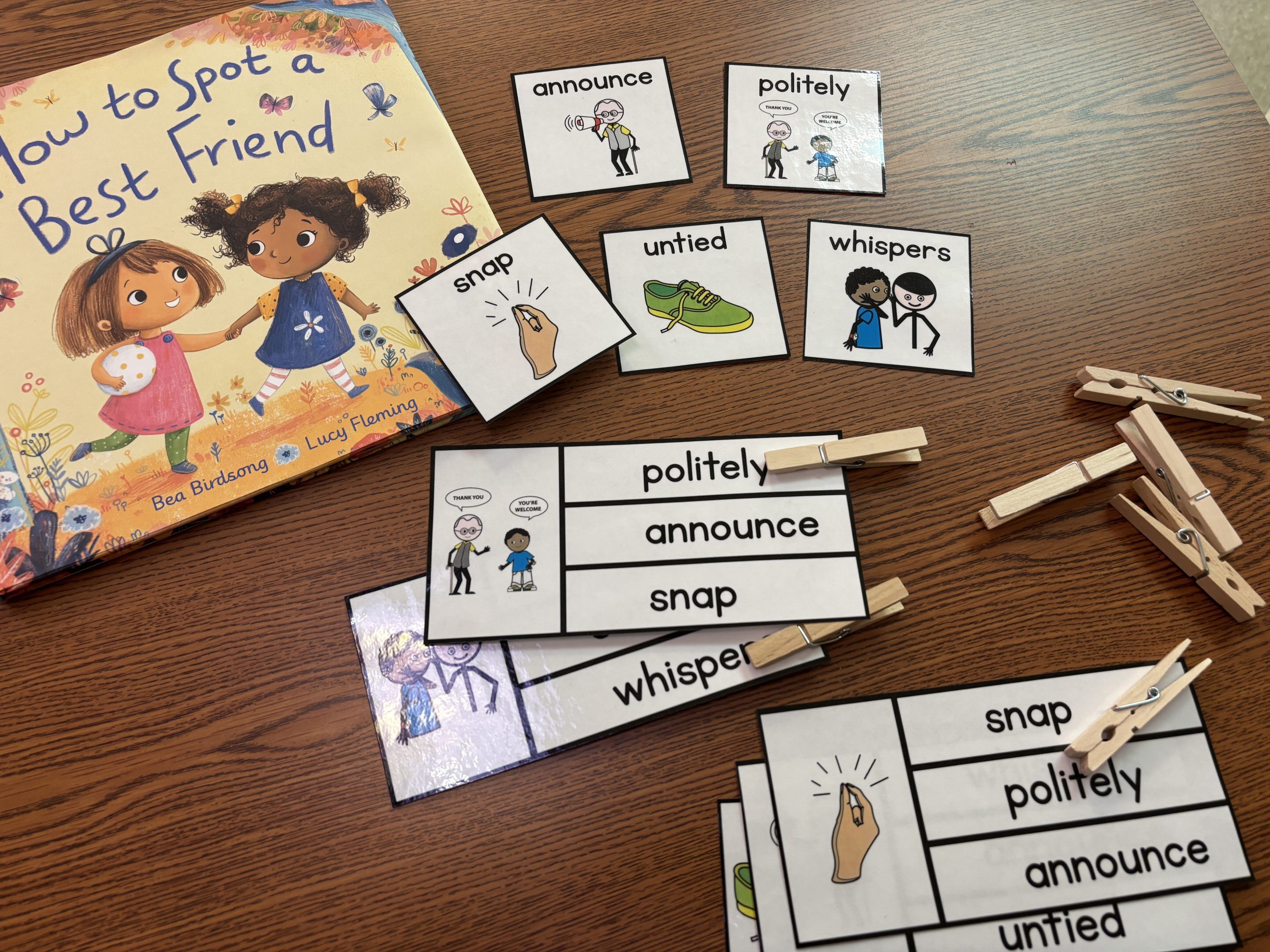
Because book companions are available in a wide variety of subjects, they can be paired with stories that target social skills and other subjects like inclusion, friendship, heritage, and more.
Some great options:
- “Mighty Mila” by: Katie Petruzziello, Illustrated by: Nadja Sarell
- “What if Everybody Thought That?” by: Ellen Javernick
- “You are Friendly” by: Todd Snow
- “My Brother Charlie” by: Holly Robinson Peete & Ryan Elizabeth Peete
- “Strictly No Elephants” by: Lisa Mantchev
Books pictured in this blog are available in bundles for Friendship and Summer!
Happy Reading!