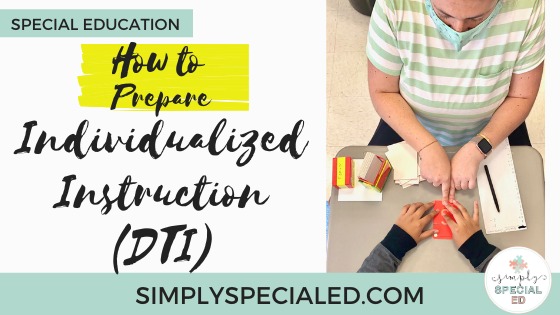
Regardless of what setting you teach in, if you are a special education teacher, you have been told to differentiate your lessons. Now you may be thinking, “I have ____ number of kids on my caseload, how do I differentiate for each of them?!” It may seem daunting, but I am here to tell you how simple it can be to prepare individualized instruction for each of your students.
Differentiated Instruction and ABA
Differentiation is the term for the variety of different methods of instruction and assessment so that it can reach all students regardless of cognitive ability. It’s one lesson with many access points. In an inclusion setting, teachers are typically asked to plan for the grade level standards and then differentiate for your learners who are above and below grade level. In my classroom, each student has their own access points and each lesson is differentiated for each individual student’s needs.
I am a teacher in a specialized school for children with Autism Spectrum Disorders (ASD) that utilizes the principles of applied behavior analysis (ABA) for all instruction. My students each have a binder full of their own individualized curriculum. These lessons, commonly called “programs” are taught to each student one on one according to each individualized education plan (IEP) . My students’ IEP goals are based on differentiated and modified versions of the student’s grade level Common Core State Standards.
IEP Goals Become Lesson Objectives
Most of my students are chronologically 6th graders but are working on early learner-grade 1 skills.
CCSS.ELA-LITERACY.W.6.1: This standard says that “students write arguments to support claims with clear reasons and relevant evidence.” In my classroom, the corresponding goals range from “Student will trace letters with a fading visual prompt.” to “Student will write a paragraph stating one opinion, 3 reasons to support his claim and a closing statement.”
What To Look For When Designing Instruction
When beginning to plan my programming, the first thing I do is look at each student’s IEP and write down the goals by subject. I find it helpful to have this list in one place when figuring out what programs need to be written, what types of data I will be collecting and prompt levels I will be using. All of my students are working on a fixed ratio of 1 (FR1) schedule of reinforcement; each occurrence of target behavior earns reinforcement. Since we are working in 1:1 settings and reinforcement is contingent on the occurrence of the behavior, this type of instruction is called discrete trial intervention or DTI.

Discrete Trial Intervention
By presenting instruction through DTI, I am able to ensure that each program is uniquely matched to the areas for growth for that student. I am able to take explicit data on how the student responds to the antecedent (what causes the student to respond, a question, a gesture) and whether they are able to perform the target behavior (the response to the antecedent/behavior selected for change). We record this data with (+) or (-). This allows us to see in real time the way our teaching decisions are impacting student growth.
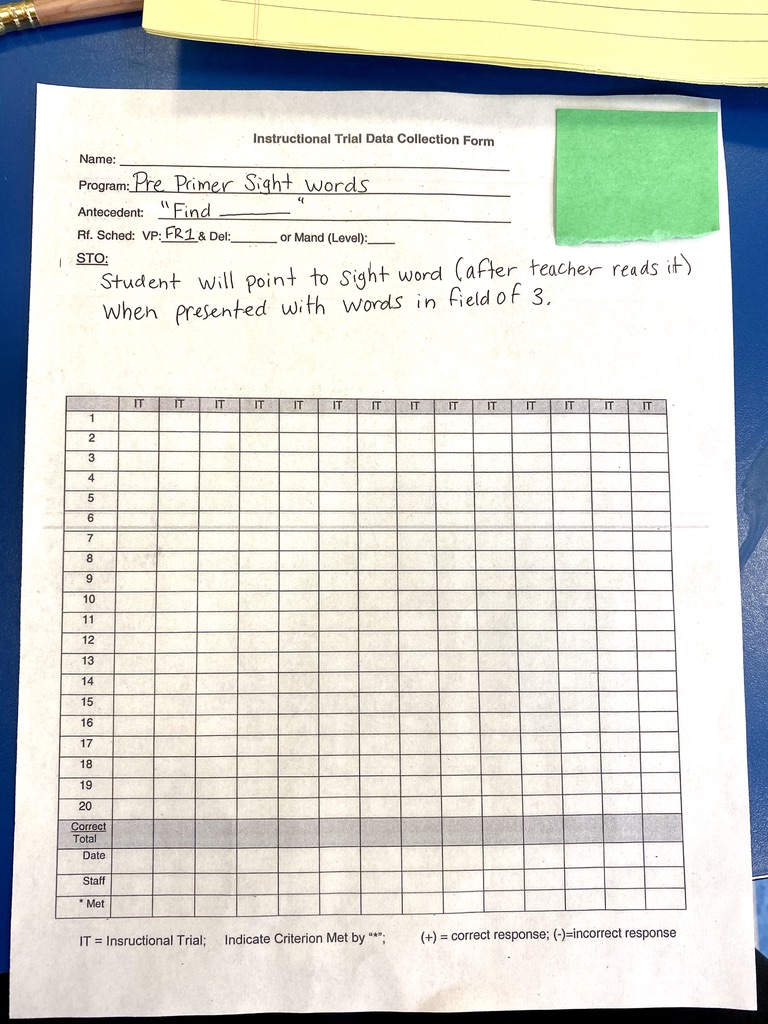
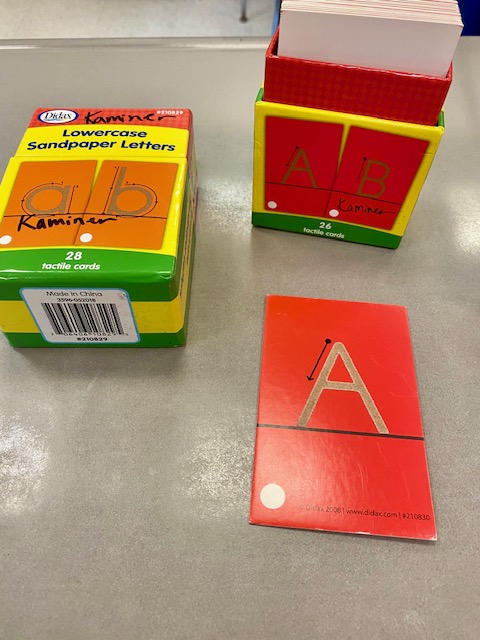
DTI also focuses on repeated exposure to the same concepts with different materials/stimuli to prevent generalization. This means you are creating LOTS of different ways to ask the same question and elicit the same response. Differentiation on differentiation on differentiation! Stimuli can range from letters written in Sharpie on an index card, a letter game or one of SimplySpecialEd’s file folder games. As long as the activity is yielding the same response, it’s fair game!
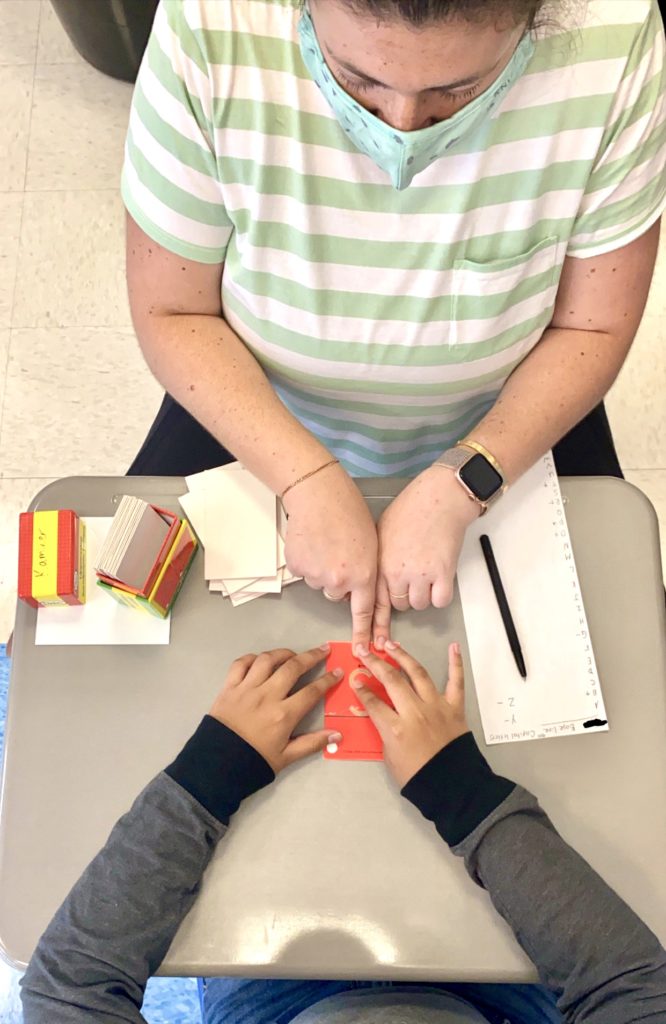
Once you have created the programs based on IEP goals, found stimuli and made data sheets, you are finally ready to present instruction!

Questions about ABA or DTI? Leave them below!
