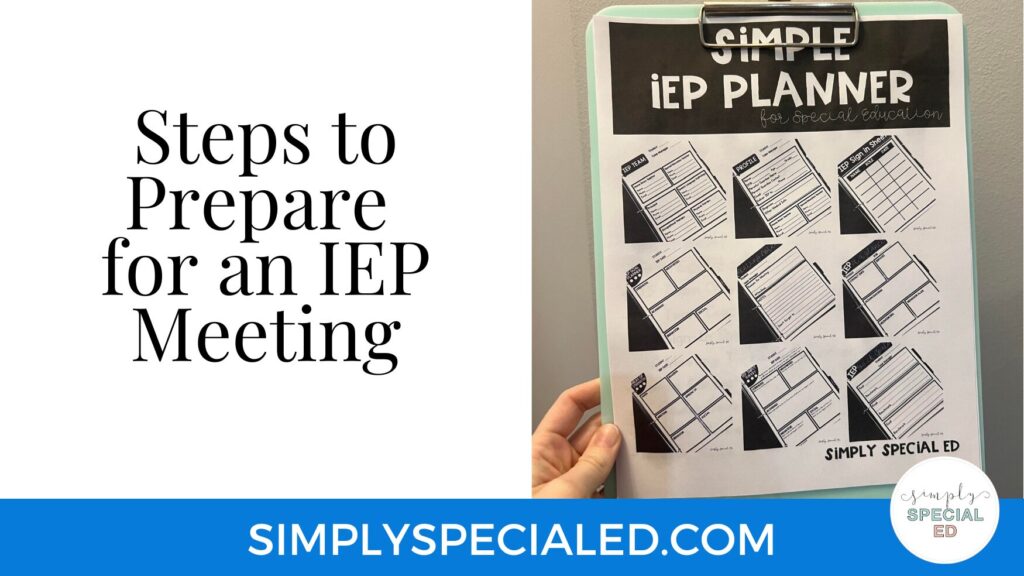
IEP meetings can be intimidating. There is so much that needs to be prepared ahead of time. You need data, areas of strengths and weaknesses, goals, etc. You also have to have it all completed a few days before the actual meeting to ensure a draft goes home to families if you live in specific states. However, IEPs probably feel even more intimidating to families. Here are some practical steps to help prepare you and the team for an IEP meeting!
Step 1: Create a Master Schedule
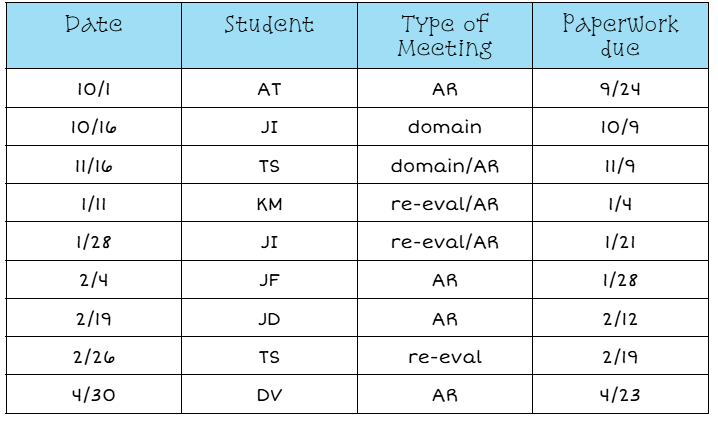
In my classroom, I like to create a master document at the beginning of the year that includes each of my students and their meeting dates. I like to include when the draft is due and when the actual meeting is to help me stay ahead. As shown above, I write what kind of meeting it is as well. AR stands for annual review. I keep this posted near my desk so my paraprofessionals also know when my meetings are. It also helps to have a checklist of things you need to do ahead of time. Check out How to Plan for IEPs that has an example checklist.

Step 2: Notify the Team
In my district, we use Google Calendar to keep track of all the IEP meetings. The school team has access to see when each meeting is. I try to let families know as soon as these are scheduled so that there is plenty of time to reschedule the IEP meeting if needed. I send home this slip of paper (photo above) at the beginning of the year. You can get a copy of the IEP Planning Binder here! In the state of Illinois, we have to have 3 points of contact notifying the family of the IEP meeting. I confirm that within our IEP portal.

Step 3: Focus on Strengths and Positives
IEP meetings focus a lot on what the child needs improvement in. It’s important to remember strengths of that students and highlight those. This helps to create a positive and strong rapport with the family. If they are really good at art for example, bring a work sample or talk about how naturally it comes to the student! Families love to hear how much you know their child and take interest in their interests! I try to start off each IEP meeting by telling at least one funny or successful story about their child to help break the ice.

Step 4: Make Data Easy to Understand
Data doesn’t lie. Use data to guide your conversations and goals for the student. When talking about data, I usually give the numbers but then explain it to parents. IEP meetings have so much jargon, so I like to use colorful graphs to help parents understand. I also like using graphs from year to year so that it shows progress of the student compared to themselves, not other peers. For example, my district uses the VBMAPP. The grid in the photo shows a student’s grid where each color represents a different school year. So, yellow was the first year the assessment was administered, green was the second year, red was the third year, blue was the fourth year. This shows that each year, the student is always making progress because their grid is getting filled in. Even if parents don’t understand the categories, they can visually see the success.

Step 5: Include the Family and Student
Ask families and students ahead of time for their input! I like to send home a survey to families at the beginning of the year asking about any goals they have for their child. This helps me understand what they want out of their child’s education. If possible, I include those goals! You can find the survey in the Back to School Forms resource. In addition, I’ve had students make a PowerPoint to talk about themselves and goals they want for themselves to present at the IEP meeting. Students feel really proud when they are included and have a say. Even if it’s not appropriate for the student to stay the whole meeting, you can always have them join in the beginning!
IEP meetings can feel overwhelming. There is a lot to prepare ahead of time. However, once you get the hang of them, they become second nature! Creating a checklist for yourself and focusing on the important pieces can help make it easier.