Staff Training
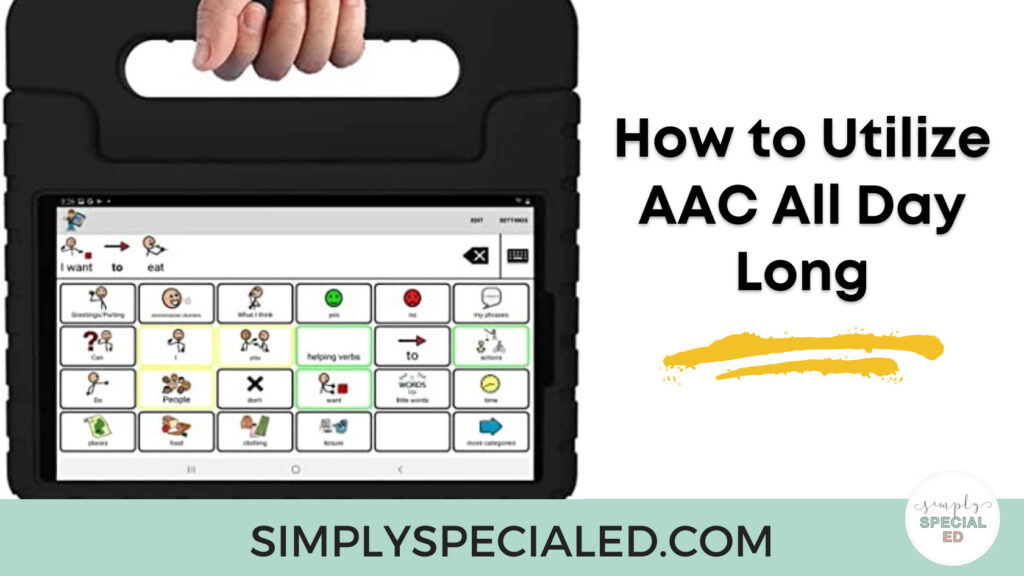
The classroom staff are the first people to get on board when utilizing AAC all day long. Whether it is low tech or high tech AAC the staff is one of the keys to success when implementing AAC. Some school districts have an AAC specialist, look into having them come to your school to train the staff. If your district doesn’t have an AAC specialist, they do have a Speech-Language Pathologist (SLP). The SLP is able to conduct AAC trainings. Invite everyone! This includes teachers and paras, but other staff members who interact with the student regularly, as well. Such as, the occupational therapist, adaptive PE teacher, behavioral therapist, and any other staff member in contact with the student. The more the staff is educated on the AAC device the less intimidating it is and the more likely it will be used.

Family Training
Provide the same type of training to the student and their family. How often does a staff member take out a high tech AAC device from the student’s backpack and it isn’t charged? Or it clearly hasn’t been used since the previous school day? If the family doesn’t know better, they can’t do better, so teach them. Help these families to feel comfortable and learn to communicate with their child by using AAC. Praacticalaac.org is a great resource to share with families.

Student Responsibility
If a student needs AAC to communicate and to have their needs/wants met, then bringing the AAC device with them is a must and should be their responsibility. When a student is non-verbal or expressive language is so impaired that AAC is implemented, the AAC is their “voice.” No one can take your voice away from you, and no one should be carrying around someone else’s “voice” for them. The student should carry their own AAC device. Make them responsible for taking it out every morning and keeping it with them throughout the day. I often see students without it on the playground or at lunch, and this is such a tragedy. This means, they don’t have their “voice” during the most social times of their day! The AAC should be with the student at all times.
Choose the Right AAC Device
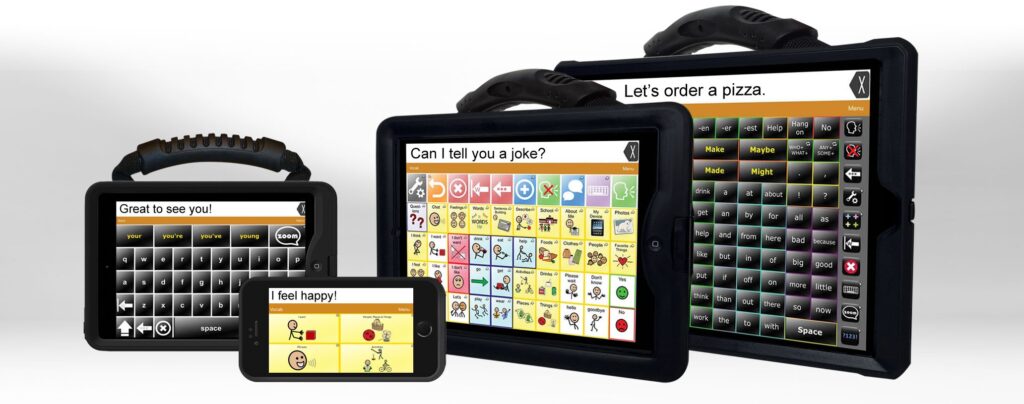
AAC is not one size fits all. Therefore, it is important to find the right AAC device for the student. For example, if a child is really small and has trouble lugging around a full size iPad but has good fine motor skills, look into using an iPod instead. There are several types of high tech devices and apps out there. Don’t get stuck on one. If the child is using low tech AAC think about what is appropriate for that specific child. Should it all go in a binder or can it be put on a key ring? Check out this blog for more tips on using low tech AAC for communication on the go. The most important thing is that the AAC is easily accessible and functional. The SLP or AAC Specialist should lead the team in making this decision, but everyone’s input should be taken into consideration.
Educate Everyone
Not everyone at school or in the community needs to attend an AAC training. But, it is important to educate people, about what the device is and why it’s being used. Tell the school librarian, the lunch lady, the proctor that so-and-so is going to use their AAC to ask for a book, place their order, ask questions because it is their “voice.” In my experience, people are excited to interact with the student when they are using their AAC device. When the student sees they are able to get their needs/wants met by other people outside of their home and classroom it reinforces the use of the AAC and it makes them want to use it more.
Put it in the IEP
AAC is always in the IEP under assistive technology. Typically, there are also IEP goals written to increase language skills by using AAC. However, I always add to the meeting notes and the accommodations page that the student will carry their AAC device, throughout the day, within and outside of their classroom. By adding this to the IEP it makes all the whole team responsible for making sure the student always has their AAC device with them. The student should be participating in class just like their peers. The only difference is they use their AAC device to speak, instead of their voice.
Learn about the 5 most popular high tech devices in this blog post!