Essential Skills at a Glance
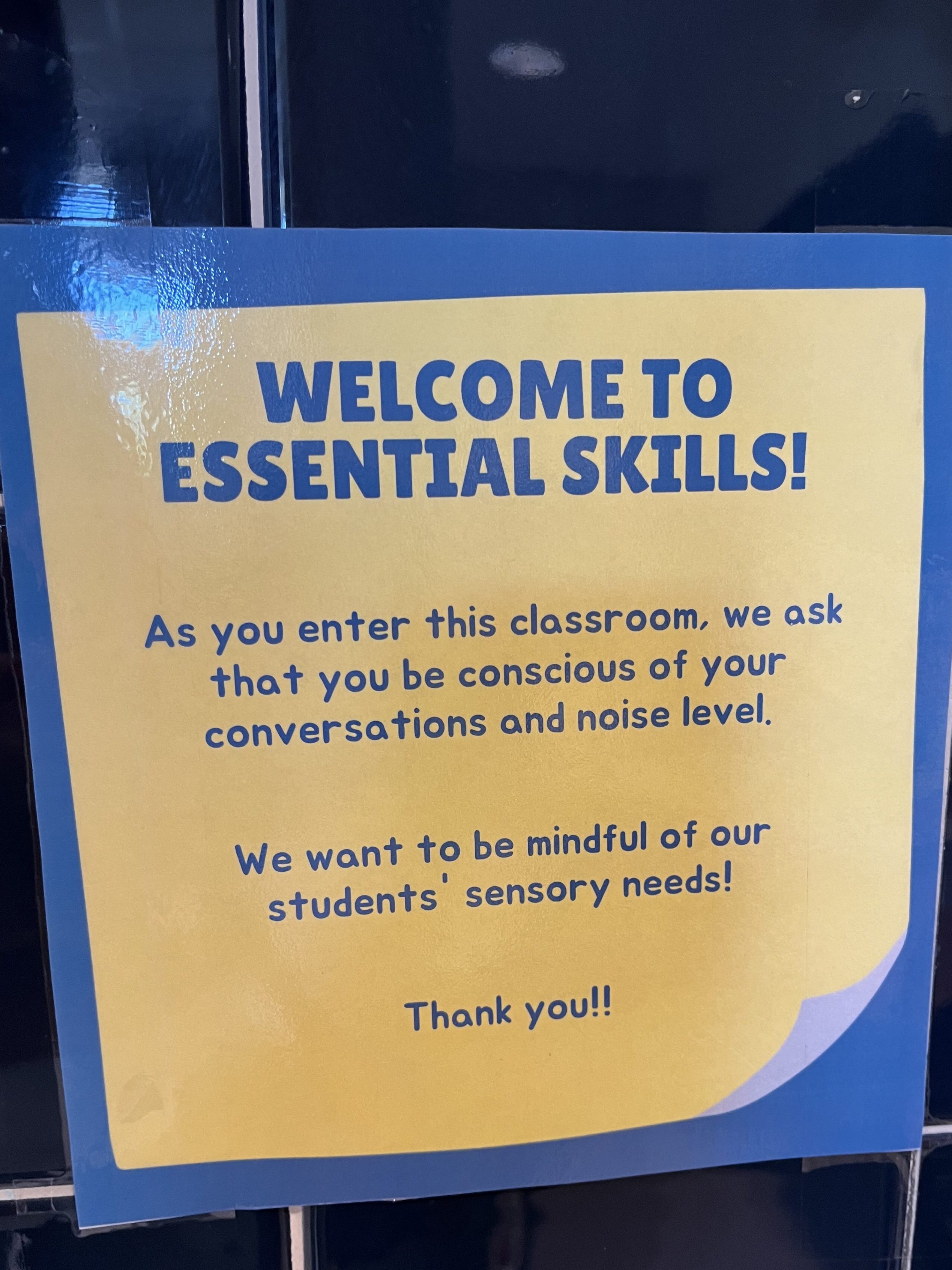
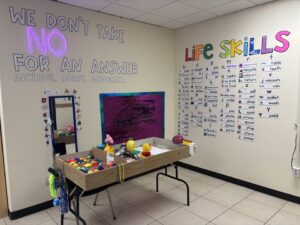
Welcome to my k-6 Essential Skills classroom tour! This classroom has been my home away from home for the last four years. In addition, I am fortunate to have an amazing co-teacher to collaborate in curriculum planning, scheduling, and case managing. Together we have fourteen students ranging in age from kindergarten-sixth grade. Additionally, the team is staffed with two full time nurses, six paraprofessionals, a CNA, and therapists including occupational therapists, vision itinerants, speech pathologists, physical therapists, and social workers. Because of the number of people that filter in and out of the classroom throughout the day, we have the above signs outside of both classroom doors serving as a reminder for staff and visitors. Consequently, we have maintained an optimal environment for learning and student growth.
What is Essential Skills?
The Essential Skills Program was created 10 years ago as a program offering a continuation of special education services from pre-k- 22 years of age. Specifically, Essentially Skills serves students with varying medical, physical, and intellectual needs. My students are working towards independence in daily living skills including feeding, mobility, communication, and play. Additionally, my classroom is housed in a public Elementary Magnet School. This lends to lots of inclusion and reverse inclusion opportunities for all of the students! Because of this we have adapted art opportunities provided to the school, and Essential Skills supplies funded through the magnet grant.

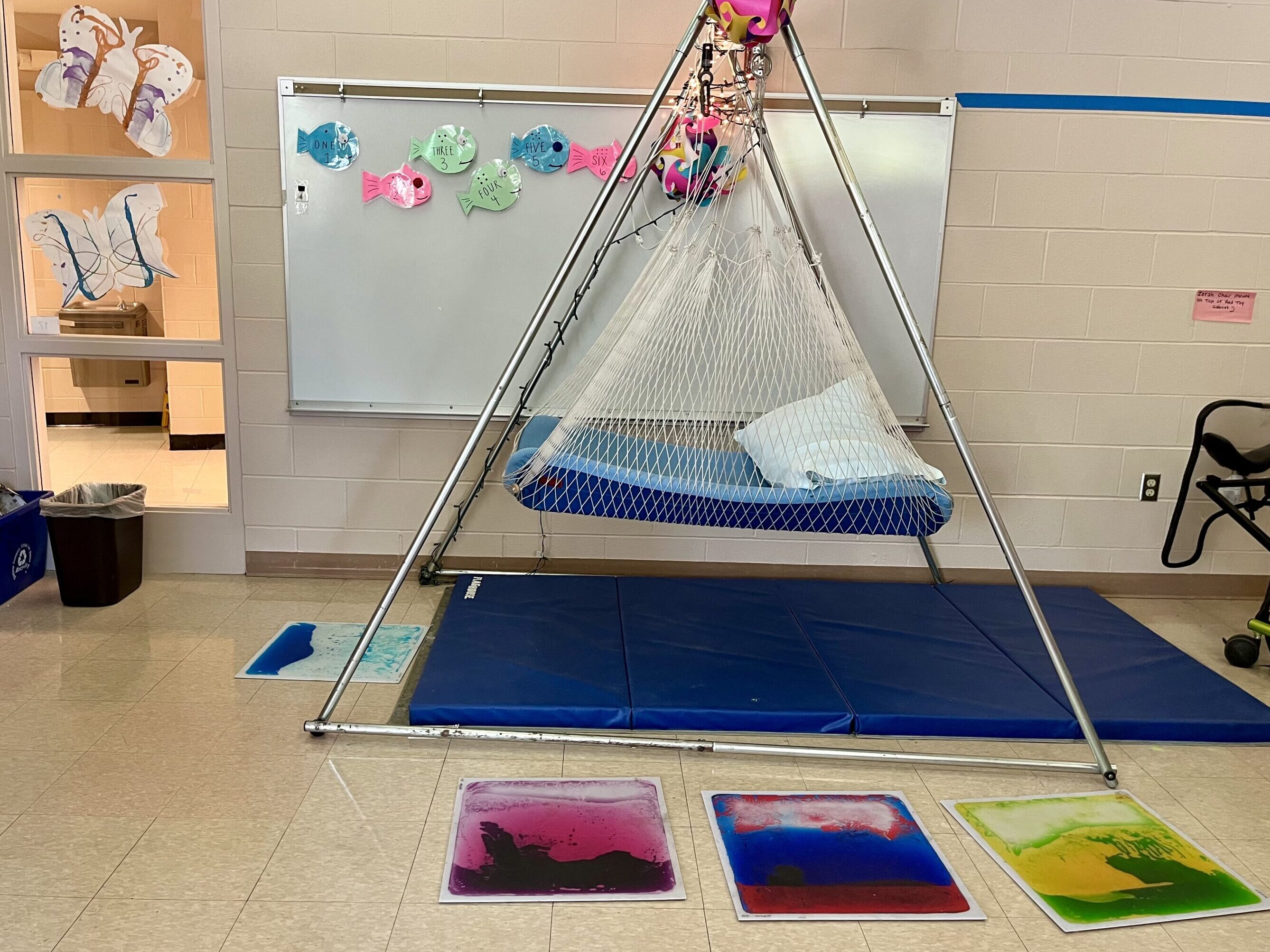
Platform Swing
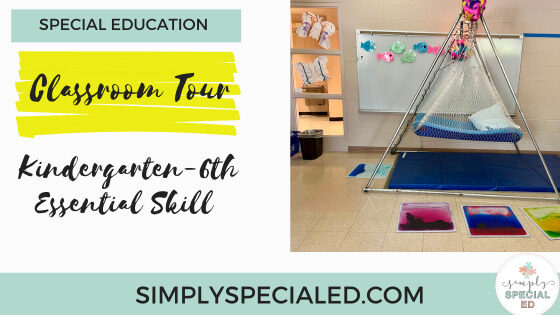
The swing is one of the most popular gross motor activities in the Essential Skills classroom! As shown above, the platform swing (affiliate link) allows students to sit or lay on the swing. During our rotations students practice pumping their legs or pushing others on the swing. Also we accessorized the swing area with twinkle lights which allows our students, specifically those with vision impairments, to work on their visual efficiency! Also, the sensory tiles ( affiliate link) surrounding the swing are great sensory tools for students needing sensory input. In fact, my students enjoy jumping on them and working on fine motor skills moving the colors around.
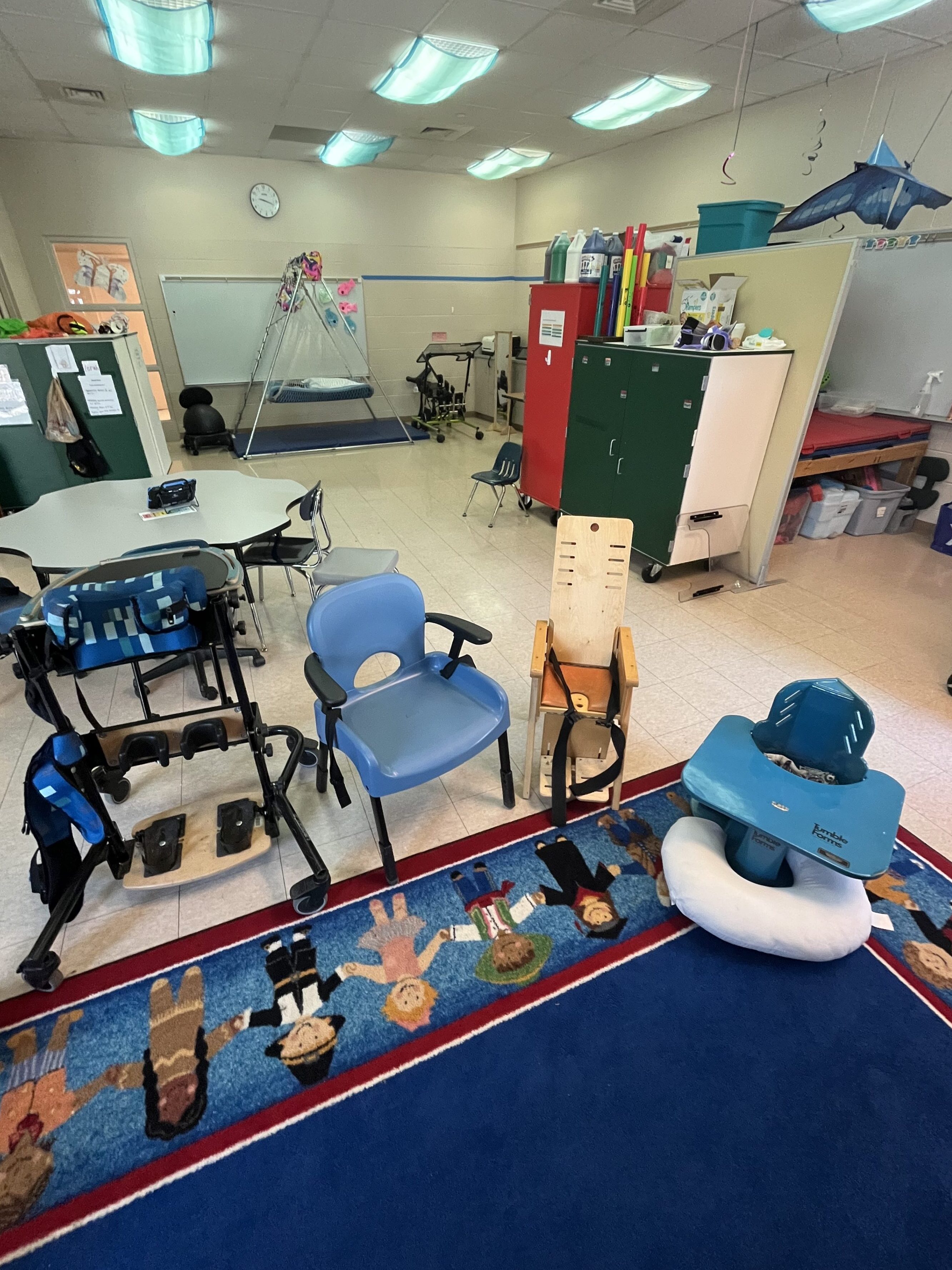
Adaptive and Flexible Seating
Because of the range in student age and physical needs, my classroom has a variety of flexible and adaptive seating. The above photo illustrates a few seating options. From left to right: vertical desk stander, Rifton chair, wooden support chair, and Tumble Forms seat. These seating options all offer unique levels of support to my students depending on their need. Furthermore, many students use multiple seating and standing aids throughout the day for position changes.
Rotations
In Essential Skills we do two blocks of rotations. First, in the morning we do an hour of academic focused rotations. During this time staff rotate between five tables. Activities include an adapted book box, student led play, physical therapy, music, and a bathroom rotation.
Then, in the afternoon the rotations are more sensory and recreation/leisure based. These rotations are aligned with our weekly theme and include art projects, fine motor skill, small group games, and student choice opportunities.
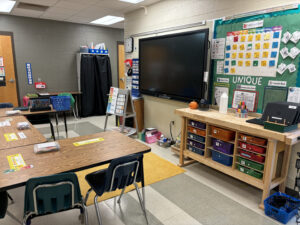
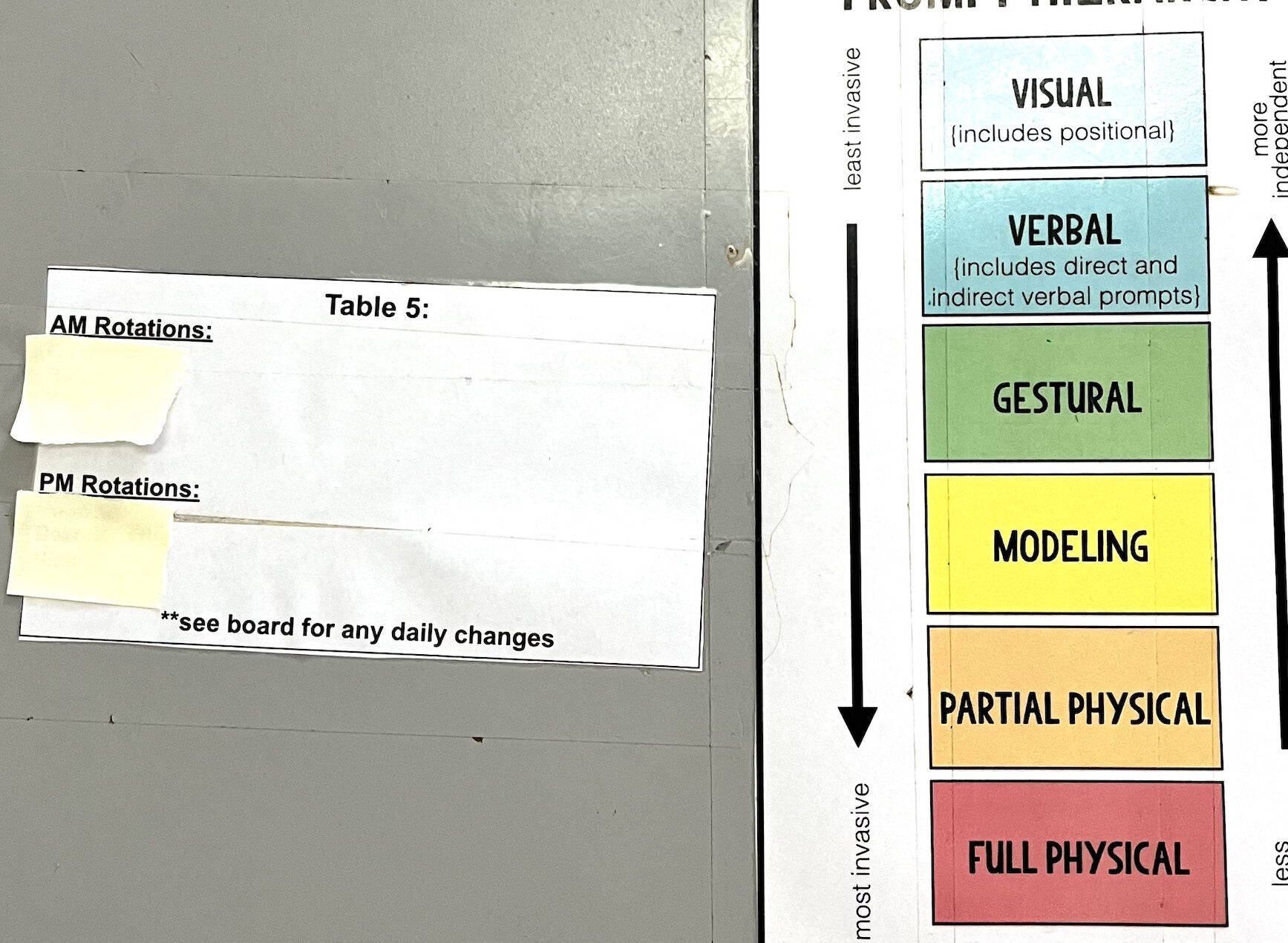
The above photo shows what the rotation tables. The laminated page shows which students are assigned to each table. My students are in and out of the classroom throughout the day in electives, recess, and general education classrooms. In my experience, it is helpful have a visual aid when helping students get to their tables. Additionally, we have a prompt hierarchy taped onto each table. Our classroom often has new staff and student teachers. It is important for our staff prompt appropriately.
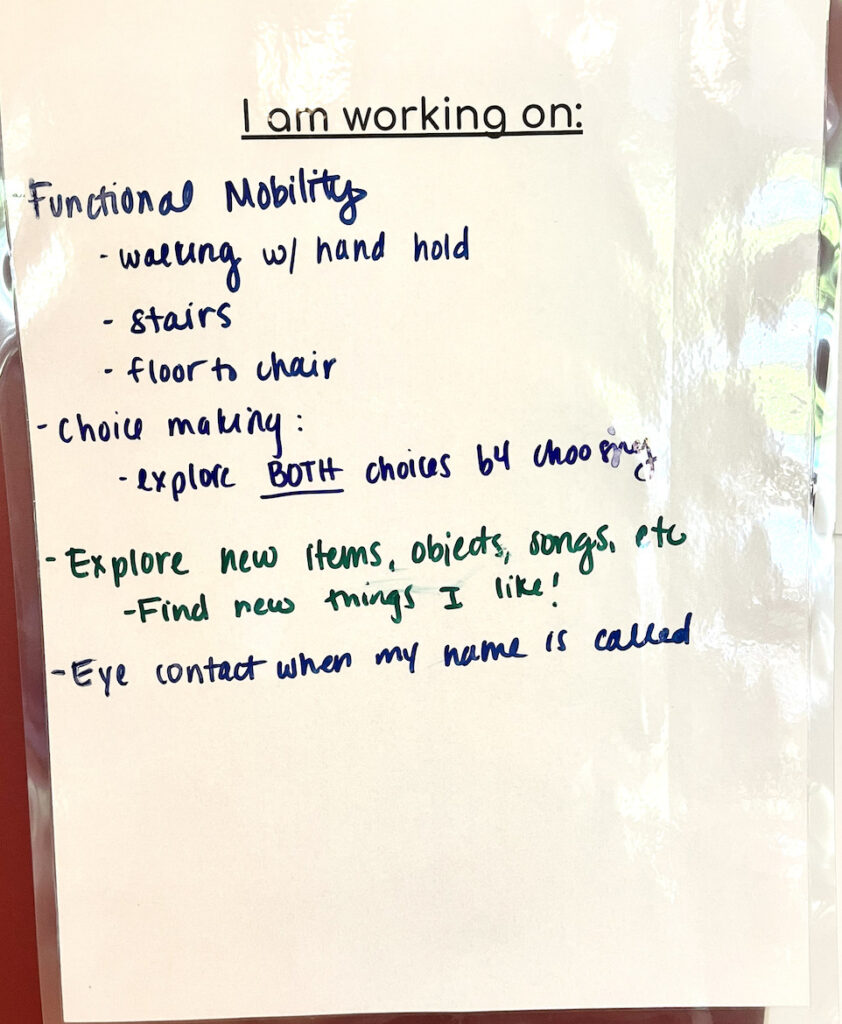
Additionally, My co-teacher and I created “I am working on” sheets that are on the front of each student cubby. This shows staff and student teachers an outline of each student’s IEP goals, preferences, and related service priorities. In Essential Skills these sheets have been super helpful snapshot of what each student is working on.
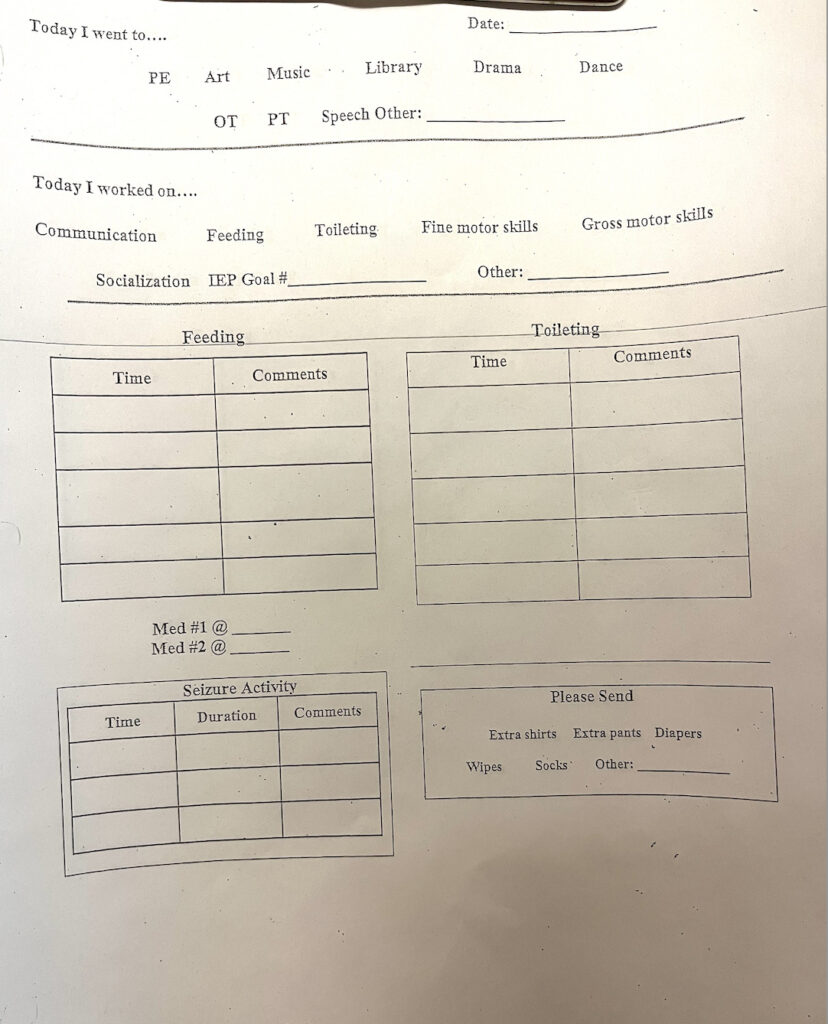
Essential Skills/ Home Communication
Additionally, family communication is a core principal of the Essential Skills program. Many of our students have medical needs that make them more susceptible to illnesses, seizures, and medication changes. My co-teacher, classroom nurses, and myself share our phone number at the beginning of the year for immediate communication with families.
Another example of family communication is the above photo. This shows the Essential Skills daily sheet. This shows families a snapshot of their students day at school. It details what elective they went to, therapies, IEP goals targeted, feeding and toileting information, medication administered, seizure activity, and any extra materials needed. Finally, at the bottom we write a blurb with a personal narrative about their students day. Finally, in Essential Skills we believe it is important for our students, regardless of their communicative status, to be able to go home and share what they did at school.
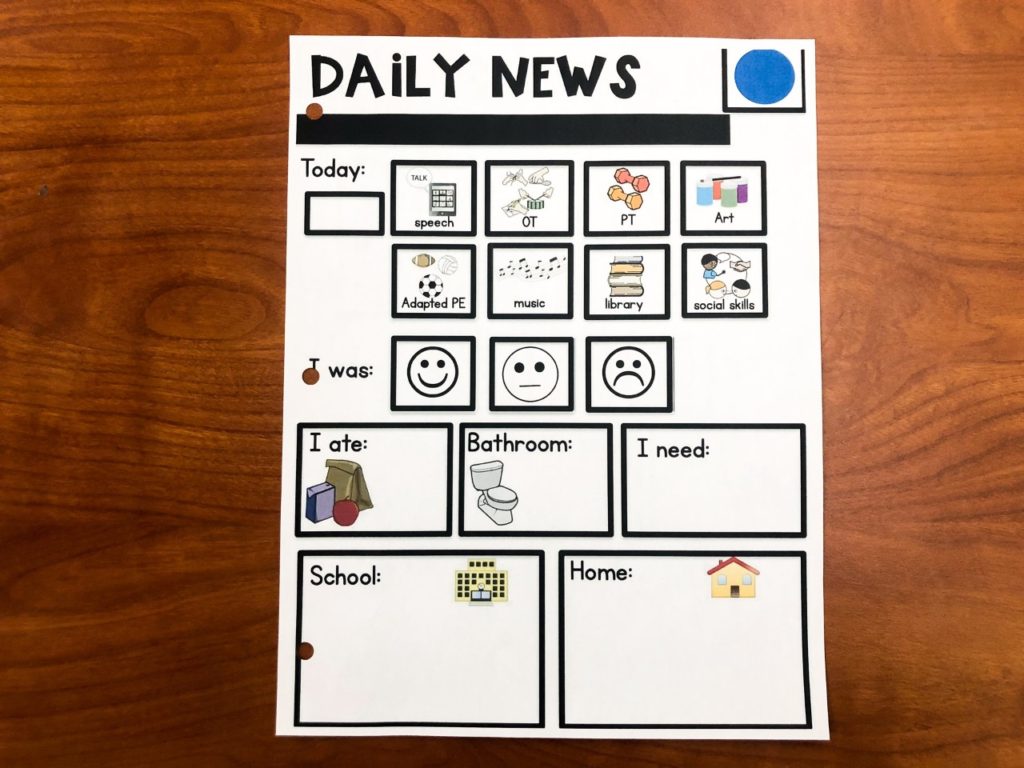
You can find SSE communication sheets here.

Learn more about Simple Self-Contained Setup 101®: the bingeable online course made specifically for self-contained special educators! Reduce overwhelm and anxiety during back-to-school season with the proven methods I teach you in this course! We walk you through EVERY step of classroom setup! Click here to learn more and join the waitlist now!