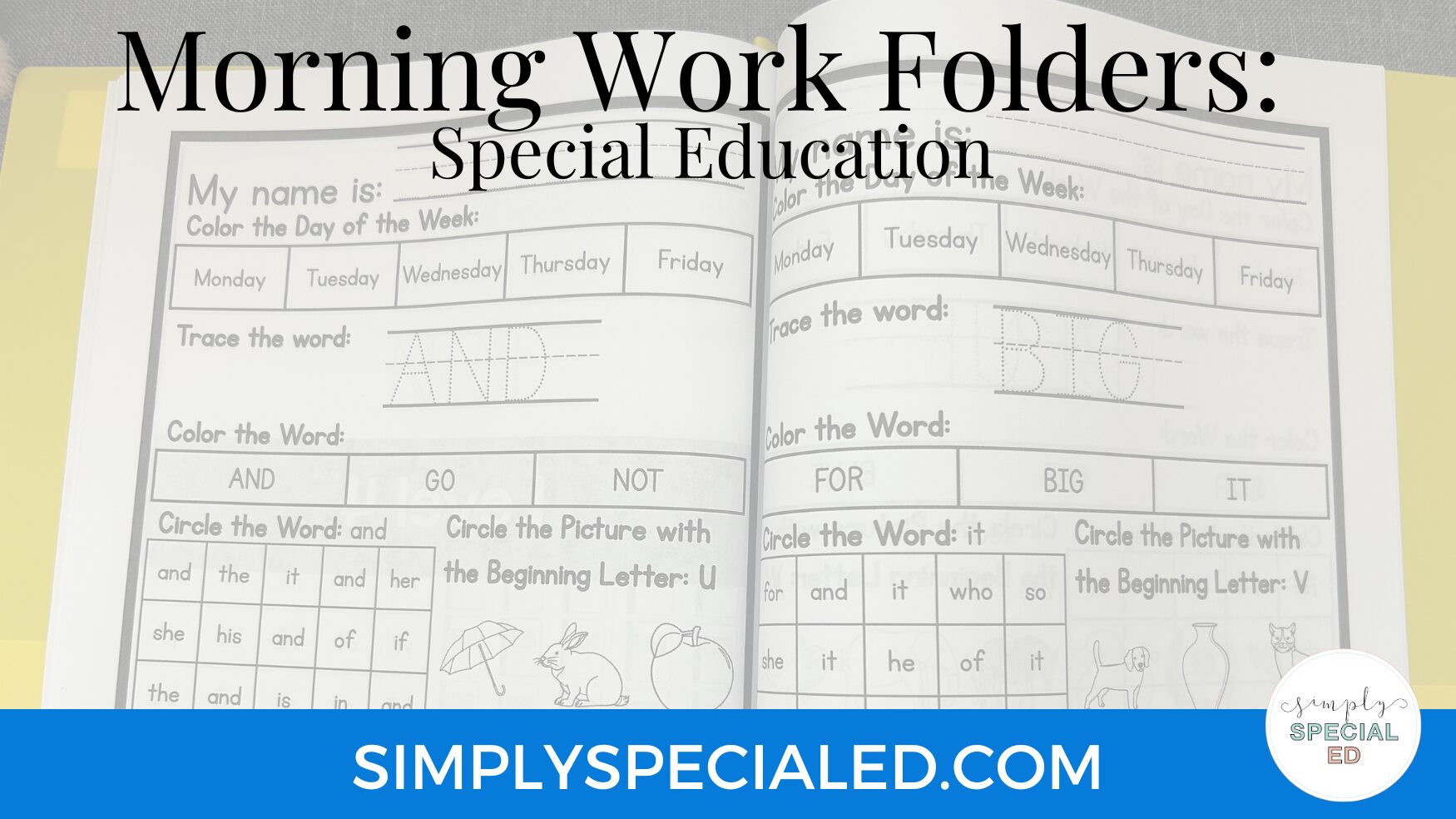
Morning Work Folders for Special Education
Morning work folders for Special Education… If you’re like me and have been searching for a simple, organized, and effective way to start the school day in your special education classroom, a morning work folder for Special Education might just be your new best friend. A well-structured morning work routine helps students settle in, practice essential skills, and begin the day with confidence. In this post, you’ll learn the best way to set up a morning work folder for special education, along with practical tips for keeping it running smoothly all year long. If you’re new here, I am a resource room teacher in an elementary school setting. Here is a tour of my classroom and here is a little more about what I do on a daily basis.

Why Use a Morning Work Folder in Special Education?
Morning work folders for Special Education are amazing! But don’t be mistaken… They are NOT just busy work to fill empty time. Morning work is purposeful and supports student success. This is especially true for students who thrive on routine, structure, and predictability, which tends to ring true for the special education population. A consistent routine lowers stress for both students and teachers, making mornings smoother and more productive. Morning work folders can: build independence and confidence, reinforce IEP goals and foundational academic skills, provide meaningful practice without overwhelming students, create a calm and predictable start to the day, and allow teachers time to take attendance, manage behavior plans, or begin rotations

What to Include in a Morning Work Folder for Special Education
The key to a strong folder system is choosing tasks that are consistent, leveled, and relevant. It is also important to focus on your students’ IEP goals. This will make your life easier as you navigate through collecting data. If you want to learn more about collecting data and want to find some amazing resources to help you navigate through data collection, take a look at this blog! Some great ideas to include when you’re focusing on creating morning work folders for Special Education include:
1. Name Writing Practice- Perfect for early learners or students working on fine motor and handwriting goals. Use traceable formats or dry-erase sheets.
2. Calendar Skills- Simple daily questions like:What day is it? What month are we in? What is today’s weather? These can be laminated for repeated use, or printed out and placed in a three prong folder for easy access.
3. Number or Letter Identification- Quick warm-ups such as: Finding the letter, circling the correct number, or writing the next number. These support foundational literacy and math skills.
4. Fine Motor Tasks- Cutting strips, tracing lines, or simple mazes are great options.
5. IEP-Aligned Practice Pages- Short review tasks tied to: Counting, reading CVC words, matching pictures, sorting objects, and writing simple sentences. Morning work time is perfect for spiraling skills without overwhelming students. Focusing on a small quantity of skills each day is a great way to provide repetition, routine and reinforcement.
How to Set Up the Morning Work Folder Step by Step
Step 1: Choose the Right Folder
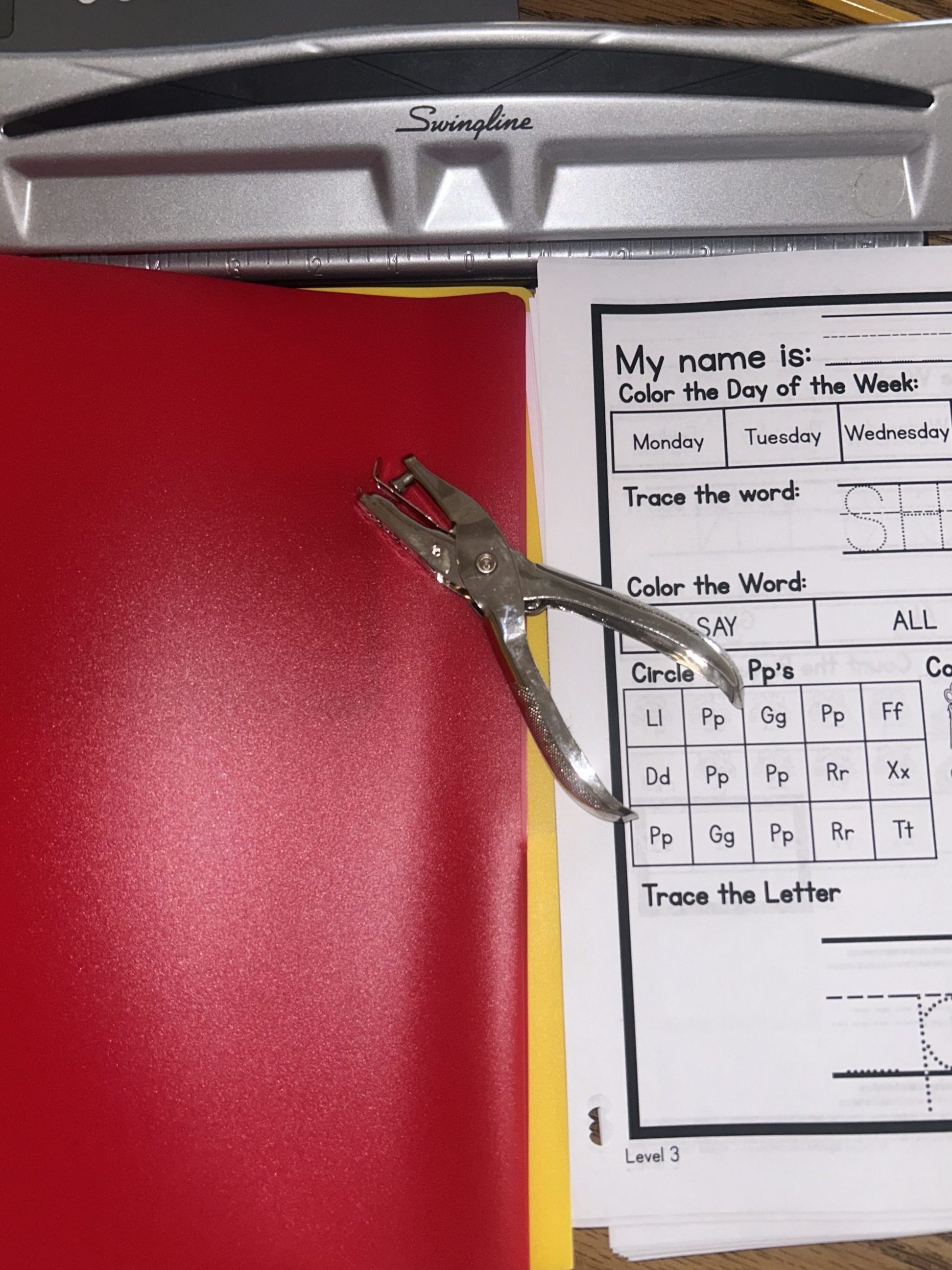
Use a sturdy plastic folder or binder that can withstand daily use. Tabs or pocket dividers help keep sections organized and easy for students to navigate. You can also just do what I do and place your morning work into a three pronged folder and have students complete however many pages your schedule allows/their abilities allow them to complete. At the end of every week, I take out what they have completed and store it in a data folder.
Step 2: Add Visual Supports
Label each section with whatever you students need to be successful. This can include pictures, icons, or color-coded tabs. You can even include a check list for students to complete and include it in their daily schedules. Visuals can help increase independence. Students instantly know where to go and what to complete next.
Step 3: Use Reusable Materials
When creating these folders, keep in mind what you want to use them for. If you’re like me and want to keep them for data purposes, you can put them in the plastic three-pronged folders and take them out at the end of every week or month. If you want to create a reusable resource, laminate the pages or put them in sheet protectors so students can complete tasks with dry-erase markers. This saves time, paper, and prep. This is completely customizable to accommodate what your students/you need.
Step 4: Keep It Consistent
The goal isn’t to create something cutesy and perfect that is going to be used for a few weeks and then fade out. The goal is to create routine and consistency. When tasks stay familiar, students can become more independent and complete their work with less prompting and support needed. Imagine how successful they will feel when given ownership of their own work?
Step 5: Differentiate for Every Learner
This is where the magic happens. Create slightly different versions of the folder work depending on your individual students’ needs. This can include accommodating for different reading levels, fine motor needs, math goals and independence level. This doesn’t have to be anything crazy. Just by differentiating the content and keeping the structure the same, students will be able to keep consistency and routine.

How to Introduce Morning Work Folders Successfully
Start simple and model, model, model. Start with introducing one task at a time. If you give the whole folder on day one, students may get overwhelmed and frustrated. Practice during small groups, or if you’re like me, you can do this individually as well. It can also be helpful to provide students with a visual checklist. This helps students see what’s done and what comes next. Another important piece is to reinforce independence with praise, token boards, or simple incentives. Whatever your students respond well to, use that to provide them with reinforcement that they are doing a great job increasing their independence. This will give some encouragement to continue on. Once the routine is established, morning work will become yours and your students favorite part of the day!

Tips to Keep Your System Working All Year
- Refresh pages monthly or quarterly, whatever works best for your system and your students
- Store extra tasks in a “teacher bin” for quick swaps
- Use different colored folders for each group or level
- Send home copies for practice if appropriate
- Keep a few “bonus pages” for fast finishers
A little organization goes a long way! If you think this is something that your students would benefit from, feel free to check out these calendar worksheets and this morning work bundle that will really make your life easy!