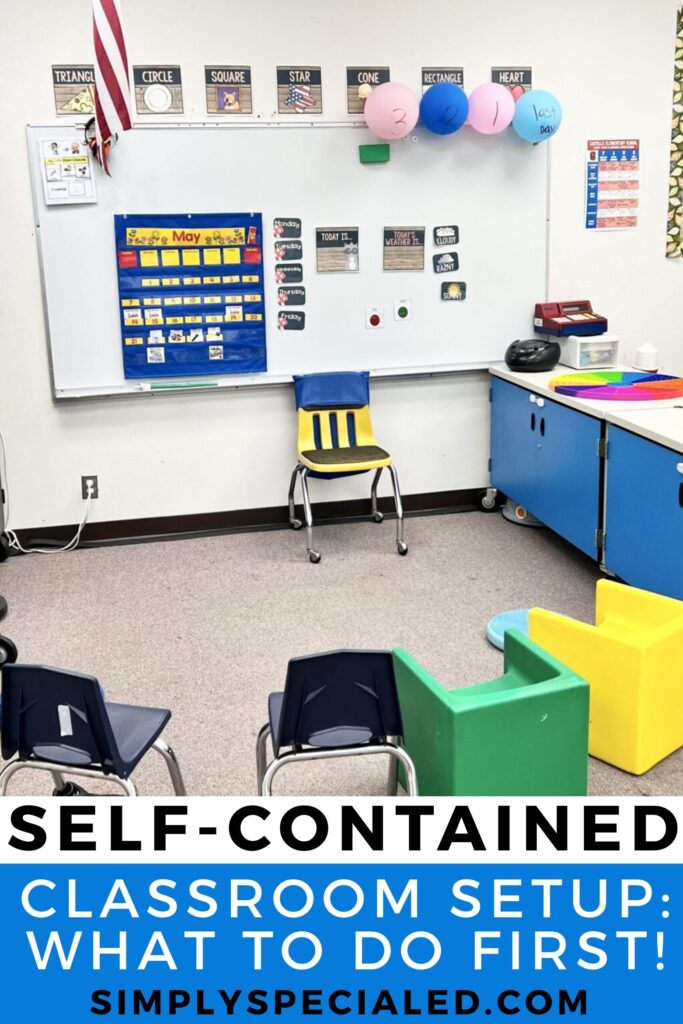
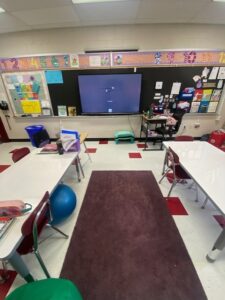
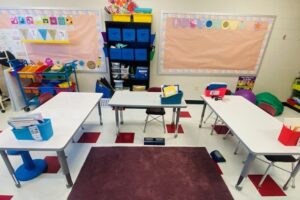
Setting up a self-contained classroom can feel overwhelming, especially if you’re starting from scratch.
Many special education teachers walk into a classroom filled with mismatched furniture, random materials, and little guidance on what the space should actually look like for students with diverse needs.
The good news is that a self-contained classroom does not need to be perfect. It just needs to be intentional, predictable, and structured in a way that supports independence.
If you’re wondering where to start, here are the first things I recommend focusing on when setting up your self-contained classroom.
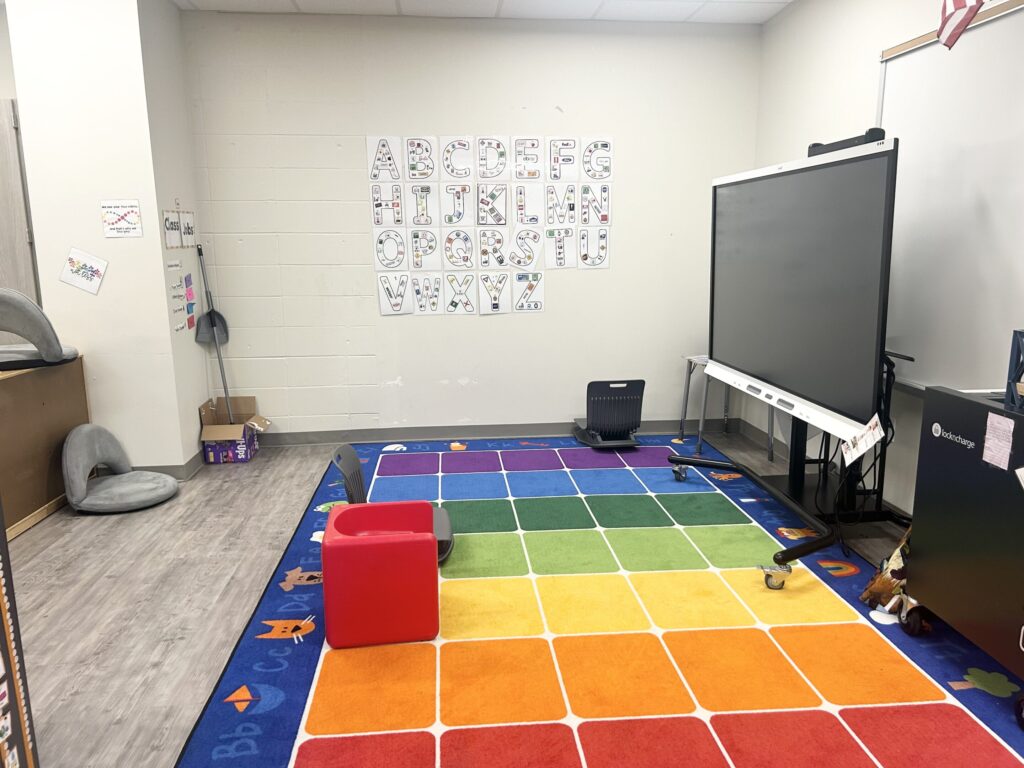
1. Start With Your Classroom Zones
One of the biggest mistakes teachers make is trying to organize materials before thinking about how the room will function.
Before you start labeling bins or decorating bulletin boards, think about the different types of learning that happen in your classroom.
Most self-contained classrooms benefit from clear zones such as:
- Small group instruction
- Independent work
- Centers or workstations
- Sensory or calm area
- Whole group space
When these areas are clearly defined, students begin to understand where learning happens and what is expected in each space.
This simple structure can reduce confusion and help students transition more smoothly throughout the day.
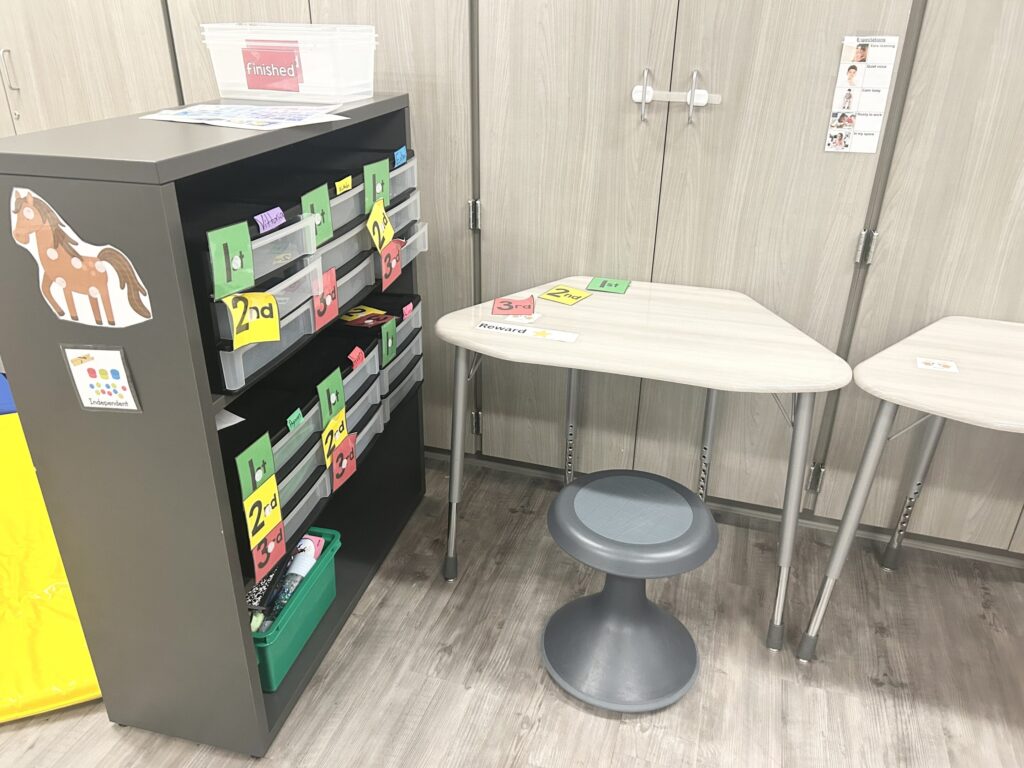
2. Prioritize Predictability
Predictability is one of the most powerful supports we can give neurodivergent learners.
Students who know:
- where to go
- what to do
- how to finish
- and what comes next
are much more likely to stay regulated and independent.
Simple visual supports can help with this, including:
- visual schedules
- task strips
- finished bins
- clearly labeled work areas
These environmental cues often reduce the need for constant prompting from adults.

3. Create Systems Before the Year Starts
Teachers in self-contained classrooms are often managing multiple instructional levels, behaviors, therapies, and staff support all at once.
Without clear systems in place, things can quickly feel chaotic.
Some helpful systems to think through before the year begins include:
- where materials live
- how students start independent work
- how centers rotate
- how finished work is handled
- how staff know what to support
When these systems are clear, your classroom runs more smoothly for both students and adults.

4. Design for Independence
One of the most important goals in a self-contained classroom is helping students become as independent as possible.
Your classroom setup should support students in answering these questions on their own:
What do I do?
Where do I go?
How do I know I’m finished?
What comes next?
When the environment answers these questions, students rely less on adult prompts and begin building independence.
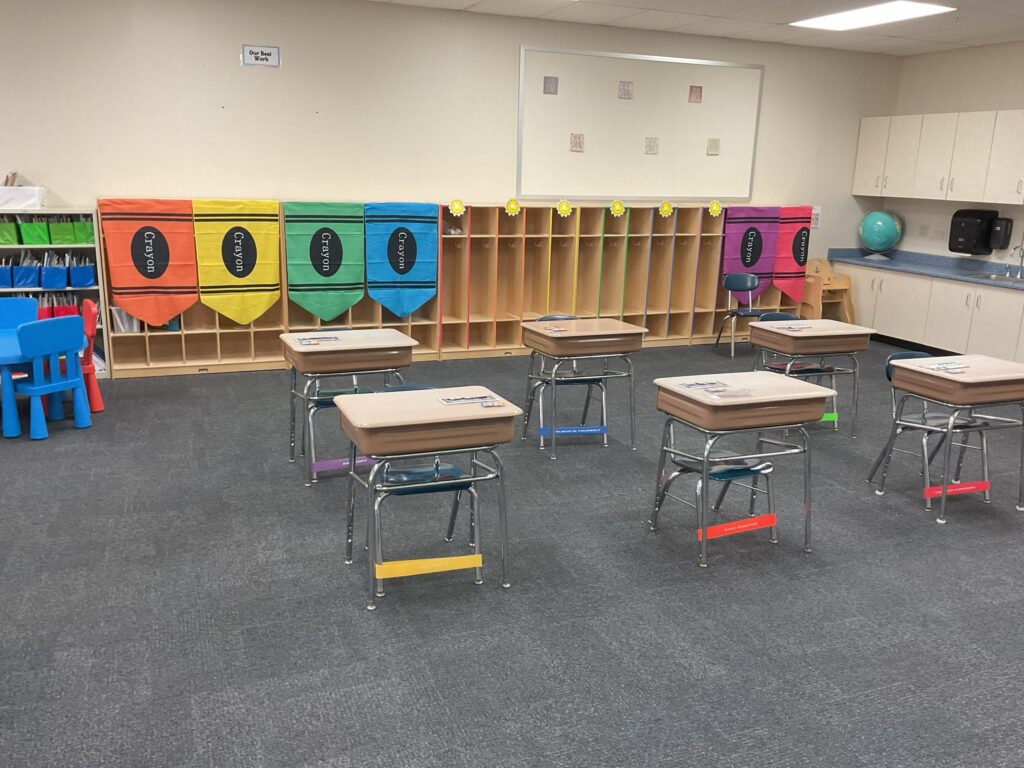
If Classroom Setup Feels Overwhelming
You are not alone. Many special education teachers are expected to design a self-contained classroom with little training or guidance.

That’s exactly why I created Simple Self-Contained Setup 101®.
Inside the course, I walk you step-by-step through:
- how to design effective classroom zones
- what systems self-contained classrooms need
- how to create predictable environments that support behavior and independence
- what to prioritize first so you are not reinventing the wheel
If you want a clear roadmap for setting up your classroom, you can learn more here!