If you are involved in the world of Special Education at all, you know just how important paraprofessionals are. Paras help make the day run smoother. They form great relationships with their students. If you are someone who is lucky enough to work with a para, here are some ways to make his/her life easier!

Have established routines and expectations
In my opinion, the best Special Education classroom is one where the teacher has set consistent and easy to follow routines and expectations. Sometimes, paras move around day to day. Some are not in the same classroom all day. He/she may not know what is expected of them. In these cases, it can lead to miscommunication.
I have found it helpful to make a document of your daily routine and include what the paras should be doing during that time. This can be posted anywhere in the classroom that is easy for them to access.
That way, if they come into your classroom during your math block, they can quickly read about the expectations during that time and jump right in.
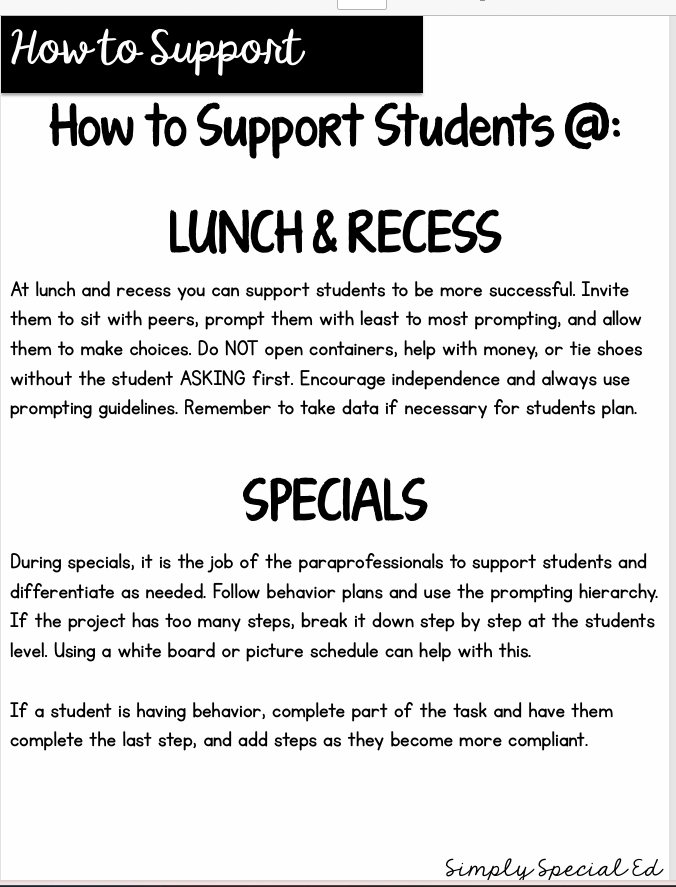
Below is a snippet of a previous staff expectations sheet I made.

Create a paraprofessional binder
Going along with this, providing each of your paras with a binder that includes important information can be so helpful. The binder can look different based on your classroom and school.
Some ideas to include in the binder are the daily schedule (classroom and individual student schedules), need to know information about each student, your behavior management system, etc. Simply Special Ed has a ready to go binder that you can access here.
Work as a team
One simple thing I always do is make sure my students understand that we are all a team. Although they understand that I am technically the leader in the room, I make sure to always refer to the paras as teachers as well.
I will say things like “this classroom has three teachers: me, miss x and miss y”. Even simple things like signing a morning message from all of the adults in the room, not just you as the teacher, can make a difference.
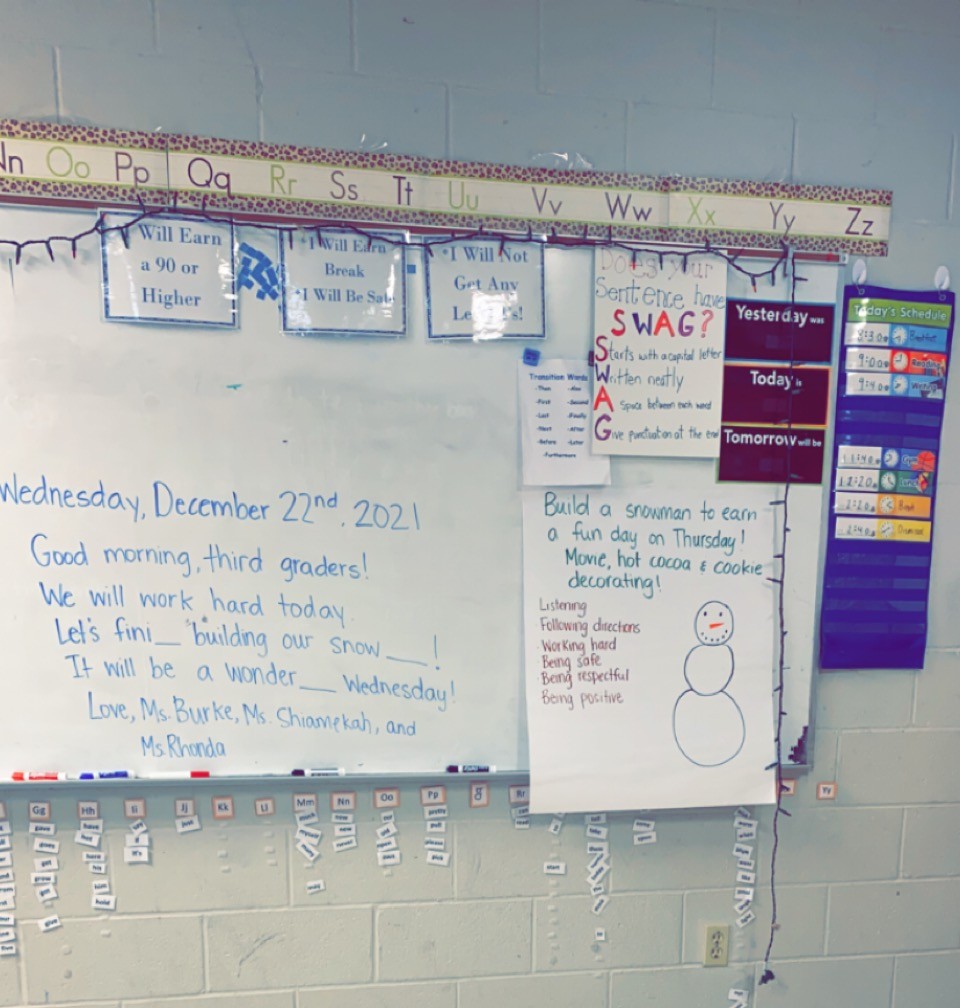
If the students think that the para is not equally as important in the classroom as the lead teacher, then they may behave differently around them.
Even if I don’t agree with a decision made by a para, I never bring that up in front of a student. It is much better to discuss any disagreements when students are not around. This way, students won’t pick up on any tension, and you can talk without the pressure of students watching.
Paraprofessionals are valuable resources to any Special Education setting. Saying “thank you” regularly can go a long way to show your appreciation, as well as following these tips!