
Do you have a child who receives special education services, or may become eligible for special ed? If so, an IEP meeting may be in your future! But, the meeting does not have to be daunting. As a parent, you play an important role in your child’s IEP meeting! I am both a special education teacher and a parent of a child with special needs. So, I have been on both sides of these meetings. Keep reading for a rundown of what to expect before, during, and after the meeting!
Before the IEP Meeting
Notification of an IEP Meeting
In advance of the IEP meeting, the school will reach out to inform you that a meeting to discuss your child’s progress will take place. If your child is new to special education, the meeting may be to determine their eligibility for services. If your child already has an IEP in place, the meeting may called an Annual Review, and it serves to review how they are doing, and make plans for the next year.

Parental Rights
As a parent, you have the right to make decisions regarding your child’s IEP. Before the meeting you should have access to a copy of your state’s parental rights. In my state, it is called Parental Rights In Special Education (PRISE); elsewhere it may be called Procedural Safeguards, IDEA Manual, or something similar. If you do not receive a copy with your meeting notification, ask for one! This manual goes over all the processes and procedures relating to your child’s IEP.
Preparing for the IEP Meeting
IEPs should contain a section where parental concerns are documented. Before the meeting, you may want to take some time to consider any concerns you have; any improvements you have seen; and any goals you would like to see your child work towards. You will have a chance to share these thoughts during the meeting!
During the IEP Meeting

The Team
The meeting will be attended by your child’s special education teacher, a general education teacher, and therapists who see your child (such as speech, occupational, and/or physical therapists). Other people who may be involved might include a behaviorist, social worker, school psychologist, and any other school personnel who work with your child and have knowledge of their needs and growth.
And of course, you are part of the IEP team as well! You also have the right to bring others who have knowledge of your child’s progress to the meeting; for example, family members, outside-of-school therapists, advocates, or caregivers.
Reviewing the Document

There are many aspects to an IEP document. The main sections that will be discussed in the meeting ate the present levels, goals, accommodations and modifications, and placement.
Present Levels
The Present Level of Academic Achievement and Functional Performance (PLAAFP) is a statement about how the student is performing academically, behaviorally, functionally, and in therapies. Each area in which your child will have a goal, will be accompanied by a PLAAFP. The PLAAFPs are a descriptive section that will give you information about how your child is performing in school.
Goals

The IEP will contain goals for each subject in which your child has academic, social, behavioral, or functional needs. These goals are for things your child to accomplish during the next academic year. Each one will be paired with short-term, incremental goals.
Accommodations and Modifications
A list of accommodations and modifications is included in the IEP. Accommodations address HOW a child learns, while modifications change WHAT a child is learning. An example of an accommodation for reading is to provide access to audiobooks. A modification for reading would be to allow student to complete assignments using a text at their reading level (as opposed to a grade-level text). Accommodations and modifications are there in order to help your child achieve the goals set forth in the IEP by removing barriers to learning.
Placement
The type of classroom your child will be placed in will be discussed. The options range from the regular education classroom (least restrictive) to self-contained special education (most restrictive). The goal should always be to place the child in the least restrictive environment that will allow them to be successful.
Your Input
Throughout the meeting, you will be able to share your thoughts and feelings about what has been said, and to provide your own unique insight. As a parent, YOU are the expert on your child, and you have the right to make your voice heard! The IEP should be a collaborative document created with you and the school personnel.
After the IEP Meeting
Consider the Draft

After the IEP is finalized, it will go into effect after a certain period of time (usually 10-15 days). At the end of the meeting, you may be asked to sign a waiver to forego that time period and put the IEP into effect right away. However, you have the right to NOT waive that time, and review the IEP further before it goes into effect.
Create an IEP Binder

After the meeting, you will no doubt have lots of information about your child to consider. Compiling documents such as the IEP, your parental rights manual, and other reports in a binder makes it easy to keep track of your child’s pertinent info. As progress reports and assessments come home throughout the school year, you can add them to the binder so that everything is at your fingertips when you need it!
Do you have any questions about the IEP process for parents? Leave a comment with your questions so we can connect! And be sure to read Alyssa’s post for some insight into the teacher’s side of the meeting!


FREE DOWNLOAD
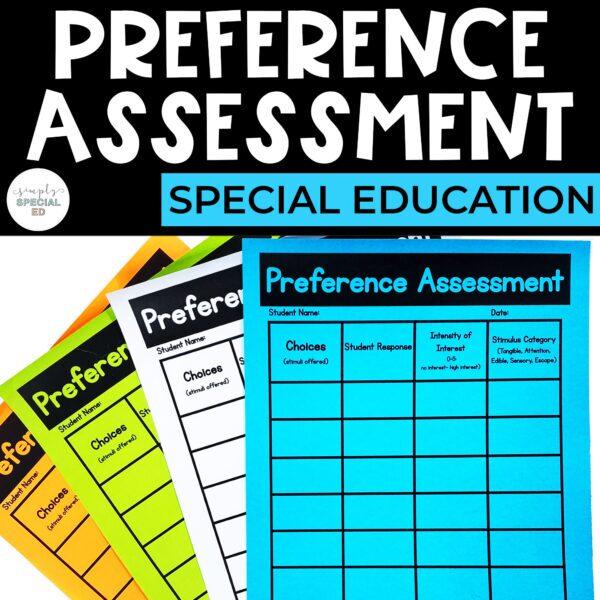
Use this FREE preference assessment to learn about student interests to include in the IEP! This helps for a more well rounded IEP should the student ever leave you or your district. This is a free download!


