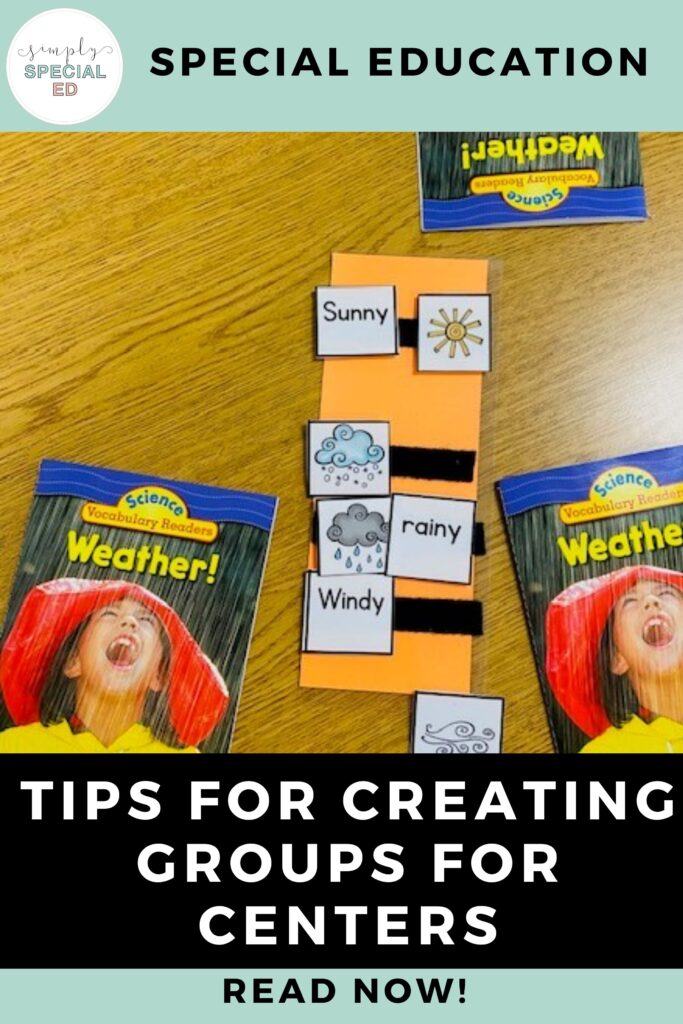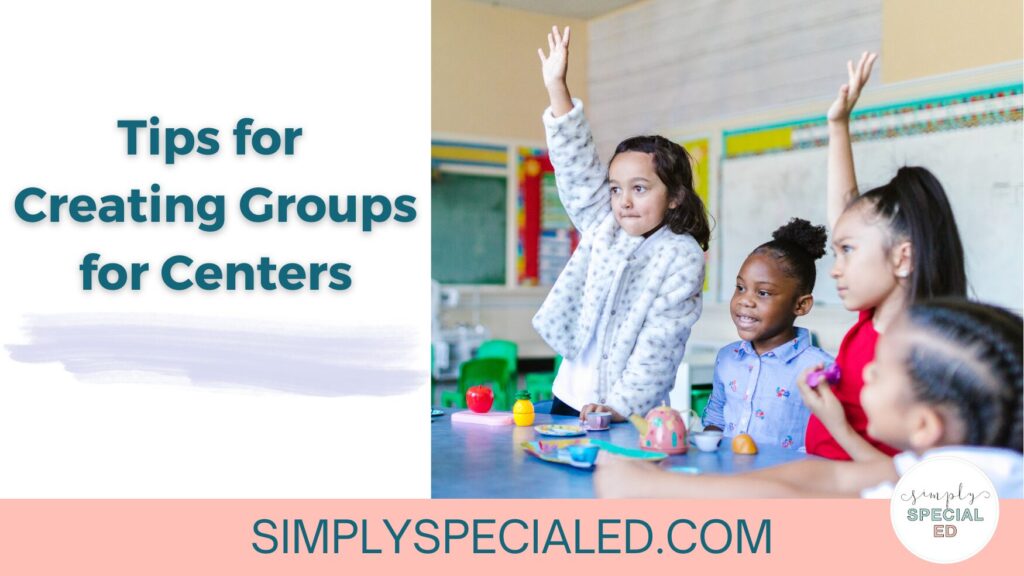
Self-contained classrooms THRIVE on centers! Working with my students in small groups (or individually) gives me a chance to target exactly what they need to work on. Read on to see how I group my students to help them get the most of their center time!
Academic Groups
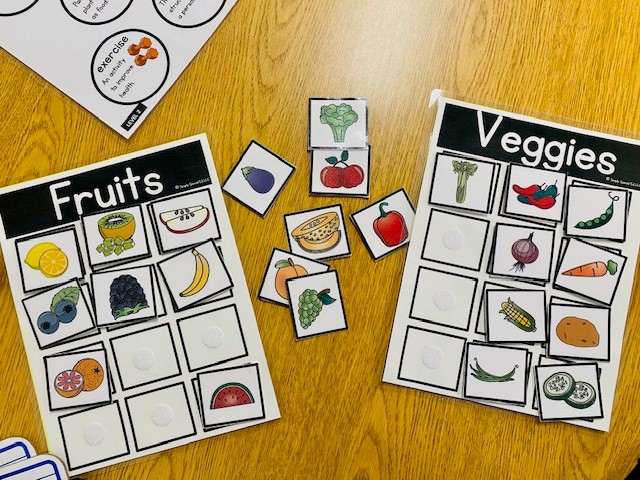
The most common way to group students is by their academic levels. It’s not always perfect, but it makes running centers so much easier. A student who is working on category sorting (like with this free Fruit and Veggie sorting activity) would make a great pair with another student who is working on discrimination tasks. The two kiddos might not be best friends, but the fact that they are working at the same level means that you are able to more efficiently plan their work. And, it is encouraging for the students to work with a peer who is at the same level as they are.
Grade Levels
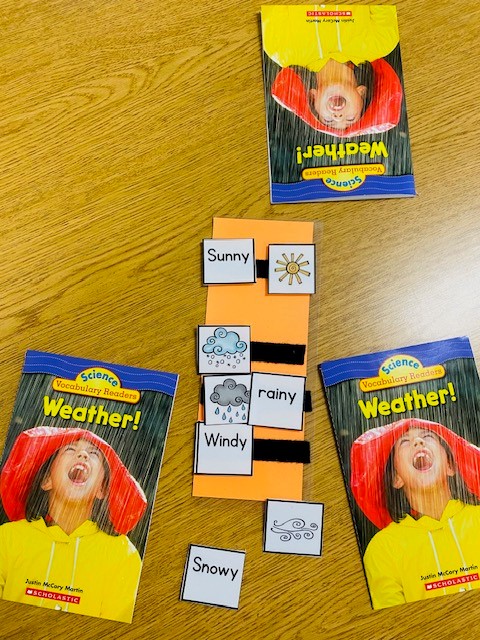
In my self-contained classroom, I teach multiple grade levels (third through fifth, in my case). Just because students are in the same grade doesn’t mean they are working on the same level of activities. For that reason, grouping by grade level usually isn’t the best choice.
However, sometimes students in the same grade level need to work on a similar activity. For example, when my class is preparing to take the DLM assessment, working in grade level groups makes sense! I can easily expose my students to their grade-level familiar texts, and help my fifth graders prepare for the science portion.
Goal Groups
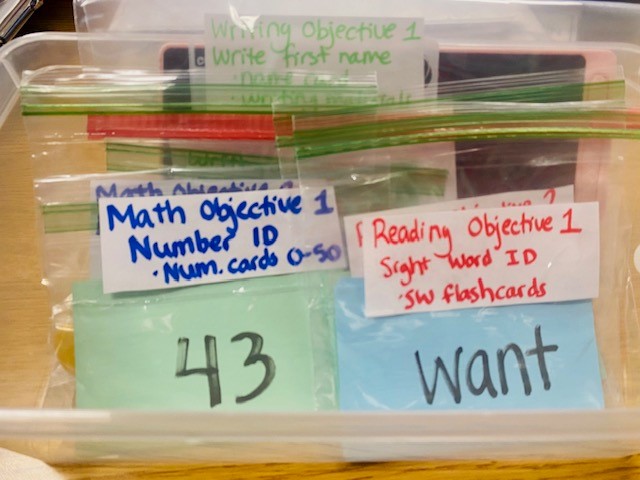
Another way to place students is to base groups on IEP goals. Students who are working on similar goals will likely be good pairs because they need to work on the same things. The students will be able to share materials, which will help you cut down on prep time. And, it will make data collection for goals a breeze!
Personality

When creating student groups, personalities are a factor that cannot be overlooked! Two students may look like a great match on paper, but in practice they have trouble getting along with each other. In that case, it may be your best bet to try having them work in separate groups. Similarly, some students work best on their own. They may be easily distracted (or be a distraction to others) or require one-on-one instruction for other reasons. So, some of your groups may need to be just an individual student.
An important thing to remember about your groups is that they do not have to be permanent. If students are having a hard time working with the peers you have paired them with, you can trial different groupings to see what works for you and your class!
How do you create groups for centers in your classroom? Share your grouping ideas below!


Get on the Waitlist Today!
Ready to simplify your classroom and make centers work for your students? Join the waitlist for the Simple Centers System today! Be the first to know when the course launches, get access to exclusive bonuses, and receive special early-bird pricing.
Don’t wait—sign up for the waitlist now and take the first step toward creating a classroom that runs itself! Click here to join the waitlist!