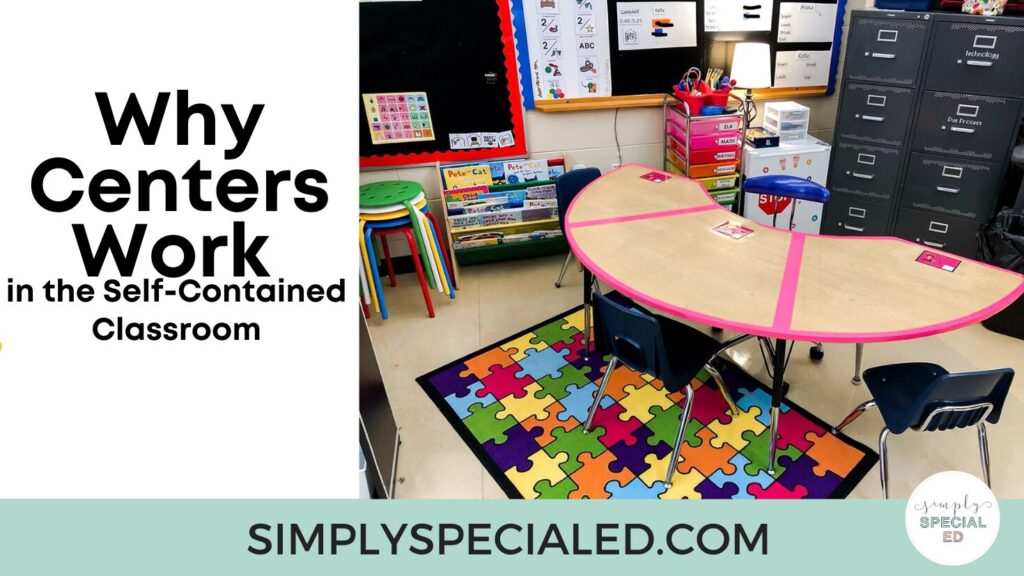
If you’re a self-contained special education teacher, you know just how unique your classroom is. With students at varying levels, a broad range of needs, and often limited resources, it’s easy to feel overwhelmed and exhausted trying to meet every student where they are. That’s where centers can become your new best friend!
In this post, I’m breaking down why centers are the key to simplifying your self-contained classroom, improving student engagement, and freeing up your time. Plus, I’ll introduce you to the Simple Centers System—a step-by-step course I’ve created specifically for special education teachers like you to set up centers that work. If you’re ready to make your classroom run smoother and provide more individualized learning opportunities, then keep reading!

What Are Centers in a Self-Contained Classroom?
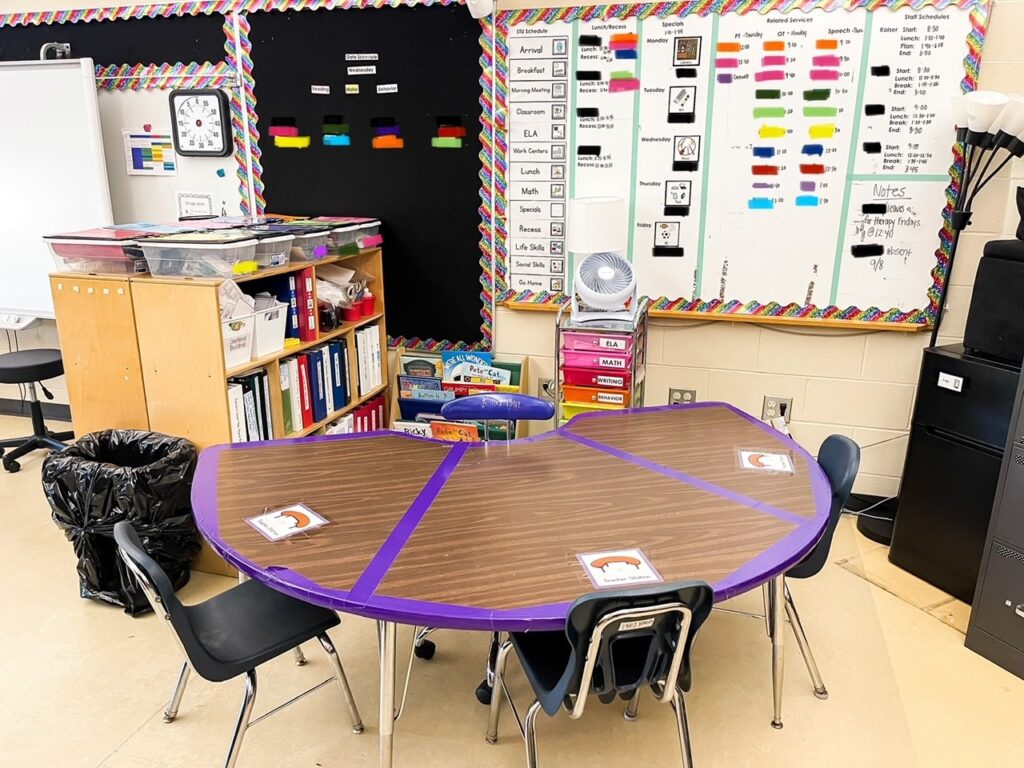
Before we dive in, let’s define what I mean by “centers.” Centers are designated areas or activities within your classroom where small groups of students rotate through different learning experiences. Each center targets specific skills or objectives, and students work independently or with minimal assistance. This format allows teachers to deliver differentiated instruction and ensures that every student receives the support they need.
Why Centers Work So Well in Self-Contained Classrooms
- Individualized Learning Opportunities
One of the biggest challenges in a self-contained classroom is meeting students’ individualized needs while also managing group instruction. Centers are a perfect solution because they allow you to tailor activities based on each student’s IEP goals, learning levels, and interests. Instead of planning separate lessons for each student, centers let you focus on skill-building activities that can be adapted to multiple ability levels. - Structured Routine and Predictability
Structure and routine are critical components of a successful self-contained classroom. Centers offer a predictable and manageable routine that students can rely on every day. They know what’s expected at each center and become more confident and independent as they master the activities. This predictable flow helps reduce anxiety, increase student focus, and minimize disruptions during transitions. - Maximizing Teacher and Paraprofessional Roles
When you’re understaffed or juggling too many responsibilities, centers can help distribute the workload more efficiently. By assigning paraprofessionals to different centers or having them support students as they rotate, you can ensure that everyone has a role in facilitating student learning. This means you’re not spread too thin, and your students receive more focused attention. - Student Engagement and Motivation
Centers allow for a variety of activities that keep students engaged and motivated. With options like sensory bins, hands-on math games, independent reading stations, and more, students get to experience learning in multiple formats. This variety keeps them interested and excited to participate, which means less time managing behaviors and more time teaching! - Increased Student Independence
Centers foster a sense of independence in students because they learn to follow routines, manage their materials, and complete tasks with minimal adult support. This independence is a game-changer for students with disabilities who may struggle with self-confidence or executive functioning skills. Building this independence also gives teachers more time to work one-on-one with students who need intensive support.
Learn more tips for centers in this blog post.
Introducing the Simple Centers System
Feeling ready to dive into centers but not sure where to start? That’s exactly why I created the Simple Centers System! This course is designed specifically for special education teachers working in self-contained classrooms. It takes the guesswork out of setting up centers and provides you with step-by-step guidance on how to create a center system that works for your students—regardless of their level or needs.
In the Simple Centers System, I’ll walk you through:
- Planning and organizing effective centers.
- Setting up rotations that work in any size classroom.
- Creating differentiated activities for various skill levels.
- Managing staff roles to keep everything running smoothly.
With this course, you’ll have everything you need to transform your classroom into an organized, effective, and student-centered environment.

Get on the Waitlist Today!
Ready to simplify your classroom and make centers work for your students? Join the waitlist for the Simple Centers System today! Be the first to know when the course launches, get access to exclusive bonuses, and receive special early-bird pricing.
Don’t wait—sign up for the waitlist now and take the first step toward creating a classroom that runs itself! Click here to join the waitlist!