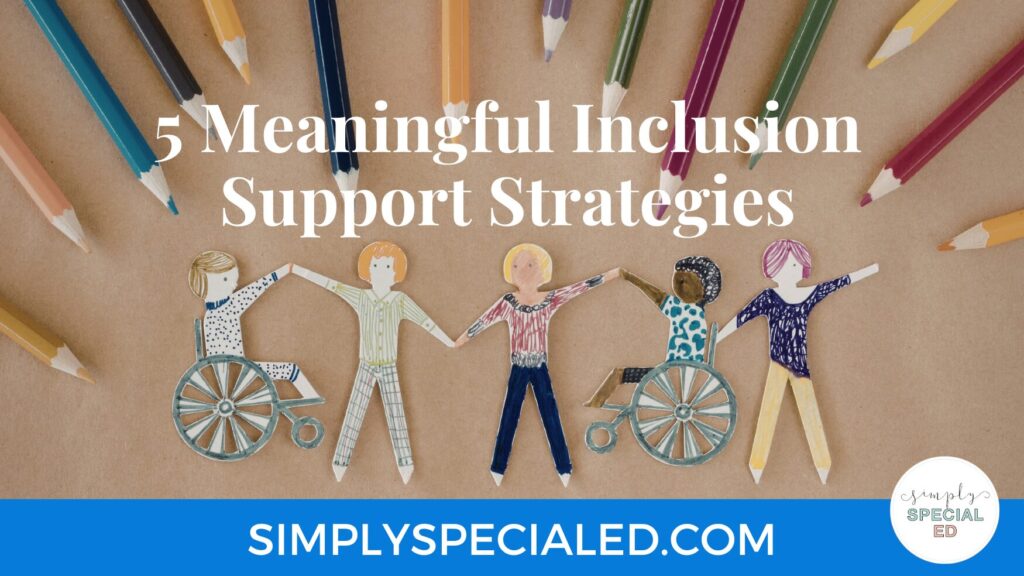
Inclusion is equally important for general education students as special education students. Read on to learn some strategies for supporting and fostering inclusion of special education students.
1. Collaborate with the general education teacher
Opportunities to include your students with general education peers may differ. Some students may push into a general education class for a certain subject, and some may only interact with their general education peers at lunch and/or in specials.
Even if your situation is the latter, inclusion is still possible. One of the best things you can do is to get to know the general education teachers in your building. You can discuss ways to blend your classes together, even just for lunch. You can also discuss topics and activities their class is working on to find ways to have your students join them for activities.
For example, if the general education class is working on a project about famous African Americans, you can see if your students can work on the project with them or come listen to their presentations. It can also work the other way!
Of course, this is probably not possible for every lesson and activity, but even aiming for a joint project once a month or every other month is better than nothing!
Pictured below is one of my former self-contained students doing magnetic/fishing science experiment with a general education peer.

2. Set up a buddy system
You can also collaborate with the general education teacher to establish a buddy program. This means that a general education student can be a buddy to a special education student, to help them with social skills, academics, etc.
In my opinion, the best way to do this is to let the general education students express interest in this on their own. You and the general education teacher can talk to the general education class to explain that this is a great way to make new friends. You can always revisit this topic as the year goes on and all students become more comfortable with each other.
General education students can sit with their buddies at lunch, walk with them in the hallways, help them with their work whenever possible, etc. These students should be students who are kind and can be great role models. You can set it up to be students that are in the same grade level, or older general education students paired with younger special education students to really facilitate positive role models.
You can read this blog from teachingspecialthinkers.com to learn more about the buddy system and read about a real-life example!

3. Use books to facilitate conversations
Going along with collaboration and using a buddy system, using books to foster conversations about inclusion is an easy thing to do. There are so many books out there about children with disabilities that can help teach typically developing children about their special education peers.
You can suggest these books to the general education teachers, or even invite their class in to your classroom to listen to a read aloud. These books can spark great conversations about what disabilities are, how to treat everyone with kindness, etc.
It may help for the general education teacher to have a prior discussion with their class about the topic of the book, so that no unkind comments are made when around special education peers.
Some of my favorite books about explaining special needs and inclusion are: All Are Welcome by Alexandra Penfold, Chester’s Way by Kevin Henkes, and My Brother Otto by Meg Raby. There are so many more!

Image from whatwedoallday.com
4. Talk to admin and advocate for your students
Many special education teachers, especially self-contained teachers in an elementary school, often express feeling left out or being forgotten when it comes to school wide events. It is important for you to talk with your admin team if this is the case for you.
You can talk to them about the importance of inclusion for both special education and general education students. They most likely don’t realize you are being left out.
This is another situation where having a positive relationship with general education teachers can be beneficial, as they can also help advocate for you and your students.

Image from maneuveringthemiddle.com
5. Utilize student strengths and interests
All students, regardless of ability level, have different strengths. When planning for inclusion activities, make sure you are utilizing student strengths and interests. For example, if your student is great at coding on the computer, invite his/her typically developing peers to come learn how to code.
If your students enjoy sensory activities, you can plan a “Fun Friday” event where you invite a general education class to come do sensory centers, like playdoh, kinetic sand, shaving cream, etc. You can tie in academics by having them use these sensory tools to make letters, write their names, count, etc.
The picture below shows a group of special education students and general education students playing with snow together!

Inclusion can benefit all involved and can make a meaningful impact on both students and teachers.