Visual tools are crucial for success in self-contained classrooms! So many of our students struggle with verbal-only directions. Pairing oral instructions with visual supports such as pictures, schedules, and color-coding can provide a reference that students can revisit, which helps them to accomplish things in the classroom with more independence.
Why are Visual Tools Important?
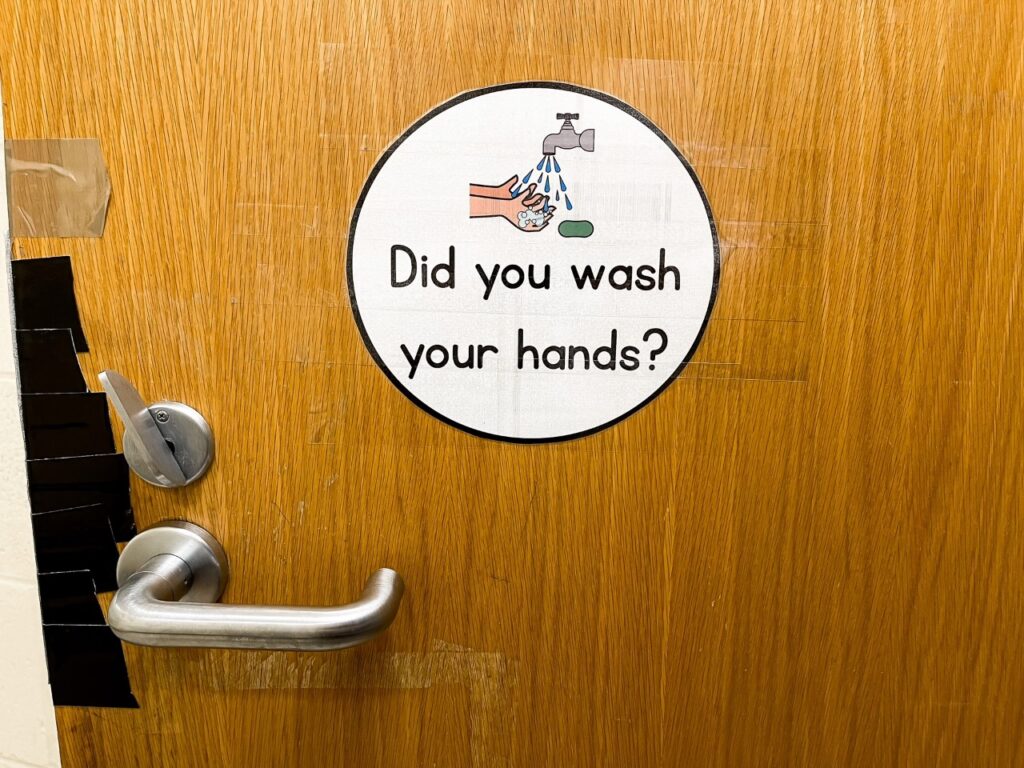
Visual tools make your classroom more predictable for students while also allowing for differentiation. Visuals make your classroom a more predictable environment which reduces anxiety of the unknown for students. Additionally, students are better able to navigate the environment with independence when they have visual supports.
Another benefit of visuals is that they allow you to differentiate for your students’ needs. For example, different styles of visual schedules can be implemented based on the children’s ability to use them. Another example is that some students may need more explicit visual symbols, while students with higher reading skills would benefit more from cues that are paired with words.
Keep reading to learn more about what five of my favorite visual tools are, and why you need them for your classroom!
Visual Timers
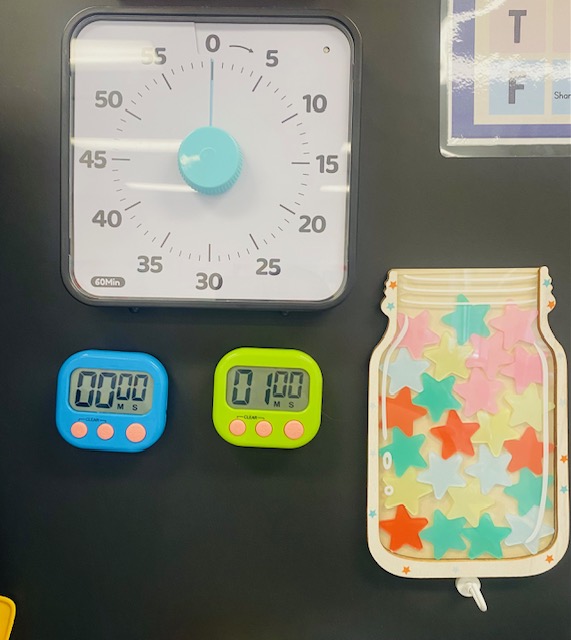
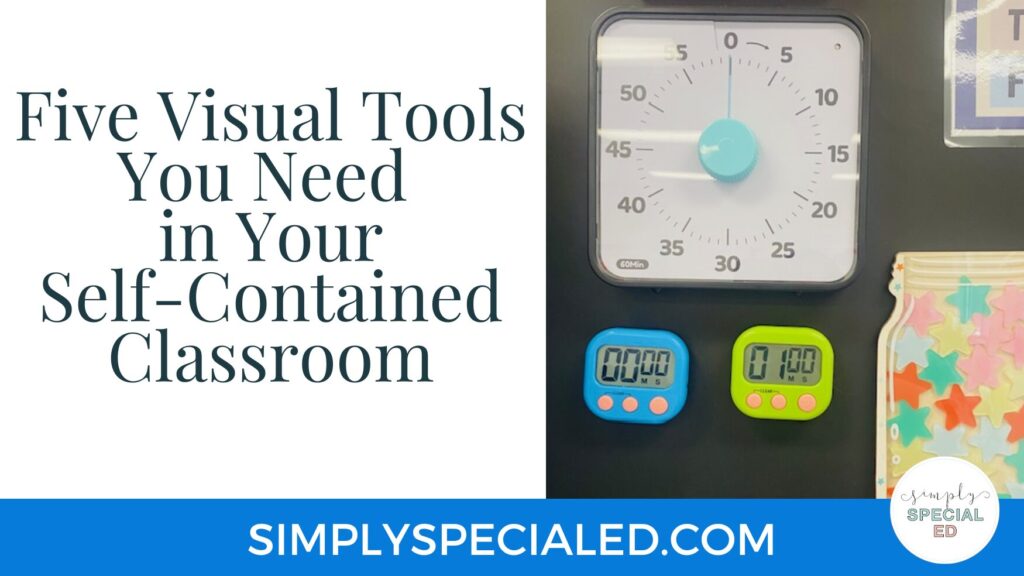
The tool that gets the most use in my classroom on a daily basis is a visual timer! I use timers to keep my students and me on track throughout the day! I use different varieties of timers in different ways.
A magnetic board timer is great for keeping us mindful of how much time we have for different activities. Another way I use them is to remind us of special activities. When we have an assembly or another activity that is outside of our normal routine, setting this timer to countdown to the special event helps us get ready to transition,
A digital timer video projected on my board is a lifesaver for whole-group needs! This large visual is helpful when we are all doing the same things. For example, when the class is having free time, the large, graphic timer helps us all know when it is time to wrap up. And, using this type of timer during centers makes our rotations seamless because they give students the info they need to be successful!
Personal timers also come in handy for keeping individual students on track. For example, they can be used to time a student’s break. Or, if a child struggles with transitions, a personal timer can help them anticipate when changes are going to occur.
Schedules
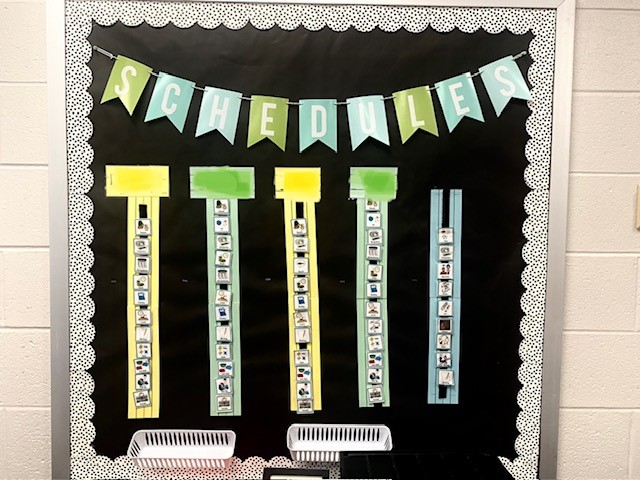
Visual schedules are important for EVERYONE, adults and students, gen ed and classified, alike. Everyone needs to know what to anticipate throughout the day. Schedules help us make our students’ days more predictable, which in turn helps us to decrease behaviors and anxiety about the school day. There are many ways to create visual schedules. At the very least, your classroom needs a whole group schedule. This shows an outline of what your class will do throughout the day. It is also a helpful reference for substitutes or other guests who come into your room!
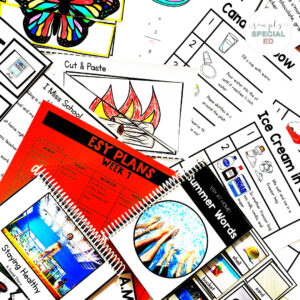
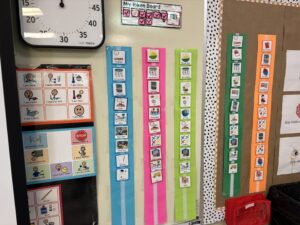
Many of our self-contained students also benefit from personal visual schedules. I have used many types of schedules throughout the years. The two I have used most often with my upper-elementary students are vertical schedules and checklist-style schedules. They help my students see what is planned for them throughout the day and they are easy to set-up and customize for my classroom needs.
Visual Prompts
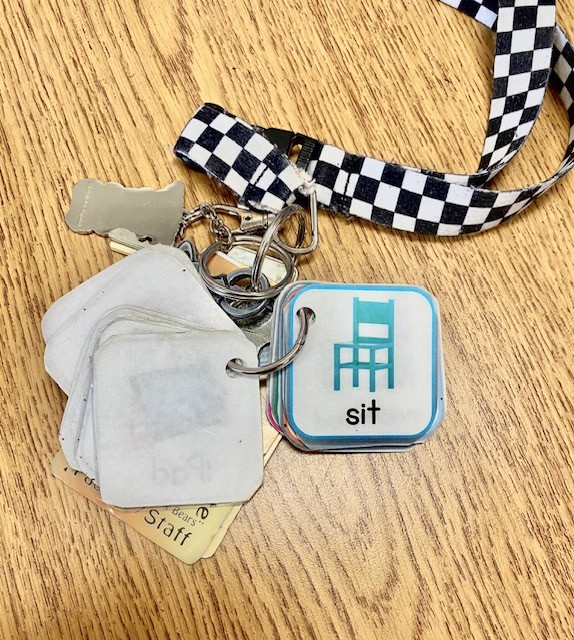
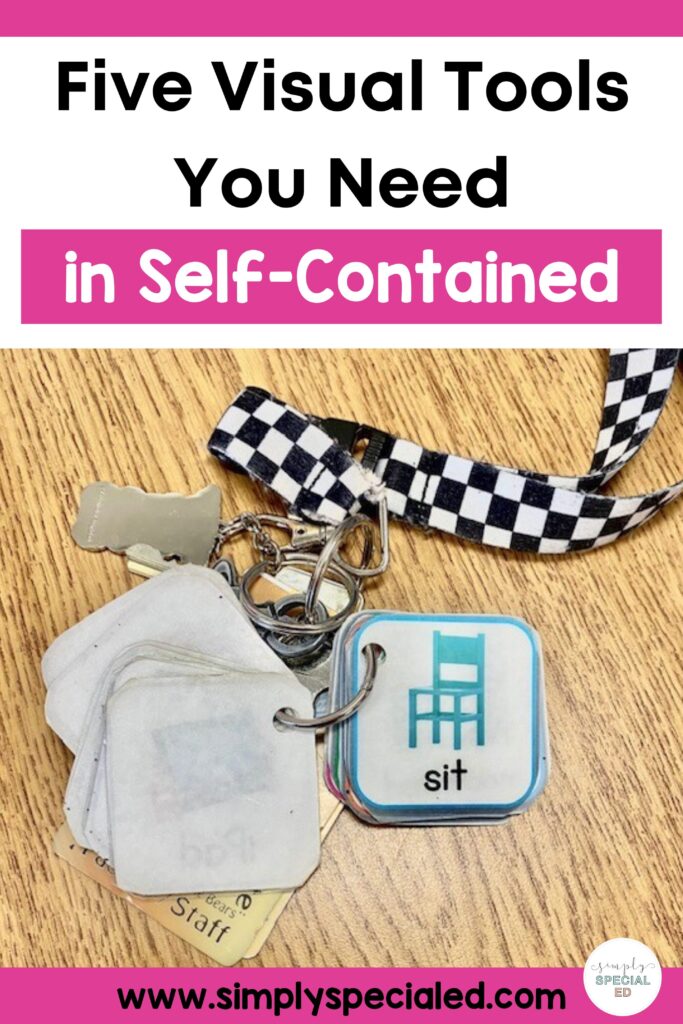
I have my visual prompting keychain on me at all times! These visual tools allow me to quickly give nonverbal cues to my students. I keep them on my lanyard so they are always at hand! Then I can flash a quick reminder to kids who need it, without calling them out or interrupting the flow of a lesson. I find that these are especially helpful when we are in an assembly!
While I love the real pictures option, there are also boardmaker-style visuals as well. These are helpful for students who are more responsive to colors and graphic representations.
Color Coding
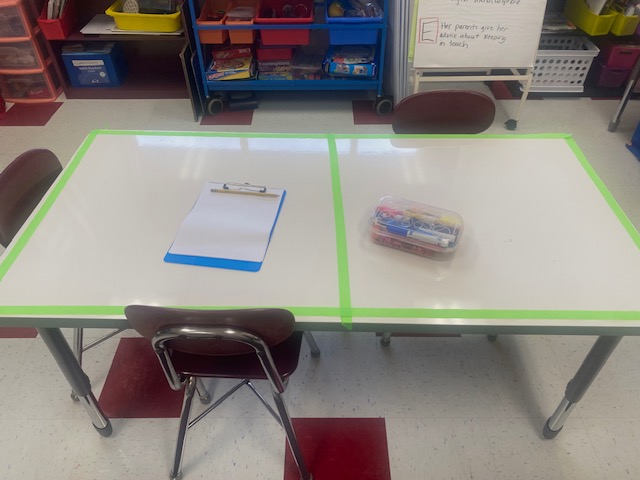
Color coding items in the classroom can be a powerful visual tool! At the beginning of the year I assign each of my students a color and then make their visual schedule, nametag, and work bins all match so that it is super easy for them to find their items!
Colored tape can be used to delineate so many things. Create visual boundaries for lining up. Separate sections of tables or desks so students know where their boundaries are. Color code tables for centers to clearly mark where students should go for their rotations.
Signs
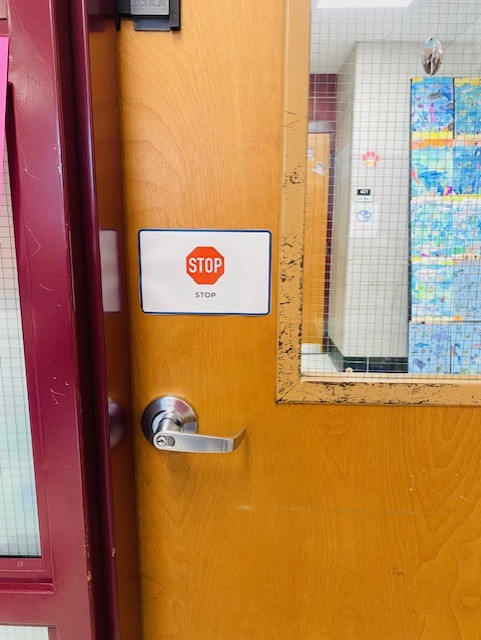
There are so many signs and labels that are effective visuals for the classroom! One example is a stop sign. It may seem simple, but posting a big red stop sign on your door can be surprisingly helpful in deterring eloping students! Likewise, a “come in” or “enter” side on the outside of the door has helped students of mine who are reluctant to enter the room.
Classroom area labels are great for keeping sections of your room defined. You can mark student tables, break areas, your desk, and other important places. These labels help students navigate the room with ease and understand what areas are available to them. Another perk is that when you pair these labels with words, it is an easy way to promote word recognition!
Those are just a few examples of the many visual tools that can help your self-contained classroom run smoothly! What types of visuals do you use in your room? Tell us about your favorites in a comment!