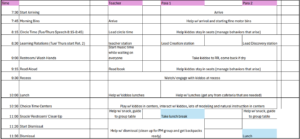
Creating an effective daily schedule for preschool special education programs requires careful consideration of individual student needs, therapeutic goals, and developmental milestones. A well-structured schedule provides predictability while allowing flexibility for personalized learning experiences, ensuring that every moment of the day serves a purpose in each child’s educational journey. In this blog post, I share a sample schedule for a special education half-day preschool program and key tips for implementation.

Sample Half-Day Schedule (8:30 AM – 12:30 PM)
8:30-9:00 AM: Arrival and Morning Routine
- Individual greetings with visual schedule review
- Self-help skills practice (hanging up backpack, washing hands)
- Sensory regulation activities as needed
9:00-9:20 AM: Morning Circle Time
- Hello song with movement
- Calendar and weather discussion
- Review of daily visual schedule
- Social skills practice through greetings and sharing
9:20-10:00 AM: Centers/Goal work
- Structured play centers with embedded learning goals
- 1:1 or small group instruction as needed
- Peer interaction opportunities
- Fine motor skill development activities
10:00-10:15 AM: Snack Time
- Nutrition
- Functional communication practice
- Self-help skills reinforcement
10:15-10:45 AM: Gross Motor/Movement
- Outdoor play when weather permits
- Indoor movement activities
- Balance and coordination exercises
- Following multi-step directions through movement games
10:45-11:15 AM: Small Groups/Therapy
- Academic readiness skills
- Pre-literacy and pre-math concepts
- Turn-taking and following group rules
- Related services such as speech-language therapy, occupational therapy, and physical therapy
11:15-11:45 AM: Art/Sensory Exploration
- Fine motor skill development
- Creative expression opportunities
- Sensory processing activities
- Following directions and completing tasks
11:45 AM-12:15 PM: Story Time/Music
- Language development through books and music
- Listening skills and attention building
12:15-12:30 PM: Departure
- Gathering belongings
- Review of home communication
- Positive closure to the day
- Individual goodbyes
Tips for Implementation

Visual Supports: Visual supports facilitate effective communication in special education classrooms. Picture schedules, choice boards, and visual cues enable children to understand expectations and navigate transitions with greater confidence and independence.
Consistency and Routines: Predictable patterns help young learners feel secure and develop a deep understanding of daily expectations. Successful programs recognize that while routines provide essential structure, the timing and specific activities within that structure may need adjustment based on individual student needs and the group dynamics on any given day.

Individualized Support: Individualized support represents the heart of special education programming. It requires that each child’s IEP goals be woven seamlessly into the fabric of daily activities. This allows learning objectives to be natural parts of play, social interaction, and daily routines, making skill development more meaningful and likely to generalize across settings.
Transition Support: Transitioning from one activity to the next sometimes presents challenges for young learners with special needs. Building extra time into these moments, along with clear visual and verbal cues, transforms potentially stressful periods into opportunities for practicing self-regulation and following directions. These supported transitions become teaching moments that strengthen children’s ability to cope with change and uncertainty.
Regular Review: Regularly assess and review the effectiveness of the schedule to ensure that the program continues to evolve with the children it serves. This ongoing evaluation process should consider student progress, changing developmental needs, and the overall classroom climate, allowing for thoughtful adjustments that keep the program responsive and relevant.

Staff Communication: Staff communication serves as the backbone of the successful implementation of the preschool special education schedule. All team members should clearly understand their roles during each part of the schedule and how their individual contributions support each child’s unique goals and needs.
Conclusion
An effective preschool special education schedule strikes a balance between consistency and flexibility, ensuring that each child receives individualized support while participating in meaningful learning experiences alongside peers. The key is to embed therapeutic and academic goals naturally throughout the day while maintaining the joy and wonder that should characterize early childhood education.
Please note that the sample schedule in this blog post should be adapted to meet the specific needs of your program, student population, staffing, and available resources. Regular assessment and adjustment ensure that the schedule continues to meet the evolving needs of all children in the program.

How SSE Can Help
Did you know that Simply Special Ed’s Simple Self-Contained Setup 101 Course is dedicated to helping novice and veteran self-contained teachers alike build out the ideal classroom schedules? Join the waitlist here!