• Home
  • Online Courses
    • Simple Self-Contained Setup 101®
      • Success Stories
    • Simple Centers System
    • Course Member Sign In
  • Shop Now
    • Shop Now
    • Free Resources
    • Gift Cards
    • Cart
    • Purchase Orders
    • School Licenses
    • My Account
  • Free Webinars
  • Blog
    • Academics
      • Adapted Books
      • Comprehension
      • Cooking
      • Crafts
      • ELA
      • ESY
      • Fine Motor
      • Life Skills
      • Math
      • Occupational Therapy
      • Science
      • Sensory Bins
      • Social Emotional Learning
      • Social Skills
      • Social Studies
      • Speech Therapy
      • Task Boxes
      • Vocabulary
      • Writing
    • At Home Learning
      • Digital
      • Remote Learning
    • Behavior
      • ABA
      • Communication
        • AAC
      • Data
      • Schedules
      • Visuals
    • Simple Classroom
      • Back to School
      • Book Recommendations
      • Classroom Setup
      • Freebies
      • IEP
      • Inclusion
      • Inspiration
      • Organization
      • Paraprofessional
      • Remote Learning
      • Seasonal
        • Fall
        • Winter
        • Spring
        • Summer
    • Tot School
  • Classroom Tours
    • Self-Contained
    • Speech
    • Preschool
    • Elementary Autistic Support
    • K-2
    • K-2 (Socially Distanced)
    • K-4 (Tiny Room)
    • 1-4 (Life Skills)
    • 2-3 (ABA)
    • Middle School
    • High School
    • High School (Life Skills)
    • Multiple Disabilities
  • New Teachers
    • Join My Online Course
    • First Year
    • Interviews
    • Job Search
  • Grade Level
    • Preschool
    • Primary
    • Elementary
    • Middle School
    • High School
  • More…
    • Meet Alyssa
    • Meet Our Bloggers
    • Collaborate
    • Guest Blogging
    • Contact Me
    • Disclosures
    • Facebook
    • Instagram
    • Pinterest

Simply Special Ed

Resource Downloads & Teaching Advice

Academics Data Elementary High School IEP Middle School Organization Primary Speech Therapy

25 Student Strengths To Use On Your Next IEP

Header for 25 Student Strengths To Use On Your Next IEP

Listing a student’s strengths is often the best part of the IEP for a parent and the most fun part for a teacher. When creating a list of student strengths for your next IEP, it is important to gather information from parents, teachers, and the student. Student strengths start IEPs in a positive way and show parents that the team knows the student well. Looking for more positive strengths for your students? Here is a list of student strengths to use on your next IEP.

SOCIAL STRENGTHS
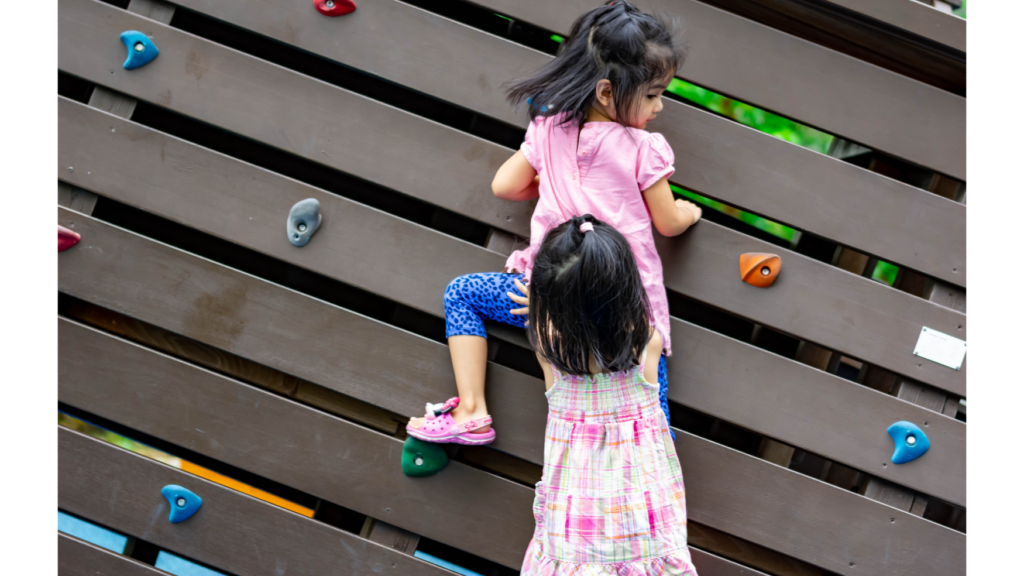
Kids helping each other on the playground.
Social strengths are just as important as any academic strengths!

Strengths in the area of social skills can be observed by every person on the IEP team. Using social strengths can be related to the student’s personality or how the interact with peers. When finding strengths in this area, observation and collaboration with the IEP team is necessary.

  1. Student is kind, sweet, caring, etc.
  2. Student is respectful and responsible.
  3. Student is a good friend.
  4. Student shares well with others.
  5. Student helps friends in need.
  6. Student makes others feel welcome in the classroom.
  7. Student is a leader.
  8. Student is organized (e.g., always has their materials ready to go, transitions between tasks independently).
  9. Student is able to problem solve well.
  10. Student enjoys… (I like to add feedback from the student about what they enjoy learning about and dong outside of school).

CLASSROOM STRENGTHS

Kids raising hands in the classroom.
Finding strengths in the classroom can be easy when you work as a team.

Strengths within the classroom are best seen by the classroom teacher. They are the expert in classroom strengths. Some classroom teachers may have difficulty coming up with strengths if they do not have the student in the room often. Here are some ideas of strengths that can be observed within the classroom:

  1. Student takes and applies feedback well.
  2. Student is actively engaged in classroom discussions.
  3. Student helps in the classroom.
  4. Student looks to peers to help follow directions when needed.
  5. Student follows classroom routines independently.
  6. Student follows classroom rules and expectations.
  7. Student uses the calm down corner when needed.
  8. Student asks for help independently (or with cues) and appropriately.
  9. Student shares thoughts and ideas with the class.
  10. Student starts work tasks (independently, with reminders, with visuals, etc.).

ACADEMIC STRENGTHS

Student thinking
IEPs are focused on academics, so finding a few academic strengths should be a priority.

Finally, academic strengths are important to include, as they lead into the “meat and potatoes” of the IEP. I always include improvements from the last year, academic areas of interest, and feedback from any additional staff that works with the student.

  1. Interested in (math, reading, writing).
  2. Enjoys learning about (animals, math, science).
  3. Student benefits from visual supports.
  4. Advocates for help when needed.
  5. Student has improved in the area(s) of (reading, speech, fine motor, etc.)

ORGANIZATION

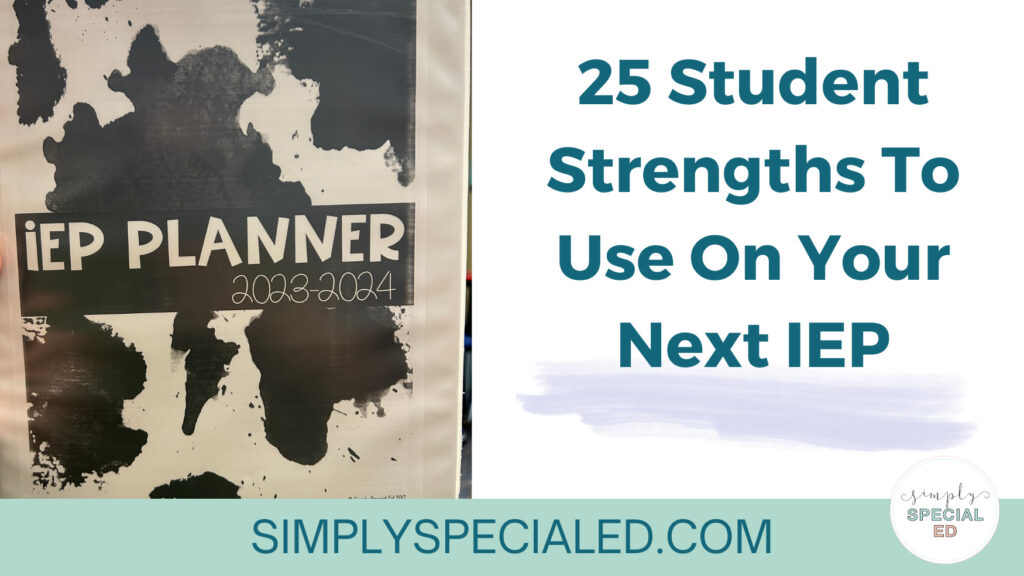
Organizing information for IEPs can be challenging, due to the amount of information that is required and the number of people involved in the process. Using this IEP Planner helps me keep input from the team organized. Below is an example how to use a planning page. This can be filled out while gathering information from parents, teachers, relative services providers, and the student. I keep all planning pages in my IEP Planning binder so it is readily available.
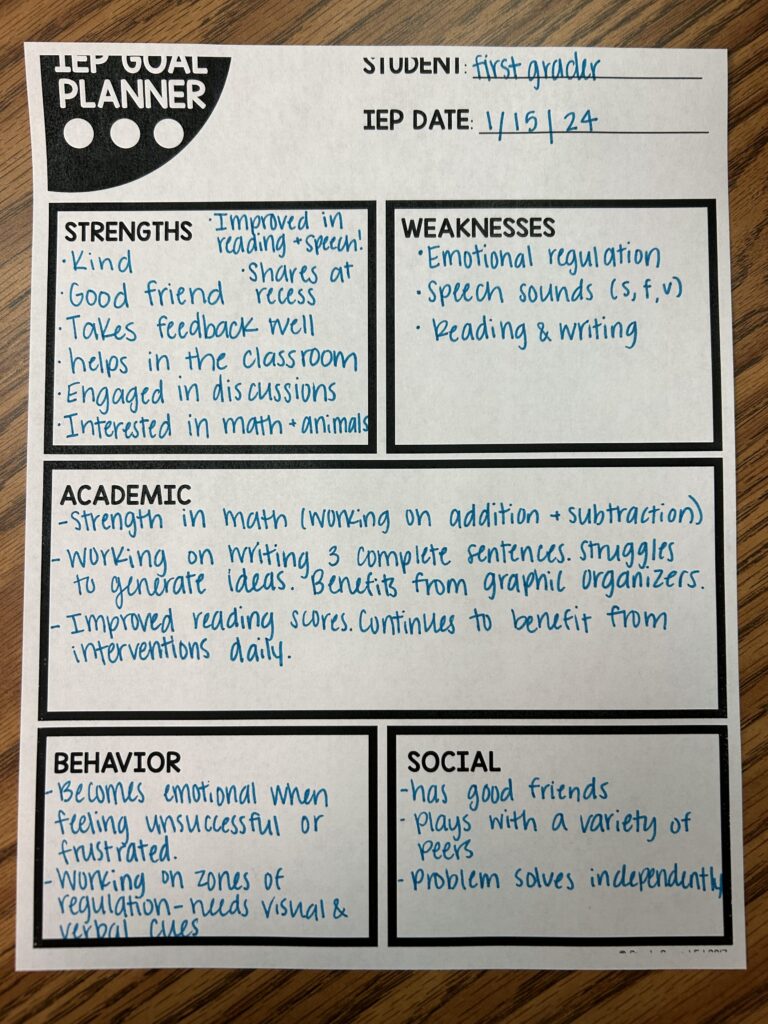
Example of how to use IEP goal planner
Here is an example of how to complete an IEP Goal Planning page. I use it for strengths as well!

Developing a list of specific student strengths for each IEP is a vital part of the process. Using the IEP planner to keep yourself organized when collaborating with all IEP team members. Happy planning!
Rachel signature

Click here to join the Simple Centers System waitlist to learn everything about launching simple centers in your self-contained classroom that save you time, free up staff members, and increase student learning!
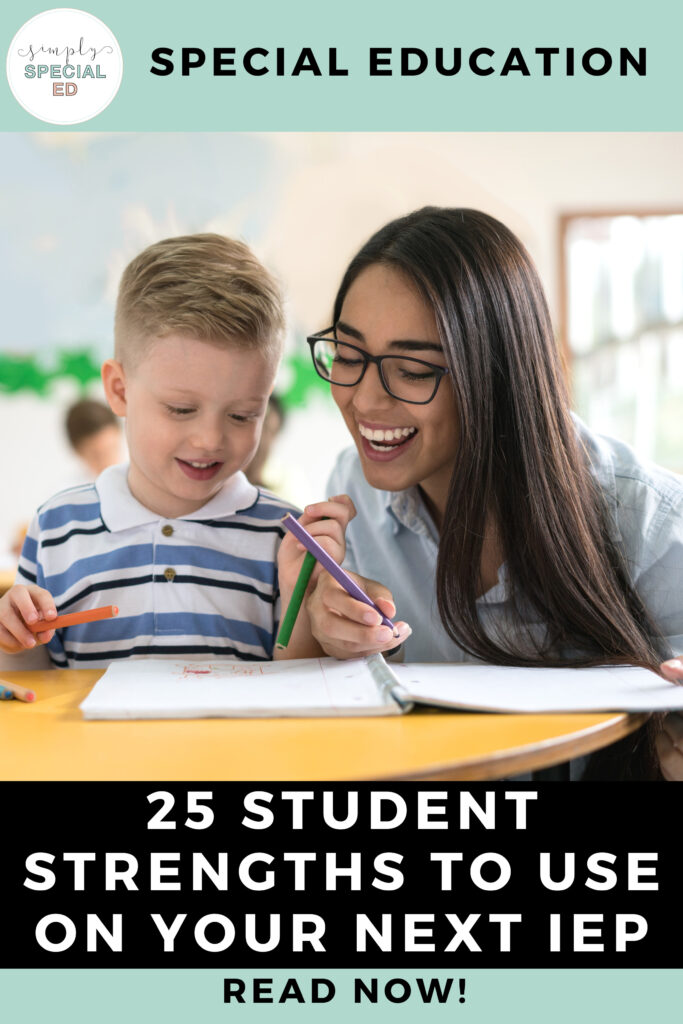
Pin for 25 Student Strengths To Use On Your Next IEP

FREE DOWNLOAD

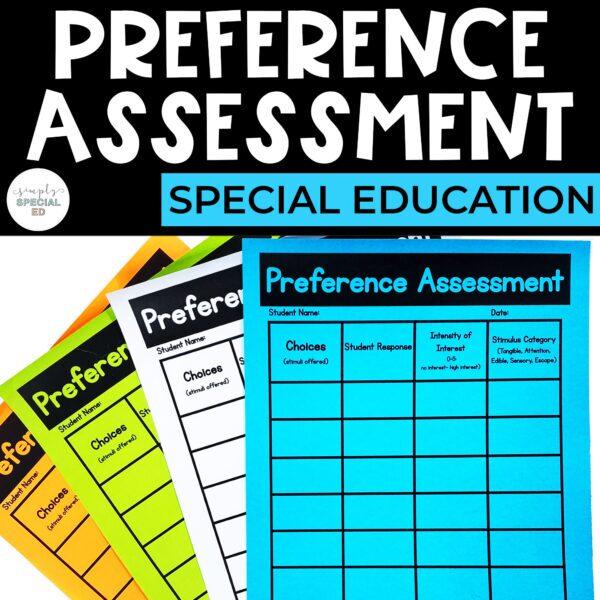
Use this FREE preference assessment to learn about student interests to include in the IEP! This helps for a more well rounded IEP should the student ever leave you or your district. This is a free download!
Related Posts:

  • IMG_5762
    How to Create and Use Book Companions to Meet IEP Goals
  • IMG_2878
    What to Include in Your IEP Binder for Middle School…
  • How to help your child use AAC at home
    How to help your child use AAC at home
Share
Pin


« My Steps to a Successful IEP Meeting
Tips for Toe Walking »
Hi amazing teachers!
I'm Alyssa Shanahan -- a former Elementary Special Ed & Life Skills teacher. My classroom focus was always to keep things simple, increase communication, and build independence. Simply Special Ed's goal is to help teachers and students reach their full potential in and out of the classroom!

Sign up to receive exclusive tips,
free resources, and more!

Recent Posts

FBA's in Special Education

FBA’s in Special Education: What Are They and How Do You Do Them? (A Guide for Special Education Teachers)

10 Transition Tips for Special Education Classrooms

How to create a calm corner that actually get used

Setting Up Centers for Your High School Classroom

Visual Tools for Self-Contained High School

A Course that Changed the Way I Setup my Classroom

Copyright © Simply Special Ed 2026 · Design by Fancy Girl Design Studio

Copyright © 2026 · Simply Theme on Genesis Framework · WordPress · Log in

We use cookies to ensure that we give you the best experience on our website. If you continue to use this site we will assume that you are happy with it.