Having daily or weekly communication with parents in special education is extremely important, especially at the elementary level. In this day and age, there are so many different ways to communicate with parents. Sometimes, knowing what works best for them is important. In addition, however, you want to find something that works best for you as a special education teacher and bonus points if it is not super time consuming in your crazy day!

Many of our students also cannot communicate things about their day when they get home as their typical peers do. It is our job that parents have the information they need to be successful at home, as well as some fun information about their child’s day! Let’s talk about 5 easy ways to communicate with parents in special education:
#1 Daily Communication Binders
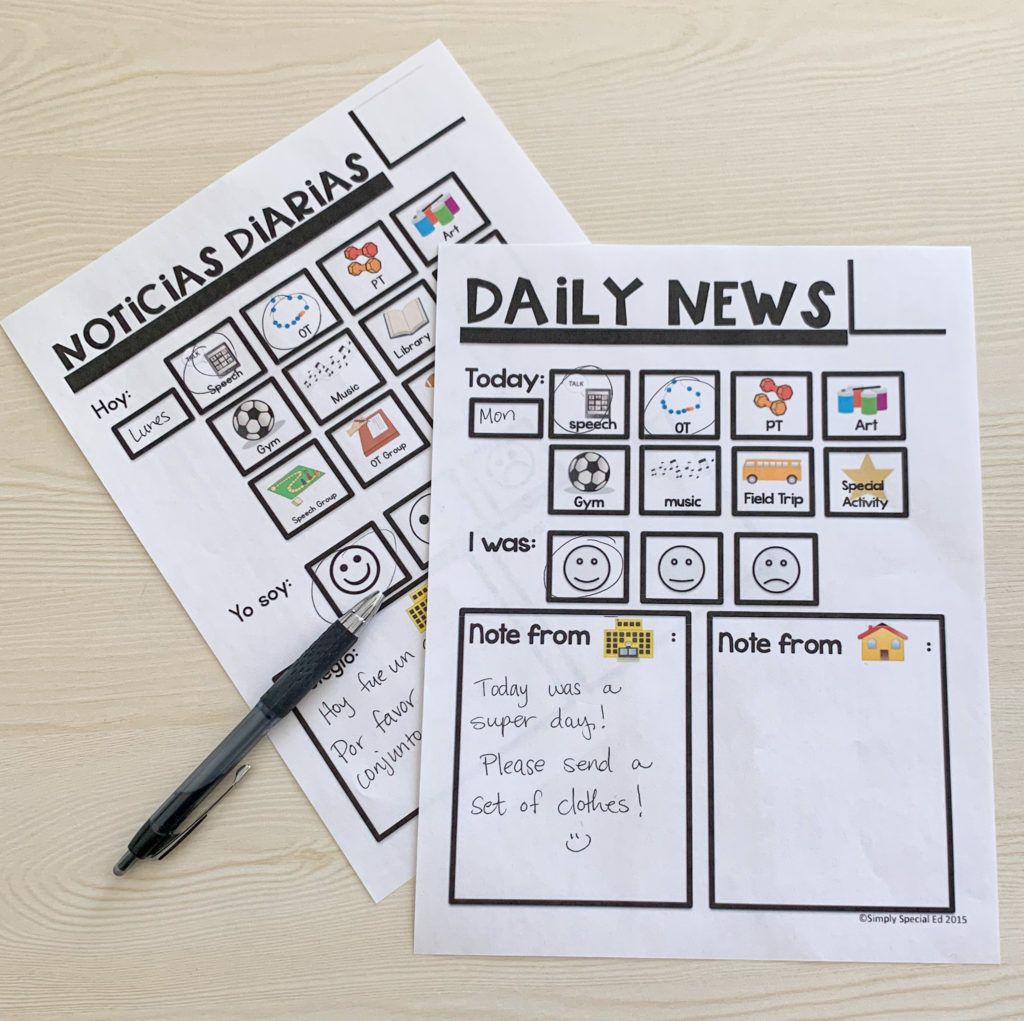
When I was in the classroom, daily communication binders were my saving grace as a special education teacher. I used them daily and even color-coded my classroom around my daily communication binders. A daily communication binder is easy to be passed back and forth, keeps a tracking of how days/nights are going if you need to look back, and is simple enough for ALL parents to understand. This is a great spot to house all communication from related service providers, any notes back and forth from home to school as well as the student’s daily schedule. I place these daily communication logs in the binder for easy home to school communication. These are editable and you can circle or just simply use a bingo dauber to mark the parts of their day. When I wrote in the boxes at the bottom, I liked to keep the content short and positive.

#2 Text
Everybody has a smart phone these days, am I right? That smartphone is always on them and they are always on it. For this reason, it may be easier as a teacher in the year 2021 to give out your phone number and let parents text you. This hasn’t always been the case and some teachers are very much against this. I have spoken to many special education teachers over the years, however, and some just have parents that prefer texting communication and may be the only way they can get parents to respond. Be sure to set clear boundaries if you decide to give out your phone number, maybe such as no texts after 8:30pm please or on weekends, but that is totally up to what works best for you!

#3 Email
Email is and always will be a classic form of communication home to parents. In 2021, everyone has an email address-I mean you just have to nowadays! I typically ask parents if they prefer phone or email communication because I always had some parents who did not check their email on a daily basis. The benefits of email right now are that email goes to their phone as well, for easy access. Some cons to email are that people’s inbox can fill up with junk and spam if they don’t keep up on it and your emails home could go overlooked.

#4 An App (Seesaw, Class Dojo)
Seesaw and Class Dojo are 2 great apps for communicating with parents. Seesaw has been an especially important platform for remote learning during the 2020-2021 school year. It has features to upload student work as well as pictures to parents. In addition, it has a texting feature for families. Class Dojo is similar, except it is used for behavior management in the school setting. Teachers can assign students an “avatar” and reward them with dojo points throughout the school day for good choices or remove points for not great choices. Parents can see their daily progress and there is also a texting feature through the app. If you don’t want to give out your phone number, one of these apps might be a great solution for you.

#5 Social Media
We live in the age of social media and many teachers are now incorporating this into their classroom. A lot of teachers have Facebook or Instagram pages for their class that they only invite parents to and keep private. This is an easy way to post about class announcements, give homework reminders or send out class pictures for parents to view. Some teachers might even be on Twitter to communicate with parents.
Whichever way to communicate with parents works for you if fine. Just make sure that you are being consistent in your communication home and you are sure to have a great relationship with the families of your students!