• Home
  • Online Courses
    • Simple Self-Contained Setup 101®
      • Success Stories
    • Simple Centers System
    • Course Member Sign In
  • Shop Now
    • Shop Now
    • Free Resources
    • Gift Cards
    • Cart
    • Purchase Orders
    • School Licenses
    • My Account
  • Free Webinars
  • Blog
    • Academics
      • Adapted Books
      • Comprehension
      • Cooking
      • Crafts
      • ELA
      • ESY
      • Fine Motor
      • Life Skills
      • Math
      • Occupational Therapy
      • Science
      • Sensory Bins
      • Social Emotional Learning
      • Social Skills
      • Social Studies
      • Speech Therapy
      • Task Boxes
      • Vocabulary
      • Writing
    • At Home Learning
      • Digital
      • Remote Learning
    • Behavior
      • ABA
      • Communication
        • AAC
      • Data
      • Schedules
      • Visuals
    • Simple Classroom
      • Back to School
      • Book Recommendations
      • Classroom Setup
      • Freebies
      • IEP
      • Inclusion
      • Inspiration
      • Organization
      • Paraprofessional
      • Remote Learning
      • Seasonal
        • Fall
        • Winter
        • Spring
        • Summer
    • Tot School
  • Classroom Tours
    • Self-Contained
    • Speech
    • Preschool
    • Elementary Autistic Support
    • K-2
    • K-2 (Socially Distanced)
    • K-4 (Tiny Room)
    • 1-4 (Life Skills)
    • 2-3 (ABA)
    • Middle School
    • High School
    • High School (Life Skills)
    • Multiple Disabilities
  • New Teachers
    • Join My Online Course
    • First Year
    • Interviews
    • Job Search
  • Grade Level
    • Preschool
    • Primary
    • Elementary
    • Middle School
    • High School
  • More…
    • Meet Alyssa
    • Meet Our Bloggers
    • Collaborate
    • Guest Blogging
    • Contact Me
    • Disclosures
    • Facebook
    • Instagram
    • Pinterest

Simply Special Ed

Resource Downloads & Teaching Advice

Academics Blog Elementary Uncategorized

How To Work With Students That Are Medically Fragile

Today I’m going to talk about how to work with students that are medically fragile. I teach in a classroom with students that have various medical needs. There are some important things to remember when working with students that are medically fragile.

Presume Competence

Always presume competence when working with students. Yes, our students may have lowered stamina due to their various medical diagnosis. But that doesn’t mean we shouldn’t create and implement challenging activities. Maybe my student can only work 15 minutes at a time and then needs a 45 minute rest period. That’s okay! We meet our students where they are. 

Here my sweet friend and I are working on an art/motor skills project. I’m not going to do it for him, but I will absolutely help. He did need a break after this and that’s okay!

Know Your Students

Image of a white brick wall with two binders attached. One pink and one red. The pink binder says seizures and the red binder says emergencies.
These are my seizure/feeding and emergency binders.

Know your students’ various medical needs. Do your students have epilepsy, use feeding tubes, need snacks at certain intervals or do they use a suction machine? Make sure you know these things and how to use them. Some schools may provide nursing for each student, but in my experience that is not always feasible. We have a permanent RN at our school and that is an amazing thing. She trains myself and my staff on how to take care of my students and is always available for emergencies. There WILL be emergencies. 

Be Prepared
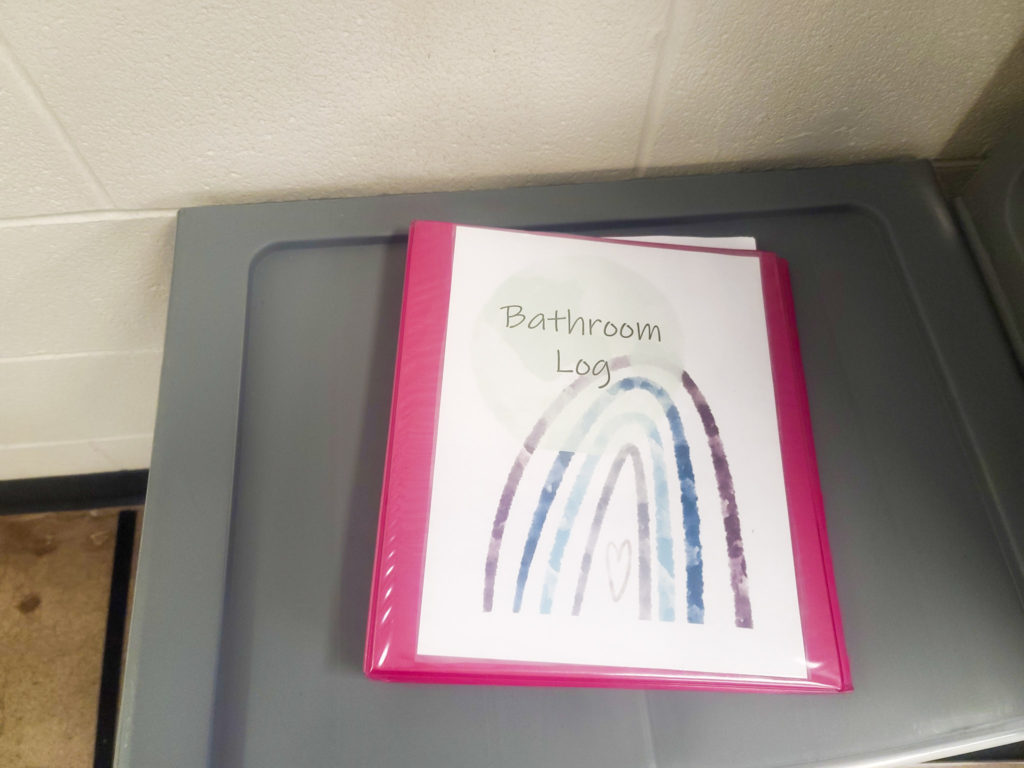
Image of a pink binder on a grey shelf. The binder says bathroom log.
My bathroom log is kept right by the door. I bought these binders on amazon, you can get them here. (affiliate link)

You need to be prepared for when things happen, because they will happen. Students will have seizures, mickey buttons will break, pump sets will leak, ect. Make an emergency binder. In the binder put all of the students’ health plans and make sure to read them thoroughly. I like to make a “cheat sheet” at the front of each student’s section on when to call an ambulance during a seizure and when to administer emergency medications. I also make sure I have all relevant phone numbers on this page. That way in a crisis you can just grab the binder and get going. 

Keep Logs

image of a seizure log
This is what my seizure log looks like.

When our students are medically fragile it’s important to log any relevant medical information. Important things to keep track of are: How often did you need to suction your student today, how many seizures did they have, how much did they eat today, and how often did they go to the bathroom. These are all important data points to track every day. It sounds like a lot, but it’s not. If you teach in a medically fragile classroom you already track toileting with a log.  It takes just a few seconds to jot this information down. 

Treat Your Student Like Any Other Student

This one is REALLY important. Just because our students have medical needs, doesn’t mean we need to treat them differently. Sure, we need to monitor pulse oxygen levels or provide other assistance. But that doesn’t mean we keep them in a bubble. We need to include our student, just as we would any other.

Image of a teacher and student making a bird feeder.
All we needed to worry about is if we had enough line to reach everything and we totally did!

I hope this helps you when you have students that are medically fragile in your classrooms. These are all things I wished I’d been taught in college. Check out this article by Alyssa to see even more things we all wish we’d known in college. These are my tips on how to work with students that are medically fragile. If you have any questions please ask!
Related Posts:

  • sorting activities
    Sorting Activities for Independent Work
  • Screenshot
    Why Centers Work in the Self-Contained Classroom
  • IMG_1596
    How to Use a Folder for Morning Work
Share
Pin


« 10 YouTube Videos to Use for Morning Meeting
8 Pinterest Boards for Special Education Teachers »
Hi amazing teachers!
I'm Alyssa Shanahan -- a former Elementary Special Ed & Life Skills teacher. My classroom focus was always to keep things simple, increase communication, and build independence. Simply Special Ed's goal is to help teachers and students reach their full potential in and out of the classroom!

Sign up to receive exclusive tips,
free resources, and more!

Recent Posts

Essential Sensory Supports for Self-Contained Classrooms

How to Create and Use Book Companions to Meet IEP Goals

Behavior Friendly Center Activities for Special Education

How to Make ESY Planning Simple

New to Teaching ESY? Read This First!

7 Systems Every Self-Contained Classroom Needs

Copyright © Simply Special Ed 2026 · Design by Fancy Girl Design Studio

Copyright © 2026 · Simply Theme on Genesis Framework · WordPress · Log in

We use cookies to ensure that we give you the best experience on our website. If you continue to use this site we will assume that you are happy with it.